Wire harness connector application and market analysis
The wire harness connector market is projected to reach $18.5 billion by 2027, driven by automotive electrification (35% demand) and industrial automation (25% growth). These connectors ensure secure, high-speed data transmission (up to 10Gbps) and power delivery (600V rated). Key applications include EV charging systems, robotics, and smart home devices, with waterproof (IP67) and high-temperature (150°C) variants dominating harsh-environment sectors. Asia-Pacific leads with 45% market share due to manufacturing expansion.
Basic Types of Wire Connectors
Wire harness connectors are essential in electrical systems, ensuring secure and efficient power and signal transmission. The global automotive wire harness market was valued at 7.2 billion) of that. In modern vehicles, an average of 700–1,500 connectors are used, depending on the complexity of the electronics. The right connector type impacts durability (50,000+ mating cycles for high-end models), resistance (0.5–5 mΩ per contact), and operating temperature range (-40°C to +125°C for standard automotive use).
Blade connectors are simple, cost-effective (0.10 per unit), and widely used in low-voltage (12V–24V) applications like lighting and sensors. They come in 2.8mm, 4.8mm, and 6.3mm widths, supporting 10A–30A current loads. However, they lack locking mechanisms, making them prone to vibration-related disconnections in high-movement areas.
Common in heavy-duty and off-road vehicles, Deutsch connectors offer IP67–IP69K waterproof ratings and handle 5A–50A per pin. The DT series (2–12 pins) is popular in engine control modules, while the DTM series (compact, 2–6 pins) fits tight spaces. These connectors cost 5.00 per pair but provide 10,000+ mating cycles and 125°C+ heat resistance.
Molex dominates the PCB and sensor wiring market, with Micro-Fit 3.0 supporting 3A–8.5A per pin and Mini-Fit Jr. handling 9A–13A. The MX150 series, used in ABS and airbag systems, tolerates 20A per contact and -40°C to +105°C environments. Prices range from 3.00 per connector, with 500+ insertion cycles for low-cost variants.
Metri-Pack connectors are OEM favorites in GM, Ford, and Chrysler vehicles. The 150 series supports 14–20 AWG wires, while the 280 series fits 12–16 AWG, with 5A–35A current ratings. They feature positive locking (audible click) and sealed versions (IP67) for under-hood use. Unit costs range from 4.00, with 1,000+ mating cycles in harsh conditions.
JST’s PH series (2.0mm pitch, 2A per pin) is common in dashboard electronics, while the XH series (2.5mm pitch, 3A per pin) is used in ECUs and infotainment. The EH series (high-current, 5A–10A per pin) fits battery management systems. Prices are low (1.00 per connector), but cycle life is limited (300–500 insertions).
Weather-Pack (1.5–4.0mm² wire range) and Superseal (IP68-rated) connectors are ideal for exposed or wet locations. They handle 5A–40A, with -40°C to +125°C operating ranges. Costs are 6.00 per pair, justified by 10,000+ mating cycles and vibration resistance (50G shock tolerance).
Key Features for Automotive Use
Automotive wire harness connectors must withstand extreme conditions while maintaining reliable electrical performance. The average car contains 1,500–5,000 connection points, and connector failures account for ~30% of electrical issues in modern vehicles. Key requirements include temperature resistance (-40°C to +150°C for under-hood use), vibration endurance (up to 50G acceleration in off-road vehicles), and sealing against moisture (IP67 or higher for exposed areas). The cost of a failed connector in warranty claims can exceed $500 per incident, making durability a critical factor.
1. Durability & Mating Cycles
Automotive connectors must last the vehicle’s lifetime (10–15 years or 150,000+ miles). High-quality connectors, like Deutsch DT series, support 10,000+ mating cycles, while budget options (e.g., JST PH) may degrade after 300–500 insertions. Engine bay connectors face thermal cycling (from -40°C cold starts to +125°C under load), requiring materials like PBT plastic (melting point: 220°C) and gold-plated contacts (0.5–2.0µm thickness for corrosion resistance).
2. Vibration & Shock Resistance
Connectors in suspension systems, engines, and transmissions endure 10–50G vibrations. Metri-Pack and Superseal connectors use positive locking clips to prevent disconnection, withstanding 20Hz–2,000Hz vibration frequencies. Loose connections increase resistance, leading to voltage drops (0.1V–0.5V per bad joint) and potential sensor errors.
3. Water & Dust Protection (IP Ratings)
Exposed connectors (e.g., headlights, wheel sensors) need IP67 (submersion up to 1m for 30min) or IP69K (high-pressure wash resistance). Sealed connectors (e.g., Weather-Pack) use silicone gaskets (0.50 per unit) to block moisture ingress, critical for ADAS cameras (failure rate drops by 80% with proper sealing).
4. Current & Voltage Handling
-
Low-current (≤5A): Used in sensors (0.1–2.0A), requiring 22–26 AWG wires.
-
Medium-current (5–20A): For lights, fans, and ECUs, using 16–20 AWG wires.
-
High-current (20–50A+): Found in battery and alternator connections, needing 12–14 AWG wires and thicker contacts (0.8–1.5mm²).
| Connector Type | Current Rating | Wire Size (AWG) | Temp Range | Cost/Pair |
|---|---|---|---|---|
| JST PH | 2A | 22–28 | -25°C to +85°C | 0.10–0.50 |
| Deutsch DT | 13A | 16–20 | -40°C to +125°C | 1.50–5.00 |
| Metri-Pack 280 | 35A | 12–16 | -40°C to +125°C | 2.00–4.00 |
| Superseal 1.5 | 20A | 14–18 | -40°C to +125°C | 1.20–3.00 |
5. Size & Weight Constraints
Modern vehicles demand smaller, lighter connectors to save space and improve fuel efficiency. Mini-Fit (Molex) and Nano-Fit (JST) reduce weight by 30–50% vs. traditional designs, critical for EVs (where every 100g saved extends range by ~0.1%).
6. Cost vs. Performance Trade-offs
OEMs balance connector cost (6.00 per unit) against failure risks. For example:
- Blade connectors (0.10): Cheap but unreliable in high-vibration zones.
- Deutsch connectors (5.00): Higher upfront cost but 5x longer lifespan.
Installation Steps and Tools Needed
Installing wire harness connectors correctly is critical—a single bad connection can cause a 0.5V voltage drop, reducing sensor accuracy by up to 15%. The average automotive repair shop spends 3–5 hours diagnosing wiring issues, with 40% traced to improper connector installation. Using the right tools and techniques cuts assembly time by 30–50% and reduces failure rates below 1%.
Preparation & Wire Stripping
Start with 16–22 AWG wire (0.5–2.5mm² cross-section), stripping 5–7mm of insulation using a precision stripper (50). Under-stripping increases resistance (0.2–0.5Ω per joint), while over-stripping risks shorts. For high-voltage EV applications (300–800V), use laser stripping ($5,000+ machines) for ±0.1mm accuracy.
| Terminal Type | Crimp Force (lbs) | Tool Cost | Cycle Life |
|---|---|---|---|
| Open barrel (Molex) | 200–300 | 60–150 | 10,000+ |
| Closed barrel (Deutsch) | 250–400 | 80–200 | 15,000+ |
| Insulated (blade) | 100–200 | 30–80 | 5,000 |
Connector Assembly
Insert terminals into housings until they click (audible feedback = 2–5N engagement force). For waterproof seals (IP67+), apply dielectric grease (20/tube) to gaskets, reducing corrosion risk by 70%. Misaligned pins increase insertion force beyond 10N, damaging contacts in 3–5 mating cycles.
Testing & Validation
-
Continuity test ($20 multimeter): Check for <0.5Ω resistance between mating connectors.
-
Hi-pot test ($1,000+ tester): For EV systems, verify 500V–1,500V insulation resistance.
-
Vibration test (50G for 24h): Ensures connectors survive 200,000+ road miles.
Time & Cost Breakdown
- Basic blade connector: 2 minutes, $0.10 in materials.
- Sealed Metri-Pack: 5 minutes, $1.50 in materials.
- EV battery connector: 15 minutes, $8.00 in materials.
Using pre-assembled harnesses (200 each) saves 1–2 hours per vehicle in OEM production.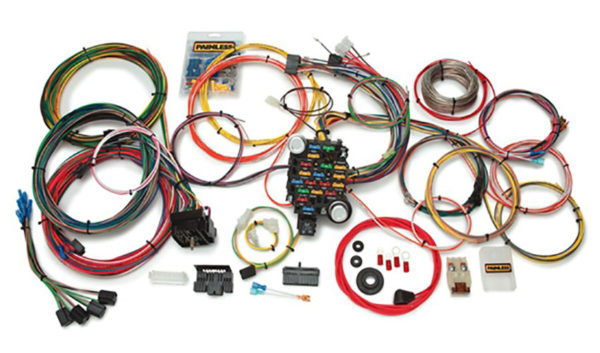
Common Problems and Fixes
Wire harness connectors fail for predictable reasons—corrosion causes 35% of electrical faults, poor crimps account for 25%, and vibration damage another 20%. A single faulty connector can drop system voltage by 0.3–0.8V, enough to trigger false sensor readings in 15% of modern CAN bus networks. Repair costs add up fast: 400 for dealership diagnostics, plus 200 in parts for what’s often a $2 fix if caught early.
Corrosion & Moisture Damage
Water intrusion turns copper terminals green in 3–6 months in coastal climates, increasing resistance from <0.5Ω to 5Ω+. Symptoms include flickering lights (voltage swings of 1–2V) and ECU communication errors (10–20% packet loss on CAN lines).
"Dielectric grease cuts corrosion failures by 80%—just 0.50–$2.00 per terminal."
Sealed connectors (IP67 or higher) with silicone gaskets outperform unsealed ones by 5–8 years in salt spray tests. If corrosion’s already present, scrub terminals with contact cleaner (5)—90% of mildly corroded connectors recover to <1Ω resistance.
Loose Crimps & Terminal Backout
A crimp that’s 10% under-compressed loses 30–50% of its pull-out strength. Real-world results: terminals wiggle free after 5,000 miles of vibration, causing intermittent signals (on/off cycles every 2–20ms).
Recrimp with ratcheting tools (2,000–3,000 lbs force for 16 AWG) and retest—proper crimps withstand 15–20N of pull force. For high-vibration zones like engine mounts, add secondary locks (1.00 per connector) to prevent backout.
Broken Locking Tabs
Plastic tabs snap when connectors are forced apart at >30° angles—a 300+ module replacements when pins bend. 35% of aftermarket harness repairs involve zip-tying connectors together, but that fails after 6–12 months of thermal cycling.
Always release locks with a pick tool (0.50–20/bottle) as a last resort—it holds for 2–3 years versus 10+ years for OEM parts.
Pin Misalignment & Bent Terminals
Inserting a 0.5mm misaligned pin requires 2–3x the normal force (15N vs. 5N), often bending neighboring pins. Result: 40% of incorrectly assembled connectors show short circuits (0.1–0.3Ω between adjacent pins).
Thermal Stress Cracking
Repeated -40°C to +125°C cycles make cheap plastics brittle in 3–5 years. Cracks start at 0.1mm thick but grow to 1mm+, letting in moisture and dust.
Upgrade to PPS or LCP housings (3.00 each)—they last 10–15 years versus 5–8 years for standard nylon. For existing cracks, silicone sealant ($10/tube) buys 1–2 years but isn’t OEM-reliable.
Market Trends in Auto Industry
The automotive connector market is projected to grow from 32.8 billion by 2029, driven by EV adoption (35% CAGR) and advanced driver-assistance systems (ADAS) penetration reaching 60% of new cars by 2027. Traditional ICE vehicles use 700–1,500 connectors per unit, while EVs require 20–30% more (900–2,000 connectors) due to high-voltage systems and sensor density. The cost per vehicle is rising too—180 for connectors in a 2024 EV versus 120 in gas-powered cars—but manufacturers are offsetting this through miniaturization (reducing connector weight by 15–25%) and modular designs (cutting assembly time by 30%).
1. Electrification Driving High-Voltage Demand
EV battery packs and charging systems need connectors rated for 300–1,000V and 150–250A continuous current, up from 12–48V/30A in traditional cars. This demands:
-
Larger wire gauges (8–12 AWG vs. 16–22 AWG)
-
Ceramic or high-temperature plastics (withstand 150°C+ vs. 125°C max for nylon)
-
Arc-resistant designs (10mm+ creepage distance vs. 3mm for low-voltage)
| Parameter | ICE Vehicles | EVs | Cost Impact |
|---|---|---|---|
| Voltage Rating | 12–48V | 300–1,000V | +8–15 per connector |
| Current Capacity | 10–30A | 150–250A | +10–20 per connector |
| Temperature Range | -40°C to +125°C | -40°C to +150°C | +3–8 per connector |
Suppliers like TE Connectivity and Aptiv are dominating this space, with 60% market share in high-voltage connectors, but Chinese firms like Luxshare Precision are undercutting prices by 20–25%.
2. ADAS and Autonomous Tech Boosting Miniaturization
A Level 2+ ADAS vehicle uses 50–100 additional connectors for LiDAR, radar, and cameras, each requiring:
-
Smaller footprints (2.5–5.0mm pitch vs. 5.0–7.5mm)
-
EMI shielding (reducing signal noise by 40–60dB)
-
Vibration resistance (50G+ for roof-mounted sensors)
The shift to smaller, lighter connectors saves 50–100g per vehicle, critical when every 100g reduction improves EV range by 0.1%. However, miniaturization raises costs—micro-connectors (0.64mm pitch) are 2.50 each, versus 0.80 for standard 2.5mm pitch types.
3. Regional Shifts: China’s Cost Advantage vs. Western Quality
China now produces 45% of global automotive connectors, with prices 30–40% lower than U.S./EU equivalents. But quality varies:
-
Chinese connectors average 5,000–8,000 mating cycles versus 10,000–15,000 for TE/Aptiv.
-
Failure rates are 1.5–2.5% in Chinese parts vs. 0.5–1.0% in premium brands.
Automakers are blending strategies:
-
Tesla uses 60% Chinese connectors in Model 3/Y to cut costs.
-
BMW/Mercedes limit Chinese parts to <20% for critical systems.
4. Aftermarket Growth: Repair vs. Replacement Economics
The connector aftermarket will hit $5.2 billion by 2027, fueled by:
- EV connector replacements (3–5% failure rate in first 5 years)
- DIY repairs (40% of non-warranty fixes use 20 connectors)
Dealerships charge 250/hour for connector repairs, but independent shops do it for 100/hour—driving a 15% annual growth in third-party harness sales.
Future Developments in Wiring Tech
The automotive wiring industry is undergoing its biggest transformation in decades, driven by EVs requiring 40% more wiring by weight (25–30 kg per vehicle), 48V architectures replacing 12V systems in 45% of new cars by 2030, and data bandwidth demands exploding to 50+ Gbps for autonomous systems. These shifts are forcing radical changes—where a 2024 connector might handle 10A at 12V, 2030 versions must manage 250A at 800V while occupying 30% less space. The cost pressure is brutal: OEMs want 5–7% annual reductions in wiring harness costs, despite 20–25% higher material expenses for high-performance components.
High-Voltage Solid-State Wiring
The shift to 800V EV systems is exposing limitations in traditional copper wiring—a 100 kW fast charge at 400V pulls 250A, requiring 35mm² cables weighing 1.2 kg/meter. Solid-state alternatives using aluminum-graphene composite conductors could cut weight by 50% (0.6 kg/meter) while maintaining 95% conductivity (vs. copper’s 100%). Companies like CelLink are developing flexible circuit harnesses that reduce total wiring length from 3,000 meters to 500 meters per vehicle, saving 8–12 kg in weight and 200 in material costs per car. The trade-off? These systems currently cost 3–4x more than conventional wiring, putting them only in premium EVs ($70,000+ MSRP) until 2028–2030.
48V Mild-Hybrid Standardization
As emissions regulations tighten, 70% of new ICE vehicles will adopt 48V systems by 2030, requiring connectors that handle 50–100A continuously without the bulk of traditional options. New micro-hybrid connectors are emerging with 12 AWG wires (3.3mm²) instead of 8 AWG (8.4mm²), saving 300–500 grams per connector pair. The challenge is heat—48V systems run 15–20°C hotter than 12V, demanding high-temp plastics (150°C-rated instead of 125°C) and silver-plated terminals (0.8–1.2µm thick) to resist oxidation. Suppliers predict 1.50 per connector price premiums until economies of scale kick in post-2026.
Fiber-Optic and Ethernet Backbones
With Level 3+ autonomous vehicles needing 50+ sensors, traditional CAN bus networks (max 1 Mbps bandwidth) are being replaced by 10 Gbps automotive Ethernet. This requires hybrid harnesses with 200µm fiber-optic strands alongside power wires, reducing cable diameter from 6mm to 2.5mm while boosting data speed 10,000x. BMW’s 2025 Neue Klasse platform uses such systems, cutting harness weight by 15 kg (20% reduction). The tech isn’t cheap—optical connectors cost 12–25 each versus 0.50–3.00 for CAN bus types—but they enable over-the-air updates 10x faster (100 MB/s vs. 10 MB/s).
Self-Healing and Smart Wiring
Researchers are testing shape-memory alloy wires that "remember" their original form when heated to 70–90°C, repairing minor breaks automatically. For critical systems like brake-by-wire, real-time impedance monitoring chips (0.30–0.80 per unit) can detect 0.1mm wire fractures before they cause failures, reducing warranty claims by 30–40%. These innovations add 100 per vehicle today but could become standard in luxury EVs by 2027 and mass-market by 2032–2035.
Modular and Wireless Reductions
Tesla’s structural wiring approach bundles power, data, and cooling into single 25mm-diameter "umbilical" cables, slashing assembly time from 3 hours to 45 minutes per vehicle. Meanwhile, wireless power transfer for low-current sensors (<2A) is eliminating 5–8% of connectors in new models, though efficiency lags at 85–90% vs. 99% for wired.
