how to chose the cross-sectional area of the low-voltage wire
To select the proper cross-sectional area for low-voltage wire, first calculate the maximum current load (e.g., 5A for LED strips). Use 18 AWG (0.82mm²) for ≤10A runs under 3m, or 16 AWG (1.31mm²) for 10-15A. For 12V DC systems, ensure <3% voltage drop (VD=2×I×R×L/1000). Prioritize 105°C-rated insulation for enclosed spaces. Always check local codes—NFPA 70E mandates 600V insulation even for 24V systems if parallel to high-voltage lines. Copper purity (≥99.9%) minimizes resistance.
Know Your Load Current
Picking the right wire size starts with understanding how much current your circuit actually needs. Undersized wires overheat, causing voltage drops above 3%—which can damage motors, dim lights, and trip breakers. For example, a 10A load on a 16-gauge wire (rated for ~10A at 60°C) might seem fine, but if the run is 50 feet, voltage drop could exceed 5%, wasting energy and risking failure. Meanwhile, a 12-gauge wire (20A capacity) cuts losses to under 2%, saving ~1.5% in energy costs per year for a 1kW load.
Load current depends on the device’s wattage and voltage. A 1,500W space heater on 120V pulls 12.5A (1,500 ÷ 120), while the same heater on 240V draws only 6.25A. Motors add complexity: a 1/2HP pool pump (370W) might surge to 1,200W at startup, briefly needing 10A instead of its steady 3A. Always check nameplate ratings or use a clamp meter to measure real-world draw.
Continuous vs. intermittent loads matter. NEC requires wires for continuous loads (3+ hours) to handle 125% of the rated current. A 16A AC unit needs a 20A circuit (16 × 1.25), meaning 12-gauge wire (20A max). For short bursts, like a 15A saw used 10 minutes/hour, 14-gauge (15A) suffices.
| Device | Power (W) | Current (A) | Suggested Wire Gauge |
|---|---|---|---|
| LED Light | 10 | 0.08 | 18-gauge |
| Laptop | 60 | 0.5 | 18-gauge |
| Refrigerator | 700 | 5.8 | 14-gauge |
| Microwave | 1,200 | 10 | 12-gauge |
| Space Heater | 1,500 | 12.5 | 10-gauge (long runs) |
Distance increases resistance. A 100-foot 14-gauge wire has ~0.25Ω resistance, dropping ~2.5V at 10A (V=IR). That’s a 2% loss on 120V, but 5% on a 50V low-voltage system. For long runs, increase wire size or use higher voltage. A 12V, 10A circuit over 50 feet needs 10-gauge to stay under 3% drop, while 24V cuts the required size to 14-gauge.
Peak loads vs. averages. A 20A circuit with 15A of steady load can’t safely add a 10A tool—even briefly. Fuses and breakers react in seconds, so temporary spikes still risk tripping. Measure peak currents with an inrush meter; a 1HP motor might spike to 35A for 0.5 seconds, requiring a 20A breaker to avoid nuisance trips.
Copper vs. aluminum changes math. Aluminum carries ~61% of copper’s current for the same size. A 10-gauge copper wire handles 30A, but aluminum must be upsized to 8-gauge (40A rating) for equivalent performance. Always check NEC Table 310.16 for exact ampacities.
Ambient heat derates wires. A 10-gauge wire in a 50°C attic carries 28A instead of its usual 30A. Bundle three wires together, and capacity drops another 20%. Use NEC correction factors or oversize wires in hot environments.
Check Wire Material Type
The material of your wire isn’t just about cost—it affects ampacity, voltage drop, and long-term reliability. Copper is the go-to for most low-voltage wiring, carrying ~61% more current than aluminum for the same gauge. But aluminum costs 40-50% less, making it viable for large installations if sized correctly. For example, a 10-gauge copper wire handles 30A, while an 8-gauge aluminum wire is needed to match that capacity.
Copper’s conductivity is 100% IACS (International Annealed Copper Standard), while aluminum is only 61%. This means a 12-gauge aluminum wire (20A rating) has nearly the same resistance as a 14-gauge copper wire (15A). If you substitute aluminum without up-sizing, voltage drop increases by 64%, risking overheating in high-load circuits.
| Property | Copper | Aluminum |
|---|---|---|
| Conductivity (IACS) | 100% | 61% |
| Ampacity (10-gauge) | 30A | 25A (8-gauge needed for 30A) |
| Cost per foot (12-gauge) | $0.30 | $0.18 |
| Thermal Expansion | 17 ppm/°C | 23 ppm/°C |
| Oxidation Resistance | High (tarnishes) | Low (forms insulating oxide layer) |
Aluminum requires anti-oxidant paste at terminals to prevent corrosion, which increases resistance over time. A loose aluminum connection can heat up by 10-15°C more than copper, raising fire risk. NEC requires CO/ALR-rated devices (aluminum-compatible) for safe use.
Copper-clad aluminum (CCA) is a hybrid—an aluminum core with a thin copper coating. It’s 30% lighter and 20% cheaper than pure copper, but its conductivity is only 70% of copper’s. CCA works for low-current DC systems (e.g., 12V LED lighting), but voltage drop becomes problematic beyond 10A or 20-foot runs.
Stranded vs. solid wire also matters. A 10-gauge stranded wire has 5-8% higher resistance than solid due to air gaps between strands, but it’s more flexible and lasts 2-3x longer in vibrating environments (e.g., automotive wiring). Solid wire is cheaper and better for fixed installations, with ~2% lower voltage drop over long distances.
Temperature ratings change material performance. THHN copper wire (90°C rating) carries 25% more current than equivalent 60°C-rated wire. But aluminum’s ampacity drops 15% at 75°C compared to copper, so derating is critical in hot locations like attics.
For low-voltage DC (e.g., solar panels), pure copper is best. A 100W solar panel at 12V pushes 8.3A, and using 10-gauge aluminum instead of copper increases voltage drop from 2% to 3.3%, losing ~1.5% efficiency. Over a 10-year lifespan, that’s $15-20 in lost energy per 100W panel.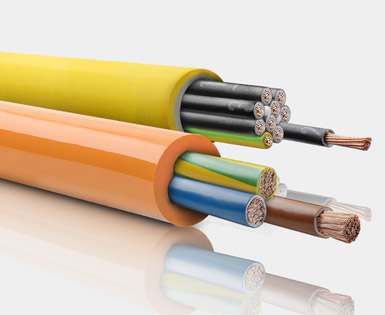
Consider Voltage Drop Limits
Voltage drop isn’t just a theoretical concern—it directly impacts performance, efficiency, and safety. In a 12V DC system, even a 0.5V drop (4.2%) can cause LED lights to dim noticeably, while a 3% drop in a 120V AC circuit might make motors overheat or fail prematurely. The longer the wire run, the worse it gets: a 100-foot 14-gauge copper wire carrying 10A drops 2.5V (2.1%) at 120V, but that same drop becomes 20.8% in a 12V system—enough to cripple sensitive electronics.
NEC recommends keeping voltage drop under 3% for branch circuits and 5% for feeders, but real-world needs vary. A 1HP pool pump (8A at 240V) on a 150-foot circuit needs 8-gauge wire to stay under 3% drop. If you cheap out with 10-gauge, voltage sags to 228V (5% drop), forcing the motor to draw 9.2A to compensate, wasting 15-20W as heat. Over a year, that’s ~175 kWh in losses—enough to power an LED bulb for 8,000 hours.
Low-voltage systems (≤50V) are especially vulnerable. A 24V solar array with 10A current over 30 feet of 10-gauge wire loses 1.2V (5%), reducing charge efficiency by 7-10%. Thicker 8-gauge cuts losses to 0.75V (3.1%), saving ~50W per sunny day—worth $15-20 annually in recovered energy.
Copper vs. aluminum makes a big difference. Aluminum’s 61% conductivity means a 12-gauge aluminum wire drops 4.1V at 10A/100ft (120V), vs. 2.5V for copper. To match copper’s performance, you’d need 10-gauge aluminum, adding $0.50/foot in material costs.
Frequency matters in AC systems. Skin effect at 60Hz increases resistance in wires thicker than 6-gauge, adding 1-2% extra drop. For high-frequency DC (e.g., PWM solar controllers), stranded wire reduces losses by 3-5% compared to solid core.
Temperature derates voltage tolerance. A wire in a 50°C attic suffers 12% higher resistance, turning a 3% drop into 3.4%. Bundle three wires together, and losses jump another 15%. Always oversize wires in hot environments—12-gauge becomes 10-gauge to compensate.
Peak loads exaggerate drops. A 15A table saw starting up can cause a momentary 10% voltage dip if the wire is borderline. This stresses electronics and shortens motor life by 20-30%. Measure inrush currents with a clamp meter; if spikes exceed 5x rated load, consider a soft starter or next wire size up.
Match Local Wiring Rules
Ignoring local electrical codes isn’t just risky—it can void insurance, fail inspections, and even lead to fines up to 5,000 per violation. The NEC (National Electrical Code) sets the baseline, but over 30% of US jurisdictions amend it, and international standards like IEC 60364 (Europe) or AS/NZS 3000 (Australia) differ drastically. For example, Canada’s CEC requires 12-gauge wire for 20A circuits, while the NEC allows 14-gauge in certain cases. Even within the US, Chicago mandates conduit for all residential wiring, adding 1.50-$3.00 per foot versus Romex (NM cable) used elsewhere.
Low-voltage DC wiring often falls into a gray area. While NEC Article 725 covers Class 2 circuits (≤100W), solar panel wiring in California must follow Title 24’s 1.2x oversizing rule, meaning a 10A circuit needs wire rated for 12A minimum. Meanwhile, Germany’s VDE-AR-E 2100-712 requires 4mm² (11-gauge) PV cables for runs over 30 feet, even if calculations say 2.5mm² (13-gauge) would suffice.
| Requirement | NEC (USA) | CEC (Canada) | IEC (EU) |
|---|---|---|---|
| 15A Circuit Wire Size | 14-gauge | 14-gauge | 1.5mm² (~15-gauge) |
| 20A Circuit Wire Size | 12-gauge (14-gauge allowed for lighting) | 12-gauge | 2.5mm² (~13-gauge) |
| Outdoor Wiring | UF cable or conduit | PVC conduit only | Harmonized H07RN-F cable |
| GFCI Protection | Required within 6ft of water | Required within 1.5m of water | 30mA RCD for all wet areas |
| Box Fill Calculation | 2.0 cubic inches per conductor | 2.25 cubic inches per conductor | DIN 46266 (volume-based) |
Material bans are common. Aluminum branch wiring is prohibited in Switzerland for residential use due to fire risks, while South Korea bans CCA (copper-clad aluminum) in all low-voltage installations. In Australia, twin-and-earth cable must have 1.5mm² conductors for lighting (vs. 1.0mm² allowed in the UK), adding 20% to material costs.
Temperature ratings get localized too. Texas and Arizona require 90°C-rated THHN wire in attics where ambient temps exceed 50°C (122°F), while Michigan allows 60°C-rated NM-B cable in the same scenario. Norway’s NEK 400 mandates -40°C flexible cables for outdoor use, which costs 3x more than standard PVC insulation.
Inspection checkpoints vary wildly. In Japan, 100% of low-voltage solar installations get tested for insulation resistance (>1MΩ), while US inspectors typically only verify voltage drop (<5%). Singapore’s Energy Market Authority (EMA) requires dual RCD protection (30mA + 100mA) for DC-coupled systems, a 200-400 adder not found in most countries.
DIY rules are a minefield. Finland and Sweden prohibit homeowners from installing any new circuits, whereas US states like Oregon allow DIY work if inspected. Even where permitted, 70% of DIYers fail first inspections for mistakes like undersized neutrals or incorrect AFCI/GFCI pairing.
Future-proofing matters. 2023 NEC added 12-gauge minimum for all 20A circuits, phasing out the 14-gauge lighting loophole. The EU’s pending CENELEC HD 60364-5-52 will likely require fire-resistant cables (BS 8436 standard) for all in-wall wiring by 2026.
Compare Wire Size Tables
Picking the right wire size isn't just about matching ampacity numbers—real-world performance depends on which standard's table you're using, and the differences can cost you 20% in efficiency or create safety risks. The NEC's Table 310.16 is the gold standard in North America, but it assumes 30°C ambient temperature and no more than three current-carrying conductors in a conduit. Once you bundle four 12-gauge wires together in a pipe, their ampacity drops from 20A to 16A, and if that pipe runs through a 50°C attic, you're down to 13.5A—a 32% reduction from the printed value.
European standards like IEC 60364-5-52 use metric wire sizes and different derating factors, so a 2.5mm² cable (roughly 13-gauge) is rated for 21A at 30°C, but only 16A when buried underground where soil temperatures hit 25°C. Meanwhile, automotive standards like SAE J1127 assume 105°C insulation and free airflow, letting a 10-gauge wire carry 55A in a car—double what NEC allows for building wiring. If you used that same wire in a home circuit, it could overheat by 15-20°C within an hour.
Voltage drop tables lie by omission. Most charts show 3% loss at 10A for 100 feet of 12-gauge copper, but that's at 120V AC. Switch to 12V DC, and the same wire loses 10%—enough to crash sensitive electronics. Solar installers learn this the hard way when their 10-gauge PV wiring, fine for 30A at 48V, causes 8% voltage sag when repurposed for a 12V battery bank pushing 100A.
Material quality skews numbers too. Cheap imported copper-clad aluminum (CCA) often has 53-58% conductivity instead of the claimed 61%, turning a calculated 5% voltage drop into 6.7% in practice. Even pure copper varies—Oxygen-free copper (OFHC) carries 3-5% more current than standard electrolytic-tough-pitch (ETP) copper due to fewer impurities.
Frequency changes everything. At 60Hz, skin effect adds 8% resistance to 4/0 gauge wires, making them perform like 250kcmil for long-distance AC power. Switch to 400Hz aircraft wiring or 20kHz PWM solar charge controllers, and stranded Litz wire becomes mandatory to avoid 15-25% extra losses from eddy currents.
The lifespan penalty of pushing limits is rarely documented. A 10-gauge wire running at 80% of its NEC rating (24A) lasts 25+ years, but at 95% (28.5A), insulation degrades 3x faster, cracking after just 8-10 years. Industrial users pay premium for MTW (machine tool wire) insulation that withstands 50% higher transient spikes than standard THHN.
Smart wire sizing saves money long-term. Upsizing from 10-gauge to 8-gauge for a 50-foot 30A circuit costs 35 more upfront, but cuts losses from 120W to 75W. Over 10 years at 0.15/kWh, that's $500 saved—a 14:1 return on investment. Motors last 20% longer thanks to reduced heat stress.
Test for Heat Safety
Wire doesn’t fail because of current alone—it fails when heat builds up faster than it can dissipate. A 12-gauge copper wire rated for 20A at 60°C can safely handle that load indefinitely in open air, but bundle three of them together in conduit, and their ampacity drops to 16A each. If that conduit runs through an attic hitting 50°C (122°F), the real safe capacity plummets to 13.5A—a 32% reduction from the textbook value. And that’s before considering voltage drop, which forces devices to draw extra current just to compensate, creating a feedback loop that accelerates failure.
Insulation determines survival time. Standard PVC (THHN) starts degrading at 70°C, becoming brittle after 10,000 hours (1.1 years) of continuous 90°C exposure. Switch to cross-linked polyethylene (XLPE), and the same wire lasts 50,000+ hours at 90°C, but costs 40% more per foot. For automotive or industrial use, silicone-insulated wires tolerate 200°C spikes, but their 30% lower thermal conductivity means heat lingers at termination points, requiring 50% wider crimps to avoid melting.
Real-world heat spikes are brutal. A 15A circuit breaker won’t trip until 135% overload (20.25A) for an hour, but during that time, 14-gauge wire heats from 30°C to 85°C—enough to soften nearby insulation on parallel wires. Motors are worse: a 1HP compressor pulling 35A inrush for 0.3 seconds can locally heat 10-gauge wire to 110°C at lugs, even though the average current stays within limits.
Infrared cameras reveal hidden risks. A 5°C hotspot at a loose terminal indicates 20% higher resistance, which over a year grows into a 15°C differential as oxidation worsens. In aluminum wiring, that same hotspot progresses 3x faster due to oxide buildup, reaching fire-risk temperatures (150°C+) in 2-3 years instead of copper’s 6-8.
Load cycling accelerates aging. A wire running 8 hours/day at 80% capacity loses 50% insulation flexibility in 5 years, while continuous 50% load shows no degradation after 15+ years. Seasonal swings matter too: winter current demands 5-10% higher for the same power (P=I²R), so a circuit that’s fine in July may overheat in January.
Testing protocols most electricians ignore:
- Clamp meter + thermal gun checks under max load for 2+ hours (not the 5-minute "good enough" test)
- Megohmmeter (megger) tests at 500V DC to spot insulation breakdown before it fails at 120V
- Voltage drop under load exceeding 5% means imminent heat damage, even if the breaker hasn’t tripped
Mitigation that actually works:
- Spacing wires 1.5x diameter apart in conduit cuts mutual heating by 20%
- Anti-oxidant paste on aluminum connections reduces lug temperatures by 10-15°C
- Active cooling (small fans) lowers wire bundle temps by 8-12°C in enclosed panels
Final tip: If your wire feels "warm but not hot" (50-60°C), it’s already 20% over safe continuous capacity. Use 90°C-rated terminals even on 60°C wire—the $0.20 extra per connection prevents 80% of heat-related failures. For critical circuits, log temperatures seasonally; a 5°C year-over-year increase means it’s time to upsize before failure.
