wire harness drawing standards
Wire harness drawing standards are guidelines and specifications that define how wire harness drawings should be created and formatted. These standards ensure consistency, clarity, and accuracy in wire harness documentation, making it easier for designers, manufacturers, and technicians to understand and work with the harnesses.
Of course, standing on the wire harness manufacturer's point of view, these are also necessary factors for us to quote out price, because only when we fully understand all the details that you need, we offer you the correct price.
While specific standards can vary based on industry and application, here are some common elements found in wire harness drawing standards:
- Title Block
- Scale
- Drawing Views
- Symbol Library
- Wiring Diagrams
- Wire Routing
- Connector Information
- Wire Identification
- Bill of Materials (BOM)
- Revision Control
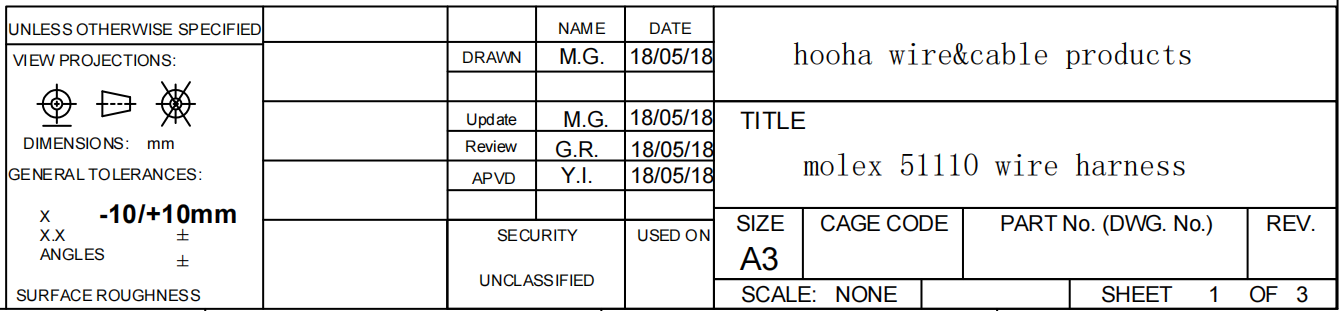
1. Title Block
A title block is typically placed at the bottom right corner of the drawing and contains essential information such as the drawing title, revision number, date, part number, and the name of the drafter.
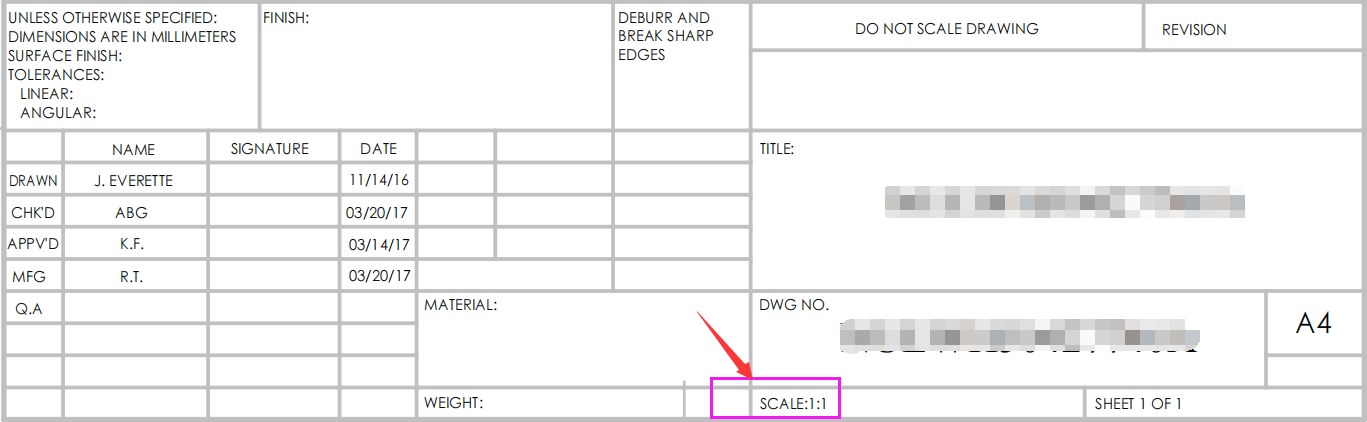
2. Scale
The scale of the drawing should be clearly indicated, ensuring that the dimensions are accurately represented.
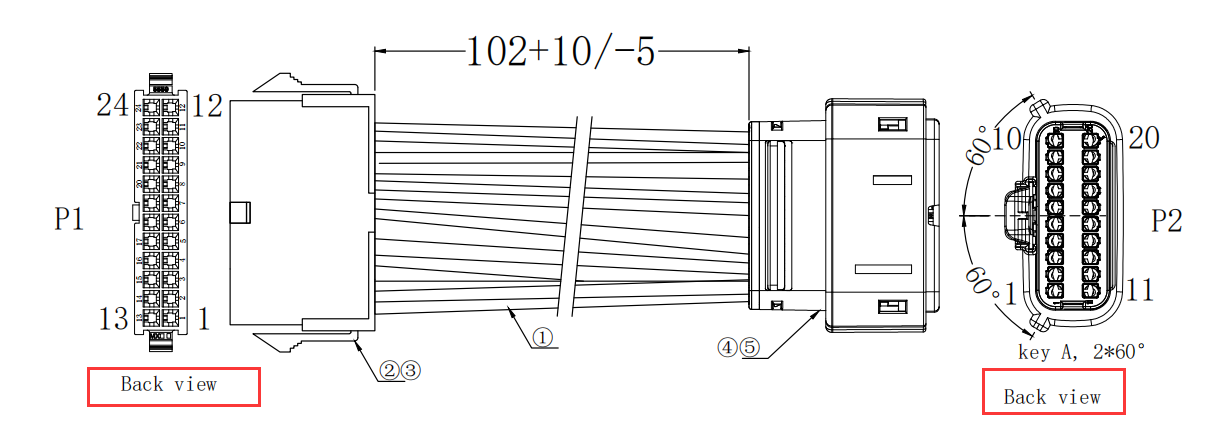
3. Drawing Views
Wire harness drawings usually include multiple views, such as plan views, elevation views, and section views, connector View orientation to provide a comprehensive representation of the harness layout. especially connector's view direction, you know, from the top or from the back view have different circuits, we have the traumatic experience to view it wrong, then making a whole order wrong.
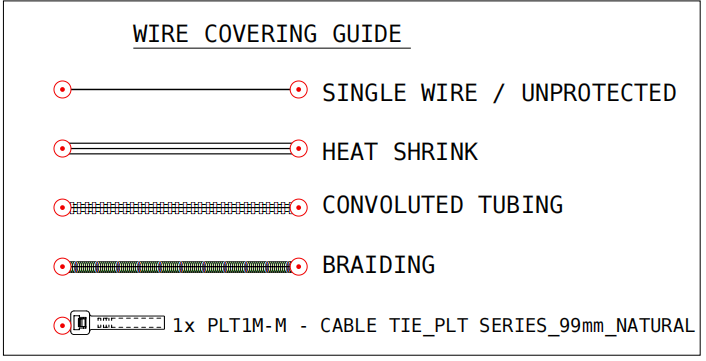
4. Symbol Library
A standardized library of symbols is used to represent various components, connectors, terminals, splices, and other elements within the wire harness.
5. Wiring Diagrams
Wiring diagrams show the electrical connections between components, including wire routing, branching, and termination points. These diagrams often use standardized symbols and color codes to represent different wires, connectors, and functions.

6. Wire Routing
The routing of wires within the harness should be clearly illustrated, indicating the path, bundling, and securing methods. This includes any clips, ties, or sleeves used to manage and protect the wires.

7. Connector Information
Each connector should be labeled with a reference designation or part number, pin numbers, and descriptions of the wires or signals associated with each pin.
8. Wire Identification
Wires should be identified using a standardized labeling system, including alphanumeric codes or color codes. This helps in identifying wires and their corresponding functions.
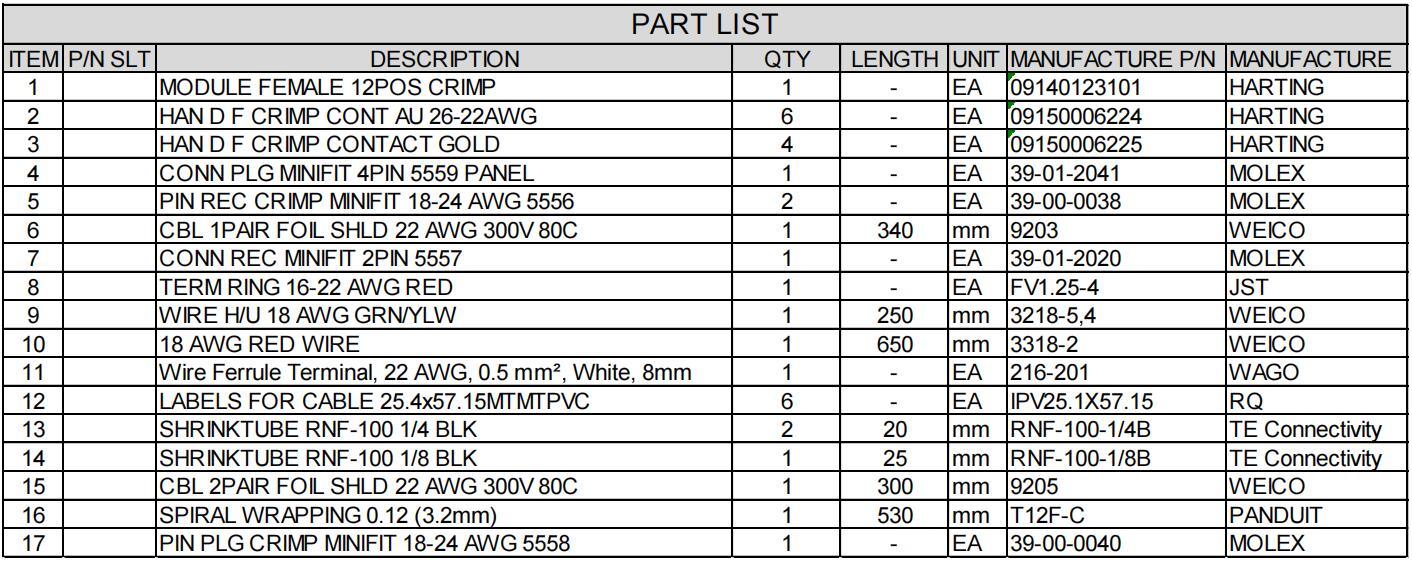
9. Bill of Materials (BOM)
A BOM lists all the components, connectors, terminals, and other materials required to build the wire harness. It provides part numbers, descriptions, quantities, and other relevant information for procurement and assembly purposes.
10. Revision Control
A revision history table is typically included to track changes made to the drawing over time. It includes revision numbers, dates, a brief description of the changes, and the name of the person responsible for each revision. it is regularly listed at the top right corner of the drawing.

Summary
These are some general guidelines that should be followed. However, it's important to keep in mind that different industries and companies may have their own unique standards and requirements. This means that you need to do your due diligence and consult the applicable standards or specifications relevant to your industry or organization. By doing so, you can ensure compliance with all necessary regulations while also maintaining accuracy throughout the drawing process. Whether you're working on a project for automotive manufacturing, aerospace engineering, or any other field that requires wire harnesses, taking the time to research and understand these specific requirements is crucial. Ultimately, creating high-quality wire harness drawings requires attention to detail and a commitment to excellence. By staying up-to-date on industry-specific standards and best practices, you can produce work of exceptional quality that meets all necessary criteria.
Contact us
To customize your wire harness, please provide us with as many details as possible. We will then create a drawing for you to review and confirm. After the approved drawing is finalized, we will proceed to make a sample for testing. Only when everything is confirmed to be satisfactory can you proceed to place an order for mass production.
