RJ11 to DB25P Adapter, China Manufacturer
Introduction
The RJ11 to D-sub 25-pin adapter bridges connectivity between telephony/modem equipment and legacy serial devices by converting the compact RJ11 connector (used for phone lines and low-speed data) to the robust D-sub 25-pin interface (familiar in vintage computers, industrial hardware, and serial communications). These adapters are indispensable in retro-computing, industrial automation, and telecommunications, enabling devices like dial-up modems to interface with serial ports for data transfer. They come in two primary configurations—male and female D-sub variants—to accommodate diverse port types, often requiring custom wiring to align with signal protocols (e.g., RS-232). Passive models offer direct pin mapping, while active versions include circuitry for voltage conversion or signal amplification.
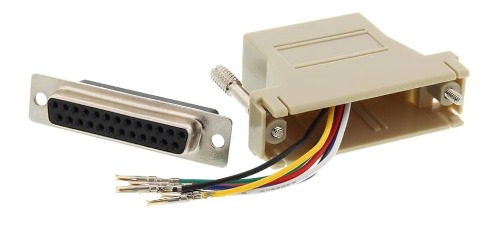
Adapter Types
RJ11 to DB25 Male Adapter
This adapter integrates an RJ11 jack (typically 6P4C or 6P6C) with a male DB25 plug. Designed to connect to female DB25 ports, its compact design facilitates seamless integration into devices such as legacy computers or industrial controllers. Key features include direct wiring for basic serial communication and compatibility with asynchronous protocols, such as RS-232. Applications span retro computer setups (e.g., attaching modems to vintage PCs) and industrial PLCs where RJ11-based sensors link to serial control systems.
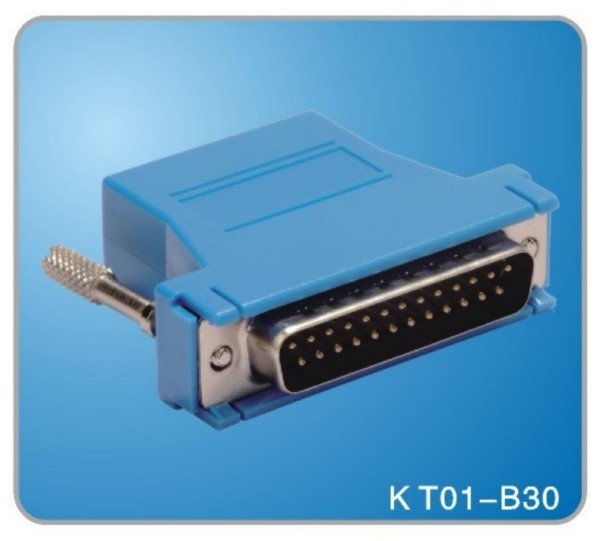
RJ11 to DB25P Male - Blue
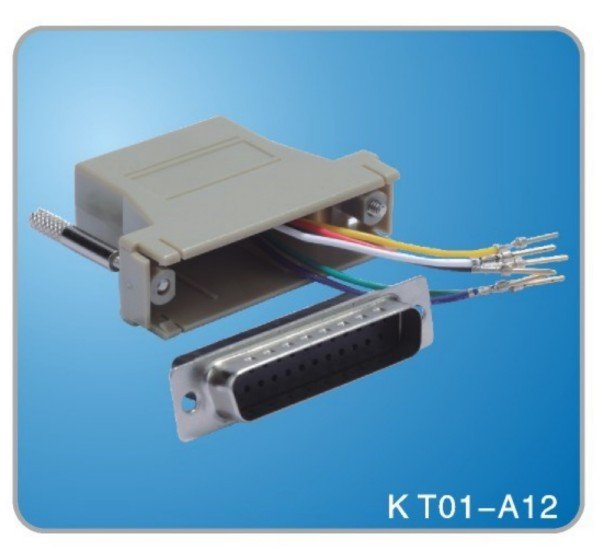
RJ11 to DB25P Male - Grey
RJ11 to DB25 Female Adapter
Featuring an RJ11 jack paired with a female DB25 socket, this adapter serves as both a port extender and a gender converter for male DB25 connectors. It enables devices with pre-terminated male cables (e.g., printers) to interface with RJ11-equipped systems. Highlights include robust metal shielding for EMI resistance and support for hardware flow control (RTS/CTS). Typical uses include telecom infrastructure and point-of-sale terminals, where it bridges RJ11 modem connections to serial peripherals.
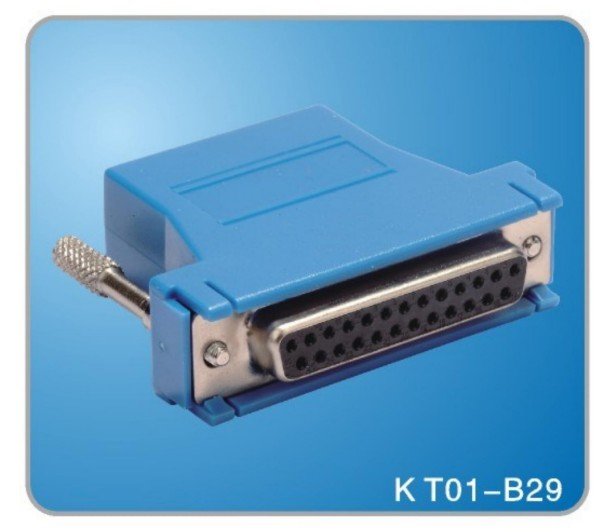
RJ11 to DB25P Female - Blue
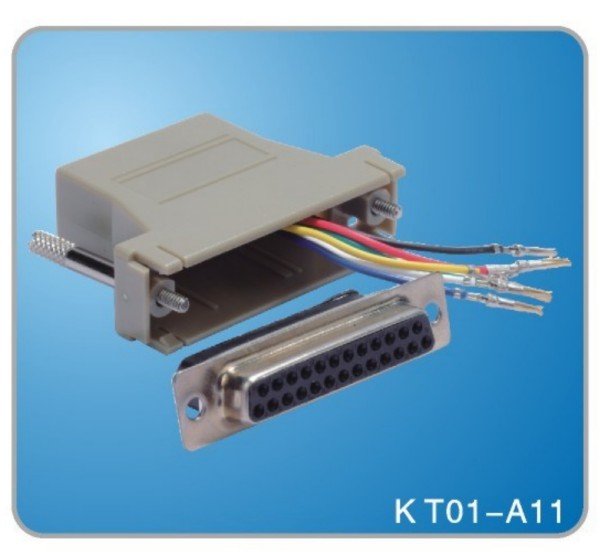
RJ11 to DB25P Female - Grey
Applications
RJ11 to D-sub 25-pin adapters are pivotal in legacy and industrial ecosystems, reconciling modern telephony interfaces with vintage serial hardware. By enabling cross-standard communication, they extend the lifespan of legacy systems in sectors such as manufacturing, healthcare, and telecommunications. The male variant typically interfaces RJ11 devices to serial hosts (e.g., computers), while the female version connects to serial peripherals (e.g., printers) via existing male cables. Below are key applications for each type.
RJ11 to DB25 Male Adapter Applications:
- Connecting dial-up modems to vintage computers (e.g., IBM PC serial ports).
- Integrating telephony alarm systems with legacy control panels.
- Linking RJ11-based barcode scanners to industrial serial PLCs.
- Interfacing fax machines with proprietary database systems.
- Attaching telephone line testers to serial diagnostic tools.
- Facilitating modern backups for POS terminals in retail.
RJ11 to DB25 Female Adapter Applications:
- Extending serial cables from RJ11 modems to DB25 male peripherals (e.g., printers).
- Adapting telecom test equipment to RJ11 network lines.
- Connecting industrial sensors to data loggers via serial extensions.
- Linking legacy CNC machines with RJ11 communication modules.
- Integrating PBX systems with RS-232-controlled switches.
- Enabling a retro-gaming console modem allows it to link to PCs.
Wiring Diagram
General Wiring Reference (Simplified RS-232):
| RJ11 Pin (6P4C) | DB25 Pin | Function |
|---|---|---|
| 2 (Tip) | 2 | TXD (Transmit) |
| 3 (Ring) | 3 | RXD (Receive) |
| 5 | 7 | GND (Ground) |
Notes:
- RJ11 Pins 1, 4, and 6 are not in use. Handshaking (RTS/CTS) may require custom mapping.
- Straight-Through: Basic data transfer without handshaking.
- Flow Control: Incorporates RTS (Pin 4) and CTS (Pin 5) for buffered communication.
- Null Modem: Crossed TXD/RXD for direct device linking.
- Custom Protocols: Device-specific voltage or logic configurations.
For custom wiring diagrams (e.g., matching proprietary industrial pinouts), contact us for tailored design support.
Conclusion
RJ11 to D-sub 25-pin adapters are critical enablers for sustaining legacy systems in a modern world. By facilitating interoperability between RJ11 telephony devices and DB25 serial infrastructure, they preserve investments in aging industrial hardware, vintage computing, and niche telecommunications setups. Selecting the correct variant—male for host ports or female for peripheral extensions—depends on target device configurations. Users must verify wiring alignment to avoid signal conflicts or hardware damage, especially for protocols requiring handshaking or voltage translation. For non-standard applications, bespoke adapter solutions are recommended to ensure reliability and optimal performance. As technology migrates toward universal interfaces like USB and Ethernet, these adapters remain vital stopgaps, providing seamless transitions while honoring the legacy of serial communication standards.
