RJ45 to DB25P Adapter, China Manufacturer
Introduction
The RJ45 to D-sub 25-pin adapter is a specialized interface converter designed to bridge legacy serial or parallel devices with modern RJ45-based networks. It translates signals between the compact 8-pin RJ45 connector, commonly used for Ethernet and telecommunications, and the robust 25-pin D-sub (DB25) interface, which has historically been prevalent in industrial control, serial communication (RS-232), and parallel printer systems. These adapters enable backward compatibility, allowing contemporary devices to interact with legacy machinery or specialized equipment, such as CNC tools, mainframe terminals, or industrial sensors. By leveraging standardized wiring schemas, they mitigate obsolescence risks while ensuring reliable data transmission or control signals. Their compact design and versatility make them indispensable for retrofitting legacy systems across various sectors, including manufacturing and IT infrastructure.
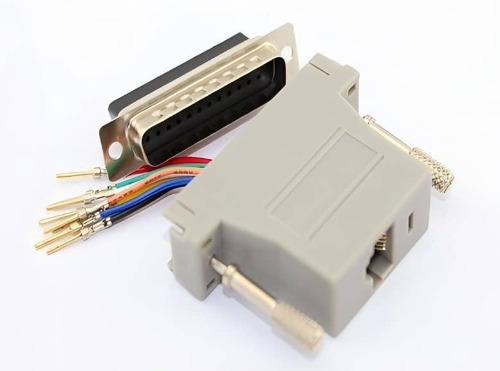
RJ45 to DB25 Male Adapter
This variant features an RJ45 female port and a DB25 male connector. It integrates seamlessly with devices that require a "female" D-sub port, such as older printers, industrial programmable logic controllers (PLCs), or laboratory instruments. The male DB25 plug pins establish direct physical contact, ideal for transmitting parallel data or serial commands. Applications include configuring legacy computer peripherals (e.g., dot-matrix printers) via modern network cables and adapting telecommunications hardware for RS-232 diagnostics. Its rugged housing ensures durability in harsh environments, and shielded designs minimize electromagnetic interference.
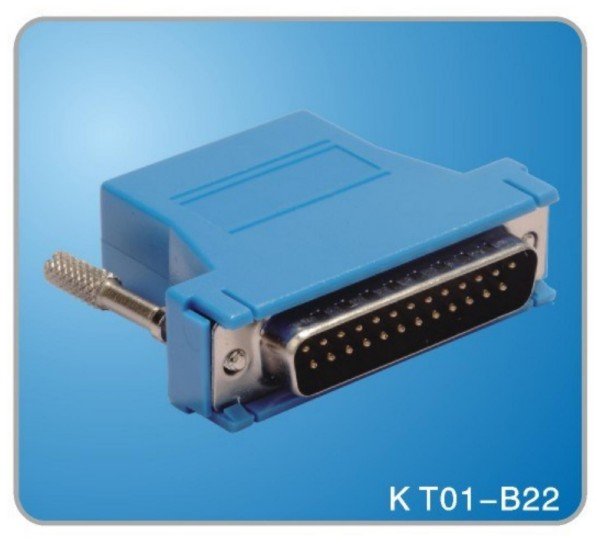
Blue
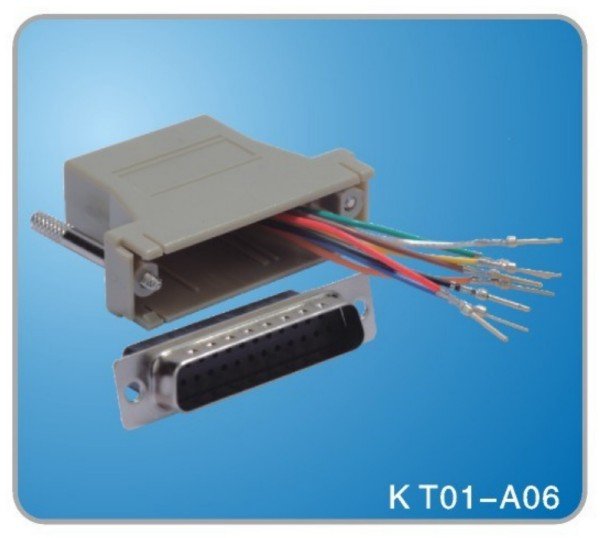
Grey
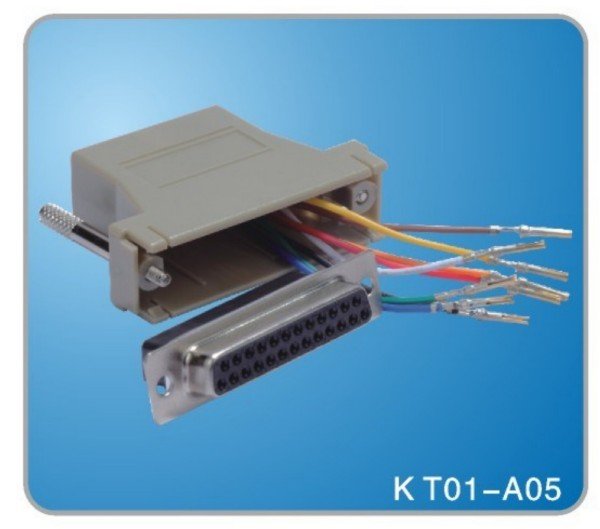
RJ45 to DB25 Female Adapter
Equipped with an RJ45 female socket and a DB25 female receptacle, this adapter connects to DB25 male ports commonly found on vintage computers, data loggers, or test equipment. It enables bidirectional signal conversion, making it suitable for serial communication tasks like software debugging on legacy servers or extending connections using Cat5 cables. Key uses include interfacing with scientific instruments, audio/video broadcast gear (e.g., serial-controlled routers), and industrial automation controllers. The female DB25 socket features screw-locking for secure mating, which is crucial in high-vibration settings.
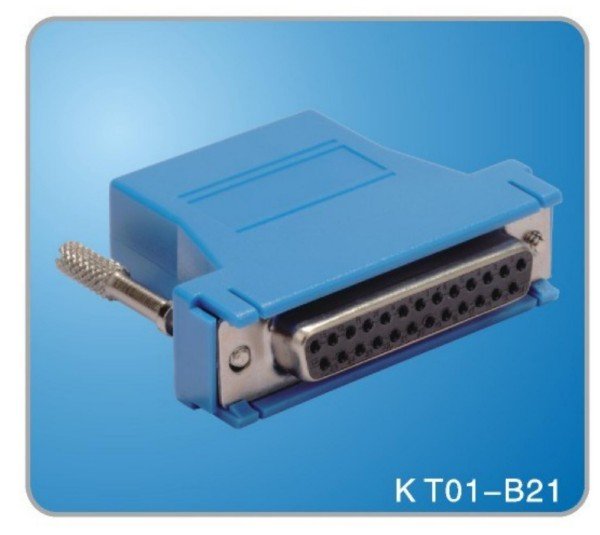
Blue
Grey
Applications
RJ45 to DB25 adapters extend the lifespan of legacy systems by enabling hybrid connectivity between modern RJ45 infrastructures and vintage devices. They serve as cost-effective solutions for industries, avoiding the need for complete equipment replacement, and maintaining compatibility with protocols such as RS-232/422 or Centronics parallel. These adapters facilitate data transfer, device control, and network integration across diverse settings—from factory floors to data centers. By converting signal interfaces, they streamline workflows and reduce dependency on obsolete hardware while preserving existing investments.
RJ45 to DB25 Male Adapter
- Legacy dot-matrix/impact printer connectivity to Ethernet networks.
- CNC machine control via RS-232 interface on modern laptops.
- Mainframe terminal emulation (e.g., IBM AS/400 systems).
- PLC programming and monitoring in manufacturing.
- Retro-computing peripherals (e.g., SCSI interfaces).
- Data acquisition from industrial sensors with parallel ports.
- Serial communication for telecom test equipment.
RJ45 to DB25 Female Adapter
- Connecting modern servers to legacy console ports for system management.
- Audio mixing consoles with serial control interfaces.
- Extending serial links using Cat5e cables (RS-232 over Ethernet).
- Integration of laboratory instruments (oscilloscopes, multimeters).
- Broadcast video switchers and servers with serial commands.
- Point-of-sale (POS) systems with DB25 receipt printers.
- Industrial robotics controller interfacing.
Wiring Diagram
General Schematic Outline:
Pin mappings vary based on protocol (serial vs. parallel) and device requirements. Typical configurations include:
RS-232 Serial: RJ45 pins (e.g., 1-TX, 2-RX) mapped to DB25 pins (2-TX, 3-RX, 7-GND).
Parallel (Centronics): RJ45 data lines (pins 1–8) linked to DB25 data/control pins (e.g., DB25 pin 2–9).
Note: Custom wiring is essential for non-standard applications. Pin assignments depend on device-specific signaling (e.g., DTR, DSR). For a customized wiring diagram, please contact our technical team to design a verified solution tailored to your specific equipment.
Conclusion
RJ45 to D-sub 25-pin adapters represent a critical interoperability tool, seamlessly merging historical and contemporary technologies to overcome compatibility barriers. These adapters empower industries to prolong the utility of legacy devices—such as industrial controllers, printers, and scientific instruments—while harnessing modern RJ45 cabling's efficiency and cost benefits. By offering both male and female DB25 variants, they address diverse interface requirements, ensuring robust connections in demanding environments like manufacturing, telecommunications, and IT. Their role in enabling protocols like RS-232 or parallel data transfer underscores their versatility, bridging gaps that would otherwise necessitate expensive hardware upgrades. As organizations prioritize sustainability and operational continuity, these adapters provide a pragmatic path to modernization without discarding functional equipment. For specialized applications, custom wiring diagrams further enhance their adaptability, making them indispensable in preserving technological investments and driving long-term operational resilience.
Customize Your Adapter
Send your sample or drawing/schematic for quote price→ Feedback with quotation(1~3 days) → Confirm quotation → Arrange sample you for approval→ [Make mold if needed (7 days) →Mold test] → Making samples(1~3 days)→ Samples test(Approval) → place order for Mass production(2~3 weeks)→ Quality checking→ Packing → Delivery → After Service → Repeat Order.
