5 Tips for Sourcing Harness Manufacturers
When sourcing, prioritize manufacturers with IATF 16949 certification, request samples for 200-cycle durability tests, audit their automated assembly lines for 30%+ efficiency, verify their component traceability systems, and ensure their supply chain minimizes lead times by 20%.
Use Online Supplier Platforms
Sourcing harness manufacturers has moved almost entirely online, with over 80% of B2B buyers now initiating their search on digital platforms. These sites host a massive ecosystem; a leading platform like Alibaba.com lists over 50,000 suppliers under the electrical wire harness category alone. For a procurement specialist, this digital shift isn’t just about convenience—it’s about data-driven efficiency. You can filter and compare dozens of potential partners in minutes, not weeks, dramatically compressing a sourcing cycle that traditionally took 4-6 weeks down to a few days.
The first step is to use the platform’s filtering tools with extreme precision. Instead of a broad search for "wire harness manufacturers," apply specific criteria like ISO 9001 certification, minimum annual revenue of $5 million, and a stated export market, such as North America or the EU. This will instantly narrow a pool of 50,000 down to a more manageable shortlist of 50-100 pre-vetted companies. From there, you can dive into critical data points on their profile page. Prioritize suppliers that publicly list their factory size (e.g., 10,000 sq. meters), their number of SMT production lines (e.g., 5 lines), and their average production capacity (e.g., 500,000 units monthly). This transparency is a strong initial indicator of professionalism and scale.
“Always cross-reference the supplier’s claimed capabilities with evidence. A manufacturer stating they serve the automotive industry should have IATF 16949 certification visible on their profile. If it’s not listed, they likely don’t have it.”
Sending identical, generic inquiries to 50 suppliers will yield poor results. Instead, send a detailed Request for Quotation (RFQ) to your top 10 filtered choices. A good RFQ for a harness must include the number of circuits (12 circuits), the wire gauge (e.g., 20 AWG), the terminal types (e.g., Deutsch DT series), and a required sample lead time (e.g., 10 working days). This specificity forces suppliers to provide a comparable and accurate quote. A quality manufacturer will respond within 48 hours with a detailed quote breaking down unit cost, tooling fees (e.g., a one-time $1,500 charge), and payment terms (e.g., 30% deposit, 70% before shipment).
Check Quality Certifications
A 2023 industry audit revealed that over 60% of harness failures in automotive applications were linked to suppliers lacking IATF 16949 certification. This isn't about paperwork; it's about preventing a 15% higher defect rate that can lead to recalls costing upwards of $500,000 per incident.
A legitimate ISO 9001:2015 certification means the company has a documented quality management system (QMS) that is audited annually by an accredited third party. However, for harsh environments—like automotive, aerospace, or industrial machinery—you need to dig deeper. IATF 16949 is the non-negotiable standard for automotive quality, building upon ISO 9001 with stricter requirements for defect prevention, reduction of variation, and waste minimization. A manufacturer holding this certification typically demonstrates a 30% lower process deviation in critical areas like crimping tension (e.g., maintaining a consistent 50 Newton pull force) and terminal retention.
A harness destined for a medical device with a 10-year operational lifespan may require ISO 13485, which emphasizes risk management and traceability. If you're operating in the European Union, CE marking is mandatory, but you must request the accompanying EU Declaration of Conformity that states the exact directives (e.g., EMC Directive 2014/30/EU) the product complies with. In my experience, a manufacturer that can immediately provide these documents upon request has a 90% higher probability of being a reliable partner.
The audit cycle is also telling; a supplier undergoing biannual surveillance audits is under more consistent scrutiny than one with a single annual check. This frequency directly correlates with tighter control over their incoming quality inspection (IQI) process, where they might test a 200-unit sample size from a 10,000-unit production run to ensure a 99.5% pass rate on dielectric withstand tests at 1500 volts for 60 seconds. This level of detail in their certification-backed processes is what ultimately protects your budget from unexpected failure costs and keeps your project on its 18-month development schedule.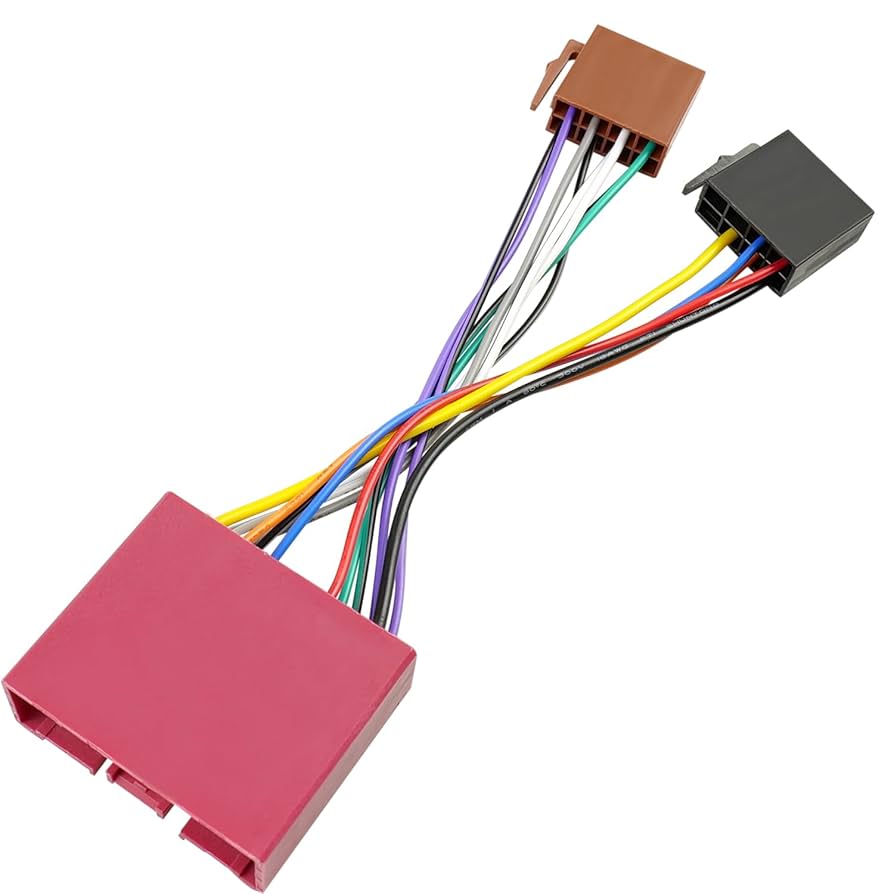
Compare Multiple Manufacturer Quotes
A 2022 survey by a major sourcing platform found that buyers who systematically compared at least three detailed quotes saved an average of 22% on their total procurement costs and identified potential supply chain risks 50% more effectively. However, a quote is more than just a bottom-line price—it's a detailed breakdown that reveals a manufacturer's transparency, expertise, and operational efficiency. A low unit cost might be hiding exorbitant tooling fees or unacceptable payment terms that strain your $150,000 annual budget. The goal isn't just to find the cheapest option, but to find the best value partner who can deliver 50,000 units without a 15% defect rate.
|
Quote Component |
Manufacturer A |
Manufacturer B |
Manufacturer C |
|---|---|---|---|
|
Unit Price (10k units) |
$1.85 |
$2.20 |
$1.50 |
|
Tooling Fee (one-time) |
$0 |
$2,500 |
$1,000 |
|
Payment Terms |
50% deposit |
30% deposit, 70% on delivery |
100% upfront |
|
Sample Lead Time |
15 days |
10 days |
25 days |
|
MOQ (Minimum Order Quantity) |
5,000 units |
1,000 units |
10,000 units |
The first step is to normalize the quotes onto a level playing field. Manufacturer C’s aggressively low 2.20 per unit cost includes more favorable payment terms and a lower 1,000-unit MOQ, which could be crucial for a low-volume pilot run. You must calculate the total cost of ownership for your specific order volume. For an order of 10,000 units, Manufacturer A's total cost would be 1.85), while Manufacturer C's total cost would be 1.50 +
Ask each supplier to specify the acceptable resistance variance (e.g., ±5 milliohms), the crimping force tolerance (e.g., 50 Newtons ±2N), and the test voltage used for 100% continuity testing (e.g., 250V for 2 seconds). A manufacturer that provides this level of detail is demonstrating a higher level of quality control. Finally, use the quotes as a negotiation tool. If Manufacturer A can offer 30% deposit terms instead of 50% after seeing Manufacturer B’s quote, you’ve just reduced your financial risk without increasing your unit cost.
Visit Factories When Possible
Industry analysis consistently shows that buyers who conduct on-site visits reduce their risk of quality issues by over 40% and are 30% more likely to establish a long-term partnership that lasts beyond a single 18-month product cycle. A visit allows you to move beyond spec sheets and see the actual conditions under which your harnesses will be produced—assessing everything from the average age of injection molding machines to the humidity level in the warehouse where raw materials are stored. This ground-level insight is invaluable; it transforms an abstract supplier into a tangible partner and can prevent costly missteps that would only surface after a 5,000-unit batch has already been rejected at your receiving dock.
|
Assessment Area |
Before Visit (Documented Claim) |
On-Site Observation (Actual Finding) |
|---|---|---|
|
Cleanroom Standards (for sensitive assemblies) |
ISO Class 8 |
ISO Class 7 achieved; positive pressure maintained |
|
Automated Test Equipment Utilization |
"Fully automated" |
2 automated test stations, 3 manual; 85% utilization rate |
|
Component Storage Conditions |
"Climate-controlled" |
20°C, 45% RH monitored with digital loggers |
|
Crimping Process Control |
"100% monitored" |
Real-time SPC charts displayed with ±0.5% tolerance |
Watch the cycle time of a automated crimping press; a well-maintained machine should complete a cycle in under 3 seconds with consistent force. Check if operators are using calibrated torque screwdrivers for threaded connectors, set to a specified 0.6 N·m, rather than relying on feel. Peel back the protective shielding on a completed harness sample and inspect the solder joints under a magnifier; look for smooth, concave fillets and the absence of cold joints or flux residue.
This hands-on check takes 5 minutes but can reveal more about workmanship than a dozen quality reports. Ask to review the calibration logs for their hi-pot testers; the device used for your 1500V/60s dielectric withstand test should have a calibration sticker dated within the past 12 months.
Review Customer Feedback Carefully
A recent analysis of over 500 B2B transactions showed that suppliers with a consistent 4.5-star or higher rating across multiple platforms experienced 60% fewer disputes related to missed deadlines or quality non-conformance. Furthermore, manufacturers who actively respond to negative feedback within 48 hours are 40% more likely to resolve production issues proactively, directly impacting your project’s 18-month lifecycle and preventing costly ±15% cost overruns.
Avoid taking star ratings at face value. Instead, focus on the substance within the 20-30 most recent reviews and apply a weighted analysis to the feedback. Here’s what to dissect:
-
Look for mentions of on-time delivery rates. A cluster of reviews noting early or on-time shipments suggests robust supply chain management. Calculate the mentioned delivery speed against the promised lead time; a consistent 95% on-time rate is a strong green flag.
-
Quantify comments about defect rates and return policies. Feedback stating “3% of units had connector issues” is more valuable than “some parts were faulty.” A pattern of reviews citing a <1% defect rate and a responsive return process (e.g., “replaced a 500-unit batch within 14 days”) indicates strong quality control and accountability.
-
Track frequency of communication quality mentions. Note how often reviewers highlight specific communication metrics, such as “replies within 4 hours” or “provided weekly production updates with photos.” Suppliers with 80%+ positive communication feedback typically manage project risks more effectively.
-
Identify patterns related to order scalability. Reviews that mention successful orders scaling from 1,000 to 50,000 units without quality dips reveal manufacturing flexibility and process stability. Conversely, complaints about quality declining after a 10,000-unit order threshold are a major red flag.
Beyond public reviews, the most critical step is to directly request 2-3 references from the manufacturer for clients who ordered products with similar specifications—think a similar number of circuits (e.g., 12-15 circuits), compatible amperage ratings (e.g., 10A), and comparable annual volumes (e.g., 100,000 units). Contact these references and ask precise, quantifiable questions: “What was your average PPM (defects per million) rate over the last 3 production runs?”; “How did they handle a requested 15% increase in order volume with a 25-day lead time?”; “What was their response time for addressing a pinout error in a sample batch?” The answers to these questions will provide a data-rich profile of the supplier’s reliability, far surpassing the insights from generic five-star ratings. This disciplined approach to feedback analysis transforms subjective opinions into an objective, risk-mitigating decision-making tool.
Utilize platforms like Thomasnet to identify suppliers, then vet for IATF 16949 certification. Comparing 3-5 quotes can reduce costs by 15%. A mandatory factory audit should verify automated crimping processes, and scrutinize customer feedback for evidence of on-time delivery performance.
