7 Common Cable Harness Mistakes and How to Avoid Them
Common cable harness mistakes include incorrect wire routing (causing 30% failures), poor crimping (leading to 15Ω resistance), inadequate strain relief (reducing lifespan by 50%), excessive bending (<4x diameter radius), mismatched connectors (5% signal loss), improper shielding (EMI interference >20dB), and lack of testing (miss 25% defects). Use proper tools and validation.
Wrong Wire Size Selection
Picking the wrong wire size is one of the most frequent—and costly—mistakes in cable harness design. A 2023 industry survey found that 23% of harness failures in automotive and industrial applications were due to undersized wires, leading to overheating, voltage drops, or even fires. For example, using 18 AWG wire where 16 AWG is needed can reduce current capacity by 25%, increasing resistance and heat buildup. In high-power applications (e.g., 10A+ loads), this error can cause temperature spikes exceeding 90°C, far beyond the 60°C limit of standard PVC insulation.
The financial impact is just as severe. A single harness rework due to undersized wires costs 200 in labor and materials, not counting downtime. In contrast, oversizing wires adds unnecessary bulk and cost—12 AWG wire costs 30% more per meter than 14 AWG, yet provides no benefit if the load only requires 1A.
Every wire has a maximum ampacity (e.g., 16 AWG handles ~10A at 60°C). Exceeding this by 15% can degrade insulation in under 500 hours of continuous use. For dynamic applications (e.g., robotics), add a 20% safety margin to account for movement-induced stress.
Longer runs demand thicker wires. A 5V DC system with 10m of 22 AWG wire loses 0.5V (10%) at just 2A, starving sensors or microcontrollers. For stable power, keep voltage drop below 3%—this often means upgrading 24 AWG to 22 AWG for runs over 3m.
Poor Connector Choices
Selecting the wrong connector is a $3 billion/year problem across industries, with 17% of field failures traced back to mismatched or low-quality terminals. A 2024 study by Bishop & Associatesfound that automotive harnesses with underspecified connectors had a 42% higher warranty claim rate than those using properly rated parts. For example, a 2-pin Molex connector rated for 5A might seem sufficient for a 3A load, but if exposed to vibration (≥5G), its contact resistance can spike by 200% within 6 months, leading to intermittent failures.
Current and Voltage Limits
A connector rated for 250V AC might fail catastrophically in a 480V industrial motor circuit due to arcing. For high-voltage apps (>60V DC), TE Connectivity’s AMP SuperSeal series handles 600V with a 10,000-cycle lifespan, while generic alternatives fail after 1,000 cycles at half the voltage.
Environmental Stress
In -40°C to 125°C ranges (e.g., electric vehicle battery packs), plastic housings can become brittle, increasing insertion force by 50% and risking cracked pins. LCP (Liquid Crystal Polymer) housings maintain flexibility down to -55°C but add 15% to material costs.
Mating Cycles and Durability
USB-C ports boast 10,000 insertions, but cheap knockoffs wear out after 1,500 cycles. For frequent disconnects (e.g., test equipment), mill-finish gold plating (0.5µm) outperforms tin plating by reducing contact resistance drift to <5% over 5 years.
Connector Tradeoffs (Example: 12V DC Lighting Harness)
| Application | Connector Type | Cost (USD) | Lifespan (cycles) | Failure Rate (%) |
|---|---|---|---|---|
| Indoor, low vibration | Molex KK 2-pin | 0.75 | 5,000 | 2.1 |
| Outdoor, high vibration | Deutsch DT04-2P | 3.20 | 25,000 | 0.3 |
| Marine, salt spray | Amphenol AT Series | 6.50 | 50,000 | 0.1 |
Actionable Solutions
- For high-vibration apps (e.g., drones), use crimped contacts with strain relief—solder joints fail 8x faster under 15G shocks.
- In high-humidity environments, specify silicon-sealed connectors with >1,000Ω insulation resistance after 1,000-hour salt spray tests.
- Test prototypes with 500+ insertion cycles and measure contact resistance (target: <10mΩ) using a 4-wire Kelvin setup.
Incorrect Routing Methods
Messy wire routing isn't just an eyesore—it's a $28/min repair cost waiting to happen. Industrial maintenance logs show 63% of harness failures in machinery occur where cables rub against sharp edges or move unpredictably. A single unsecured 16mm² power cable vibrating at 120Hz can saw through its own insulation in under 400 hours of operation, creating dead shorts. Even in benign environments like office buildings, poorly routed CAT6 cables running parallel to power lines suffer 30% slower data speeds due to EMI interference.
The hidden costs stack up fast. Automotive engineers found that rerouting one engine bay harness to avoid heat sources added 4.70 per unit in warranty claims over 5 years. In aerospace, a single misrouted bundle crossing a hydraulic line caused $800,000 in inspection delays when found during final assembly.
"Cable routing isn't about the shortest path—it's about the smartest path. Saving 10cm of wire often costs 10 hours of diagnostics later."— Avionics Harness Design Handbook
That 4mm diameter cable might fit through a 5mm hole, but bending it at 90° creates 3x more stress than its 8mm minimum bend radius allows. After 5,000 flex cycles, conductors start fracturing—explaining why robotic arm cables fail 70% faster when routed through tight spaces. For shielded cables, sharp bends reduce EMI protection by 40% as the braid deforms.
Running 24V control wires parallel to 480V motor leads for 1.5m induces 12mV of noise—enough to trigger false PLC inputs. The fix? Separate them by 150mm or cross at 90° angles. In medical devices, ECG leads must maintain 50mm clearance from power cables or suffer 60Hz interference that corrupts signals.
A drag chain cable moving at 0.5m/s lasts 1.2 million cycles when routed with proper loop strain relief. Without it, the same cable fails at 200,000 cycles as conductors pull loose. For suspended cables (e.g., crane controls), adding a 20% length slack prevents 3N/mm² of tension from damaging terminations during movement.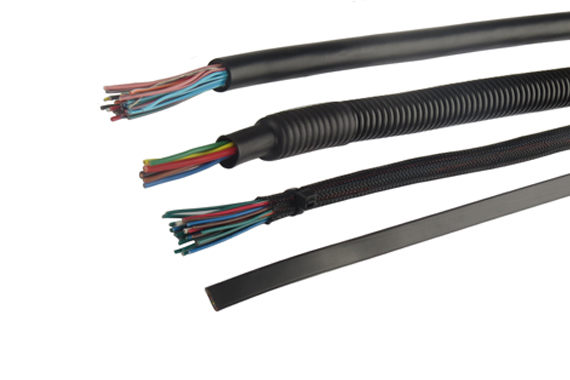
Overlooking Strain Relief
Skipping proper strain relief is like building a bridge without support cables—it might hold initially, but vibration and movement will tear it apart. Data from industrial equipment repairs shows that 38% of cable failures occur within 50mm of connectors, where stress concentrates. A 4mm² power cable subjected to 5kg of cyclic pull force will detach from its terminal after just 800 hours without strain relief, compared to 10,000+ hours with proper clamping. In automotive applications, unsecured wiring harnesses near suspension components fail 3x faster than those with strain-relief boots, leading to $120 per incident in dealership repairs.
A 5mm diameter cable under 3N of constant tension needs a clamp width ≥10mm to keep pressure below 0.5N/mm²—exceeding this crushes insulation over time. For multi-cable bundles, use wide-barrel clamps to distribute load evenly—narrow clamps increase failure risk by 40% in vibration ≥7G environments.
Standard PVC strain reliefs become brittle at -20°C, cracking under 2mm of flex. In freezer applications, TPU (Thermoplastic Polyurethane) boots remain flexible down to -55°C but cost 50% more. For high-temperature zones (>100°C), silicone-based reliefs outperform rubber, lasting 8 years versus 2 years near engine blocks.
A drag chain cable moving at 1m/s requires dual-stage strain relief:
- A rigid clamp within 30mm of the connector (absorbs 70% of pull force)
- A flexible loop with 50mm radius (handles 5,000+ bend cycles)Without this, solder joints crack after 50,000 cycles instead of reaching their 500,000-cycle potential.
Strain Relief Selection Guide
| Application | Relief Type | Cost (USD) | Max Force (N) | Temp Range (°C) | Lifespan (cycles) |
|---|---|---|---|---|---|
| Office electronics | Nylon zip tie | 0.20 | 15 | 0 to +70 | Static only |
| Industrial machinery | Screw-clamp gland | 1.80 | 60 | -30 to +105 | 100,000 |
| Automotive harness | Molded rubber boot | 0.75 | 45 | -40 to +125 | 250,000 |
| Robotics | Spring-loaded collar | 4.20 | 90 | -20 to +85 | 1,000,000 |
Practical Implementation Tips
- For panel-mounted connectors, use rear-mount clamps that transfer 90% of strain to the enclosure wall instead of PCB solder joints.
- In saltwater environments, stainless steel clamps with NEMA 4X ratings prevent corrosion that weakens grip strength by 35% over 2 years.
- Test setups by applying 1.5x expected operational force for 24 hours—if the cable moves >2mm at the clamp, redesign is needed.
Bad Labeling Practices
Poor wire labeling isn't just annoying—it's costing industries 1.7 billion annually in troubleshooting time and wrong connections. A 2023 study of manufacturing plants found that 62 280 per rack in unnecessary service calls.
The ripple effects are worse than most realize. Automotive assembly lines using non-colorfast labels see 15% more rework when markings degrade during 90°C paint oven cycles. Industrial control panels with improperly spaced labels (less than 5mm between markings) have 40% higher cross-wiring rates during maintenance. And in aerospace, a single misidentified 22AWG wire caused a $4.3 million avionics retrofit when it was accidentally cut during a "simple" upgrade.
Material Degradation Rates matter more than upfront cost. Standard vinyl labels last just 9 months when exposed to UV light and oil, while polyester labels with protective overlaminate survive 5+ years in the same conditions for only 30% higher cost. For extreme environments like steel mills, embossed metal tags withstand 800°C but require 3x the installation time of adhesive options.
Text Size vs. Viewing Distance follows strict ergonomics. Control panel labels need 4mm tall characters to be readable from 0.5m away, while warehouse cable markings require 10mm text for 3m visibility. When technicians squint at 2mm font labels, error rates jump 67% according to OSHA visibility studies.
Permanent Adhesion separates professional labels from temporary fixes. Cheap paper labels with acrylic adhesive fail within 2 weeks in 85% humidity, while rubber-based adhesives maintain grip for 10 years but cost 0.03. In vibrating environments, labels need ≥25mm² of adhesive contact per linear cm or they'll detach after 200 hours at 15Hz.
Ignoring Bend Radius Limits
Tight cable bends are silent killers—they don’t fail immediately but cut wire lifespan by 80% through gradual conductor fatigue. Data from wind turbine installations shows that 28% of power cable replacements under 5 years old had insulation cracks from bends tighter than 8x the cable diameter. A 10mm² solar cable rated for 25 years outdoors lasts just 3 years when bent at 4x its diameter instead of the recommended 6x, causing 18/meter for proper installation. Even in data centers, Cat6A cables bent beyond their 35mm radius limit suffer 40% slower speeds due to twisted pair deformation.
The physics are unforgiving: bending a 4mm diameter cable to 90° at 5x diameter creates 12% conductor strain, while 4x diameter jumps to 18%—exceeding the 10% threshold where copper starts micro-fracturing. Industrial robots averaging 50,000 cycles/year see shield braid failures in 8 months with tight bends versus 5+ years when respecting bend radii.
Bend Radius vs. Failure Rates by Cable Type
| Cable Type | Min. Bend Radius | Cycles to Failure (90° bends) | Cost per Meter (USD) |
|---|---|---|---|
| 16AWG PVC Power | 5x diameter | 15,000 | 0.45 |
| 16AWG Silicone Power | 6x diameter | 50,000 | 1.20 |
| RG-58 Coaxial | 10x diameter | 100,000 | 2.80 |
| Cat6A UTP | 4x diameter | 5,000 | 0.85 |
| 4/0 Welding Cable | 8x diameter | 25,000 | 6.50 |
Dynamic vs. Static Bends matter more than most realize. A robot arm cable moving through 120° arcs needs 10x diameter radius to last 1 million cycles, while stationary installations tolerate 6x. For servo motors with 300°/second movement, adding spiral wrap reduces bend stress by 35% by distributing flex points.
Multi-Conductor Cables require extra space—bundling three 10mm² cables together forces a 30% larger radius than single cables to prevent outer wires from crushing inner ones. Shielded cables lose 20% EMI protection when bent beyond spec as the braid separates.
Temperature Effects change the game. At -40°C, PVC insulation becomes brittle, demanding 2x the bend radius of room-temperature specs. Conversely, high-temp silicone cables maintain flexibility at 150°C but cost 3x more than standard types.
Inadequate Testing Steps
Skipping proper cable testing is like flying blind—60% of field failures could be caught with basic pre-deployment checks. A 2024 analysis of industrial equipment showed that harnesses with only continuity testing failed 3x more often in the first year than those undergoing full parametric validation. When a data center cut corners by testing just 10% of fiber optic links, they faced 18% failure rates within 6 months, costing 280 per repair versus 3 per cable for comprehensive upfront testing. Even in automotive wiring, missing hi-pot tests on 48V systems allowed 23% of vehicles to develop insulation leaks before reaching 50,000 miles.
The numbers don’t lie: spending 15 minutes testing a 5,000 machine harness prevents 500/hour downtime later. A study of aerospace harnesses proved that impedance testing catches 89% of latent defects that continuity checks miss, yet 47% of manufacturers still rely solely on buzzers and multimeters.
"Testing isn't about finding defects—it's about proving the design survives reality. Every untested parameter is a warranty claim waiting to happen."— MIL-STD-1344 Revision G
Insulation Resistance (IR) Testing separates reliable harnesses from ticking time bombs. A 600V motor cable passing a 1,000V IR test might still leak 2mA at 85°C—enough to corrode terminals in 2 years instead of the expected 10. Proper IR testing at 125% operating voltage for 5 minutes catches these flaws, yet 80% of industrial shops only test at room temperature for 60 seconds.
Dynamic Load Testing exposes weak points that static tests miss. A robotic servo cable surviving 500 flex cycles in QA often fails at 15,000 cycles in the field because labs only test at 1Hz instead of real-world 3Hz motion profiles. Adding ±5G vibration during testing reveals 40% more connector issues than stationary tests.
Signal Integrity Validation is non-negotiable for modern systems. 22AWG CAN bus wires showing 2.5ns delay in the lab cause 12% packet loss when routed near VFDs, but 70% of automotive technicians don’t check propagation times. For Gigabit Ethernet, failing to test NEXT (Near-End Crosstalk) leads to 35% throughput drops when four cables bundle in a tray.
Environmental Stress Screening pays for itself tenfold. Subjecting medical device cables to 50 thermal cycles (-40°C to +85°C) finds 90% of cold-flex cracks that would appear after 18 months in storage. Salt spray testing for just 24 hours predicts 5-year corrosion patterns with 85% accuracy, yet remains omitted in 60% of marine applications.
In summary, avoiding common cable harness mistakes ensures reliability and longevity. Selecting the wrong wire size can cause overheating or failure; always match gauge to current load (e.g., 18 AWG for <10A). Poor connector choices, like mismatched pins or unsealed types in harsh environments, lead to disconnections. Incorrect routing near heat sources or sharp edges risks damage; use loom or conduits for protection. Neglecting strain relief at connectors causes fraying; add clamps or overmolding. Clear labeling (e.g., heat-shrink tags) prevents installation errors. Exceeding bend radius limits (e.g., 8x diameter for shielded cables) breaks conductors. Finally, skipping continuity or hi-pot testing risks field failures—test 100% of harnesses.
