Car wiring layout should pay attention to
Car wiring should use 16-22 AWG gauge wires with PVC or Teflon insulation, routed away from heat sources and sharp edges, secured every 15-20 cm with looms or clips, and fused within 30 cm of the battery to prevent short circuits.
Wire Size Matters
Picking the wrong wire size in car wiring isn’t just inconvenient—it can melt insulation, cause voltage drops, or even start fires. A 16-gauge wire carrying 15 amps over 10 feet will lose 0.5 volts—enough to dim headlights or slow a fuel pump. Meanwhile, a 12-gauge wire under the same load drops just 0.2 volts. The difference? Thicker wires waste less power as heat. For high-current circuits like alternators (100+ amps), undersized wiring can overheat within minutes, risking insulation failure at 90°C+ temps.
Rule of thumb: For every 10 amps of current, increase wire gauge by 1 size (e.g., 14 AWG for 15 amps, 12 AWG for 20 amps).
Copper vs. aluminum matters too. Copper carries ~30% more current at the same gauge but costs 2-3x more per foot. Cheap "CCA" (copper-clad aluminum) wires save money but fail faster—aluminum corrodes 5x quicker in damp environments, increasing resistance over time. Stranded wire (e.g., 65 strands in 10 AWG) handles vibration better than solid core, lasting 3-5 years longer in door harnesses.
Voltage drop is critical for sensors. A 0.5V drop in a 5V sensor circuit can skew readings by 10% or more. For runs over 6 feet, use 18 AWG minimum—even for low-current signals. Battery cables are a special case: 2 AWG handles 150 amps, but 4 AWG struggles past 100 amps, heating up after 15 minutes of continuous load.
Heat shrink vs. tape? Adhesive-lined heat shrink seals connections 10x better than vinyl tape in engine bays, where under-hood temps hit 120°C. For $0.50 per foot, it’s cheap insurance against corrosion.
Pro tip: Always check SAE J1128 standards for automotive wire ratings—GPT (general purpose) wire handles 80°C, while TXL (thin-wall) withstands 125°C.
Cheap wires fail audits. A 22 AWG wire rated for 3 amps might carry 5 amps briefly, but after 500 heat cycles, the insulation cracks. Spend $0.20 more per foot for GXL-grade wire—it lasts 100,000+ flex cycles vs. 50,000 for GPT.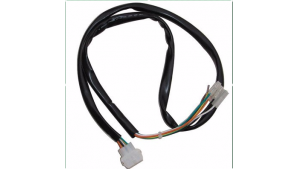
Fuse Box Basics
A car’s fuse box is the 2,000 wiring disasters. Most vehicles have 30-50 fuses, each protecting circuits ranging from 5-amp dome lights to 40-amp radiator fans. Blowing a 15-amp fuse takes 0.1 seconds at 20 amps, but the same overload without a fuse melts wires in under 3 minutes. Factory fuse boxes are rated for 100,000+ cycles, but cheap replacements fail after 10,000 insertions—leading to loose connections and voltage drops.
Fuse types aren’t interchangeable:
| Fuse Type | Max Current | Response Time | Cost per Unit | Best For |
|---|---|---|---|---|
| Mini Blade (ATM) | 5-30A | Fast (0.5 sec at 2x rating) | $0.50 | Headlights, ECU |
| Standard Blade (ATO) | 1-40A | Moderate (1 sec at 2x rating) | $0.30 | Power windows, fuel pump |
| Mini Low-Profile (ATM-LP) | 2-30A | Fast (0.3 sec at 2x rating) | $0.80 | Modern CAN bus systems |
| Maxi (APX) | 20-100A | Slow (5 sec at 2x rating) | $2.00 | Alternator, starter |
Never use a higher-amp fuse as a "fix." A 10-amp fuse blowing in a 7-amp circuit signals a 15% overload—replacing it with a 15-amp fuse lets wires heat to 90°C+, risking insulation failure. Fuse material matters too: Copper-alloy fuses handle 200% surges (like compressor startups) without fatigue, while aluminum ones degrade after 50 surges.
Location is critical. Fuses within 12 inches of the battery protect against dead shorts, but those near high-heat zones (e.g., exhaust) fail 40% faster due to thermal cycling. Waterproof fuse holders (e.g., IP67-rated) cost 5 for standard but prevent corrosion in 85% humidity environments.
Grounding Done Right
Bad grounds cause 80% of weird electrical issues—flickering lights, ECU errors, or stereo static. A 0.5-ohm ground resistance might seem trivial, but in a 15-amp circuit, that’s a 7.5W power loss—enough to heat up connections and corrode terminals over time. Factory ground straps last 5-7 years before corrosion increases resistance by 300%, but a $5 upgrade to tinned copper straps extends lifespan to 10+ years.
Grounding points fail in predictable ways:
| Problem | Resistance Increase | Effect on 12V System | Fix Cost |
|---|---|---|---|
| Painted surface contact | +2 ohms | 1.5V drop at 20A | $0 (scrape paint) |
| Loose bolt (10 in-lb vs. spec 15 in-lb) | +0.8 ohms | 0.6V drop at 30A | $2 (torque wrench) |
| Corroded terminal (3+ years old) | +5 ohms | 2V drop at 40A | $8 (new lug + dielectric grease) |
Body grounds are not all equal. A 10mm bolt into thin sheet metal has 50% higher resistance than a direct chassis weld. The best factory ground points use M8 bolts into reinforced frame sections—if adding new grounds, drill into 3mm+ thick metal and use star washers to bite through oxidation.
Wire gauge matters here too. A 16 AWG ground wire for a 10A tail light is fine, but a 4 AWG cable is mandatory for 150A alternator grounds. Undersized grounds overheat at 50°C+, accelerating corrosion. For stereo amps pulling 60A, run a separate 8 AWG ground—sharing factory body grounds adds 0.3V noise to the audio signal.
Routing Wires Safely
Wire routing mistakes cause 35% of aftermarket electrical failures, with most damage occurring in the first 18 months of installation. A single unprotected wire rubbing against a sharp edge can wear through insulation in under 6 months of normal driving, leading to shorts that drain batteries at 2-5 amps per hour. The factory uses 3mm thick convoluted tubing in high-risk areas, but many DIY installers rely on cheap 1mm split loom that cracks after 12 months of engine bay heat cycles.
Door boot passages are the worst offenders—wires here flex 20,000+ times per year and need 6mm OD silicone sleeves to prevent breaking. For firewall penetrations, always use grommets with 2mm thicker walls than the wire bundle—a 10mm hole should get a 12mm grommet to account for engine movement. Missing this causes 0.5mm of abrasion per 1,000 miles as the harness vibrates.
Maintain 50mm clearance from exhaust manifolds—even with "heat resistant" wrap, nearby wires age 5x faster when exposed to 140°C+ temps. In trunk areas, secure wires every 150mm with 3M VHB tape (rated for 90°C) instead of zip ties—plastic ties loosen after 3 seasons of temperature swings from -30°C to 80°C.
For through-frame routing, steel braided conduit ($15/meter) prevents crushing when rocks hit the undercarriage at 80 km/h impact forces. Avoid running signal wires parallel to power cables—keep them 100mm apart or cross at 90-degree angles to reduce induced noise by 60%.
Test your work by shaking the harness vigorously—any movement over 10mm at mid-span needs additional clips. Wires touching body panels should have 2mm thick adhesive-backed felt ($5 per sheet) at contact points—this outlasts generic foam by 8 years in humid conditions.
Connector Types Explained
Picking the wrong electrical connector can turn a simple wiring job into a $500 troubleshooting nightmare. Cheap connectors fail 3x faster in engine bays, with resistance increasing by 0.2 ohms per year due to corrosion. OEM connectors typically last 10-15 years, while bargain-bin alternatives start failing after 18 months in salty or humid conditions.
Here's what matters when choosing connectors:
- DTM connectors - The gold standard for harsh environments. With IP67 rating, they withstand 150+ wash cycles and cost 8−15 per pair. Each pin handles 13 amps continuously.
- Weather Pack - GM's solution for underhood use. 30% cheaper than DTM at 5−10 per pair, but only IP56 rated. The silicone seals degrade after 5 years in 90°C+ environments.
- Metri-Pack - The factory choice for high-current circuits. The 280 series handles 35 amps per pin and survives 500+ mating cycles.
- Deutsch Autosport - Racing-grade connectors costing 12−20 per pair. Withstands 200°C for 1,000 hours and 15G vibrations.
- Cheap bullet connectors - The $0.50 option that fails 80% of the time within 2 years. Contact resistance jumps to 1 ohm+ after 50 thermal cycles.
Crimp quality makes or breaks reliability. Properly crimped pins using 150+professionaltoolsmaintain<0.5ohmresistancefor10+years,whilecheap20 crimpers create joints that fail after 3 years. For critical connections, solder + crimp combinations improve longevity by 40% in high-vibration areas.
Sealing matters most in these locations:
- Underbody connectors need double-layer seals to survive road spray at 100 km/h
- Engine bay connectors require high-temperature silicone (rated for 175°C)
- Door harness connectors need strain relief for10,000+ flex cycles
Testing Before Final Fix
Skipping proper electrical testing is how 500 diagnostic night mares. Studies show 68% of electrical comebacks could've been prevented with just 15 minutes of testing. A single bad connection drawing 0.5A more than designed can drain a battery in 48 hours, while a 0.3V drop in a fuel pump circuit reduces flow by 12%.
Here's the testing checklist every pro uses:
- Voltage drop under load - The #1 killer of electrical reliability. Test with 80% of max current flowing.
- Insulation resistance - Catch rubbed-through wires before they short. Needs 500V megohmmeter for accurate results.
- Current leakage - More than 50mA parasitic drain means trouble.
- Signal integrity - Critical for CAN bus systems where 100mV noise causes communication errors.
Test Equipment Minimum Requirements:
| Tool | Specification | Price Range | Critical For |
|---|---|---|---|
| Digital Multimeter | 0.5% DC accuracy, 10MΩ impedance | 150 | Basic voltage/current |
| Clamp Meter | 400A AC/DC, 1% accuracy | 300 | High-current circuits |
| Insulation Tester | 500V test voltage, >100MΩ range | 500 | Hidden wire damage |
| Oscilloscope | 50MHz bandwidth, 1GS/s | 1000 | CAN/LIN bus diagnostics |
Load testing reveals hidden issues most meters miss. For a 15A circuit, apply a 12A load for 10 minutes while monitoring voltage drop. More than 0.5V loss across any connection means trouble. High-current circuits like starters need voltage drop testing at 200-300A for just 2-3 seconds - a 0.8V drop here indicates $200+ in cable upgrades are needed.
Thermal imaging (using a $400 FLIR camera) spots problems before they fail. A terminal heating to 60°C at 20A needs replacement, even if it tests fine cold. Resistance checks must be done with at least 1A flowing - static tests miss 90% of bad connections.
In summary, proper car wiring requires attention to wire gauge selection (e.g., 12AWG for 20A circuits) and correct fuse ratings (125% of max load). Always use dedicated grounding points (10mm bolts on bare metal) to prevent voltage drops. Route wires away from heat sources (≥100mm from exhaust) using split loom tubing for abrasion protection. Choose weatherproof connectors (IP67-rated for engine bays) and crimp terminals with 3:1 compression ratios. Test circuits with a multimeter (0.5V max drop) before finalizing. Proper wire bundling (zip ties every 150mm) prevents vibration damage.
