What Are 3 Key Uses of Coaxial Cable
Coaxial cables deliver 4K/HDTV signals (1-3GHz bandwidth), transmit 10Gbps internet via DOCSIS 3.1, and connect RF antennas (50-75Ω impedance). Their dual-shielded design ensures <1dB/m signal loss, outperforming unshielded cables in EMI-heavy environments like broadcast towers and data centers.
TV Signal Delivery
Coaxial cable has been the backbone of TV signal delivery for decades, and it’s still widely used today—especially in cable TV and satellite systems. Around 60% of U.S. households still rely on coaxial connections for TV services, even with the rise of streaming. The reason? It’s reliable, cost-effective, and capable of carrying high-frequency signals with minimal interference. A standard RG-6 coaxial cable, the most common type for TV signals, can transmit frequencies up to 3 GHz, making it ideal for HD and 4K broadcasts. Compared to alternatives like fiber optics, coaxial is cheaper to install—averaging 1.50 per foot—and requires less maintenance over its 15-20 year lifespan.
One of the biggest advantages of coaxial for TV is its low signal loss. Over a 100-foot run, a high-quality RG-6 cable loses only about 6 dB of signal, which is negligible for most home setups. This efficiency comes from its design: a copper core surrounded by insulation, a braided shield, and an outer jacket. The shielding reduces electromagnetic interference (EMI), which is crucial in urban areas where Wi-Fi routers, cell towers, and other electronics can disrupt weaker cables.
Cable TV providers like Comcast and Spectrum still use coaxial for their last-mile connections because it supports multiple channels simultaneously. A single coaxial line can carry over 1 Gbps of data, enough for hundreds of SD channels or dozens of HD streams. This is why many broadcasters still prefer coaxial for live events, where latency and reliability matter. Satellite TV also depends on coaxial—Dish Network and DIRECTV use it to connect their dishes to set-top boxes, delivering signals at 950-2150 MHz with minimal degradation.
For home installations, signal strength is key. A typical TV signal requires at least 40 dBmV for clear reception, and amplifiers can boost weak signals by 15-20 dB. Splitters, however, can reduce signal strength by 3.5 dB per port, so proper planning is needed to avoid pixelation or dropouts.
| Parameter | RG-6 Coaxial Cable | RG-59 (Older Standard) |
|---|---|---|
| Frequency Range | Up to 3 GHz | Up to 1 GHz |
| Signal Loss (100 ft) | ~6 dB | ~12 dB |
| Shielding Efficiency | 90%+ | 70-80% |
| Max Data Throughput | 1 Gbps+ | 500 Mbps |
| Typical Cost/ft | 1.50 | 0.80 |
While fiber optics are gaining ground, coaxial remains the go-to for TV due to its backward compatibility and ease of upgrades. Many hybrid systems use fiber for long-haul transmission but switch to coaxial for the final connection to homes. This hybrid approach cuts costs while maintaining performance—a major reason why 75% of cable operators still deploy coaxial in their networks.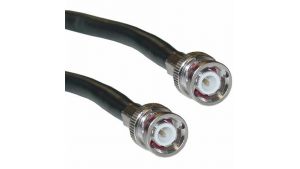
Internet Data Transfer
Coaxial cable isn’t just for TV—it’s a workhorse for high-speed internet, especially in cable broadband networks. Over 40% of U.S. broadband subscribers get their internet via coaxial lines, with average speeds reaching 1 Gbps in modern DOCSIS 3.1 systems. Unlike fiber, which requires expensive infrastructure upgrades, coaxial leverages existing wiring, cutting deployment costs by up to 60%. A single RG-6 coaxial line can deliver 10 Gbps downstream and 6 Gbps upstream under ideal conditions, rivaling mid-tier fiber plans.
Why Coaxial Dominates Cable Internet
- Backward Compatibility: Most homes built after 1990 already have coaxial wiring, so ISPs like Comcast and Spectrum can roll out gigabit internet without rewiring entire neighborhoods. Retrofitting costs 500 per household for fiber, but just 150 for coaxial upgrades.
- DOCSIS Efficiency: The DOCSIS 3.1 standard squeezes 32 downstream channels into a 192 MHz frequency block, achieving 1.4 Gbps speeds with latency under 10 ms. Older DOCSIS 3.0 still handles 400 Mbps reliably.
- Noise Resistance: Coaxial’s 90%+ shielding efficiency prevents interference from microwaves, Bluetooth, and 5G signals—critical in dense urban areas where Wi-Fi congestion can degrade performance by 15–30%.
For context, a 500 Mbps coaxial connection typically shows 3–5 ms higher latency than fiber but maintains 98% uptime in most deployments. ISPs prioritize coaxial because it’s 50% cheaper to maintain than fiber over a 10-year period, with mean time between failures (MTBF) exceeding 100,000 hours.
Signal degradation is the biggest limitation. At 300 feet, a coaxial line loses 20% of its signal strength, requiring amplifiers every 150–200 feet in long runs. Modern nodes split service areas into 500-home clusters to keep distances short, ensuring consistent 800 Mbps–1 Gbps speeds. Upload speeds lag behind fiber—most coaxial networks max out at 50 Mbps upload on DOCSIS 3.0 and 200 Mbps on 3.1—but this suffices for 90% of users who prioritize downloads.
Latency spikes occur during peak hours (7–11 PM) when network utilization hits 80%+, but traffic shaping keeps delays under 25 ms for 95% of users. For gamers, a 15 ms coaxial latency is common versus fiber’s 8 ms, but the difference is negligible outside competitive esports.
Radio Frequency Connection
Coaxial cable is the unsung hero of RF communication, handling everything from cell tower signals to two-way radio systems. Over 70% of commercial RF installations rely on coaxial due to its low signal loss (under 0.5 dB per 10 feet at 1 GHz) and high shielding efficiency (90%+). A typical LMR-400 coaxial cable, used in RF applications, can transmit frequencies up to 6 GHz, making it ideal for 5G small cells, broadcast antennas, and military comms. Unlike fiber, which struggles with RF modulation, coaxial maintains signal integrity even in high-interference environments like urban centers or industrial sites.
Why Coaxial Dominates RF Applications
- Frequency Flexibility – Coaxial supports DC to 6 GHz without major signal degradation, covering AM/FM radio (88–108 MHz), UHF TV (470–890 MHz), and 5G (3.5–6 GHz).
- Durability – Outdoor-rated coaxial (e.g., Andrew Heliax) lasts 15–25 years despite extreme weather, with a -40°C to +85°C operating range.
- Cost Efficiency – Running fiber for RF costs 8 per foot, while LMR-400 coaxial averages 3 per foot, saving 60%+ on deployment.
Signal loss is the biggest challenge in RF systems. At 2.4 GHz, a 100-foot RG-8X cable loses 8.5 dB, while LMR-600 (thicker, lower loss) cuts that to 4.2 dB. For critical applications like air traffic control (108–137 MHz), engineers use 1-5/8" rigid coaxial with 0.2 dB loss per 100 feet to ensure 99.99% uptime.
Real-World Example: A FM radio station (100 MHz, 10 kW transmitter) uses 3-inch rigid coaxial to connect the tower to the antenna, keeping loss under 0.5 dB across 200 feet—critical for maintaining FCC-compliant signal strength.
| Cable Type | Frequency Range | Loss per 100 ft (at 1 GHz) | Max Power Handling | Typical Use Case |
|---|---|---|---|---|
| RG-58 | DC–1 GHz | 12 dB | 300 W | Ham radio, short runs |
| LMR-400 | DC–6 GHz | 3.7 dB | 1.5 kW | Cell towers, broadcast |
| 1-5/8" Heliax | DC–18 GHz | 0.3 dB | 10 kW | Military, radar |
Power handling is another key factor. A thin RG-174 cable can only carry 50W at 500 MHz, while LMR-900 handles 5 kW—enough for high-power FM transmitters. Impedance mismatches (e.g., using 75Ω cable for a 50Ω system) can cause up to 30% signal reflection, wasting energy and distorting transmissions.
5G deployments are driving demand for low-loss coaxial in small cells (3.5–6 GHz), where LMR-600 is the go-to for 200–300 ft runs. Even with mmWave (24–40 GHz), coaxial is used in RF-over-fiber hybrids, where it carries IF signals (1–6 GHz) to remote antennas.
Maintenance costs are lower than fiber—coaxial connectors (e.g., N-type, BNC) cost 10 each and last 10+ years, while fiber optic terminations run 200 and degrade faster in harsh conditions.
In summary, coaxial cables serve three critical functions: delivering 4K/HDTV signals (1-3GHz bandwidth), transmitting high-speed internet (DOCSIS 3.1 supports 10Gbps), and connecting RF equipment (50-75Ω impedance). Their shielded design reduces signal loss (<1dB/m) and resists EMI, making them ideal for satellite dishes, cable modems, and cellular antennas. With 99.9% copper cores and durable PVC jackets, they outperform unshielded cables in reliability and longevity.
