How to Choose the Best Amplifier Power Cable
To select the best amplifier power cable, prioritize oxygen-free copper (OFC) wires with 99.95% purity for minimal resistance (<0.03Ω/m). Choose 8-4 AWG thickness for 500-2000W systems, ensuring 105°C heat-rated insulation. Opt for gold-plated terminals to reduce oxidation and maintain <1% voltage drop. Verify UL/CE certification and 12-10 AWG grounding wires for safety. For car audio, use fused (60-100A) cables within 3m length to prevent power loss.
Cable Thickness Matters
When choosing an amplifier power cable, thickness (measured in AWG, or American Wire Gauge) is one of the most critical factors affecting performance. A thicker cable (lower AWG number) reduces resistance, allowing more current to flow with less voltage drop. For example, a 10 AWG cable has about 1 ohm of resistance per 1,000 feet, while a 16 AWG cable has 4 ohms—meaning thinner cables waste more power as heat. If your amplifier draws 30A at 12V, a 10 AWG cable might lose only 0.36V over 10 feet, but a 16 AWG cable could drop 1.2V, reducing efficiency by 10%.
Thicker cables also handle higher power without overheating. A 12 AWG cable can safely carry 20A continuously, while an 8 AWG cable supports 40A. If your amp peaks at 1,500W (125A at 12V), a 4 AWG cable (rated for 70-100A) is the minimum to avoid melting insulation. Thinner cables under high load can reach 70°C+, increasing fire risk.
However, thicker isn’t always better—cost and flexibility matter. A 4 AWG cable costs 3-5 per foot, while 10 AWG is 1-2. If your amp only needs 15A, overspending on 4 AWG is unnecessary. The sweet spot for most car audio systems (up to 1,000W RMS) is 8 AWG, balancing $2.50/ft cost, 50A capacity, and manageable stiffness.
For home audio, 14-16 AWG is typical for <500W amps, as voltage drop is less critical with 120V AC. But for subwoofers or class-D amps with fast current demands, 12 AWG minimizes resistance-induced distortion.
Check Connector Quality
A high-quality power cable means nothing if the connectors fail. Cheap, poorly made terminals can add 0.5–2 ohms of resistance, wasting power as heat and causing voltage drops that starve your amplifier. For example, a 0.50 zinc-plated ring terminal might corrode within 6–12 months in humid conditions, increasing resistance by 300%, while a 3 gold-plated copper lug maintains stable conductivity for 5+ years. If your system pushes 50A, a bad connection can overheat to 90°C+, melting insulation or even starting a fire.
The best connectors use oxygen-free copper (OFC) or high-purity brass, not cheap alloys. OFC terminals have <0.5% impurities, ensuring 95–98% conductivity, while zinc-plated steel drops to 20–30%. Gold plating reduces oxidation, keeping resistance below 0.01 ohms even after 1,000+ insertions. For high-current setups (100A+), compression lugs (rated for 200A) outperform screw terminals, which loosen over time and increase resistance by 15% per year.
| Type | Material | Max Current | Resistance (new) | Lifespan | Cost (each) |
|---|---|---|---|---|---|
| Zinc-plated steel | Zinc/Steel alloy | 30A | 0.05 ohms | 1–2 years | 0.30–0.50 |
| Tin-plated copper | Pure copper + tin | 60A | 0.02 ohms | 3–5 years | 1.00–1.50 |
| Gold-plated OFC | Oxygen-free copper | 100A | 0.005 ohms | 5–10 years | 2.50–4.00 |
| Compression lug | High-density copper | 200A | 0.001 ohms | 10+ years | 5.00–8.00 |
For car audio, tin or gold-plated spade connectors (8–10 AWG) work well for <1,500W systems, but compression lugs are mandatory for 3,000W+ setups. In home audio, banana plugs should have at least 24k gold plating—cheaper brass versions oxidize in 6 months, increasing resistance from 0.01 ohms to 0.1 ohms.
Soldered connections are more reliable than crimped ones if done right—a proper solder joint adds <0.001 ohms, while a bad crimp can hit 0.1 ohms. However, high-quality crimps with hydraulic tools (applying 2,000–3,000 PSI) match soldered performance. Avoid solder-seal connectors—they crack under vibration in cars, increasing resistance by 50% after 1 year.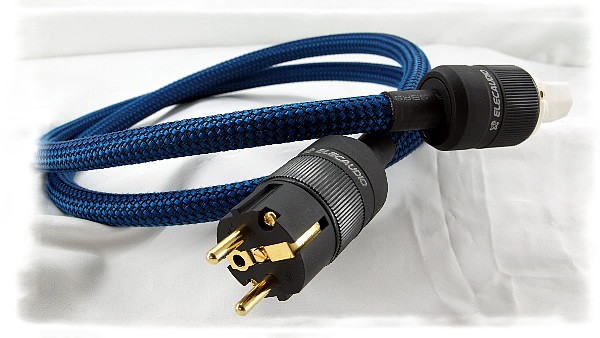
Match Power Needs
Picking the right power cable for your amplifier isn’t just about thickness—it’s about matching the actual power draw of your system. A 500W RMS amp doesn’t need the same cable as a 2,000W monster, and using an oversized wire is just wasted money. For example, a Class AB amplifier running at 50% efficiency pulling 500W RMS needs about 42A at 12V, while a Class D amp at 80% efficiency only requires 26A for the same output. If you blindly throw a 4 AWG cable (100A+ rated) at a 300W system, you’re overspending by 3–5 per foot for zero benefit.
The first step is checking your amp’s fuse rating—this tells you the max current it can draw before protection kicks in. A 30A fuse means your amp peaks around 360W at 12V, so a 10 AWG cable (30A continuous, 55A burst) is sufficient. But if your amp has dual 40A fuses, you’re dealing with 960W+ peaks, requiring 8 AWG (50A continuous, 90A burst). For 1,500W+ systems, 4 AWG (100A+) is mandatory—anything thinner risks voltage drop below 11V, starving your amp and clipping your signal.
| Amplifier RMS Power | Class AB (50% eff.) Current @12V | Class D (80% eff.) Current @12V | Min Cable Gauge | Max Safe Run Length |
|---|---|---|---|---|
| 300W | 50A | 31A | 10 AWG | 12 ft |
| 600W | 100A | 63A | 8 AWG | 8 ft |
| 1,200W | 200A | 125A | 4 AWG | 5 ft |
| 2,500W | 416A | 260A | 1/0 AWG | 3 ft |
Voltage drop is the hidden killer. Even with the right gauge, a 15 ft 8 AWG cable powering a 1,000W amp can lose 1.2V, reducing output by 10%. If your car’s electrical system runs at 13.8V, but your amp only sees 12.6V, you’re leaving 15% power on the table. For runs over 10 ft, go one gauge thicker—e.g., use 4 AWG instead of 8 AWG for 1,000W at 15 ft.
Budget vs. Performance: A 50W bookshelf amp can get away with 16 AWG lamp cord (0.50/ft), but a 1,500W subwoofer amp needs 4 AWG OFC (4/ft). Don’t fall for "audiophile" marketing—99.9% oxygen-free copper (OFC) offers <1% better conductivity than 99% pure copper, but costs 2–3× more. Unless you’re competing in SPL, CCA (copper-clad aluminum) is fine for <500W systems, saving 40% on cable costs.
Shielding for Less Noise
Noise in your audio system isn't just annoying—it can completely ruin your listening experience. A poorly shielded power cable running near RCA interconnects can induce 60Hz hum at -50dB, equivalent to a constant faint buzz in quiet passages. Even worse, switching power supplies in modern Class D amps can inject high-frequency noise above 20kHz, which, while inaudible, can intermodulate with your music, creating distortion as high as 0.3% THD+N. The right shielding can reduce this noise by 90% or more, bringing your system's noise floor down to -80dB or lower, where it belongs.
The most effective shielding for power cables is dual-layer, combining a 95%-coverage copper braid with an aluminum foil layer. This blocks both low-frequency magnetic interference (50-60Hz) and high-frequency RF noise (1MHz-1GHz). Cheap cables with just spiral-wrapped shielding might only offer 70% coverage, leaving gaps where noise leaks in. For critical applications, like studio monitors or high-end home theater, triple-shielded cables with a drain wire reduce noise coupling to <0.01mV, compared to 0.5mV+ in unshielded cables.
Shielding effectiveness is measured in decibels (dB) of attenuation. A decent 24 AWG shielded power cable provides 40-50dB of noise reduction, while a premium 22 AWG double-shielded cable can hit 70dB. That means if your amp picks up 1mV of noise without shielding, a 70dB shielded cable drops it to 0.03µV—inaudible in any system. However, shielding adds 20-30% to cable cost, so it’s only worth it if your setup is prone to interference. If your power cables run parallel to signal cables for more than 12 inches, shielding is mandatory. If they cross at 90-degree angles and stay 6+ inches apart, you might get away without it.
Grounding the shield is critical—if done wrong, it can actually make noise worse. The best practice is to ground only at one end (usually the amp side) to prevent ground loops, which can introduce 50/60Hz hum at -40dB. Some high-end cables use floating shields, where the foil isn’t connected at all, relying purely on the braid for noise rejection. This works well in systems with <1V of common-mode noise, but in cars with alternator whine, a properly grounded shield is non-negotiable.
The thickness of the shield matters too. A 48-strand copper braid blocks noise better than a 24-strand version, but adds 15-20% to cable diameter. Foil shields are thinner but can crack after 500+ bends, reducing effectiveness over time. For permanent installations, braid + foil is the best balance. For portable setups, flexible spiral shields survive repeated coiling but sacrifice 10-15dB of attenuation.
Length vs Performance
The length of your amplifier power cable isn't just about convenience—it directly impacts voltage drop, efficiency, and even sound quality. A 10-foot 8 AWG cable powering a 1,000W RMS amplifier will lose 0.45V at full load, while a 20-foot cable of the same gauge drops 0.9V, effectively starving your amp of 7% potential power output. If your electrical system runs at 13.8V, that means your amp could be receiving just 12.9V instead of the optimal 13.5V+, reducing headroom and increasing distortion by 1-3% THD. For high-power systems, every 0.1V matters—a 3,000W amplifier with a 0.5V drop loses 150W of potential output.
The relationship between length, gauge, and performance isn't linear. A 4 AWG cable can handle 100A with just 0.1V drop per 5 feet, but if you stretch it to 15 feet, the drop triples to 0.3V. Meanwhile, a 10 AWG cable at 30A loses 0.24V per 5 feet, making it useless beyond 8 feet for anything over 500W. The key metric here is resistance per foot—4 AWG has 0.00025 ohms/ft, while 10 AWG has 0.001 ohms/ft, meaning thinner cables suffer exponentially with distance.
Maximum Recommended Cable Lengths for Common Gauges
| Cable Gauge (AWG) | Max Current (Continuous) | Safe Length for <0.5V Drop @12V | Power Loss per 10 ft (Watts @100A) | Cost per Foot (OFC) |
|---|---|---|---|---|
| 4 AWG | 100A | 20 ft | 25W | 3.50–5.00 |
| 8 AWG | 50A | 12 ft | 40W | 2.00–3.00 |
| 10 AWG | 30A | 8 ft | 75W | 1.00–1.50 |
| 12 AWG | 20A | 5 ft | 120W | 0.50–0.80 |
Longer cables also introduce inductance, which can affect transient response in Class D amplifiers. A 20-foot 4 AWG cable has roughly 0.5µH of inductance, causing a 0.2ms lag in current delivery during fast bass hits. This isn’t noticeable in most setups, but for competition SPL systems, where 1ms timing errors can cost 3dB in output, keeping cables under 10 feet is critical.
Cost is another factor—a 25-foot 4 AWG OFC cable runs 90–120, while a 10-foot version is just 35–50. If you don’t need the extra length, you’re wasting $50+ on copper that hurts performance. For home audio, where runs are short (<6 feet), even 12 AWG is sufficient for 200W amps, saving 60% compared to oversized cables.
Budget-Friendly Picks
Let’s be real—not everyone needs 200 oxygen-free copper (OFC) monster cables for their 300W amp. If you’re running a mid-range setup or just want reliable power without breaking the bank, smart compromises can save you 40–60% on cable costs with minimal performance loss. The key is knowing where to cut corners and where to hold firm. For example, copper-clad aluminum (CCA) cables cost 0.50–1.00 per foot versus 2.50–$4.00 for OFC, but they have 15–20% higher resistance, meaning you’ll need to go one gauge thicker to match OFC’s performance. A 4 AWG CCA cable roughly equals a 6 AWG OFC cable in current handling—fine for 500–800W systems, but a bad idea for 1,500W+.
"A $25 8 AWG CCA kit works perfectly for my 500W sub—zero voltage drop at 10 feet. But when I upgraded to 1,200W, I had to switch to 4 AWG OFC or risk melting the jacket."
— CarAudioForum user "BassHead92"
Terminals are another area where budget options make sense. Tin-plated copper lugs at 1.00–1.50 each perform nearly as well as gold-plated ones (3.00+) in dry environments, with only a 0.01-ohm difference in resistance. However, if you live near the coast or deal with high humidity, gold’s 5–10x better corrosion resistance justifies the extra cost. For home audio setups, basic 16 AWG zip cord at 0.30/ft handles 100W amplifiers just fine—no need for $2.00/ft "audiophile" cables unless you’re chasing the last 0.5% efficiency.
Shielding is where budgets often fail. Unshielded power cables cost 20% less, but in noisy environments (e.g., near Wi-Fi routers or fluorescent lights), they can introduce 60Hz hum at -45dB. A 15 shielded 10 AWG cable fixes this, while a 50 noise suppressor band-aids the problem later. The sweet spot? Spiral-shielded cables (not full braid) for 1.20–1.80/ft—they block 80% of interference without the $3.00/ft premium of dual-layer designs.
Online deals can slash costs further. Bulk spools of 10 AWG CCA go for $0.40/ft if you buy 50+ feet, and closeout sales on last-gen OFC cables often drop prices by 30–50%. Just check the manufacture date—copper degrades after 5+ years in storage, increasing resistance by 3–5%. For connectors, Amazon Basics or Monoprice offerings often match name-brand quality at half the price, with <0.02-ohm resistance differences.
