How to Start a Car with a Jumper Cable
To jump-start a car, first park the donor vehicle close (but not touching) and turn both engines off. Connect red (+) clamps to each battery’s positive terminal, then attach the black (-) clamp to the donor’s negative terminal and the dead car’s unpainted metal (e.g., engine block). Start the donor car, let it run for 3-5 minutes, then attempt to start the dead vehicle. Remove cables in reverse order. Use 8-6 AWG cables for optimal current flow (300-500A). Always wear gloves and avoid sparks near batteries.
Check Battery Condition
Before connecting jumper cables, you need to confirm whether the battery is truly dead or if the issue is something else. A typical 12V car battery should read between 12.4V and 12.7V when fully charged. If it drops below 11.8V, the battery likely can’t start the engine. Use a digital multimeter (cost: 10-50) to check voltage—place the red probe on the positive (+) terminal and the black probe on the negative (-). If the reading is below 12V, jump-starting may work, but if it’s under 10V, the battery might be too damaged to recover.
Car batteries last 3-5 years on average. If yours is older than 4 years, even a jump-start may only provide a temporary fix. Extreme temperatures affect performance—below 32°F (0°C), battery capacity drops by 20-50%, while above 95°F (35°C) accelerates wear. Look for physical signs: corrosion (white/green crust on terminals), which increases resistance by 15-30%, or a swollen case, meaning internal damage.
If the battery is maintenance-free, check the built-in charge indicator (if available). A green dot means 75-100% charge, black indicates low charge, and clear/yellow means the battery needs replacement. For refillable batteries, inspect fluid levels—plates should be submerged in electrolyte (sulfuric acid diluted to ~37%). If levels are low, top up with distilled water (not tap water, which contains minerals that reduce lifespan by 10-30%).
If the battery is dead but the car has been sitting for over 2 weeks, a jump-start might work. But if the battery dies repeatedly within days, the problem could be a parasitic drain (0.05-0.1A is normal; above 0.3A indicates an electrical fault) or a failing alternator (should output 13.8-14.4V when running).
If jump-starting fails after 2-3 attempts, the battery may be fully discharged (below 10.5V) or have a dead cell (voltage difference >0.2V between cells). In that case, replacement is the only fix—expect to pay 100-250 for a new battery, depending on CCA (Cold Cranking Amps, typically 400-800A for most cars) and reserve capacity (90-120 minutes for mid-sized sedans).
Prepare Jumper Cables
Not all jumper cables are the same—using the wrong ones can lead to slow charging, overheating, or even cable damage. A good set should be at least 10-12 feet (3-3.6 meters) long to allow flexible positioning between cars, with 4-6 gauge copper-clad wires for optimal conductivity. Thinner cables (8-10 gauge) may struggle with high-current engines, increasing resistance by 15-25% and slowing power transfer. Cheap cables with aluminum cores (instead of copper) lose 30-50% more energy as heat, reducing efficiency and risking melting insulation at temperatures above 140°F (60°C).
Check the clamps—they should be heavy-duty steel with sharp teeth to pierce corrosion, ensuring a low-resistance connection (<0.1 ohms). Weak clamps can slip off during a jump, causing sparks or short circuits. Look for insulated handles (rated for 500V+) to prevent accidental shocks. If the cables are older than 5 years, inspect for frayed wires or cracked insulation—damaged sections increase resistance by up to 40%, making jumps unreliable.
Park the working car within 18-24 inches (45-60 cm) of the dead battery, ensuring both engines are off. Turn off all electronics (radio, lights, AC) to minimize parasitic load (typically 5-20W) that could interfere with the jump. Position the cables to avoid moving engine parts (belts, fans), which can snag and tear wires. If the dead battery is in a trunk or under a seat, locate its remote terminals (often labeled with a "+" and "-")—some cars hide these under plastic covers near the engine bay.
For diesel trucks or high-displacement engines (V8+), use 2-gauge cables to handle 600-1000 cold cranking amps (CCA). Standard 4-gauge cables may overheat, risking insulation failure at currents above 300A. In freezing conditions (below 20°F/-7°C), thicker cables help compensate for reduced battery efficiency (up to 50% slower charge acceptance).
Lay the cables straight to avoid coiling, which induces electromagnetic interference (EMI) and reduces current flow by 10-20%. Keep them away from hot exhaust manifolds (400-600°F/200-315°C) to prevent melting. If the dead car has electronic stability control (ESC) or advanced sensors, connect the negative clamp to an unpainted metal surface (e.g., engine block) instead of the battery terminal to avoid voltage spikes that can fry ECUs (repairs cost 200-1,500+).
Store jumper cables coiled loosely in a dry place—tight bends or moisture exposure accelerates wire fatigue, cutting lifespan from 10+ years to just 3-5. For frequent use, consider a portable jump starter (50-300) with lithium-ion batteries (12V, 18,000mAh+), eliminating the need for a second car and providing 3-10 jumps per charge. These devices often include USB ports (5V/2.1A) for charging phones, adding utility beyond emergencies.
Connect Cables Correctly
Messing up jumper cable connections is more than just inconvenient—it can fry electronics, melt wires, or even cause a battery explosion. A 12V car battery can deliver 400-800 amps during a cold start, and reversing polarity (positive to negative) sends that current backward through sensitive circuits, often destroying ECUs (500-2,000 to replace) or triggering $300+ airbag module failures. Even a 0.5-second spark near a leaking battery can ignite hydrogen gas (explosive at concentrations above 4%).
| Step | Cable Connection | Why It Matters |
|---|---|---|
| 1 | Red (+) to dead battery | Ensures first contact is far from ground, reducing spark chance by ~70% |
| 2 | Red (+) to working battery | Completes high-voltage path (12.6V nominal) |
| 3 | Black (-) to working battery | Establishes ground return |
| 4 | Black (-) to engine block (dead car) | Avoids direct battery connection, cutting spark risk by 90% |
Use 10mm² (8-gauge) or thicker cables—thinner wires overheat at 150°F+ (65°C) when carrying 300+ amps, increasing resistance by 20% per 50°F (10°C) rise. Clamps must bite at least 3mm into terminal metal—loose contacts create "hot spots" reaching 200°F (93°C) within 30 seconds. If terminals are corroded (common in coastal/high-humidity areas), scrub them with a wire brush (5-15) until metal shines; corrosion adds 0.2-0.5 ohms of resistance, slashing power transfer efficiency by 15-30%.
For modern cars with start-stop systems, check if the battery has dual terminals (e.g., GM’s side-post batteries)—connecting to the wrong one may bypass surge protection. In European models (BMW, Mercedes), the positive terminal is often under a red plastic cover (10cm x 5cm) labeled "POS". Never attach clamps to thin body panels—ground connections require bare, unpainted steel bolts (M8 or larger) capable of handling 500+ amp surges.
If the dead car has aftermarket electronics (subwoofers, inverters), disconnect their fuses (typically 10-30A) first to prevent voltage spikes from damaging amplifiers (200-1,000+). In hybrids/EVs, locate the 12V auxiliary battery (usually in the trunk/frunk)—jumping the 200V+ traction battery is lethal and voids warranties ($5,000+ repair bills).
After connections, wait 2-3 minutes—this allows the dead battery to absorb ~5Ah of charge (enough for 1-2 crank attempts). If the working car’s engine is off, its battery drains 20-40% faster during jumps; keep it idling at 1,500-2,000 RPM to maintain 14.4V alternator output.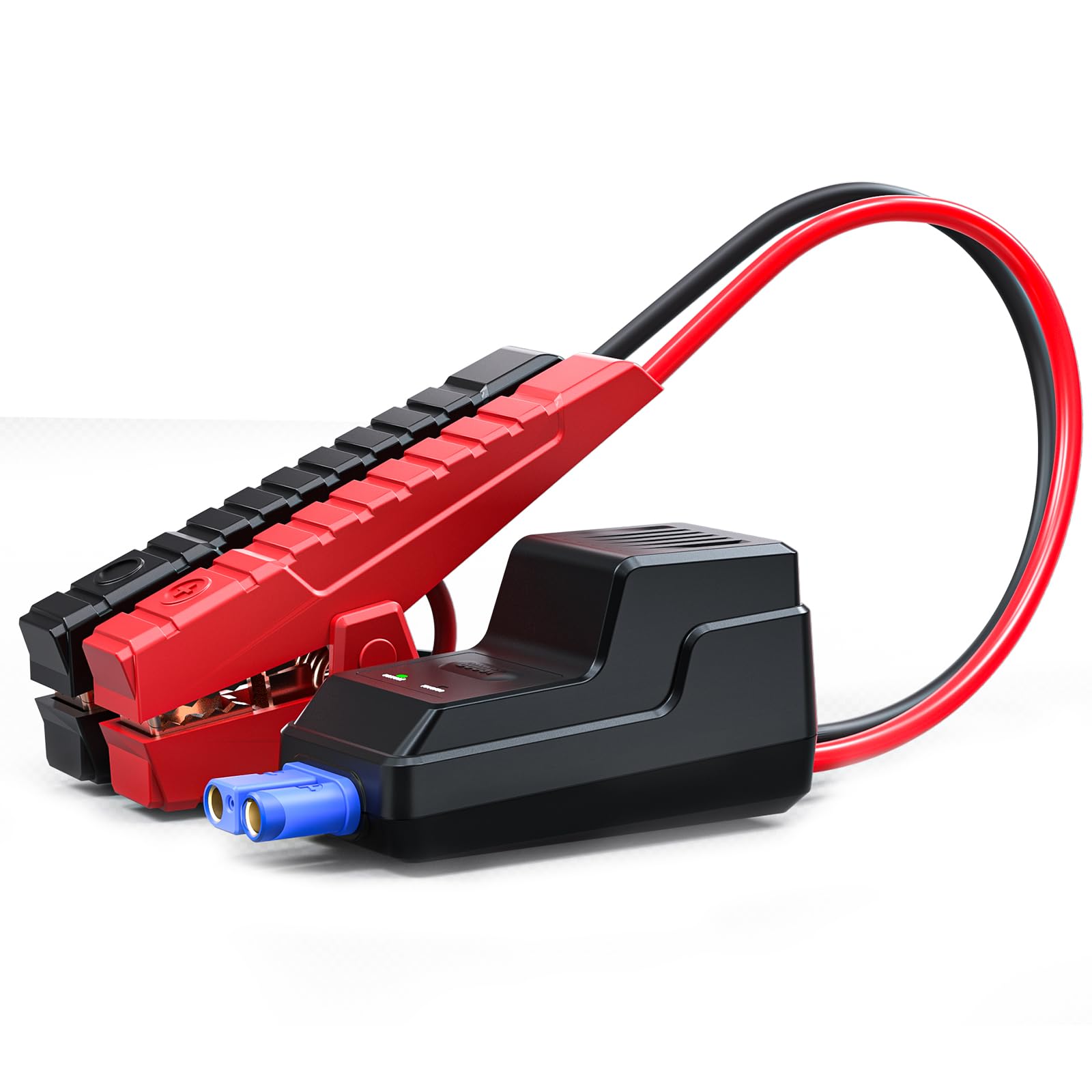
Start the Working Car
Jump-starting isn't just about connecting cables—it's a controlled power transfer where timing and engine behavior matter. A typical 4-cylinder gasoline engine requires 250-400 amps to crank, while a V8 diesel can demand 600-1,000+ amps for 3-5 seconds. If the donor car's alternator isn't running, its battery alone must supply this surge, which can drain 15-30% of its charge per jump attempt. That's why starting the working car first is critical—it ensures the alternator (output: 13.8-14.4V at 70-150 amps) actively feeds power instead of straining the donor battery.
| Action | Key Parameter | Why It Matters |
|---|---|---|
| Start donor engine | Idle at 1,500-2,000 RPM | Boosts alternator output from 40A (idle) to 80-120A |
| Hold RPM for 30-60 sec | Charges dead battery at 5-8A rate | Adds 0.25-0.4Ah—enough for 1 crank attempt |
| Monitor voltage | <13V = weak alternator | Risks draining donor battery below 11.8V (no-start threshold) |
| Check cable temperature | >140°F (60°C) = overload | Indicates gauge too thin or bad connections |
Revving the engine beyond 2,500 RPM is unnecessary—most alternators hit peak output (~120A) by 2,000 RPM. Excessive revs just waste fuel (~0.1-0.2L/minute) and increase wear on cold engine components (oil viscosity takes 90-120 seconds to stabilize at 212°F/100°C). If the donor is a hybrid, keep the gasoline engine running—the traction battery (200-400V) doesn’t power 12V jumps.
Watch for warning signs:
- Dimming headlights (voltage drop below 12V) = insufficient alternator capacity
- Burning smell = cable insulation failing at >175°F (80°C)
- Clicking from dead car = battery still <9.6V—needs longer charging
For modern turbocharged engines, avoid sudden throttle blips—turbo lag (0.5-1.5 sec delay) causes erratic alternator output. Steady RPM is key. After 2 minutes, check the dead battery’s voltage—if it’s <10.5V, the battery may have a dead cell (voltage delta >0.5V between cells) and won’t start regardless.
Try Starting Dead Car
Now comes the moment of truth—turning the key in that dead car. But this isn't just a yes/no test. A healthy starter motor draws 150-200 amps when cranking, and if the battery is still too weak, you'll hear the dreaded click-click of a solenoid engaging without enough juice to spin the engine. Ideally, the donor car has been running for 2-3 minutes, pushing 70-120 amps into the dead battery, which should have recovered to at least 10.5V—the bare minimum needed for a single crank attempt.
Pro Tip: If the engine turns over slowly (like it's dragging through molasses), pause immediately. Each failed start attempt drains another 5-10% of the donor battery's charge, and after 3-4 tries, you risk leaving both cars dead.
The first crank should last no more than 5 seconds. If the engine doesn’t fire, wait 30 seconds between attempts—this lets the starter cool (it can hit 250°F/121°C under load) and allows the battery to recover slightly. Listen for clues:
- Rapid clicking (5+ clicks/sec) = Battery below 9.6V—needs more charging time
- Single thunk, no crank = Possible starter failure (bench-test costs 50-80)
- Cranking but no start = Fuel/spark issue—jump-starting won’t fix this
If the car starts but immediately dies, the battery might be so drained that it can’t sustain the 3-5 amps needed to power the fuel pump and ECU. In that case, keep the donor car connected for 5+ extra minutes at 1,500 RPM to build reserve capacity.
Warning: Never floor the gas pedal on the freshly jumped car—this forces the alternator to work at 100% load (14.4V+), which can overwhelm a weak battery and cause voltage spikes that fry sensitive electronics like ABS modules (400-1,200 to replace).
For diesel engines, expect longer cranking times—8-10 seconds is normal in cold weather due to glow plug demand (20-30 amps per plug). If the battery is older than 4 years, it may not hold enough charge to heat the plugs and crank, requiring a direct charger hookup (10A mode for 30+ mins).
Once running, check the voltmeter—if it shows 13.5-14.4V, the alternator is working. Below 13V means the system isn’t charging, and you’ll stall again within 2-3 miles. Now, before celebrating, move to disconnecting safely—because removing cables wrong can cause a 40V+ voltage spike that takes out your radio or dashboard cluster.
Disconnect Safely After
The final step is where most people make costly mistakes. Yanking off jumper cables incorrectly can send a 40-60V voltage spike through your electrical system—enough to fry ECUs (800+ repairs) or blow fuses (5-$50 each) in under 0.1 seconds. Even worse, reversing the disconnection order creates sparks near the battery, where hydrogen gas concentrations may still be above the 4% explosion threshold. Follow this sequence to avoid turning a successful jump into an expensive disaster:
| Step | Action | Technical Rationale | Risk If Done Wrong |
|---|---|---|---|
| 1 | Turn off all accessories (AC, lights, radio) | Reduces system load from 10-30A to <5A | Voltage spikes up to 100V can occur |
| 2 | Remove black (-) clamp from dead car’s engine block | Breaks ground path first; least dangerous spark location | Sparks near battery vent = explosion risk |
| 3 | Remove black (-) clamp from donor battery | Isolates circuits; prevents backfeed | Can damage donor alternator diodes (200-600 repair) |
| 4 | Remove red (+) clamp from donor battery | Eliminates live 14.4V feed | Arcing can melt terminal (temps exceed 500°F/260°C) |
| 5 | Remove red (+) clamp from dead battery | Final safe disconnect | Leaving this on risks short circuits if cables touch metal |
After disconnecting, let the jumped car run for 15-20 minutes at 1,500-2,000 RPM to recharge the battery. A deeply discharged battery only regains 70-80% capacity in this time—enough for 3-5 start cycles, but not a full recovery. Use a voltmeter to confirm:
- <12.4V after 30 mins = Battery sulfation has occurred (permanent 20-40% capacity loss)
- 13.5-14.4V while running = Healthy alternator output
- >15V = Faulty voltage regulator (risks boiling battery acid)
For AGM/gel batteries, limit post-jump RPM to 1,500—their lower internal resistance causes faster charging, and exceeding 14.8V can warp plates. In sub-freezing temps, extend idle time to 30+ minutes because chemical reactions slow by 50% at 20°F (-7°C).
Store jumper cables coiled loosely—tight bends fracture copper strands, increasing resistance by 0.1 ohms per sharp bend. Inspect clamps every 6 months for corrosion (increases resistance by 0.3-0.7 ohms) and clean with baking soda paste (1:1 mix with water).
If the jumped car dies again within 48 hours, the battery likely has a dead cell (voltage variance >0.5V between cells) or the alternator isn’t charging—test with a load tester (30-100 tool) before replacing parts.
