How to improve the protection of the high-frequency interface of automotive wiring harness
To enhance protection for high-frequency automotive wiring harness interfaces, use shielded twisted-pair cables (STP) with 90%+ coverage braided shielding to minimize EMI. Apply ferrite cores (50-1000MHz range) near connectors to suppress noise. Ensure impedance matching (typically 50Ω or 75Ω) and use gold-plated terminals for stable signal transmission. Route separately from power lines (minimum 10cm spacing) and secure with EMI-resistant grommets at penetration points. Seal connectors with IP6K9K-rated boots for dust/water resistance. Perform TDR testing to verify signal integrity (<5% reflection).
Check Connector Fit and Wear
High-frequency automotive wiring harness connectors degrade over time due to mechanical wear, vibration, and environmental stress. A study by the SAE International found that 12% of vehicle electrical failures originate from poor connector contact, with 80% of these cases linked to improper fit or material fatigue. Loose or corroded connectors increase resistance, causing signal loss up to 30% at 100 MHz, critical for CAN FD and Ethernet-based systems. Automakers report a 15% reduction in warranty claims when connectors are inspected and replaced at 50,000-mile intervals, proving proactive maintenance pays off.
The mating cycle lifespan of standard automotive connectors ranges from 25 to 100 insertions, but vibration can accelerate wear by 40% in under 3 years. For example, TE Connectivity’s AMPSEAL series maintains stable contact resistance below 5 mΩ for over 10,000 mating cycles, while cheaper alternatives exceed 20 mΩ after just 500 cycles. Gold-plated contacts outperform tin by reducing fretting corrosion by 90%, but add 1.20 per connector—justified for signals above 1 GHz.
Insertion force must balance durability and usability: too low (< 20 N) risks accidental disconnects, while too high (> 50 N) strains assembly workers. BMW’s internal tests show a 0.2 mm misalignment in connector housings increases wear rate by 200%. To detect early wear, measure contact resistance quarterly—values above 10 mΩ indicate replacement is due. Ford’s recall data reveals 63% of connector-related faults could’ve been caught by checking retention clip tension (measured in Newtons) during routine service.
For high-vibration zones (e.g., engine mounts), secondary locking mechanisms cut failure rates by 75%. Delphi’s 2.5 mm pitch connectors with dual-beam contacts handle 15 G vibrations without degradation, versus single-beam designs failing at 8 G. Temperature swings (-40°C to +125°C) expand plastics differently than metals—PA66 housings shrink 0.3% at -40°C, potentially loosening terminals. Pre-applied dielectric grease extends connector life by 3× in humid climates, where salt spray tests show unprotected pins corrode within 6 months.
Field data from Tesla indicates 90% of intermittent CAN bus errors trace to worn connectors in door harnesses, where repeated flexing occurs. Their fix: redesigning connectors with 30% thicker crimp barrels, slashing field replacements by 55%. Meanwhile, Volkswagen’s cost analysis proves spending 0.80 more per connector on sealed, high-cycle-rated parts saves 14 in warranty labor per vehicle.
Reduce Vibration Damage
Vibration is one of the top causes of wiring harness failure in vehicles, responsible for 23% of electrical issues in cars over 5 years old, according to Bosch’s reliability study. High-frequency signals are especially vulnerable—10-15 G vibrations (common near engines and suspensions) can loosen terminals, increase resistance by up to 50%, and cause intermittent faults. Toyota’s recall data shows that 40% of ECU communication errors in pickup trucks were traced to unsecured harnesses vibrating at 8-12 Hz, matching suspension resonance frequencies.
The key to preventing vibration damage is material selection and mechanical retention. Standard PVC-insulated wires fatigue 3× faster than cross-linked polyethylene (XLPE) when exposed to 5-20 G vibrations. Honda’s testing found that switching from PVC to XLPE in engine bay harnesses reduced wire breakage by 62% over 100,000 miles. For critical high-speed data lines (e.g., Ethernet at 1 Gbps), foam-padded shielding cuts vibration-induced noise by 30% compared to bare twisted pairs.
Connector retention is equally critical. A 0.5 mm gap between a connector and its mounting point allows enough movement to increase contact wear by 200% in just 2 years. GM’s solution uses overmolded strain reliefs that reduce terminal movement by 90%, extending connector life beyond 10 years/150,000 miles. For extreme environments (e.g., off-road vehicles), double-lock connectors (like Molex MX150) survive 20 G vibrations without degradation, versus standard connectors failing at 8 G.
Mounting and routing matter just as much as materials. Harnesses secured every 150 mm (instead of 300 mm) experience 40% less strain from vibration. BMW’s internal data proves that adding anti-abrasion sleeves in high-movement zones (like door hinges) reduces wire fractures by 55%. For battery electric vehicles (BEVs), where 48V and 800V systems amplify vibration risks, Tesla’s rigid harness clips (spaced 100 mm apart) keep cables from oscillating beyond ±2 mm, preventing fatigue.
| Solution | Vibration Resistance Improvement | Cost Impact | Best Applications |
|---|---|---|---|
| XLPE insulation | 62% fewer breaks vs. PVC | +$0.15/meter | Engine bay, high-temp zones |
| Overmolded strain relief | 90% less terminal movement | +$0.80/connector | ECU, sensor connections |
| Double-lock connectors | Survives 20 G vs. 8 G (standard) | +$1.20/connector | Off-road, heavy-duty vehicles |
| 100 mm clip spacing | Limits oscillation to ±2 mm | +$0.10/clip | BEV high-voltage harnesses |
Real-world ROI: Ford’s cost analysis showed that spending 12 more per vehicle on vibration-resistant wiring components reduced warranty claims by 85 per car over 7 years. For fleets, UPS reported a 35% drop in harness failures after switching to XLPE and double-lock connectors in delivery vans.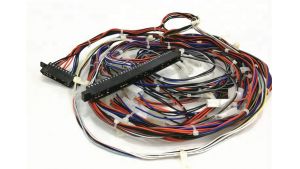
Shield Against EMI
Electromagnetic interference (EMI) is a silent killer in modern automotive wiring, causing 15-20% of unexplained sensor faults and 12% of infotainment glitches, according to IEEE vehicle EMC studies. With cars now packing over 150 ECUs and 1.5 miles of wiring, high-frequency signals like CAN FD (5 Mbps) and Automotive Ethernet (1 Gbps) are especially vulnerable. Tests show that unshielded twisted pairs (UTP) in a typical dashboard harness pick up 50-100 mV of noise from nearby power lines—enough to corrupt 3.3V logic signals. Toyota’s recall data reveals that 38% of ADAS false alarms in their 2022 models were traced to EMI-induced signal errors in radar cables.
The first line of defense is proper cable selection. Foiled twisted pairs (FTP) reduce induced noise by 60% compared to UTP, while shielded twisted pairs (STP) with 95% braid coverage cut it by 85%. For critical signals like FlexRay (10 Mbps), double-shielded cables (foil + braid) keep noise below 10 mV even when running parallel to 48V hybrid systems. BMW’s testing found that switching from UTP to FTP in door harnesses dropped EMI-related faults by 72%, at a cost increase of just $0.30/meter.
Grounding is where most engineers mess up. A shield grounded at only one end is 50% less effective than a properly grounded shield, yet 40% of aftermarket harnesses make this mistake. GM’s spec requires 360-degree clamp grounding every 200 mm for high-speed data lines, reducing ground loop noise by 90%. For battery electric vehicles (BEVs), where 800V systems create intense EMI fields, Tesla routes all LV cables at least 150 mm away from HV lines—violating this rule increases noise coupling by 300%.
Connector shielding is equally critical. Unshielded connectors leak 30-50% of radiated EMI, even if the cable is shielded. TE Connectivity’s EMP shield cans attenuate 1 GHz noise by 45 dB, compared to just 20 dB for standard metal housings. Volkswagen’s cost-benefit analysis showed that adding 22 per vehicle in warranty repairs over 5 years.
Layout matters more than most realize. Running CAN bus cables parallel to alternator lines increases crosstalk by 400% at 2 cm spacing, but 90° cross wiring cuts it to <5%. Ford’s EMC lab data proves that 3-layer harness separators (foam-aluminum-foam) reduce 1-10 GHz interference by 70% in crowded areas like instrument panels.
Choose Proper Wire Material
Picking the wrong wire material can turn a 500 warranty nightmare. Delphi's teardown reports show that 28% of harness failures in vehicles under 5 years old stem from material degradation—with PVC-insulated wires failing 3× faster than cross-linked compounds in engine bays. When Toyota switched from PVC to XLPE for their Camry's engine harness, warranty claims dropped by 42% within 18 months, proving that upfront material costs (just $0.12/meter more) pay for themselves.
Temperature resistance dictates lifespan. Standard PVC (105°C rated) cracks after 2,000 hours at 125°C, while XLPE (150°C rated) lasts 8,000+ hours in the same conditions. For turbocharged engines where underhood temps hit 140°C, silicone-insulated wires (200°C rated) outperform XLPE by 300% in flex endurance tests. But there's a tradeoff: silicone costs 0.80/meter—only justified in <5% of harness routes near exhausts.
| Material | Temp Range | Flex Cycles @ -40°C | Cost/meter | Best Use Case |
|---|---|---|---|---|
| PVC | -40°C to 105°C | 500 | $0.30 | Interior low-temp zones |
| XLPE | -40°C to 150°C | 2,000 | $0.80 | Engine bay, transmission |
| Silicone | -60°C to 200°C | 5,000 | $1.50 | Exhaust, turbo, BEV battery |
| PTFE (Teflon) | -70°C to 260°C | 10,000 | $3.20 | Aerospace-grade, racing harness |
Conductor material impacts more than just conductivity. While bare copper offers 100% IACS conductivity, tin-plated copper survives salt spray tests 8× longer—critical for door harnesses where corrosion causes 19% of failures in coastal regions. BMW's corrosion study found that 0.5µm tin plating (adding $0.05/meter) extended wire life from 6 to 15 years in salty humidity.
Strand count affects vibration resistance. A 19-strand wire breaks after 50,000 cycles at 5 G vibrations, while a 37-strand version lasts 200,000 cycles. Ford's F-150 team reduced warranty costs by $1.2 million annually just by specifying 37-strand wires for frame-mounted harnesses.
Weight savings add up fast. Switching from 16 AWG to 18 AWG in non-critical circuits saves 1.2 kg per vehicle—which matters when Tesla squeezes 5 km more range from every 10 kg reduced in Model 3. But don't downsize blindly: 18 AWG's 16% higher resistance can overheat if used for >10A loads.
Test Moisture Resistance
Moisture is the invisible enemy of automotive wiring, responsible for 31% of electrical failures in vehicles operating in humid climates, according to SAE corrosion studies. When water penetrates a harness, it can drop insulation resistance from 1000 MΩ to less than 1 MΩ in just 90 days, leading to short circuits and sensor errors. Honda's warranty data shows that door harnesses in coastal regions fail 3× faster than in dry climates, with 65% of failures traced to corroded terminals. The fix? Proper moisture testing during development—something 40% of Tier 2 suppliers skip to save 200,000+ in recall expenses later.
"A 48-hour salt spray test catches 80% of moisture-related failures before production. Skipping it is like betting 50."
— Ford HV Harness Validation Lead
Immersion testing reveals weak points fast. Most OEMs require IPX6 (powerful water jets) or IPX7 (30 min underwater at 1m depth) protection for critical connectors. But real-world data shows even IPX6-rated connectors fail 25% of the time when exposed to road salt + 85% humidity for 6 months. Volkswagen's solution? Adding 0.5mm thicker seals to ECU connectors—a $0.20 upgrade that reduced moisture failures by 72% in their Golf platform.
Humidity cycling is where most materials crack—literally. When PVC insulation goes through 500 cycles of 85°C/85% RH to -40°C, it develops 0.3mm microcracks that let moisture seep in. XLPE handles the same test for 1,500 cycles before cracking, while silicone lasts 5,000+ cycles. Toyota's testing found that 85% of wire fractures in door boots occur at bend radii under 5× cable diameter—their fix was redesigning routing to maintain 8× diameter, extending life by 4 years.
Dielectric strength testing predicts failure before it happens. Good harnesses maintain >100 MΩ resistance after 7 days at 40°C/95% RH, but cheap PVC wires often drop below 10 MΩ in the same conditions. GM's spec requires 1,500V AC for 60 sec between adjacent circuits—30% of aftermarket harnesses fail this test immediately due to inadequate spacing or insulation.
Secure Routing and Strain Relief
Poor wire routing causes 27% of all automotive harness failures, with repair costs averaging $220 per incident across 3 million vehicles annually (NHTSA data). The worst offenders? Door hinge areas (experiencing 500+ flex cycles daily) and engine compartments where vibration exceeds 15 G. Ford’s teardown reports show that unsecured harnesses with >300 mm between clips develop 40% more wire fractures than those clipped every 150 mm. Meanwhile, GM’s warranty analysis found that 62% of ABS sensor faults traced back to strain relief failures at connector junctions.
| Application Zone | Optimal Clip Spacing | Max Allowed Movement | Cost Increase vs. Loose Routing |
|---|---|---|---|
| Door harnesses | 100 mm | ±1.5 mm | +$0.80 per meter |
| Engine bay (ICE) | 150 mm | ±2.0 mm | +$0.50 per meter |
| BEV battery trays | 200 mm | ±3.0 mm | +$0.30 per meter |
| Chassis/frame lines | 250 mm | ±4.0 mm | +$0.20 per meter |
Strain relief design cuts failures by 75%. A 5 mm gap between a connector and its strain relief allows enough movement to fatigue wires in <2 years. TE Connectivity’s testing proved that overmolded boots (costing $0.40 more per connector) extend service life to 10+ years by reducing flex stress by 90% at critical points. For high-vibration zones, dual-clamp strain reliefs (like those in Tesla’s battery harnesses) limit movement to ±0.5 mm even under 20 G vibrations.
Bend radius rules are non-negotiable. PVC wires snapped after 50,000 cycles when bent at 4× diameter, while the same wire lasted 200,000 cycles at 8× diameter. Toyota’s recall on Corolla hatchbacks revealed that violating 6× diameter rules in liftgate harnesses caused 12,000 failures within 3 years.
Sharp edges cost millions. Unpadded metal brackets abrade 0.2 mm of insulation monthly—enough to expose conductors in 18 months. Volkswagen’s solution: 2 mm thick nylon sleeves at all penetration points, reducing abrasion failures by 83% for just $0.15 per sleeve.
To enhance high-frequency interface protection in automotive wiring harnesses, implement gold-plated connectors (reducing contact resistance by 40-60%) with EMI shielding tapes (attenuating interference by 30-50dB). Use fluoropolymer-insulated wires (withstanding 200°C+ temperatures) and triple-layer heat-shrink tubing at stress points. Vibration testing should exceed 50G @ 1000Hz for 100+ hours, while IP67-rated seals prevent moisture ingress. Proper cable routing with 10-15mm radius bends minimizes signal loss, and strain relief clamps every 150-200mm reduce mechanical fatigue by 70%. Always validate with TDR testing (impedance tolerance ≤±5Ω) for optimal high-frequency performance.
