Instrument Panel Wiring Harness, China Custom Manufacturer
Introduction
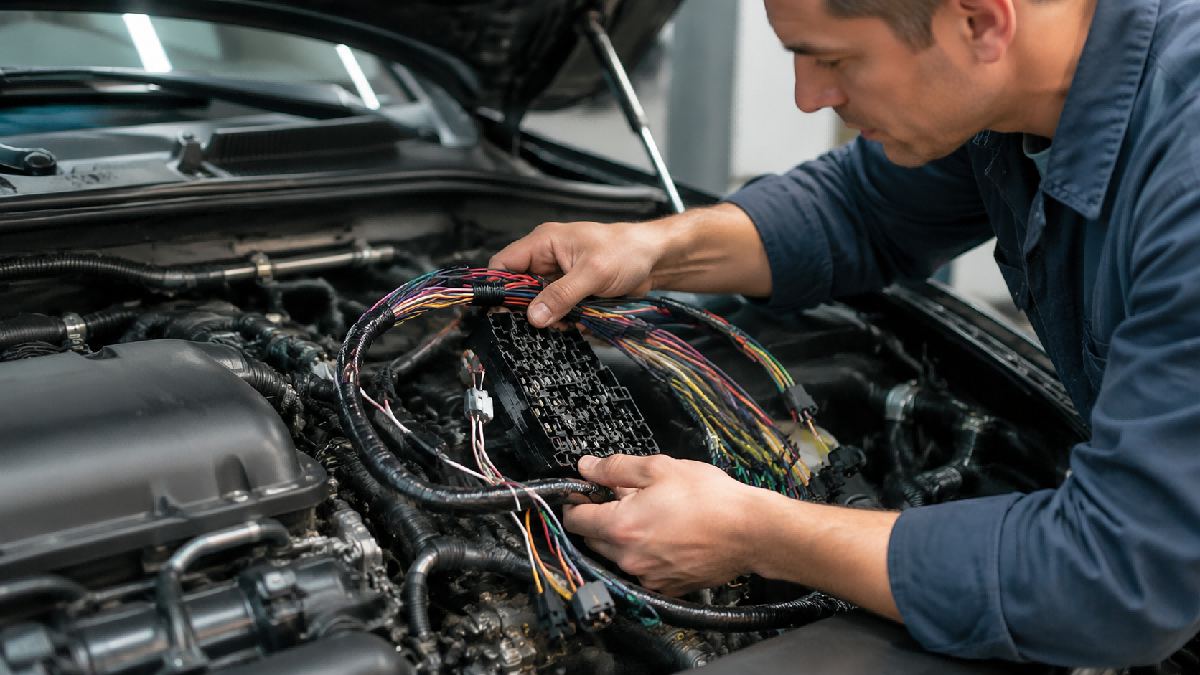
An Instrument Panel Wiring Harness is a sophisticated assembly of wires, connectors, terminals, and protective components that serves as the central nervous system for a vehicle’s cockpit. It distributes electrical power and transmits data signals between the instrument cluster, infotainment system, HVAC controls, steering column modules, airbag systems, and body control modules. This harness must withstand constant vibration, temperature fluctuations, and tight spatial constraints while maintaining flawless signal integrity.
Many professionals confuse “dashboard” with “instrument panel.” The dashboard refers to the physical trim structure—the visible plastic, leather, or composite surface that provides aesthetics and crash padding. The instrument panel, however, denotes the functional electronic assembly behind the dashboard, including the gauge cluster, warning lights, and associated control modules. In modern automotive terminology, the instrument panel encompasses the entire wiring infrastructure that powers these displays and controls.
The instrument panel is located directly behind the windshield, spanning the full width of the front cabin from the driver’s side door to the passenger’s side door. It is typically mounted to the vehicle’s firewall and supported by a cross-car beam. This location exposes the harness to heat from the HVAC system, potential moisture ingress from windshield seals, and mechanical stress during vehicle operation. Proper design and material selection are therefore critical for long-term reliability.
Types
Instrument panel wiring harnesses can be classified by layout, architecture, and application. The main IP harness forms the backbone across the dashboard, while dedicated sub-harnesses serve specific modules such as the radio, climate control, and airbag system. Steering column harnesses connect stalks, ignition switches, and clock springs, requiring flexible yet durable construction to accommodate steering wheel movement.
From an architectural perspective, traditional point-to-point wiring has largely been replaced by bus-based networks. Modern vehicles rely on Controller Area Network (CAN bus), Local Interconnect Network (LIN bus), or FlexRay protocols to reduce wire count and weight. Hybrid architectures combine direct power lines for high-current loads with multiplexed data lines for sensors and switches, offering the best balance of simplicity and performance.
Application-specific variations further differentiate harness types. Passenger car harnesses prioritize infotainment integration and comfort features, resulting in higher connector density and more shielded cables. Commercial vehicle harnesses demand ruggedized connectors and thicker insulation to endure harsh operating environments. Electric vehicle harnesses introduce high-voltage interlock loops and dedicated circuits for battery management display, requiring strict adherence to safety isolation standards.
What kind of Wire Harness are they?

Dash Cluster Wire Harness
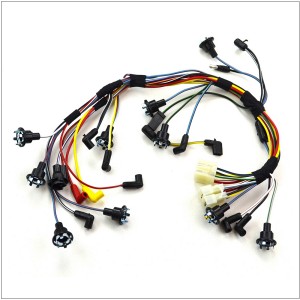
Dash Cluster Wiring Harness
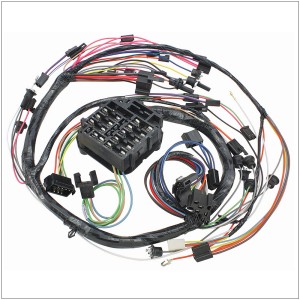
Dash Wire Harness
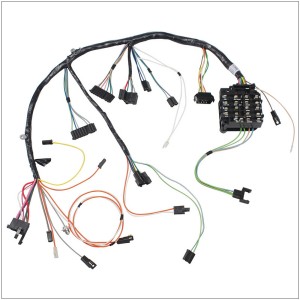
Dash Wiring Harness
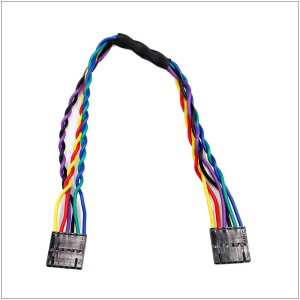
Instrument Cluster Wiring Connector
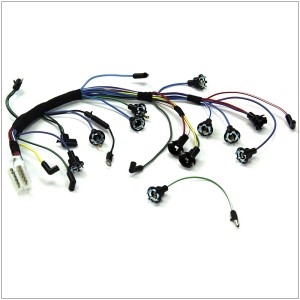
Instrument Cluster Wiring Harness

Instrument Panel Harness
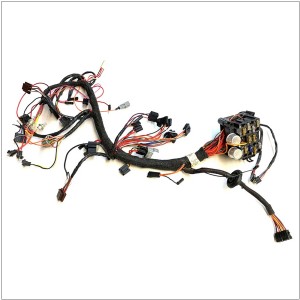
Instrument Panel Wire Harness Assembly
Applications
The fundamental role of an instrument panel wiring harness is threefold: power distribution, signal transmission, and control communication. It supplies regulated voltage to all cockpit electronics, carries sensor data such as speed, temperature, and fuel level to the engine control unit and instrument cluster, and transmits operator commands from switches and buttons to actuators throughout the vehicle. Safety-critical functions like airbag deployment and seatbelt pretensioner activation also depend on this harness.
Across different vehicle models, the complexity and configuration of the IP harness vary significantly. Economy cars feature fewer circuits and simpler connectors, often using unsealed housings and lower-grade wire insulation. Luxury vehicles incorporate dozens of shielded cables for premium audio systems, ambient lighting, and advanced driver-assistance systems (ADAS), demanding higher pin counts and stricter electromagnetic compatibility requirements.
Internal combustion engine vehicles include circuits for engine start-stop systems, transmission shift locks, and traditional gauge clusters. Electric vehicles replace these with high-voltage interlock loops, battery state-of-charge displays, and thermal management controls. Regional differences also influence design: North American models require daytime running light circuits and specific OBD-II diagnostic interfaces, while European vehicles emphasize CAN bus compliance and environmental regulations.
Raw Material Selection
A well-engineered Instrument Panel Wiring Harness lives or dies by three material pillars — connectors, wire & cable, and auxiliary hardware. Each pillar carries distinct mechanical, thermal, and electrical demands shaped by the IP's location: behind the windshield, strapped to a steel cross-car beam, sharing real estate with HVAC ducts and airbag modules. Below is our itemized selection framework, developed through years of custom harness production at Hooha.
Connectors — Selection by Function Zone
The IP harness typically spans four function zones, and each demands a different connector philosophy:
|
Function Zone
|
Typical Circuits
|
Priority
|
Connector Approach
|
|---|---|---|---|
|
Cluster / Gauge Interface
|
Speedo, tacho, warning lamps, tell-tales
|
Pin density, signal integrity
|
Miniature sealed/unsealed signal connectors (NanoMQS, JAE MX34)
|
|
Switchbank & Stalks
|
Lighting, wiper, turn, cruise
|
Ergonomics, mating cycles
|
Low-engage-force systems (Aptiv GT 150/280)
|
|
HVAC & Blower
|
Blower motor, blend doors, sensors
|
High current, vibration
|
Robust 2.8 mm blade systems (Aptiv GT 280, TE MCON 1.2/2.8)
|
|
Firewall Pass-Through
|
Main power feed, CAN bus, ground straps
|
Moisture sealing, pull-out strength
|
Circular sealed bulkhead connectors or grommeted sealed housings
|
TE — NanoMQS (0.50 mm Miniature Signal Connector System)
NanoMQS is TE's answer to the relentless miniaturisation of modern IP electronics. Built on the proven MQS platform but scaled down to a 1.8 mm pin pitch with a 0.5 × 0.4 mm blade, it handles 0.13–0.35 mm² wire (roughly 26–22 AWG) at up to 6 A nominal / 170 °C max, and qualifies to LV214 / USCAR vibration and environmental specs. The locking-lance terminal design produces an audible and tactile click on full insertion, with optional CPA (Connector Position Assurance) and TPA (Terminal Position Assurance) to prevent partial mating — absolutely critical behind a dashboard where no one sees the connector after assembly. We recommend NanoMQS for cluster-to-PCB pigtails, infotainment head-unit links, and any "black-box" module where PCB footprint needs to shrink but automotive-grade vibration robustness cannot be sacrificed.
TE — MCON Interconnect System (MCON 1.2 / MCON 2.8)
MCON is TE's sealed, high-current, harsh-environment terminal family and the go-to when the IP harness must carry airbag current loops, seatbelt pretensioner triggers, or main B+ feeds that transit the cross-car beam. The MCON 0.50 sealed variant delivers IPx9k-level water/moisture protection and is rated for close-proximity installs up to LV214 Level 3/4 and 170 °C. The larger MCON 2.8 version accepts heavier gauges (up to ~2.0 mm² / 14 AWG class) while keeping a compact, clean-body sealed housing. We specify MCON wherever ingress protection and micro-vibration fretting are the dominant failure modes — firewall pass-throughs, A-pillar adjacency, and any cavity that shares splash-path with windshield-washer plumbing.
Aptiv — GT 150 & GT 280 Series
The GT family is arguably the most field-proven ecosystem in North American automotive interiors. GT 150 uses a 1.5 mm blade width, 4.0–4.5 mm centerline spacing, handles 0.35–1.0 mm² (20–17 AWG) at up to ~15 A, and offers both sealed and unsealed housings with a two-rib cable seal that uses less material than legacy three-rib designs without compromising IP rating. GT 280 steps up to a 2.8 mm blade, 0.35–5.0 mm² range, and up to 25 A, with engage forces kept deliberately low (< 50 N for high-cavity-count plugs) — a major ergonomic win during instrument-panel line assembly. Tangless terminal design simplifies repair/rework. We default to GT 150 for switchbank harnesses and wiper/lighting stalks, and GT 280 for HVAC blower feeds and multi-way inline splices where technicians still need serviceability.
JAE — MX34 Series (Compact High-Density Rectangular)
When the IP architecture is space-constrained but requires higher pin counts (e.g., 20–40 ways across a single cluster interface), JAE's MX34 delivers a compact, dual-lock rectangular body with CPA/TPA features, gold- or tin-plated options, and a profile that tucks neatly behind thin modern bezels. It fills the gap between "too big" traditional 2.54 mm pitch headers and "too fragile" FFC-only jumpers. We recommend MX34 for OEM projects where the cluster carrier is injection-moulded thin-wall plastic and every millimetre of Z-height behind the trim face is contested.
Molex — Mini-Fit Jr. / Micro-Fit / MX150 (Where Applicable)
For non-safety-critical, higher-current accessory tie-ins — aftermarket-friendly infotainment upgrades, USB hub pigtails, or supplier-provided head-unit harnesses — we sometimes cross-reference to Molex Mini-Fit Jr. (up to 9 A per circuit, 4.2 mm pitch) or the sealed MX150 line. These are not our first call for airbag or cluster-primary circuits, but they earn their place in the accessory breakout portion of an IP harness where service parts availability and global distributorship matter.
Wire & Cable — What the Insulation Is Really Doing
The biggest misconception in IP harness spec is treating wire as "just copper with coloured plastic." Behind the dashboard, insulation is doing four jobs simultaneously:
|
Requirement
|
What Happens if You Underspec
|
Our Spec Strategy
|
|---|---|---|
|
Thermal endurance
|
HVAC duct heats (+85 to +105 °C steady) soften/melt PVC → short to ground
|
XLPE or cross-linked wall, min 125 °C continuous
|
|
Abrasion resistance
|
Bundle rubs the cross-car beam's stamped edge → exposed conductor
|
Thin-wall XLPE + external PET braid or corrugated loom at rub-points
|
|
Chemical resistance
|
Window-wash overspray / HVAC condensate degrades the jacket
|
XLPE (SAE J1128) or ISO 6722 Class C; avoid pure PVC near ducts
|
|
Bundle diameter control
|
Too fat → won't route behind narrow radio cage
|
TXL extra-thin wall to shrink OD without losing temp rating
|
Recommended Wire Standards
-
Primary signal/cluster data (20–24 AWG):TXL (SAE J1128) — extra-thin XLPE, −40 °C to +125 °C, 50 V rating, smallest OD for high-density bundles. We protect TXL runs that contact sheet metal with PET braided sleeving or split corrugated conduit to compensate for the thin wall.
-
General IP accessories/switch feeds (16–18 AWG):GXL (SAE J1128) — thin-but-not-extra-thin XLPE wall, same 125 °C rating, better standalone abrasion margin. Ideal for door-Adjacent breakouts and anything that flexes with steering-column articulation.
-
High-heat micro-zones (heater core valve solenoid, blend-door motor pigtails):UL 1430 (XLPE, 125 °C) or UL 3135 (silicone rubber, up to 200 °C) for short-run local exposure where even XLPE is marginal.
-
European Programme builds:ISO 6722 Class C (thin-wall, cross-linked, 125 °C) — chemically and mechanically equivalent logic to TXL/GXL but under the ISO numbering OEMs expect.
-
What we explicitly reject for IP harnesses:Plain GPT (PVC, 80 °C) anywhere near HVAC airflow paths. PVC embrittles, shrinks, and cracks under repeated thermal cycling, and once it does the copper strands fatigue against the nearest metal edge.
Auxiliary Components — The "Small Parts" That Prevent Field Failures
|
Component
|
Material / Spec
|
Why It Matters in the IP
|
|---|---|---|
|
Terminals (crimp)
|
Tinned C2680 brass or C11000 copper alloy; USCAR-21 validated crimp cross-sections
|
The crimp — not the connector housing — is statistically where harnesses fail. We use 6-sided or frequency-controlled press crimps with CFM (Crimp Force Monitoring) on production runs.
|
|
Relays
|
Mini ISO or Micro ISO (PA66 / PBT housing, Ag or AgSn contact); TE V23134 / Omron G8N class
|
HVAC blower and accessory relay sockets sit inside or just below the IP. PBT grade resists heat-warping; Ag contact layer keeps voltage drop < 4 mV/A under cycling.
|
|
Fuse / Junction Blocks
|
PBT or PA66 GF30 housing; Littlefuse ZCASE / Bussmann BMS footprint compatibility
|
Must survive +105 °C under-dash soak without housing creep or terminal looseness. Integrated TPA on fuse terminals is non-negotiable.
|
|
Strain reliefs & routing hardware
|
Nylon 6/6 push-in clips with stainless spring; EPDM grommets at metal pass-throughs
|
Vibration-induced fretting at the connector-to-wire transition is suppressed almost entirely by proper strain relief radius (≥ 5× cable OD) and clip spacing ≤ 150 mm on straight runs.
|
|
Protective wrapping
|
Cloth tape (noise-sensitive cabin zones) + PVC/vinyl tape (edge-protected anchor points) + corrugated PA6 or PP loom at beam-contact zones
|
IP harnesses are a major source of "dash rattle" NVH if wrapping is wrong. Cloth tape damps; loom protects; tape alone is insufficient at sharp-edge crossings.
|
Manufacturing Process
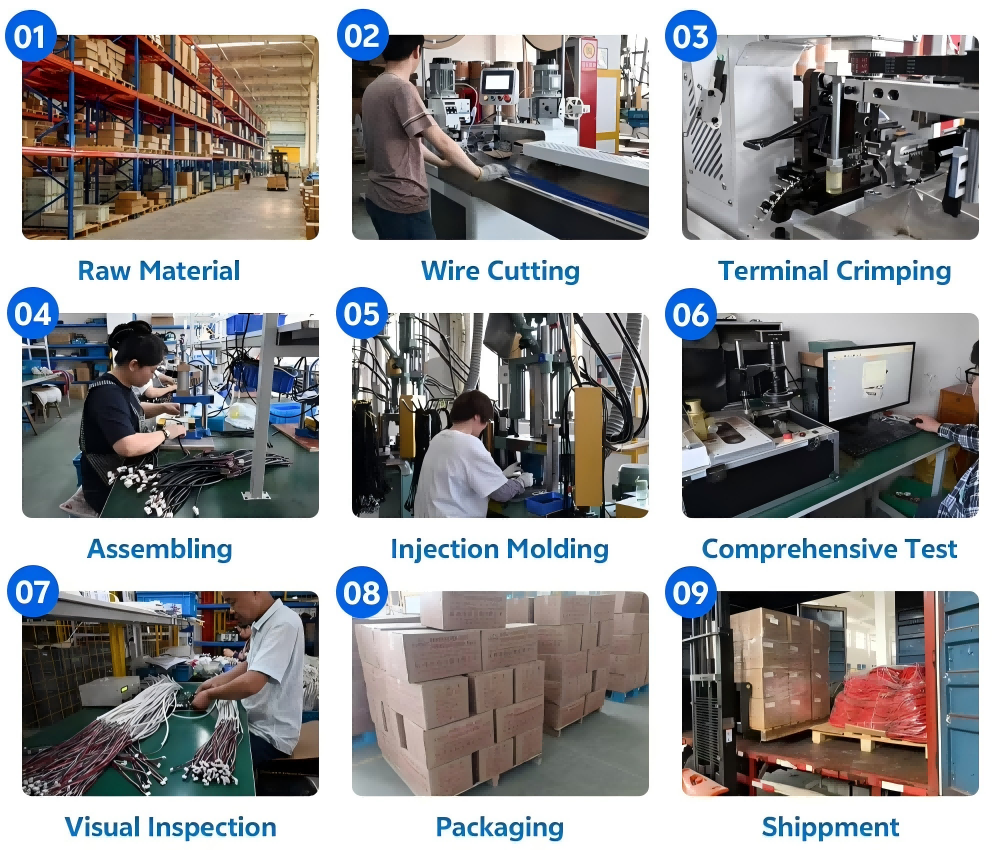
Quality Control
At Hooha Harness, all instrument panel wiring harnesses are manufactured in compliance with the IPC/WHMA-A-620 standard, ensuring that crimps, solder joints, and mechanical assemblies meet Class 2 or Class 3 acceptance criteria. Visual inspections follow strict guidelines for terminal position, insulation damage, and contamination. This standard guarantees consistency and reliability across every production batch.
Our facility holds IATF 16949 certification, the global quality management standard for automotive production. This mandates rigorous process controls, change management procedures, and full traceability through lot numbers on every component. PPAP documentation is maintained for all new products, providing customers with complete confidence in our manufacturing capabilities.
Every harness undergoes 100% continuity testing and dielectric withstand (Hi-Pot) testing before leaving the factory. Additionally, random samples are subjected to pull-force testing per SAE/USCAR specifications and thermal cycling from -40°C to +125°C to validate material stability under extreme conditions. These measures ensure that every harness delivers the performance and durability demanded by modern automotive applications. As a China custom manufacturer, we combine cost-effective production with world-class quality standards, making us a trusted partner for OEMs worldwide.
Custom Wire Harness Assembly
- Connectors: Support TE, Deutsch, Aptiv, Lear, Molex, JST, Amphenol, Sumitomo, Yazaki, etc.
- Wire Gauge:
- depends on your needs
- Recommended by us
- Wire Colors: Available in a wide range, including white, black, red, yellow, blue, green, brown, orange, purple, grey, and more.
- Wire Length: Fully customizable to your specifications.
- Wiring Diagram: Tailor-made to meet your project needs.
- Custom type:
- Send drawing to customize.
- Send a sample to customize.
- Tell us as many details as possible to customize.
- Minimum Order: 100 pieces.
Customize Your Wire Harness
Send your sample or drawing/schematic for quote price→ Feedback with quotation(1~3 days) → Confirm quotation → Arrange sample you for approval→ [Make mold if needed (7 days) →Mold test] → Making samples(1~3 days)→ Samples test(Approval) → place order for Mass production(2~3 weeks)→ Quality checking→ Packing → Delivery → After Service → Repeat Order.
