What is wire harness manufacturing?
Wire harness manufacturing involves assembling cables, connectors, and terminals into organized bundles for electrical systems. The process includes cutting/stripping wires (±0.5mm precision), crimping (10+ ton pressure), soldering, and testing (100% continuity/hipot checks).
Harnesses are built to IPC/WHMA-A-620 standards, with options for shielding, waterproofing (IP67), and custom lengths. Used in automotive (30% of vehicle wiring), aerospace, and IoT devices. Lead times range from 2 weeks (standard) to 72hrs (rush).
Wire Harness Basics
A wire harness is a structured assembly of cables, wires, and connectors designed to transmit power and signals efficiently. These bundles are used in automotive (35% of global demand), aerospace (20%), industrial machinery (25%), and consumer electronics (15%), with the market expected to grow at 4.8% CAGR from 2023 to 2030. A single car contains 1,500–2,000 individual wires, spanning 1.5–2.5 miles (2.4–4 km) in length, bundled into 12–30 separate harnesses to organize circuits and reduce installation time by 30–50%.
"A well-designed wire harness can reduce electrical failures by up to 70% compared to loose wiring, while cutting assembly labor costs by 40%."
The core materials include copper (60–70% conductivity) or aluminum (30% lighter but 40% less conductive) wires, insulated with PVC (cost: 0.50/m), Teflon (high-temp, 2/m), or silicone (flexible, 3/m). Connectors—typically made of nylon (60% of cases) or thermoplastic (30%)—ensure secure contact with 5,000–50,000 mating cycles before wear.
Automation in harness production has increased output by 200–300% in the past decade, with robotic cutting/stripping machines processing 500–1,200 wires/hour at ±0.1 mm precision. Manual assembly still dominates low-volume (sub-5,000 units/year) jobs, but automated test systems now verify 99.95% of connections in under 30 seconds per harness, reducing defects from 5% to 0.2%.
Weight optimization is critical in aerospace, where a 10% reduction in harness mass saves 200/year in fuel per aircraft. In EVs, 48V architectures (vs. 12V) cut copper use by 75%, lowering costs by 200 per vehicle. Future trends include fiber optics (10x faster data, 80% lighter) and modular harnesses (50% faster repairs)—key for next-gen autonomous cars and IoT devices.
Key Components Used
A wire harness is only as reliable as its weakest component. The average automotive harness contains 300–500 individual parts, with material costs ranging from 200 per unit depending on complexity. Copper wires (60% of harness cost) dominate the market, but aluminum (30% cheaper, 40% less conductive) is gaining traction in cost-sensitive applications. Connectors, seals, and protective sleeves make up the remaining 40% of the bill of materials (BOM), with failure rates dropping below 0.1% in premium-grade components.
| Component | Material Options | Key Parameters | Cost Range | Lifespan |
|---|---|---|---|---|
| Wires | Copper (99.9% pure), Aluminum | 16 AWG (1.3mm², 10A max), 20 AWG (0.5mm², 5A max) | 0.80/m | 10–15 years |
| Insulation | PVC, Teflon, Silicone | Temp range: -40°C to 260°C, 300V–600V rating | 3.00/m | 8–20 years |
| Connectors | Nylon, Thermoplastic, Metal | 5,000–50,000 mating cycles, 10A–100A current | 5.00 per unit | 12+ years |
| Protection | Braided sleeve, Corrugated tube | Abrasion resistance, IP67 waterproofing | 2.00/m | 10+ years |
Copper remains the #1 choice for high-current (50A+) applications due to its 58 MS/m conductivity, but aluminum (37 MS/m) cuts weight by 50% and cost by 30%. However, aluminum requires larger gauges (e.g., 8 AWG vs. 10 AWG for 30A) to match performance, increasing bundle size by 15–20%.
A single faulty connector causes 45% of harness failures in automotive applications. High-end gold-plated contacts (0.5–2µm thickness) reduce resistance from 5mΩ to <1mΩ, while tin-plated versions (cheaper, 0.50 per pin) degrade 3x faster in humid environments. Sealed connectors (IP67+)—critical for EVs—add 3 per unit but prevent 90% of moisture-related failures.
Insulation Matters More Than You Think
- PVC (Polyvinyl Chloride): 0.30/m, good for 105°C max, but cracks below -20°C.
- Teflon (PTFE): 2.00/m, handles 260°C, used in aerospace and industrial.
- Silicone: 3.00/m, flexible at -60°C to 200°C, ideal for robotics.
Braided PET sleeves (1.50/m) shield against abrasion (withstands 50N force), while corrugated tubes (1.00/m) organize wires in tight bends (8x diameter min). In high-vibration zones (e.g., engines), spiral wrap (0.80/m) reduces fatigue failures by 70%.
Embedded sensors (cost: 20 per harness) now monitor temperature (±1°C accuracy), current (±2% error), and vibration (10–2,000 Hz range)—critical for predictive maintenance. Fiber-optic cables (10 Gbps+, 10/m) are replacing copper in ADAS (Advanced Driver Assistance Systems), cutting weight by 80% per data line.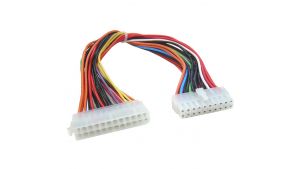
Step-by-Step Process
Building a wire harness isn't just about bundling wires—it's a precise, 12–25 step workflow where a single error in 1,000 connections can cause a 50,000 recall. The best factories achieve 99.99% accuracy using laser-guided assembly jigs and automated testing (hi-pot/megohm checks), with color-coded wires matching CAD schematics down to 0.1mm tolerance. Medical-grade harnesses require 100% traceability of materials, while automotive versions undergo 200+ bend tests. Quality control adds 10–500 per unit depending on complexity.
| Stage | Key Actions | Time per Harness | Defect Rate | Cost Impact |
|---|---|---|---|---|
| Design & Prototyping | CAD modeling, ±0.5mm tolerance checks | 2–10 hours | <0.1% | 5,000 |
| Wire Cutting | Automated machines cut 5,000 wires/day | 10–30 sec | 0.05% | 0.10/m |
| Stripping & Crimping | 0.2mm precision on exposed conductors | 15–45 sec | 0.3% | 0.20 per crimp |
| Assembly & Routing | Manual/robotic wire laying in 3D fixtures | 5–30 min | 1.2% | 20 labor |
| Connector Attachment | 50N pull-force validation per terminal | 1–5 min | 0.8% | 5.00 per connector |
| Testing & QC | Hi-pot (1,500V), continuity, resistance | 30–120 sec | 0.01% | 10 per test |
Stage 1: Design – Where 80% of Costs Are Locked In
Engineers use 3D CAD (e.g., Zuken E3, AutoCAD Electrical) to map wire lengths (±2mm accuracy), bend radii (≥8x diameter), and connector positions (±0.5mm). A 10% design error can inflate production costs by 30%, so digital twins simulate assembly paths before cutting metal.
Stage 2: Wire Prep – Speed vs. Precision Trade-offs
Automated machines cut 1,200 wires/hour at ±0.1mm length accuracy, while laser strippers remove insulation at 0.05mm depth control. Manual crimping (200–500/hour) is still used for low-volume, high-mix jobs, but auto-crimpers (200,000 per machine) achieve 0.01mm² crimp area consistency.
Stage 3: Assembly – The 40% Labor Cost Sink
Workers follow color-coded diagrams (20% faster than text instructions) to route wires through PVC sleeves or corrugated tubes. Robotic assist arms now handle 30% of repetitive tasks, reducing RSI (Repetitive Strain Injury) claims by 50%.
Stage 4: Testing – Catching 10,000 Failures
- Continuity tests detect open circuits (0.1Ω max resistance).
- Hi-pot tests apply 1,500V AC for 60s to find insulation flaws.
- Pull tests verify connectors withstand 50N force for 10s.
Stage 5: Shipping – The Last 1% Risk Zone
Harnesses are vacuum-sealed in ESD bags (1.00 per unit) to prevent moisture damage during transit. GPS-tracked containers maintain 15–25°C and 30–60% RH, as 48-hour exposure to 85% humidity can corrode contacts.
Quality Control Methods
Wire harness failures cost the automotive industry $2 billion annually in recalls and repairs, with 60% of defects traceable to poor crimping (35%), incorrect routing (15%), or connector issues (10%). Top-tier manufacturers now deploy 7-layer QC protocols that slash defect rates from 500 ppm (parts per million) to under 50 ppm, while automated optical inspection (AOI) systems scan 2,000+ connections per minute at 0.02mm precision.
| Method | Technology Used | Detection Capability | Speed | Cost per Test |
|---|---|---|---|---|
| Visual Inspection | 10x Magnification | Misrouted wires, damaged insulation | 30 sec/harness | 2.00 |
| Crimp Force Monitoring | Load cells (±0.5N accuracy) | Under/over-crimped terminals | Real-time | 0.30 |
| Hi-Pot Testing | 1,500V AC/DC testers | Insulation breaches, dielectric strength | 60 sec | 5 |
| Continuity Testing | Micro-ohmmeters (±0.01Ω) | Open circuits, resistance spikes | 10 sec | 0.20 |
| X-Ray Inspection | 3D CT scanners | Internal wire breaks, voided crimps | 2–5 min | 30 |
| Pull Testing | 50N force gauges | Weak terminal retention | 15 sec | 1.00 |
| AI Defect Detection | Machine vision (CNN models) | Pattern deviations, micro-cracks | 0.1 sec/image | 0.05 |
A proper crimp compresses wire strands to 80–90% density with <5% voids, creating 0.1–0.5mΩ resistance. Automated crimp force monitors track the 200–400N compression curve in 10ms intervals, rejecting ±15% force deviations that cause 30% of field failures. For high-voltage EV harnesses, X-rays verify crimp integrity to ISO 19642 standards, catching 5µm air gaps invisible to cameras.
Applying 1,500V AC for 60 seconds detects insulation flaws that would cause arc faults at 48V+ systems. Modern testers measure leakage currents below 1mA, with >5mA indicating failure. This weeds out 0.1% of harnesses with microscopic pinholes from extrusion defects.
Traditional QC misses 15–20% of subtle defects like insulation nicks (<0.1mm deep) or misaligned TCP seals. AI vision systems trained on 500,000+ defect images now flag 98% of anomalies, reducing false negatives by 40%. BMW’s Regensburg plant cut warranty claims by 25% after deploying NVIDIA-powered inspection robots.
Even with 90% automation, skilled technicians still perform final sign-off audits. They spot assembly logic errors that machines miss—like a correctly crimped but wrongly placed connector. Top factories mandate 200+ hours of training for QC staff, ensuring <0.5% escape rate for critical defects.
Future Trends & Tech
The wire harness industry is undergoing its biggest transformation since the 1980s, driven by automotive electrification (48V/800V systems), 5G data demands (10-100Gbps), and lightweighting pressures (5-8% weight reduction targets). By 2030, 35% of harnesses will integrate smart sensors, while fiber optics will replace 15% of copper wires in high-speed applications. The shift is urgent—today's 12V architectures struggle with 2kW+ loads in EVs, forcing 48V systems that cut copper weight by 75% but require 300% better EMI shielding.
"Modular harness systems will slash repair times from 3 hours to 20 minutes—saving automakers $800 million annually in service costs."
Lightweighting Goes Extreme
Aerospace leads the charge with composite-embedded wiring that reduces harness weight by 40% versus traditional bundles. Boeing's Tapestry fiber-optic system already cuts 787 Dreamliner wiring by 1,200 lbs (540 kg), saving $280,000/year in fuel per aircraft. Automotive follows suit—aluminum wires (30% lighter than copper) now appear in 15% of EV battery harnesses, despite requiring 20% thicker gauges. The next leap comes from graphene-doped polymers, boosting conductivity 500% while maintaining 90% weight savings at 5x current material costs.
Smart Harnesses Enter the AI Era
Embedded IoT sensors (3−15 per harness) now monitor temperature (±0.5°C), vibration (10−2,000Hz), and current draw (±1mA), with self-healing polymers ($120/meter) automatically repair <0.3mm wire nicks when heated to 70°C—potentially extending harness life from 8 to 15 years.
Manufacturing Tech Leaps Forward
Laser-assisted automated crimping achieves 0.005mm² tolerance—10x tighter than hydraulic presses—while working at 1,200 terminations/hour. 3D printing of connectors enables 72-hour prototype cycles versus 6 weeks for traditional tooling, though material costs remain high at $0.80-4.00 per gram. The biggest disruptor? Collaborative robots (cobots) working alongside humans now handle 45% of wire routing tasks with 0.01mm path accuracy, reducing repetitive strain injuries by 60% in German factories.
The Data Speed Race
As autonomous vehicles generate 40TB of data daily, traditional copper hits physical limits. Multi-core fiber optics (128 strands @ 10Gbps each) carry 1,280Gbps in 3mm diameter cables—equivalent to 8,000 copper CAN bus wires. BMW's 2025 Neue Klasse platform adopts this tech, reducing ADAS wiring weight by 85%. The trade-off? Fiber splicing requires 25,000 machines versus 500 crimpers, and repair shops need 50% upskilling.
The Cost Paradox
While smart harnesses add 20-30% upfront cost, they save 200-400% in lifetime maintenance. A 300 sensor-equipped EV harness pays for itself in 18 months by preventing just one battery management failure. For mass adoption, the industry must drive sensor costs below $1.50/unit and fiber termination under $5/connection—targets expected by 2027-2028.
In summary,wire harness manufacturing systematically bundles electrical cables into organized assemblies using precise cutting/stripping machines (±0.1mm tolerance) and automated crimping (1,200 terminals/hour). Key components like PVC/Teflon insulation (withstand -40°C to 150°C) and IP67-rated connectors ensure durability in automotive (300+ connections per car) and aerospace applications. The 18-25 step process involves laser-guided wire routing, automated continuity testing (detecting 99.99% of faults), and 3D-printed prototypes (72-hour turnaround). Emerging smart harnesses with embedded IoT sensors predict maintenance needs, while fiber optics (1,280Gbps capacity) address data demands—though requiring 25x more splicing equipment than traditional copper systems.
