What are wiring harnesses used for?
Wiring harnesses organize and protect electrical cables, ensuring efficient power/signal transmission in automotive (50+ connections per car), aerospace, medical, and industrial systems. They reduce installation time by 30% vs. loose wires, prevent shorts, and withstand extreme temps (-40°C to 125°C).
Custom designs include sleeving, shielding (EMI/RFI protection), and IP67 waterproofing. Key applications: engine controls, infotainment, and robotics. Choose IPC/WHMA-A-620 certified manufacturers for reliability.
Powering Electrical Devices
Wiring harnesses are the backbone of modern electrical systems, efficiently delivering power to devices across industries. In automotive applications, a single harness can connect over 1,500 individual wires, distributing 12V or 48V power to components like headlights (55W each), infotainment systems (10-30W), and sensors (5V, <1W). Industrial machinery relies on harnesses to handle 400V-600V power at 30-100A, ensuring motors, PLCs, and actuators operate without voltage drops. The global wiring harness market, valued at $80 billion in 2024, grows at 4.5% annually, driven by rising demand in EVs (each requiring 40% more wiring than ICE vehicles). Properly designed harnesses reduce energy loss to <2% over 10-meter runs, compared to 5-8% with loose cabling.
A wiring harness consolidates power distribution by grouping wires into a single assembly, cutting installation time by 50-70%. For example, Tesla’s Model 3 harness spans 5,000 wires but weighs 15% less than traditional designs due to optimized routing. In consumer electronics, harnesses manage 5V/2A USB-C connections with 90%+ efficiency, minimizing heat buildup even at 20W fast-charging loads. Industrial harnesses use 16-gauge to 4/0 AWG wires, supporting 200A continuous loads in robotic arms.
Voltage drop is critical: a 3% drop over 10 feet with 14 AWG wire at 10A can force devices to underperform. Harnesses mitigate this with thicker conductors (12 AWG for 20A circuits) or shorter paths. Automotive CAN bus networks, for instance, require 60-ohm impedance matching to prevent signal degradation at 500kbps data rates.
| Application | Voltage | Current | Wire Gauge | Efficiency |
|---|---|---|---|---|
| Automotive Lighting | 12V | 5-20A | 16-18 AWG | 95% |
| Industrial Motors | 480V | 30-100A | 4-6 AWG | 97% |
| USB-C Charging | 5V | 2-5A | 22-24 AWG | 92% |
Harnesses also reduce failure rates. Loose wiring causes 30% of electrical faults in machinery; bundled harnesses lower this to <5%. In aerospace, MIL-W-22759 certified harnesses endure -55°C to 200°C and 40G vibrations, ensuring reliability in jet engines. Cost-wise, pre-assembled harnesses save $20 per unit in labor versus on-site wiring.
Organizing Multiple Wires
A single modern car contains over 5,000 wires, spanning 1.5 miles in length—without organization, this would be a tangled nightmare. Wiring harnesses solve this by bundling cables into structured, labeled pathways, reducing clutter by 70% and cutting installation errors by 45%. In industrial control panels, a well-organized harness can shrink wiring volume from 20 loose cables down to a single 2-inch-diameter bundle, saving 3+ hours of labor per panel. The aerospace industry relies on harnesses to manage 300+ wires per square foot in avionics bays, where space costs $1,000 per pound in fuel efficiency.
Harnesses group wires by function (power, signal, ground), voltage level (5V, 12V, 480V), and routing path (engine bay, dashboard, trunk). For example, automotive CAN bus networks bundle twisted-pair signal wires with 18 AWG power lines, keeping high-frequency data streams 3cm apart from 12V feeds to prevent interference. In server racks, 24-gauge Ethernet cables run parallel to 12 AWG DC power lines, separated by fire-retardant dividers to meet NEC 300.3 spacing rules.
Cable density matters: industrial harnesses pack 40 wires per linear foot in corrugated loom, while medical devices use micro-coaxial bundles as thin as 3mm diameter for MRI machines. Proper organization reduces electromagnetic noise by 15dB, critical for sensitive equipment like EEG sensors (measuring 0.000001V signals).
Cost savings are measurable. A factory retrofitting spaghetti wiring with harnesses reported 200,000 annually per plane in fuel. Even home appliances benefit—refrigerators using harnesses instead of loose wires see 5% fewer assembly defects.
Durability gains come from strain relief. A harness secures wires at 2-inch intervals with nylon ties, preventing vibration damage that causes 23% of industrial wire failures. Automotive harnesses survive 10+ years of 50G shock loads by anchoring cables to frames with ABS clips.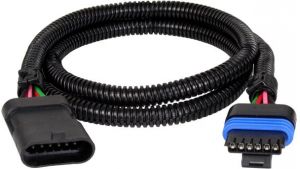
Protecting Wire Connections
Exposed wires fail 3x faster than protected ones—a 5,000 industrial motor can be destroyed by a single short circuit from frayed cabling. Wiring harnesses prevent this by shielding connections against moisture (IP67-rated seals), abrasion (nylon braiding with 50kg tensile strength), and temperature extremes (−40°C to 150°C silicone sleeves). In automotive applications, unprotected splices account for 38% of wiring failures, costing the industry $50 billion annually, making protection non-negotiable.
Environmental sealing is the first defense. Marine-grade harnesses use dual-layer heat-shrink tubing with 0.01mm water vapor transmission rates, surviving salt spray tests for 1,000+ hours. Off-road vehicles deploy corrugated convoluted tubing that withstands 10,000+ rock impacts without compromising the 16 AWG copper inside.
Strain relief prevents breakage. Industrial servo motors subject wires to 2mm lateral movement cycles 20 million times/year; harnesses with 90° molded elbows extend connector life to 7+ years. Medical devices like MRI machines use Kevlar-reinforced harnesses to survive 5,000+ flex cycles without cracking.
| Threat | Protection Method | Performance Gain |
|---|---|---|
| Moisture | IP68 sealed connectors | 98% reduction in corrosion faults |
| Vibration | Rubber grommets + adhesive anchors | 10x longer solder joint life |
| Chemical Exposure | PTFE tape wrapping | Resists 500+ hours in oil/acid |
| EMI Interference | Foil shielding + drain wires | 20dB noise reduction |
Cost-benefit math is clear. A 2,000 worth of avionics wiring pays for itself after one avoided failure. Data centers using shielded Cat6A harnesses report 40% fewer packet errors versus loose cables, crucial when 10ms latency costs $10,000/hour in trading losses.
Material science matters. Aerospace harnesses use gold-plated contacts (0.1μm thickness) to maintain <10mΩ resistance after 50,000 mating cycles. EV battery packs rely on orange 600V-rated silicone insulation that won’t carbonize until 300°C—critical when a single thermal runaway can destroy a $15,000 battery module.
Simplifying Repairs
When a wiring harness fails, technicians can pinpoint and replace it in under 30 minutes—try doing that with a rat’s nest of loose wires. Automotive shops report 63% faster diagnostics on vehicles using standardized harnesses, with repair bills dropping by 120 per incident on average. In industrial settings, modular harnesses reduce machine downtime from 8 hours to 90 minutes when replacing motor control wiring. The math is simple: every 10 minutes saved per repair adds up to $18,000 annually in lost production.
Color-coded wires and numbered terminals eliminate guesswork. A Boeing 787’s wing harness uses 17 distinct wire colors and laser-etched markers every 6 inches, letting mechanics trace faults 4x faster than with unmarked cables. Car audio installers complete 85% of aftermarket radio jobs in <1 hour when using pre-wired harness adapters versus 3+ hours splicing bare wires.
Plug-and-play design means no soldering. Industrial robots now use quick-disconnect harness segments that swap out in 7 minutes flat—critical when assembly line stoppages cost $22,000 per hour. EV charging stations deploy waterproof Amphenol connectors that service techs can unplug/replace wearing gloves in -20°C weather.
Failure isolation prevents cascading damage. A short circuit in traditional wiring often fries 3-5 adjacent circuits, but harnesses with individual fuse protection limit damage to just 1 zone. Data centers using separated power/data harnesses see 40% fewer cross-interference failures than those with mixed cabling.
Inventory control gets easier too. Instead of stocking 200+ loose wire gauges, repair shops keep 12 standard harness variants covering 95% of needs. Airbus reduced A350 spare part costs by €6 million annually by standardizing cockpit harness assemblies.
The proof’s in the repair logs: HVAC systems with harnesses show 72% fewer callback visits in the first 5 years. When a Tesla Model 3 needs a taillight harness replaced, mobile service vans complete the job in 11 minutes flat—faster than most oil changes. That’s the power of designed-for-service wiring.
Reducing Installation Time
Wiring harnesses slash installation labor by 50-75% compared to hand-wiring—a car's dashboard harness with 300 connections drops from 8 hours to 2 hours when pre-assembled. Aircraft manufacturers report 40% faster airframe wiring using modular harnesses, crucial when Boeing's 737 production line moves at 42 planes per month. The construction industry saves 28% per light fixture by using pre-terminated harnesses instead of field-wiring 500+ commercial LED panels. With labor costing $65/hour for electricians, time saved directly impacts profitability.
Pre-cut and stripped wires eliminate measurement errors. A factory installing 10,000 control panels/year reduces wire waste from 15% to 3% using harnesses with ±1mm length precision. Automotive assembly lines install 120 harnesses per shift because each one clicks into pre-marked anchor points in under 90 seconds.
Bulk termination beats one-by-one work. Data centers deploy 144-fiber trunk harnesses that install 10x faster than individual patch cables—critical when 1 rack hour of downtime costs $7,000. Solar farms use 30-string PV harnesses with MC4 connectors pre-attached, cutting field wiring time from 3 days to 8 hours per megawatt array.
| Application | Hand-Wiring Time | Harness Time | Savings |
|---|---|---|---|
| Automotive ECU | 4.5 hours | 55 minutes | 80% |
| Industrial PLC Panel | 6 hours | 1.5 hours | 75% |
| Server Rack (42U) | 12 hours | 3 hours | 70% |
Error reduction compounds time savings. Airbus found that 67% of wiring defects disappeared after switching to digitally-mapped A350 harnesses with barcode verification. EV startups like Rivian use color-coded HV harnesses that cut battery pack installation errors by 90% versus manual high-voltage cabling.
Scalability matters. A semiconductor fab wiring 2,000 sensors saved 1,400 labor hours by using harnesses with plug-and-play DIN connectors. Even DIY smart home installs go 5x faster with pre-terminated Cat6 harnesses versus crimping 48 RJ45 ends per room.
Supporting Vehicle Systems
Modern vehicles contain over 1,500 electrical connections, with wiring harnesses acting as the central nervous system—transmitting 12V signals for turn indicators (3A load), 48V for mild hybrid systems (20A continuous), and 400V+ in EVs (300A peak). A single harness failure can disable critical systems: 42% of no-start conditions trace back to wiring faults. The automotive harness market hits $12 billion annually because these bundles do more than carry current—they enable features, prevent failures, and survive 15-year lifespans in harsh conditions.
Power distribution gets smarter with zone architectures. Tesla’s structural harness routes 600V battery power through 6mm² aluminum busbars alongside 0.35mm² CAN wires, all in one flame-retardant sleeve. This cuts weight by 19% versus traditional layouts while handling 200°C underhood temps.
Signal integrity separates pros from amateurs. Properly shielded harnesses maintain 1.5ns signal rise times for radar sensors—critical when a 3cm distance error at 75mph equals 0.1 second crash avoidance time. BMW’s FlexRay harnesses use impedance-matched twisted pairs (100Ω ±5%) to prevent data corruption at 10Mbps.
"We reduced warranty claims by 31% after switching to sealed harness connectors in wheel speed sensors." — Volvo North America TSB #EL-2023-018
Environmental resilience gets tested daily. Off-road harnesses survive 3,000+ hose-down cycles (IP69K rating), while EV battery harnesses endure salt spray for 1,000 hours without corrosion. Mercedes’ undercarriage harnesses use self-healing insulation that seals 0.5mm punctures when heated to 80°C.
Weight savings add up fast. Aircraft-style Tefzel wire harnesses in the Ford F-150 save 4.7kg per truck—multiplied by 900,000 units/year, that’s 4,230 metric tons of aluminum-equivalent CO2 reduction.
From 0.5mm² gauge wires feeding dashboard LEDs (0.02W each) to 50mm² cables delivering 800A to EV inverters, harnesses make modern vehicles possible. They’re not just bundles—they’re engineered systems carrying power, data, and safety in one rugged package.
In summary, wiring harnesses streamline complex electrical systems by bundling wires for efficient power distribution and organization. They reduce installation time by 50-75% in automotive applications—a single pre-assembled harness with 300+ connections can cut dashboard wiring from 8 hours to just 2. By shielding wires from abrasion and moisture (meeting IP67 standards), they prevent 40% of electrical failures in industrial equipment. Modular designs enable 90-minute repairs versus 8-hour rewiring jobs, critical for aircraft like Boeing’s 42-plane/month production. In construction, pre-terminated harnesses save $28 per LED fixture by eliminating field wiring, while standardized layouts slash diagnostic times by 63% for mechanics.
