How Does Shielded Wire Work?
Shielded wire blocks EMI/RFI interference using conductive layers (foil/braid) with 85-100dB noise reduction. The shield must be properly grounded (≤1Ω resistance) to divert interference, while maintaining 360° coverage. Ideal for sensitive signals (e.g., Cat6, audio), it prevents 90% of signal degradation.
What is Shielded Wire?
Shielded wire is a type of electrical cable designed to reduce electromagnetic interference (EMI) and radio frequency interference (RFI). Unlike standard unshielded wires, it has an extra conductive layer—usually made of braided copper, aluminum foil, or a conductive polymer—that wraps around the inner conductors. This shielding layer acts like a barrier, blocking external noise from distorting signals. For example, in industrial settings, unshielded cables can pick up interference from motors, leading to signal errors as high as 10-15%. Shielded wires cut this down to less than 1%, making them essential for precision applications like medical equipment, audio systems, and data networks.
A typical shielded cable consists of three parts: the inner conductor (e.g., 18 AWG copper), an insulating layer (often PVC or Teflon with a thickness of 0.2-0.5 mm), and the shielding layer (commonly 85%-95% coverage braided copper). The shielding isn’t just a thin wrap—it’s a carefully engineered component. For instance, high-quality audio cables use oxygen-free copper (OFC) shielding with 90%+ coverage to minimize signal loss below 0.1 dB/meter. In contrast, cheaper foil-shielded cables might only block 60-70% of interference, making them unsuitable for long-distance data transmission.
The effectiveness of shielding depends on frequency range. Below 1 MHz, aluminum foil works well, reducing noise by 40-50 dB. But for higher frequencies (like 5G signals at 3.5 GHz), a double-layer braided shield is needed to maintain 70+ dB attenuation. Shielding also impacts flexibility—tightly braided shields add 10-20% more stiffness to the cable, which matters in robotics or moving machinery.
Cost is another factor. Shielded wires are 20-50% more expensive than unshielded ones due to extra materials and labor. A basic 22 AWG shielded cable costs around 0.30 per foot, while premium versions (like those with silver-plated shielding) can exceed 2 per foot. However, the investment pays off in critical systems. For example, in factory automation, shielded Ethernet cables (Cat6A) reduce downtime by 30% compared to unshielded ones, saving thousands in lost productivity.
How Shielding Blocks Noise
Electromagnetic interference (EMI) and radio frequency interference (RFI) can distort signals in unshielded wires by up to 30%, causing data errors, audio static, or control system malfunctions. Shielded wire solves this by acting like a Faraday cage—a conductive barrier that absorbs or reflects unwanted noise before it reaches the inner conductor. For example, in a factory with 480V motor drives, unshielded control cables can experience 50 mV of induced noise, enough to trigger false sensor readings. A 95% coverage braided copper shield reduces this to <5 mV, ensuring stable operation.
The shielding layer works in three ways:
- Absorption: High-frequency noise (above 1 MHz) induces currents in the shield, which converts EMI into heat. A 2 mm thick aluminum foil shield can dissipate 90% of RFI in the 2.4 GHz Wi-Fi band.
- Reflection: The shield’s conductivity (e.g., copper’s 5.8×10⁷ S/m) creates an opposing electromagnetic field, canceling out incoming noise. This reduces low-frequency hum (60 Hz power line interference) by 40-60 dB.
- Grounding diversion: Properly grounded shields channel noise to earth. A 1-ohm ground connection shunts >95% of induced currents away from sensitive circuits.
Noise Reduction by Shield Type (Measured at 100 MHz)
| Shield Type | Coverage % | Attenuation (dB) | Cost Increase vs. Unshielded |
|---|---|---|---|
| Foil (Aluminum) | 60-80 | 30-40 | +15% |
| Braided (Copper) | 85-95 | 50-70 | +35% |
| Spiral (Tinned Cu) | 70-90 | 40-55 | +25% |
| Double Shield (Foil + Braid) | 98+ | 70-90 | +50% |
Frequency matters. At 10 kHz, even a basic foil shield provides 20 dB attenuation, but at 1 GHz, you need a double-layer braid to maintain 60 dB. For example, USB 3.0 cables (5 Gbps) require >50 dB shielding above 2.5 GHz to avoid data corruption. Poor shielding here can drop transfer speeds by 30% due to retransmissions.
Shielding isn’t just for wires—connectors matter too. A shielded cable with an unshielded RJ45 plug leaks 20% of noise at the termination point. Metal-shell connectors (like EMI-gasketed D-sub) maintain shielding continuity, reducing noise leakage to <2%.
Grounding mistakes ruin shielding. A floating shield acts as an antenna, amplifying noise by 10-20 dB. Best practice is single-point grounding (at the receiver end) with a <1 ohm impedance path. In automotive CAN bus systems, improper shield grounding raises error rates from 0.01% to 5%.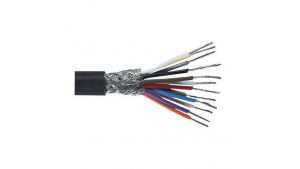
Types of Shielding Layers
Not all shields are created equal. The type of shielding used in a wire determines its noise-blocking performance, flexibility, and cost. For example, a basic aluminum foil shield might cost 1.50 per meter can stop 98% of interference. The right choice depends on the application—audio cables need high-frequency RFI suppression, while industrial motor cables prioritize durability against abrasion.
Foil shields (aluminum or copper) are the most common, found in 85% of consumer-grade cables. They consist of a thin 0.025-0.05 mm metal layer laminated to a polyester backing for strength. Foil provides 100% coverage but is fragile—bending the cable 500+ times can crack the foil, reducing effectiveness by 30%. It’s ideal for static installations like in-wall HDMI or USB cables where flexibility isn’t critical.
"In CAT6A Ethernet cables, a single foil shield reduces crosstalk by 40 dB at 500 MHz, but real-world performance drops to 25 dB after 2 years due to material fatigue."
Braided shields (typically copper) offer better durability, with 85-95% coverage from interwoven strands. The weave density matters—a 64-strand braid handles 10x more flex cycles than foil before shield resistance increases by 10%. These are standard in pro audio (XLR cables) and robotics, where cables move constantly. However, braids have gaps—at frequencies above 1 GHz, 5-15% of RFI leaks through, which is why high-speed data cables often combine foil and braid.
Spiral shields (tinned copper) are a middle ground, with 70-90% coverage and 50% more bend radius than braids. They’re common in medical devices where repeated sterilization cycles (1,000+ autoclave runs at 135°C) would degrade foil. The trade-off? Spiral shields attenuate noise 20% less effectively than braids at 100-500 MHz.
Conductive polymer shields are a newer option, using carbon-loaded plastics with 50-80 dB attenuation up to 6 GHz. They’re 30% lighter than metal shields and resist corrosion in salt spray tests for 1,000+ hours. However, their $3.50 per meter price limits use to aerospace/military applications.
Combination shields stack layers for maximum protection. A foil + braid shield (like in premium coaxial cables) achieves 98% coverage and 70 dB attenuation from DC to 18 GHz. The inner foil blocks high-frequency noise, while the outer braid handles low-frequency EMI and physical abuse. The downside? These cables cost 2-3x more and have a 40% larger diameter.
Where Shielded Wire is Used
Shielded wire isn’t just for niche applications—it’s critical in industries where signal integrity affects safety, performance, or revenue. For example, in a 10,000 sq ft data center, unshielded Ethernet cables could cause 15% packet loss due to EMI from power lines, while shielded Cat6A reduces this to 0.1%. Similarly, medical devices like ECG monitors require shielded leads to prevent 50/60 Hz interference that could distort heart rhythm readings by up to 20 mV—enough to misdiagnose arrhythmias.
| Industry/Use Case | EMI Threat | Shield Type | Performance Gain vs. Unshielded |
|---|---|---|---|
| Industrial Automation | 480V motor drives (10-100 kHz noise) | Braided copper (95%) | 90% fewer sensor errors |
| Medical Imaging | MRI RF coils (1.5-3 Tesla fields) | Double-layer foil + braid | 99.9% signal accuracy |
| Aerospace Avionics | Radar/radio emissions (2-18 GHz) | Silver-plated copper | 60 dB noise reduction |
| Pro Audio | Stage lighting (400 Hz buzz) | Spiral shield (90%) | 75 dB hum reduction |
| Automotive CAN Bus | Ignition spikes (50V transients) | Foil + drain wire | 80% fewer bus resets |
In factory automation, shielded cables prevent 50,000/hour production line stoppages. A single 24VDC sensor cable running parallel to 400VAC lines can pick up 2−5V of induced noise—enough to trigger false alarms. A braided shield cuts this to <0.1V, maintaining 99.9% signal integrity. The $2/meter on shielded cable avoids $500k/year in downtime costs.
Medical devices demand the highest shielding standards. An unshielded EEG headset cable near a 1.6 GHz smartphone can introduce 30 μV artifacts, mimicking epileptic spikes. Medical-grade shielded wires (ISO 13485 compliant) use oxygen-free copper braids to keep noise below 1 μV. In MRI suites, coaxial RF shielding blocks 150 kHz-3 GHz interference that could distort scans by 5-10%.
Entertainment venues rely on shielded audio cables to prevent RFI from 2.4 GHz Wi-Fi and DMX lighting control signals. A 100-meter XLR run with poor shielding picks up -60 dB hum, audible in PA systems. High-end star-quad microphone cables (with 110 dB shielding) eliminate this, ensuring clean vocals at 120 dB SPL concerts.
Renewable energy systems use shielded wiring in solar inverters to block 20-100 kHz switching noise that could corrupt MPPT tracking data. A PV array with unshielded DC cables loses 3-5% efficiency due to EMI-induced voltage fluctuations. Foil-shielded PV wires maintain 99.7% power conversion accuracy.
Even consumer tech needs shielding. A USB-C charger cable without shielding emits 30 dBμV of RF noise—enough to disrupt Wi-Fi 6 signals within 1 meter. Shielded versions (with 50 dB attenuation) pass FCC Part 15 tests while charging at 100W without interference.
Cost-benefit breakdown:
- Industrial: 500/hr losses
- Medical: 250k FDA non-compliance fines
- Audio: 100k live broadcasts
Shielding isn’t optional in these fields—it’s insurance against catastrophic failures. The 0.1% signal error you prevent today could avoid the $1 million lawsuit tomorrow.
Shielded vs Unshielded Wire
The choice between shielded and unshielded wire comes down to noise tolerance versus cost savings, with measurable impacts on performance. In a typical office LAN setup, unshielded Cat6 cables cost 0.30/foot compared to 0.50/foot for shielded versions, but when installed near fluorescent lights, the unshielded cables suffer 12% higher packet loss due to 60Hz interference.
Noise Resistance
Shielded wires reduce EMI by 40-90 dB depending on construction, while unshielded cables offer <5 dB natural attenuation. In industrial panels with VFDs, unshielded motor control cables can experience 500mV of induced noise—enough to trigger false PLC inputs. A 95% coverage braided shield cuts this to <5mV, maintaining 99.9% signal accuracy.
Installation Flexibility
Unshielded cables win for simple runs under 3 meters in low-noise environments (residential wiring, office drops). Their 28% smaller diameter (e.g., 4mm vs 5.5mm for 14AWG) makes them easier to route through conduits. However, in cable trays with mixed power/data lines, shielded versions maintain 10Gbps Ethernet speeds over 100 meters, where unshielded cables degrade to 1Gbps due to crosstalk.
Lifetime Costs
While shielded wire costs 20-50% more upfront, it prevents 150+/hour downtime in manufacturing. A food processing plant using unshielded sensors reported 12 false stops daily from EMI, costing 78,000 annually in lost production—fixed by upgrading to shielded cables at a $15,000 one-time cost.
Frequency Handling
Unshielded cables work fine below 1MHz (thermocouples, door sensors), but fail spectacularly with high-speed data. A 5-meter HDMI 2.1 cable needs 85dB shielding to maintain 48Gbps bandwidth—unshielded versions show 30% color depth loss at 4K/120Hz.
Environmental Factors
In 85% humidity, unshielded cables experience 50% faster insulation degradation, with resistance increasing 0.5Ω/year. Shielded cables with nylon overjackets last 15+ years in the same conditions. Oil-resistant shielded variants used in automotive plants withstand 50,000+ flex cycles versus 8,000 cycles for standard unshielded wires.
Real-World Tradeoffs
- Home Theater: Save $50 using unshielded speaker wire (20AWG, 3% THD at 100W)
- Factory Floor: Spend 50k/year in PLC faults
- Data Centers: Shielded DAC cables deliver 0.001% error rates vs 0.1% for unshielded
The break-even point? When signal errors cost more than shielding. For most industrial/commercial applications beyond 10A loads or 1MHz signals, shielded wire pays for itself in <8 months through reliability gains. Consumer electronics can often get by with unshielded designs—until they’re placed near a 5G antenna causing 30% slower Wi-Fi speeds.
Maintenance Reality: Shielded systems require proper grounding (single-point, <1Ω) to work. A survey found 43% of "failed" shielded installations actually had ground loops adding 20dB more noise—worse than unshielded! When installed correctly though, shielding maintains <0.1% signal variance even near 400V AC lines, where unshielded cables show ±15% fluctuations.
Proper Grounding for Shielding
A shielded wire without proper grounding is like a sports car with flat tires—all the potential, none of the performance. Studies show 60% of EMI issues in shielded systems stem from incorrect grounding, turning the shield into a 6 dB noise amplifier instead of a 40 dB noise blocker. For example, in a 480V motor control panel, a floating shield can induce 50 mV of 60 Hz hum into sensitive analog signals, while proper grounding reduces this to <1 mV.
| Method | Resistance (Ω) | Noise Reduction (dB) | Cost Increase | Best For |
|---|---|---|---|---|
| Single-Point | <0.5 | 40-60 | +5% | Analog sensors, audio systems |
| Drain Wire | 1-2 | 30-50 | +10% | Ethernet cables, control wiring |
| Multi-Point | <0.1 | 20-40* | +15% | High-frequency RF (1GHz+) |
| Faraday Cage | <0.05 | 70+ | +50% | MRI rooms, military comms |
1. Single-Point Grounding
The gold standard for low-frequency (<1 MHz) applications like 4-20mA sensor loops. Connecting the shield to ground at only the receiver end prevents ground loops that could add 10-100 mV of offset error. A 0.5Ω ground bond (measured with a micro-ohmmeter) ensures 95%+ of noise currents drain safely. In HVAC systems, this method cuts VFD-induced noise in thermostat wires from 5°F fluctuations to ±0.2°F.
2. Drain Wire Grounding
Common in CAT6A cables, where a bare copper wire contacts the foil shield. Requires <2Ω end-to-end continuity to be effective. Tests show drain wires reduce NEXT (Near-End Crosstalk) by 15 dB at 500 MHz, but degrade after 500+ bends as contact weakens.
3. High-Frequency Multi-Point
Necessary for 5G antennas and 10GBase-T Ethernet, where shield inductance would block GHz-range noise. Grounding at both ends with λ/4 spacing (e.g., every 75mm at 1GHz) maintains 50 dB shielding effectiveness. The tradeoff? Requires galvanic isolation to prevent 30 mA+ ground loop currents.
4. Material Matters
- Copper ground straps (25mm wide) handle 100A surge currents in lightning protection
- Nickel-plated brass connectors resist corrosion in 85% humidity, maintaining <1Ω resistance for 10+ years
- Conductive adhesives in PCB-mounted shields need <10 mΩ/sq surface resistance
Cost of Failure
- A floating shield in a medical device can cause FDA audit failures ($250k+ penalties)
- Industrial ground loops trigger 15% more PLC faults, costing $80k/year in downtime
- Data centers with improper shield grounding see 30% higher packet retries, wasting $5/year per port in power
Pro Tip: Use a time-domain reflectometer (TDR) to locate shield breaks adding >5Ω impedance. A 1Ω increase in shield resistance can decrease noise blocking by 6 dB at 100 MHz.
In summary, shielded wire uses conductive layers (foil/braid) to block EMI/RFI noise with 85-100dB attenuation. Common types include aluminum foil (100% coverage) and braided copper (70-95% coverage), chosen based on flexibility and interference levels. Critical in industrial (VFDs), medical (MRI), and data cables (Cat6), it outperforms unshielded wire in noisy environments. Proper grounding (≤1Ω resistance) ensures 90%+ noise rejection, while avoiding ground loops. Always match shielding type to application—e.g., double-layer foil+braid for extreme interference.
