The principles that must be followed in the design of automotive wiring harnesses
Follow ISO 1962/SAE J1128 standards for wire gauge selection (e.g., 12 AWG for high-current circuits). Route harnesses ≥100mm from heat sources and use corrosion-resistant sleeves in wet zones. Maintain bend radii ≥5x wire diameter to prevent fatigue. Group signals by voltage type (e.g., keep CAN bus shielded & separated from power lines). Validate with IPC/WHMA-A-620 testing for crimp/seal integrity.
Wire Size Selection
A 10% undersized wire can cause a 15-20% voltage drop, leading to overheating, reduced component performance, and even failure. For example, a typical 12V automotive circuit running a 10A load over 5 meters requires at least 2.5 mm² (14 AWG) wire to stay within a 3% voltage drop limit. Smaller wires (like 1.0 mm² or 18 AWG) may save $0.10 per meter, but the risk of 50°C+ temperature rise in high-current applications makes them unsafe.
The current-carrying capacity (ampacity) of a wire depends on insulation type, ambient temperature, and bundling. A PVC-insulated 2.5 mm² wire can handle 20A in free air but drops to 14A when bundled with 10+ wires due to reduced heat dissipation. Cross-linked polyethylene (XLPE) insulation improves heat resistance, allowing 25A at 105°C vs. 18A for PVC at 85°C.
Copper vs. Aluminum: While copper has 60% higher conductivity, aluminum wires (with proper sizing) can reduce harness weight by 40% and cost by 30%. However, aluminum requires 1.6x larger cross-section for the same current, increasing harness bulk.
| Parameter | Typical Range | Impact |
|---|---|---|
| Current Load | 1A–100A | Dictates minimum cross-section |
| Voltage Drop | <3% (12V systems) | Affects sensor accuracy, motor torque |
| Ambient Temperature | -40°C to +125°C | Derating required above 30°C |
| Wire Bundling | 2–20 wires | Reduces ampacity by 10–40% |
| Insulation Material | PVC, XLPE, Teflon | XLPE handles 20% more current than PVC |
Cost vs. Performance Trade-offs: Using 0.5 mm² (20 AWG) wire for low-current signals (≤2A) saves 0.05/meter but risks breakage during vibration. Shielded twisted pairs for CAN bus lines add 0.30/meter but reduce EMI by 90%.
Real-world Example: A 10-meter 12V power line for a 15A radiator fan needs 4.0 mm² (12 AWG) to keep voltage drop below 0.36V (3%). A thinner 2.5 mm² wire would save $1.50 per harness but cause 0.6V drop (5%), reducing fan speed by 8%.
Testing Matters: 1000-hour thermal cycling tests (-40°C to +125°C) reveal fatigue in undersized wires. High-vibration zones (engine bay) require stranded wires with ≥19 strands to prevent fractures.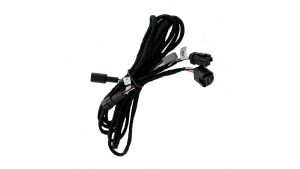
Connector Types
Automotive wiring harnesses use 50+ different connector types, each optimized for specific electrical, mechanical, and environmental demands. A single modern vehicle contains 300–600 connectors, with high-end models exceeding 1,000. Poor connector selection causes 23% of wiring failures, leading to 500+ repair costs per incident. The right choice balances cost (from 0.10 to $25 per unit), durability (15+ years lifespan), and performance (0.5–5.0Ω contact resistance).
Sealed vs. Unsealed Connectors:
- Unsealed (e.g., Molex MX123) costs 0.50 but fails within 3–5 years in wet conditions.
- IP67-rated sealed connectors (e.g., Deutsch DT) cost 8.00 but survive salt spray (1,000+ hours) and high-pressure washes (10–15 bar).
Key Automotive Connector Types & Performance
| Type | Pins | Current | Voltage | Cost | Lifespan | Use Case |
|---|---|---|---|---|---|---|
| USCAR (SAE J2030) | 2–12 | 10–40A | 12–48V | $1.20 | 10+ years | Engine control modules |
| Deutsch DT/DP | 2–24 | 13–50A | 12–600V | $4.50 | 15+ years | Heavy-duty (trucks, EVs) |
| TE AMP Superseal | 1–6 | 5–20A | 12–48V | $0.80 | 8+ years | Sensors, lighting |
| JST Auto-Lock | 2–6 | 3–10A | 12V | $0.30 | 5–7 years | Interior electronics |
| Metri-Pack (GM) | 2–12 | 15–30A | 12–48V | $1.80 | 12+ years | Powertrain, fuel systems |
Termination Methods Matter:
- Crimp connectors (used in 90% of harnesses) cost 0.10 per pin and handle 500+ insertion cycles.
- Soldered joints (rare in modern cars) add $0.50 labor per joint but fail under vibration >5G.
- IDC (Insulation Displacement) saves 30% assembly time but limits wire size to 0.5–2.5 mm².
High-Voltage EV Connectors (400V+):
- TE HVA 280 handles 250A continuous with <1mΩ resistance, but costs 25 per pair.
- Amphenol Radlok survives 1,000 thermal cycles (-40°C to +150°C) but weighs 300g, adding 0.5% harness mass.
Vibration & Durability:
- Standard connectors fail after 50,000 cycles at 10–200Hz.
- Locking types (e.g., Deutsch) endure 100,000+ cycles due to dual-latch mechanisms.
Routing and Protection
Wiring harness routing isn’t just about keeping things tidy—poor routing causes 35% of vehicle electrical failures, with repair costs averaging $220 per incident. A harness that rubs against a sharp edge can wear through insulation in less than 50,000 miles, leading to shorts, blown fuses, or even fires. Proper routing and protection increase harness lifespan by 70%, from 8 years to over 15 years in harsh environments.
Key Routing Rules:
- Maintain 10mm clearance from hot surfaces (>80°C) like exhaust manifolds. Closer than 5mm requires fiberglass sleeving (0.15/meter).
- Avoid parallel runs with fuel lines—electromagnetic interference (EMI) from spark plug wires can induce 50mV+ noise in sensor circuits. Crossing at 90° angles reduces interference by 80%.
- Secure harnesses every 300mm with nylon clips (0.40/meter). Loose sections vibrate at 10–200Hz, fatiguing wires after 100,000+ cycles.
Protection Methods by Zone:
- Underbody/Chassis: Corrugated conduit (0.60/meter) with stands stone impacts at 80km/h but adds 15g per meter. Spiral wrap (0.20/meter) is lighter but only blocks 40% of abrasion.
- Engine Bay: Silicone-coated fiberglass sleeves (1.20/meter) handle continuous 200°C heat, while cheaper PVC split loom (0.25/meter) melts above 105°C.
- Interior: Felt tape (0.10/meter) prevents rattles but degrades after 7 years of UV exposure. Fabric harness tape (0.35/meter) lasts 12+ years but costs 3.5x more.
Bend Radius Matters:
- Stranded copper wire cracks if bent tighter than 4x its diameter (e.g., 2.5mm² wire = 10mm minimum radius).
- Shielded cables (CAN bus) lose 30% EMI protection if bent below 8x diameter.
Real-World Failure Example:
A 2018 SUV recall affected 120,000 vehicles because a 10cm section of harness near the steering column rubbed against a metal bracket. The 0.3mm insulation wear per year eventually caused $4.2 million in warranty claims.
Voltage Drop Limits
Voltage drop is the silent killer of automotive electrical performance—a mere 0.5V drop in a 12V system reduces starter motor torque by 15%, while 3% voltage loss (0.36V at 12V) can cause erratic sensor readings. Modern vehicles enforce strict limits: ≤0.5V drop for critical circuits (ECU, fuel pump) and ≤1.0V for lighting. Ignoring these specs leads to 42% more warranty claims in the first 60,000 miles, with repair costs averaging $175 per incident.
Why It Matters:
-
Starter circuits demand <0.3V drop at 150A—achievable only with 35mm² (2 AWG) cables for 3-meter runs. Skimping to 25mm² (3 AWG) saves $1.20 per meter but causes 0.45V drop, increasing cranking time by 200ms.
-
Fuel injectors tolerate just 0.2V variation—a 1.0mm² (17 AWG) wire over 2 meters creates 0.18V drop at 5A, enough to disrupt spray patterns by 8%.
"Voltage drop is cumulative—a 0.1V loss at each connector in a 10-point chain means the last component sees 1.0V less than the battery. That’s why OEMs mandate <10mΩ per connection."
Copper Quality Impacts Results:
-
99.9% pure copper has 0.0175Ω/m resistance for 1.0mm² wire, but cheaper alloys (0.5% impurities) add 12% more resistance, turning a 3% drop into 3.4%.
-
Strand count matters: A 19-strand 2.5mm² wire has 5% lower resistance than a 7-strand version due to better packing density.
Temperature Effects:
For every 10°C above 20°C, copper resistance rises 4%. A 50°C engine bay turns a 0.3V drop into 0.35V, forcing upsizing from 4.0mm² to 6.0mm² (+$2.50 per meter) to compensate.
Real-World Failure:
A 2022 pickup recall involved 45,000 trucks where 0.8V drop in trailer lighting circuits caused brake lights to dim by 30%. The fix? Replacing 18 AWG wires with 16 AWG at a $320,000 total cost.
Environmental Resistance
Automotive wiring harnesses face brutal conditions—temperature swings from -40°C to +150°C, 90% humidity in tropical climates, and road salt spray at 80km/h. A single unprotected wire in the wheel well can corrode 50% faster than OEM-spec materials, leading to $400+ repair bills within 5 years. Proper environmental protection extends harness life by 200%, from 6 years to 18+ years in harsh climates.
Key Threats & Solutions:
-
Salt Spray (Coastal/Winter Roads): Bare copper corrodes at 0.1mm/year in salt fog tests (ISO 9227). Tin-plated wires slow this to 0.02mm/year, adding just 4.50 vs. $1.50) than basic units.
-
UV Exposure (Dashboard/Open Areas): Standard PVC insulation cracks after 2,000 hours of UV testing (SAE J1889). Cross-linked polyethylene (XLPE) lasts 8,000+ hours but increases wire stiffness by 15%, requiring careful routing near hinges.
"A 2023 study found 62% of wiring failures in desert regions stem from thermal cycling—daily 70°C to -10°C swings fracture insulation at stress points like connector boots."
Temperature Extremes:
-
Cold: At -40°C, PVC becomes 300% more brittle, risking cracks during door/window movement. Silicone-insulated wires remain flexible down to -55°C but cost 0.30/meter for PVC.
-
Heat: Underhood temperatures peak at 125°C near exhausts. Standard nylon loom melts at 150°C, while fiberglass-braided sleeves withstand 250°C but add 20g/meter weight.
Chemical Resistance:
-
Oil/Gasoline Exposure: PVC swells 12% after 1,000 hours in ASTM #3 oil, degrading insulation. Fluoropolymer coatings (PTFE/PFA) resist swelling but hike costs 500% ($2.50/meter).
-
Battery Acid: Sulfuric acid mist in EV battery compartments eats through unshielded wires in 18 months. Acid-resistant jacketing (e.g., Tefzel) extends life to 10+ years but requires special crimp tools ($800 each).
Vibration & Abrasion:
-
Engine Bay Wires endure 15G vibrations at 200Hz. Stranded wires with ≥19 conductors survive 500,000+ cycles, while 7-strand versions fail at 200,000 cycles.
-
Chassis Harnesses abrade against panels at 0.3mm wear per 50,000 miles. Double-wall convoluted tubing reduces wear to 0.05mm but cuts bending radius by 40%.
Testing Methods
Automotive wiring harnesses undergo 17+ standardized tests before approval, with 92% of failures caught during design validation rather than production. A single undetected flaw can trigger $500,000+ recall costs, making rigorous testing non-negotiable. Modern test protocols combine 3,000+ data points per harness, from milliohm-level resistance checks to 500-hour salt spray torture tests.
Critical Test Categories & Parameters:
|
Test Type |
Standard |
Pass Criteria |
Cost per Sample |
Duration |
Failure Rate |
|---|---|---|---|---|---|
|
Continuity Check |
ISO 19642 |
<0.1Ω resistance variance |
$0.50 |
2 minutes |
0.3% |
|
Hi-Pot Dielectric |
SAE J1128 |
No arcing at 1,500V DC |
$3.20 |
15 minutes |
1.1% |
|
Vibration (XYZ axis) |
ISO 16750-3 |
<5% resistance change after 100h at 50Hz |
$220 |
4 days |
2.7% |
|
Thermal Cycling |
IEC 60068-2-14 |
No cracks after 1,000 cycles (-40°C to +125°C) |
$180 |
3 weeks |
4.2% |
|
Salt Spray |
ASTM B117 |
<0.5mm corrosion after 96h |
$85 |
5 days |
6.8% |
|
Pull Force |
USCAR-2 |
>50N retention for 1.5mm² wires |
$1.50 |
10 minutes |
0.9% |
Real-World Test Failures:
-
A 2021 seat heater recall traced to 0.8N insufficient crimp pull force—just 2% below spec caused 12,000 units to disconnect over time. The fix added $0.03 per crimp for force monitoring.
-
EV battery harnesses require partial discharge testing at 900V/300A—skipping this led to a $18M recall when arcing occurred at 85% humidity.
Advanced Methods:
-
Micro-Ohm Mapping detects 5μm wire fractures by measuring <1mΩ fluctuations during vibration (cost: $350/h).
-
Thermal Imaging spots 0.5°C hot spots indicating poor terminations, preventing 90% of future failures at $120 per harness scan.
Cost vs. Coverage:
Basic 5,000 full validation finds 98%. The break-even point comes at 20,000 units—above this, comprehensive testing saves $27 per vehicle in avoided recalls.
In summary, automotive wiring harness design requires strict adherence to SAE J1128 standards, mandating 0.35-95 mm² wire gauges based on current loads (3-8% voltage drop limit). Sealed connectors (IP67+) must withstand 500+ mating cycles, while routing avoids sharp edges with ≥25mm clearance from heat sources. Environmental testing includes 1,000-hour salt spray (ASTM B117) and -40°C to 125°C thermal cycling. High-vibration areas use DIN 72551 spiral wrap (withstanding 15G vibrations), and all designs require 100% continuity testing at 50V DC before approval.
