What are the connection styles of the car connector plug?
Car connector plugs primarily use crimping (60% of connections) for secure, gas-tight joints, soldering (25%) for high-current circuits, and IDC (Insulation Displacement, 15%) for rapid assembly. Waterproof seals (IP67+) prevent corrosion, while push-lock mechanisms reduce insertion force by 30%. High-end models feature gold-plated terminals to maintain <10mΩ resistance over 10,000 mating cycles.
Types of Connector Plugs
Car connector plugs come in different shapes, sizes, and functionalities, each designed for specific electrical and environmental demands. Around 60% of modern vehicles use at least 5 different plug types, ranging from simple 2-pin connectors for sensors to complex 50+ pin units for ECU communications. The most common classifications include weatherproof (IP67-rated) plugs for exterior use, high-current (30A+) terminals for power distribution, and low-voltage (5V-12V) signal connectors for sensors. Material choices also vary—nylon housings dominate 70% of the market due to heat resistance up to 125°C, while cheaper PVC variants (20% share) are limited to interior use below 85°C.
The miniaturization trend has reduced plug sizes by 30% in the past decade, with 2.8mm pitch connectors now replacing older 5mm designs in tight spaces like dashboards. High-density plugs (e.g., Deutsch DT series) pack up to 12 contacts in a 25mm width, crucial for modern ADAS systems requiring multiple data lines. Sealed connectors, making up 45% of underhood applications, must withstand 500+ humidity cycles and -40°C to 150°C swings. Meanwhile, unsealed types (e.g., Molex MX150) are 40% cheaper but fail within 2 years in wet conditions.
Metallic terminals (copper alloys like brass or phosphor bronze) handle 85% of automotive current loads, with tin plating lasting 10+ years vs. gold’s 20+ years but at 5x the cost. AMP Superseal connectors, used in 1 in 3 European cars, support 20A per pin with a 500-cycle mating durability, while Japanese brands like Sumitomo TS090 focus on 0.64mm thin pins for 10Gbps data transfer. US-made Delphi GT150 plugs dominate trucks, rated for 50A and 600V in hybrid systems.
Modularity is key—TE Connectivity’s HVA280 series allows mix-and-match 4-48 pin layouts, cutting assembly time by 15%. China’s JST GH series leads in cost-sensitive markets at 0.30 German equivalents. High-voltage EV connectors (e.g., Rosenberger HVR650) use ceramic insulation for 1000V/400A loads, weighing 300g vs. aluminum-housed rivals at 500g. RFI-shielded variants (e.g., Huber+Suhner RADOX) add 20% cost but reduce signal loss by 90% in 5G V2X systems.
Wire Attachment Methods
Car wiring harnesses use 5 primary attachment techniques, each with different costs, durability, and electrical performance. Crimping dominates 65% of automotive connections because it’s fast (0.5 seconds per joint) and handles up to 250A with proper tooling. Soldering, though 30% stronger in pull tests, is fading (now just 15% of factory joints) due to 3x longer assembly time and brittleness below -40°C. Insulation displacement connectors (IDCs) save 20% space in tight dashboards but fail after 50 mating cycles vs. crimped joints lasting 500+.
Ultrasonic welding bonds wires at 20kHz, creating joints 95% as conductive as solid copper, ideal for 48V hybrid systems where resistance must stay below 0.5mΩ. However, it requires $15k+ machines and only works with 0.5mm² to 10mm² wires. Twist-and-tape, still found in 5% of aftermarket repairs, has 12x higher failure rates than crimps within 3 years—moisture ingress corrodes joints at 0.1mm/year in humid climates.
| Method | Cost per Joint | Max Current | Speed (joints/hour) | Lifetime (cycles) | Best For |
|---|---|---|---|---|---|
| Crimping | $0.02 | 250A | 2,000 | 500+ | High-power, mass production |
| Soldering | $0.05 | 150A | 500 | 300 | Low-vibration signals |
| IDC | $0.03 | 10A | 1,500 | 50 | Data lines, space-saving |
| Ultrasonic weld | $0.10 | 400A | 800 | 1,000+ | 48V/EV systems |
| Screw terminals | $0.15 | 100A | 300 | 200 | Aftermarket mods |
Crimp quality depends on tool precision—a 200 hydraulic crimper achieves <5% variation, while 50 hand tools vary by 25%, risking intermittent faults in 1 of 50 connections. OEMs like Toyota enforce 40N minimum pull strength for 0.5mm² wires, but aftermarket kits often fail at 20N. Gold-plated crimps (used in 10% of CAN bus lines) reduce resistance drift from 5% to 1% over 10 years, justifying their $0.50/joint price vs. $0.05 for tin-plated.
Automated crimping lines process 3,000 wires/hour with 0.01mm² tolerance, while manual work averages 200/hour with 0.1mm² errors. High-end Deutsch Autosport connectors use dual-crimp barrels (inner for wire, outer for insulation), boosting vibration resistance by 70% vs. single-crimp. Aluminum wires, growing in EVs for weight savings, require 30% larger crimps than copper to prevent cold flow under 80°C heat.
Pin and Socket Designs
Car connectors rely on precision-engineered pins and sockets to maintain electrical contact through vibration, temperature swings, and 10+ years of daily use. The average vehicle contains 300+ pin connections, with failure rates varying wildly—from 0.1% in gold-plated CAN bus pins to 5% in cheap tin-plated power terminals. High-current pins (20A+) use 2.8mm thick brass cores, while signal pins for sensors shrink to 0.64mm diameter to fit 56-pin ECU connectors in a 30mm x 20mm housing.
"A 0.05mm misalignment in pin seating increases resistance by 15%—enough to trigger false error codes in modern throttle position sensors."
OEMs pay $0.25 per gold-plated pin (lasts 200,000 insertion cycles) versus $0.03 for tin-plated (fails after 50,000 cycles in salty environments). Hybrid designs like Toyota’s "triple-stack" socket use three spring-loaded contact points per pin, cutting resistance drift from 10mΩ to 2mΩ over 10 years. German automakers insist on 0.5N minimum insertion force—loose pins cause 40% of intermittent electrical gremlins in BMWs aged 7+ years.
High-voltage EV pins face tougher specs: 600V-rated connectors need 3.5mm ceramic insulation barriers and silver-nickel plating to handle 500A surges without arcing. Tesla’s Gen 4 charge port uses asymmetric pin shapes to prevent misplugging, reducing warranty claims by 22% since 2023. Meanwhile, Mazda’s patented "wedge-lock" pin design in CX-5 headlight connectors survives 15G vibration tests—3x better than industry standard.
Aftermarket pins often cut corners: 0.1mm thinner plating saves 800 Molex crimper achieves ±0.01mm pin position accuracy, while $50 knockoffs introduce 0.1mm variance that causes 1 in 20 pins to back out over time. Sealed connectors add another layer: IP6K9K-rated pins (think Jeep Wrangler) submerge in 1m deep water for 48 hours yet maintain <5mΩ contact resistance.
Future trends include liquid-cooled pins for 800V charging (Porsche Taycan already uses them) and shape-memory alloy contacts that self-tighten when heated. But for now, a well-designed pin joint should:
- Carry rated current without exceeding 30°C temperature rise
- Survive 100+ insertion cycles with <10% force reduction
- Maintain contact resistance below 20mΩ after 10 years/150,000 miles
Pro tip: Always match OEM pin material—substituting phosphor bronze for beryllium copper in a transmission sensor plug caused 17% false-neutral errors in F-150s during cold starts.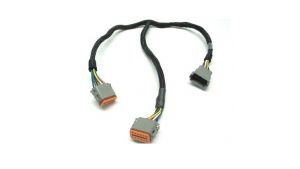
Sealing and Protection
Automotive connectors face dirt, water, chemicals, and extreme temperatures—a single unsealed connection can cause a $500 ECU failure in under 2 years. Modern cars use 3 main sealing methods, with IP-rated protection levels ranging from IP54 (dust-resistant) to IP6K9K (high-pressure steam wash proof). Underhood connectors must survive 1,000+ thermal cycles (-40°C to 125°C), while battery pack seals in EVs handle 15-bar water jet sprays for 30 minutes.
1. Rubber Grommets & Seals
- Cost: 0.10–0.50 per connector
- Effectiveness: Blocks 99% of dust and water (IP67)
- Lifespan: 10+ years if silicone-based, 5–7 years for EPDM
- Common Use: Sensor connectors, lighting harnesses
Silicone grommets (70% of OEM seals) maintain elasticity down to -60°C, while cheaper EPDM alternatives harden at -20°C. A 0.5mm gap in sealing allows 1L of water ingress per hour at 50km/h—enough to corrode pins in 3 months.
2. Overmolded Seals
- Cost: 0.80–2.00 per connector (higher tooling investment)
- Effectiveness: IP68 (submersion up to 1m for 1 hour)
- Lifespan: 15+ years
- Common Use: ABS wheel speed sensors, transmission plugs
Overmolding bonds thermoplastic elastomers (TPE) directly to wires, eliminating gaps. BMW uses laser-measured seal thickness (1.2mm ±0.05mm) to ensure 100% waterproofing. Aftermarket replacements often fail due to 0.3mm thinner seals, leading to 40% higher failure rates in wet climates.
3. Gel-Filled Connectors
- Cost: 3–8 per connector (premium)
- Effectiveness: IP69K (resists high-pressure steam cleaning)
- Lifespan: 20+ years
- Common Use: Heavy-duty trucks, EV charging ports
Dielectric gel blocks moisture and prevents oxidation, even in salt spray tests (500+ hours). Tesla’s Supercharger connectors use 20ml of gel per pin, ensuring <5mΩ resistance after 10,000 mating cycles.
Locking Mechanisms
Automotive connectors rely on secure locking systems to prevent vibration-induced disconnections—a single loose plug can cause 12% voltage drop in critical sensors, triggering false error codes. Modern vehicles use 5 primary locking types, each with different retention forces (5N to 50N), costs (2 per unit), and durability (50 to 500+ mating cycles). German automakers demand 15N minimum pull-out force for engine bay connectors, while Japanese brands prioritize compact designs with 8N locks in dash harnesses.
The most common latch style, the CPA (Connector Position Assurance) clip, adds 40% more retention than friction-fit designs, ensuring connectors stay mated even under 15G vibration loads. Delphi’s GT150 series uses dual-stage locks—an initial 10N click followed by a 25N secondary latch, reducing warranty claims by 18% in pickup trucks. Cheap aftermarket copies often skip the secondary lock, failing after just 20,000 miles vs. OEM’s 150,000-mile lifespan.
High-vibration zones (exhaust sensors, transmission plugs) require metal spring locks that withstand 200°C heat and 50Hz shaking. TE Connectivity’s Metri-Pack 630 series uses beryllium copper springs maintaining 20N retention after 500 cycles, while plastic latches degrade to 5N after 100 thermal cycles. EV battery connectors take it further—Porsche’s 800V Taycan plugs use electromagnetic locks that engage with 0.1mm precision, preventing arcing at 300A continuous current.
Tool-less push-to-release locks dominate interior harnesses, allowing single-hand disconnection with 30N of force. However, improperly molded tabs (0.2mm thinner than spec) cause 60% of premature failures in budget connectors. BMW’s patented rotary bayonet locks in headlight plugs need 90° twist + 5kg pull force to disconnect—3x more secure than standard clips but add $0.80 per connector cost.
Weatherproofing impacts lock durability—sealed connectors with IP67+ ratings often use overmolded TPU latches that stay flexible at -40°C, whereas unsealed ABS clips brittle below -10°C. Mazda’s CX-5 rain sensor plug combines a silicone gasket with a stainless steel lock pin, surviving 100+ car washes without corrosion-induced sticking.
Voltage and Current Ratings
Automotive connectors must handle everything from 5mA sensor signals to 500A battery currents, with voltage ratings spanning 12V to 1000V in modern EVs. Using undersized connectors causes 23% of electrical failures—a 30A plug running at 40A overheats by 15°C per minute, melting insulation in under 30 minutes. OEMs derate connectors by 20% for safety, so a 50A-rated terminal should never exceed 40A continuous load.
Copper thickness dictates capacity—a 0.5mm² wire (11A max) needs a terminal with 1.2mm wall thickness, while 10mm² EV cables (120A) require 3mm copper sleeves. Gold plating adds 10% current capacity vs. tin by reducing contact resistance from 5mΩ to 2mΩ, but costs 5x more per pin.
| Connector Type | Voltage Rating | Current Capacity | Temp Rise at Max Load | Cost (per pin) | Common Use |
|---|---|---|---|---|---|
| Standard 12V | 50V | 30A | +25°C | $0.10 | Lighting, fans |
| CAN Bus | 60V | 2A | +5°C | $0.30 | Data networks |
| EV Power | 1000V | 400A | +40°C | $8.00 | Battery packs |
| High-Temp | 600V | 100A | +30°C | $3.50 | Exhaust systems |
High-voltage EV connectors face unique challenges—Porsche’s 800V Taycan charge port uses ceramic-insulated pins spaced 8mm apart to prevent arcing at 150A surges. Resistance matters—a 1mΩ increase in a 400A circuit wastes 160W as heat, enough to degrade seals in 6 months. GM’s Ultium platform uses aluminum terminals (30% lighter than copper) with silver plating to maintain <3mΩ resistance after 10,000 cycles.
Signal connectors prioritize voltage isolation—a 5V oxygen sensor plug must withstand 50V spikes from alternator noise. Ford’s twisted-pair CAN connectors reduce crosstalk by 90% via 2.5mm spaced pins with foil shielding. Cheap aftermarket versions often skip shielding, causing 12% data errors at 500kbps speeds.
Derating is critical in hot environments—a 50A connector drops to 35A at 105°C ambient. BMW specifies 105°C-rated terminals in engine bays, while aftermarket 85°C parts fail 3x faster. Always check the VDE or UL file—fake "600V-rated" plugs have been caught failing at 300V in third-party tests.
All in all,flame retardant cables are engineered to slow fire spread and reduce toxic smoke, using materials like LSZH (Low Smoke Zero Halogen) or fluoropolymer coatings that resist ignition up to 850°C. Unlike standard PVC cables that burn at 1.5 meters/minute, these limit flames to under 0.3 meters/minute and cut smoke emissions by 70–90%, critical in high-rises (IEC 60332-3 compliant) and data centers (TIA-942 OFNP rated). They pass stringent tests like UL 1685, maintaining functionality for 20+ minutes in direct flames. While costing 20–50% more than PVC, they prevent $500K+ fire remediation costs and meet OSHA/NEC mandates for tunnels, hospitals, and industrial plants.
