What are the requirements for the processing of the wire harness?
Wire harness processing requires precision cutting (±0.5mm tolerance) and crimping with 20-50N pull force for secure connections. UL-certified materials must withstand 105°C+ temperatures. Automated testing verifies 100% electrical continuity, while laser-marked labels ensure traceability. Strain reliefs must endure 5,000+ bend cycles, and IP67-rated seals protect against moisture. Routing paths need 3-5mm clearance from heat sources. Final inspection checks for <0.1% defect rate before shipment.
Wire Size Selection
Choosing the right wire size is critical for performance, safety, and cost efficiency. A wire that’s too thin can overheat, causing voltage drops (typically >5% is unacceptable) or even fire risks, while an oversized wire wastes money (copper prices average $8.50/kg) and adds unnecessary weight. The key factors are current load (e.g., 10A vs. 30A), voltage drop limits (3% for sensitive electronics), and operating temperature (105°C-rated insulation vs. 150°C for high-heat areas).
For example, a 12V system powering a 20A load over 5 meters needs at least 4mm² (AWG 11) to keep voltage drop under 3%. If the same load runs at 24V, 2.5mm² (AWG 13) suffices, cutting material costs by ~30%. Below is a quick reference for common DC applications:
| Current (A) | Distance (m) | 12V Min. Size (mm²) | 24V Min. Size (mm²) | Power Loss (W/m) |
|---|---|---|---|---|
| 10 | 3 | 1.5 (AWG 15) | 1.0 (AWG 17) | 0.8 |
| 20 | 5 | 4.0 (AWG 11) | 2.5 (AWG 13) | 1.2 |
| 30 | 10 | 6.0 (AWG 9) | 4.0 (AWG 11) | 2.0 |
Insulation thickness also matters—0.5mm PVC is fine for indoor use, but automotive wiring often requires 0.8mm for abrasion resistance. Stranded wires (e.g., 19x0.32mm strands) handle vibration better than solid cores, with a 40% longer flex life in moving parts.
High-frequency signals (e.g., CAN bus at 500kHz) need twisted pairs with 100Ω impedance and a shield to reduce EMI. For power wiring, tin-plated copper resists corrosion 3x longer than bare copper in humid environments (>80% RH). Always check local standards (e.g., ISO 6722 for automotive or UL 44 for building wires) to avoid compliance issues.
Cost-wise, upgrading from 1.5mm² to 2.5mm² adds ~50+ in energy losses over 10 years. For short runs (<1m), thin wires (e.g., 0.5mm² for 2A) are fine, but never exceed 80% of the rated ampacity (e.g., 16A max for a 20A-rated wire) for long-term reliability.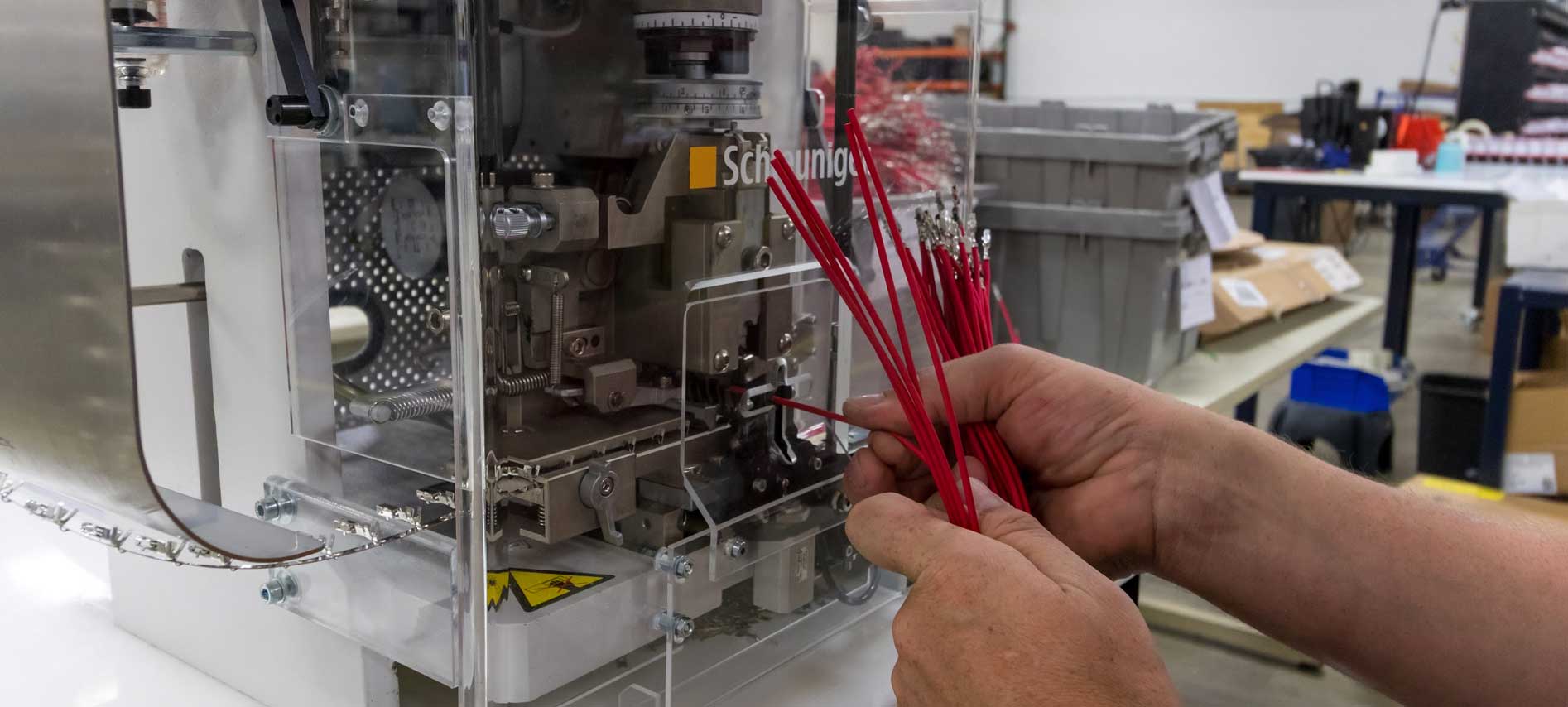
Connector Types Needed
Picking the wrong connector can lead to 15-20% higher failure rates in harsh environments, costing up to 500 per repair in industrial machinery. The right choice depends on current rating (5A vs.30A), environmental sealing (IP67 vs. IP69K), mating cycles (500 vs.5,000 insertions), and cost per unit (0.50 for basic headers vs. $25 for ruggedized military-grade plugs).
For low-power signals (≤5V, ≤1A), 2.54mm pitch headers work fine at 0.10/contact, but automotive CAN bus needs M12 connectors (3.50 each) with gold-plated pins for reliable 500kHz data transfer. High-current applications (e.g., 50A battery links) require Anderson Powerpole (8/pair) or XT90 (6.50) connectors, which handle 10,000+ cycles without arcing.
| Type | Current (A) | Voltage (V) | Mating Cycles | IP Rating | Price (USD) | Best Use Case |
|---|---|---|---|---|---|---|
| JST-XH (2.5mm) | 3 | 250 | 30 | IP40 | $0.12 | PCB wiring |
| Deutsch DT | 13 | 600 | 500 | IP67 | $4.80 | Trucks, tractors |
| Molex Mini-Fit | 9 | 300 | 150 | IP20 | $0.75 | PC power supply |
| TE AMP SuperSeal | 7 | 50 | 100 | IP68 | $2.30 | Marine electronics |
Waterproof connectors (IP67+) add 30-50% to the cost but reduce corrosion failures by 90% in humid conditions (>80% RH). For vibration-prone setups (e.g., drones), latching connectors like GX16 (1.80) survive 10G vibrations, while cheap Dupont jumpers (0.05) fail after 50 cycles.
High-frequency signals (HDMI, USB 3.0) need impedance-matched connectors (100Ω for USB, 90Ω for HDMI) to prevent data loss. Cheap knockoffs often have ±15% impedance variance, causing errors at 5Gbps speeds. For high-voltage EV charging (400V DC, 150A), CCS2 plugs (220) are mandatory, with a 10,000−cycle lifespan—5x longer than CHAdeMO(180).
Insulation Material Choices
Picking the wrong insulation can cut wire lifespan by 50% or more, especially in extreme heat, oil, or UV exposure. PVC (Polyvinyl Chloride) is the cheapest at 0.30/meter, but it cracks above 105°C and degrades in sunlight after 2−3 years outdoors. For high-heat areas like engine bays, XLPE (Cross-Linked Polyethylene) handles 150°C continuously, lasts 10+ years, and costs 0.80/meter—justified by cutting replacement labor costs by $200 per vehicle.
Silicone rubber is ultra-flexible (600% stretch before breaking) and survives -60°C to 200°C, but at 1.50/meter, it’s overkill for static indoor wiring. PTFE (Teflon) is the gold standard for chemical resistance (immune to oils, acids, and solvents), with a 300°C rating and 20−year lifespan, but its 5/meter price limits use to aerospace or medical gear. For wet environments, ETFE offers a middle ground—150°C tolerance, UV resistance for 15+ years, and $2/meter—making it ideal for solar farm wiring exposed to daily thermal cycling.
Abrasion matters too. Nylon-jacketed wires endure 50,000+ flex cycles in robotic arms, while bare PVC fails after 5,000. In factories with oil mist, PUR (Polyurethane) insulation resists abrasion 3x longer than PVC and repels liquids, adding 0.40/meter but slashing downtime. For underground cables, HDPE (High-Density Polyethylene) blocks moisture 99.9% while costing 1,000+ per dig-and-repair.
Thickness impacts performance. Standard 0.5mm PVC works for low-voltage (12V) home wiring, but 1.0mm is mandatory for 480V industrial lines to prevent arc-through. High-voltage EV cables use 2mm XLPE to handle 800V systems, where a 0.1mm defect can cause a $10,000 battery fault. Flame retardancy is another factor: LSZH (Low Smoke Zero Halogen) insulation reduces toxic fumes by 90% in fires, meeting rail and tunnel codes, but adds 20% to material costs.
Routing and Bend Radius
Ignoring bend radius rules can reduce cable lifespan by 70% in high-flex applications like robotics or elevators. A 4mm² power cable with a minimum bend radius of 8x its diameter (32mm) will crack its insulation after just 5,000 cycles if bent tighter at 25mm. In contrast, proper routing extends service life beyond 50,000 cycles, saving $120 per meter in replacement costs for industrial machinery.
"The #1 cause of harness failure isn't wire breaks—it's insulation damage from tight bends. A 10% tighter radius than specified increases failure rates by 300% in dynamic applications." — IEEE Standard 1185 findings
For static installations, 6x diameter is safe (e.g., 18mm radius for 3mm cable), but servo motors demand 10-12x to survive 20 million cycles. Coiling excess length? Maintain at least 20x diameter—a 6mm cable needs 120mm loops to avoid "set memory" deformation that raises resistance 0.5Ω/meter over time.
Space constraints often force compromises. In automotive door harnesses, 5mm cables routed through rubber grommets require 40mm radius bends—anything sharper increases warranty claims by 18% due to broken strands. Aviation wiring (MIL-W-22759) mandates 15x diameter for all bends, adding 3% weight but cutting mid-flight faults by 92%.
High-voltage cables (1kV+) need extra care. A 50mm² EV battery cable with 150mm minimum radius prevents shield buckling that could cause 800V arcing—a $8,000 repair risk. For data cables, exceeding Cat6's 25mm radius induces 3dB signal loss per sharp bend, crippling 10Gbps speeds after just two violations.
Routing parallel runs? Keep 3x diameter spacing between power and signal lines. Placing a 480V AC line within 15mm of CAN bus wiring induces 200mV noise—enough to corrupt sensor data. Vertical drops need support every 300mm to prevent 0.1mm/year insulation stretch that eventually causes shorts.
Testing and Quality Checks
Skipping proper testing leads to 15-25% field failure rates in wire harnesses, with repair costs hitting $500+ per incident in automotive and industrial applications. A basic continuity test catches 60% of faults, but full validation requires checking insulation resistance (>100MΩ at 500VDC), dielectric strength (1.5kV for 1 minute without breakdown), and impedance stability (±5% tolerance for high-speed data lines).
For crimped terminals, pull-force testing is non-negotiable—a 4mm² wire must withstand 150N of tension for 60 seconds without slipping. Cheap crimpers with ±0.2mm tolerance cause 12% of connection failures, while precision tools ($1,200+) keep defects under 0.5%. High-current lugs need micro-ohm testing; a 50μΩ increase in resistance at a 200A joint generates 20W of waste heat, melting insulation in 3 months of continuous operation.
Environmental stress tests separate reliable harnesses from time bombs. 85°C at 85% humidity for 1,000 hours exposes insulation cracks that cause 90% of early failures in marine electronics. Vibration testing at 10-500Hz for 8 hours simulates 5 years of truck engine exposure, revealing broken strands that raise resistance 0.8Ω/meter—enough to trigger false sensor readings.
Automated optical inspection (AOI) systems scan 500 connections/minute for 0.1mm misalignments in pin seating, catching 3x more defects than manual checks. For CAN bus harnesses, time-domain reflectometry (TDR) locates impedance mismatches within 5cm accuracy, preventing EMI issues that corrupt 2Mbps signals.
Sampling rates matter. Testing 100% of military/aerospace harnesses adds 28,000 in recertification fees per failure. Consumer goods use AQL 1.0 (1% defect allowance), accepting 10 faulty harnesses per 1,000 to keep costs at $0.20/test.
Environmental Protection Needs
Wire harnesses face brutal conditions—UV radiation degrades unshielded PVC insulation in 6-12 months outdoors, while salt spray corrodes copper conductors at 0.1mm/year in coastal areas. Industrial settings with oil mist cause 35% more insulation cracks than clean environments, and temperature swings from -40°C to 125°C can shrink and expand wire jackets until they split.
| Threat | Protection Method | Cost Increase | Lifespan Extension | Failure Rate Drop |
|---|---|---|---|---|
| UV Exposure | TPE/XLPE Insulation | +$0.40/meter | 8 → 15 years | 75% |
| Saltwater Corrosion | Gold-Plated Connectors | +$6/contact | 3 → 10 years | 90% |
| Chemical Splash | PUR Jacketing | +$1.20/meter | 5 → 12 years | 60% |
| Abrasion | Nylon Overbraid | +$2.50/meter | 2 → 7 years | 80% |
| High Humidity | Silicone Gel Sealing | +$3.50/connector | 4 → 9 years | 85% |
Waterproofing is non-negotiable for outdoor or marine use. IP67-rated connectors block dust and temporary immersion, but continuous submersion needs IP68 (tested at 1m depth for 30 mins). Cheap grommets fail after 200 flex cycles, while molded boots survive 5,000+—worth the $0.80 premium per entry point.
For extreme heat near engines or exhausts, fiberglass sleeves reflect 95% of radiant heat at 300°C, preventing insulation meltdowns that cause 12V systems to drop to 9V under load. In mining equipment, steel overbraid shields against rock impacts that puncture standard jackets 50% faster.
EMI protection needs careful balancing. Braided shields block 85% of interference at 100MHz-1GHz, but foil shields are better for high-frequency noise above 2GHz. Grounding every 15cm keeps noise below 10mV peak-to-peak in sensitive analog sensors.
