Don't let the waterproof plugs ruin the entire batch of wiring harnesses
In actual production and assembly, issues like "forgetting to install the wire seal after crimping," "mixing up wire seals and cavity plugs," or "leaving a cavity unsealed" are regrettably common. These seemingly minor oversights can often lead to severe quality incidents.
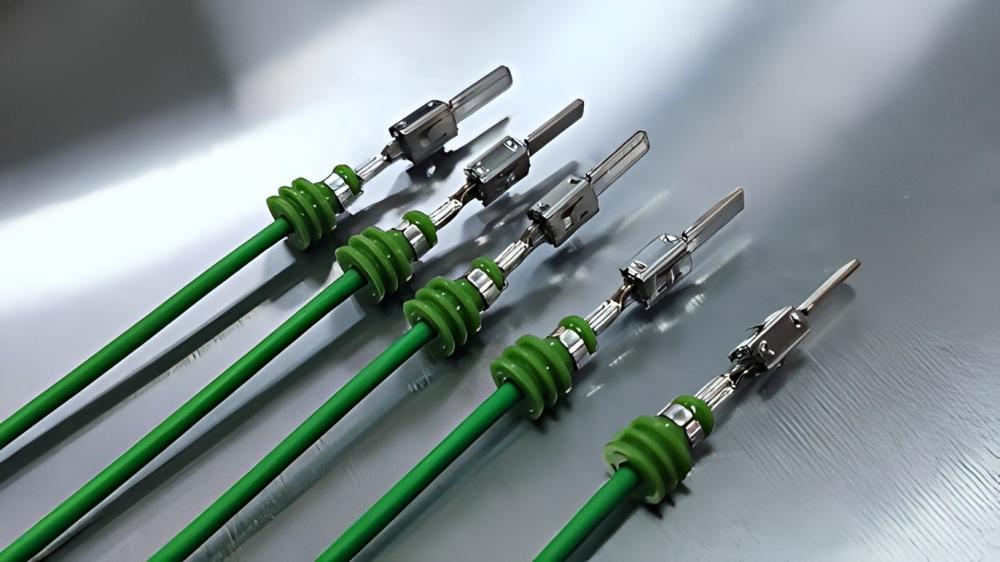
Why is Missing or Incorrectly Installing a Seal a "Critical Oversight"?
Before delving into wire seals and cavity plugs, let's address two key questions: Why are seals forgotten during production, and what are the serious consequences of this negligence?
1. Why Are Seals Commonly Forgotten After Crimping?
This problem typically arises from a combination of workflow gaps and habitual practices.
On one hand, harness assembly involves multiple steps: cutting, stripping, crimping terminals, installing seals, and inserting them into the connector. If operators do not strictly follow the "install seal before crimping" rule, or if a step is missed during hand-off, the omission is often only discovered after crimping is complete.
On the other hand, some personnel may not fully grasp the critical importance of the seal, thinking "missing one occasionally is no big deal." This complacency, especially during high-volume production or under rushed deadlines, can lead to shortcuts in the process.
Furthermore, the variety of seal sizes can cause delays if materials aren't organized in advance, potentially prompting workers to skip the step altogether to save time.
2. The Severe Consequences: More Damaging Than You Think
The consequences of missing or installing the wrong seal are highly destructive, extending beyond product failure to potential safety hazards:
Harness Failure & Equipment Malfunction: Moisture, dust, and contaminants can enter the connector cavity, causing terminal oxidation and corrosion. This leads to poor contact, signal interruption, and malfunctions. For example, a missing seal in an automotive harness can allow rainwater ingress, leading to power window or brake light failure. In machinery, it can cause a control system failure.
Short Circuits & Fire Risk: Moisture ingress compromises insulation, easily causing short circuits between terminals. In high-voltage applications, this can generate sparks, igniting nearby plastics or wire insulation, posing a serious fire hazard in vehicles or energy systems.
Increased Costs & Reputational Damage: Repairs for seal-related failures often require complete harness replacement, driving up costs significantly. More critically, if defective products reach the market, they can lead to customer complaints and damage the company's reputation.
Core Component Analysis: The Wire Seal – The Harness's "Custom-Fit Raincoat"
The wire seal (or grommet) is installed directly on the wire, creating a seal with the connector housing. It acts as a custom barrier for each wire, preventing contaminants from entering along the gap between the wire and the housing.
1. Core Function
Its primary role is to provide a radial seal between the wire and the connector housing. It also helps secure the wire and buffers against pulling forces from vibration, preventing terminal loosening. It is a fundamental component in almost any waterproof wiring harness.
2. Common Classifications
-
By Installation Method:
-
Pre-Assembled: Must be threaded onto the wire before terminal crimping. This is the industry standard, offering reliable sealing but requiring strict adherence to procedures.
-
Post-Assembled: Can be installed after crimping, typically snapping onto the wire. This allows for repair or rework but offers slightly inferior sealing and requires precise matching of wire sizes.
-
-
By Material:
-
Rubber (EPDM/NBR): Most common. EPDM offers excellent weather/ozone resistance for outdoors. NBR provides superior oil resistance for engine compartments.
-
Silicone: Wider temperature range (-60°C to 200°C), excellent for extreme environments like near engines or EV battery packs.
-
-
By Aperture Size: The seal's inner diameter must precisely match the wire's cross-sectional area (e.g., 0.5 mm², 0.75 mm²). A mismatch compromises the seal or damages wire insulation.
3. Correct Usage Guidelines
The key is "select the right size, follow the sequence, ensure proper seating."
-
Confirm Specification: Match the seal's inner diameter to the wire size and its outer diameter to the connector's seal groove. Use the BOM, connector datasheet, or packaging for verification.
-
Follow Sequence Strictly: For pre-assembled seals, install on the wire before crimping. For post-assembled types, use tools to avoid damaging insulation.
-
Ensure Proper Installation: After insertion, verify the seal is fully seated in the housing groove—it should not move when the wire is gently pulled and should fit snugly.
-
Avoid Mixing/Substitution: Do not mix sizes or materials (e.g., using a large seal on a small wire or rubber where silicone is required). Never use damaged or deformed seals.
Core Component Analysis: The Cavity Plug – The Port's "Sealing Stopper"
The cavity plug seals unused cavities in a connector. It's a common misconception that unused cavities don't need sealing. In reality, they are a direct path for contaminants. The cavity plug acts as a "stopper," completing the seal alongside wire seals.
1. Core Function
Its primary role is to seal unused cavities, working with wire seals to form a complete sealing system. It also prevents dust and foreign-object ingress, protects internal contacts, allows for future expansion, and enhances the connector's structural stability.
2. Common Classifications
-
By Installation Method:
-
Push-In Type: The mainstream type, snapped into place via elastic clips. Quick to install, but must be fully seated.
-
Screw-In Type: Threaded for installation. Offers stronger sealing and better vibration resistance for high-voltage or high-reliability applications.
-
-
By Protection Level: Rated for specific IP levels (e.g., IP67, IP68). Choose based on the operational environment (outdoor, wet, etc.).
-
By Material: Typically EPDM or silicone rubber. Some high-strength applications may use metal bodies with rubber seals.
3. Correct Usage Guidelines
The key is "identify the cavity, install correctly, avoid missing any."
-
Identify Cavity & Spec: Use harness drawings and connector manuals to locate all unused cavities. Select the correct plug size for each.
-
Install Properly: For push-in types, press firmly until you hear an audible "click" confirming locking. For screw-in types, tighten to the specified torque to avoid damage.
-
Inspect to Prevent Omission: After assembly, visually inspect every cavity. Use a flashlight or gauge to verify that all unused cavities are plugged. Implement a checklist.
-
Do Not Reuse: Cavity plugs are generally single-use. Removal can damage the sealing surfaces. Always replace with a new plug and discard any that are cracked or deformed.
The Synergy of Wire Seals and Cavity Plugs: A Complete Protection System
In summary, wire seals and cavity plugs are both indispensable. They work synergistically: wire seals block ingress along the wires, while cavity plugs seal the remaining ports. Only with both correctly installed is a complete seal achieved.
For personnel on the line, preventing these errors requires:
-
Cultivating Awareness: Understand that "sealing is critical" and recognize the severe potential consequences.
-
Following Procedures Rigorously: Standardize the "seal before crimp" and "plug all unused cavities" habits.
-
Verifying and Inspecting: Use available documentation (BOMs, manuals) and tools to check for correct specifications and proper installation.
By properly utilizing wire seals and cavity plugs, we build a robust defense against moisture and contamination. This ensures the long-term reliability of the wiring harness and, ultimately, the safe operation of the equipment it serves.
