What Are the 7 Must-Know Standards for Cable Harness Assembly
Cable harness assembly must comply with IPC/WHMA-A-620 Class 3 for aerospace/medical use, requiring <1% defect rates. Critical standards include 30N pull-test crimps, 500V HiPot isolation, and 3:1 bend radius for strain relief. Use UL-certified wires (105°C rated) and torque-controlled terminals (0.5Nm ±10%), with automated continuity testing (<0.5Ω resistance/connection) to ensure reliability in harsh environments.
Wire Size and Type
A mismatch can lead to overheating, voltage drop, or even failure—costing up to $15,000 in rework for industrial applications. The most common mistake? Using 22 AWG wire for high-current circuits when 16 AWG is needed, increasing resistance by 64% and reducing efficiency by 12%. Automotive harnesses, for example, typically use 0.35 mm² to 6 mm² wires, with 0.5 mm² being the standard for low-power signals and 2.5 mm² for power lines.
Copper remains the dominant material (95% of harnesses), but aluminum is gaining traction in cost-sensitive applications, offering 30% savings at the expense of 20% lower conductivity. Stranded wires (e.g., 7/0.2 mm or 19/0.1 mm) are preferred for flexibility, while solid cores are used in fixed installations. Temperature ratings matter too: PVC-insulated wires (80°C max) are cheaper but fail in engine bays, where silicone or PTFE (200°C+) is mandatory.
Key Selection Factors
| Parameter | Typical Range | Impact |
|---|---|---|
| AWG Size | 8–28 AWG | Thinner wires (28 AWG) handle 0.05A, while 8 AWG carries 40A+ |
| Voltage Drop | <3% of source | A 5m 18 AWG wire at 10A drops 2.1V (7%)—unacceptable for 12V systems |
| Current Capacity | 3–40A | 16 AWG supports 10A, but derate to 7A in bundled harnesses |
| Insulation Type | PVC, XLPE, PTFE | PTFE costs 5x PVC but lasts 10x longer in high-heat zones |
For data cables, impedance control is critical. USB 3.0 requires 90Ω differential pairs, and deviations beyond ±10% cause signal loss. Shielded twisted pairs (STP) reduce EMI by 15–20 dB compared to unshielded (UTP). In aerospace, MIL-W-22759 specs mandate tin-plated copper for corrosion resistance, adding $0.30/meter but extending lifespan by 8–10 years.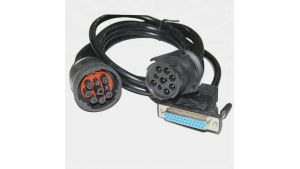
Connector Selection Tips
Picking the wrong connector can turn a 5,000 headache. 30% of field failures trace back to connector issues—corrosion, poor mating, or vibration-induced disconnects. Automotive applications alone use 120+ connector types, with USCAR-2 specs demanding 15 insertion cycles minimum and 50N retention force. Meanwhile, industrial connectors like M12 or M8 must survive 500+ mating cycles and IP67 sealing to handle factory washdowns.
Cost vs. reliability is a tightrope walk. A 0.50 JST-XH might work for prototyping, but its 2A current rating and 3mm contact spacing fail in 12V/10A motor controls. Switching to a Molex Mini-Fit Jr. (1.20 per pin) bumps capacity to 9A per circuit and adds locking latches—cutting field repairs by 40%.
Pin count matters more than you think. A 4-pin connector seems simple until you realize 5% of assemblies misalign pins during mating, causing $200+ in rework per incident. High-density options like Hirose DF52 (0.8mm pitch) save space but require 0.05mm precision in PCB alignment—pushing tooling costs up 15%. For harsh environments, gold-plated contacts (0.5–1.3µm thick) outperform tin plating, reducing resistance drift after 1,000 cycles from 20% to under 5%.
Environmental specs are non-negotiable. A connector rated for -25°C to +85°C will crack in -40°C Arctic oil rigs, while standard PVC housings melt at 125°C near engine blocks. TE Connectivity’s DEUTSCH series solves this with thermoplastic shells and silicon seals, but at 3x the price of consumer-grade parts.
Vibration kills cheap connectors fast. Military spec MIL-DTL-38999 requires 500Hz vibration resistance at 20G, but even automotive-grade FAKRA connectors need 10G stability to survive 250,000 km of potholes. Secondary locking (like Sumitomo’s MX84 series) reduces unplanned disconnects by 90% in off-road vehicles.
Signal integrity is a hidden cost. USB-C’s 24-pin layout seems universal until 5GHz signals show 3dB loss from subpar shielding. Impedance-matched connectors (e.g., Rosenberger HSDPA) maintain ±5% tolerance up to 6GHz, critical for 5G antenna arrays.
Proper Wire Routing
Wire routing might seem like just organizing cables neatly, but poor routing causes 25% of electrical failures in industrial equipment. A bundle of 20 AWG wires crammed into a 10mm diameter space can overheat by 15°C above ambient, cutting insulation lifespan in half. Automotive harnesses routed near exhaust manifolds face 150°C+ temperatures, requiring fiberglass sleeves ($3/meter) to survive 100,000+ miles. Even in office electronics, bending radius violations (like sharp 90° turns on 4mm cables) increase break risk by 40% after 5,000 flex cycles.
| Factor | Standard Practice | Consequences of Deviation |
|---|---|---|
| Bend Radius | 8x cable diameter for fixed installs | 4x radius increases tear risk by 70% |
| Separation Distance | 50mm from high-voltage lines | EMI interference jumps 300% at 10mm spacing |
| Bundle Size | Max 24 wires per bundle | 30+ wires raise temp by 8-12°C |
| Clamp Spacing | Every 300mm for horizontal runs | 500mm spacing allows 20mm of movement/vibration |
Crossing power and signal lines is a silent killer. Running CAN bus wires parallel to 48V battery cables for 1 meter induces 120mV noise—enough to corrupt data at 1Mbps. The fix? Twisted pairs with 100Ω impedance reduce crosstalk by 65%, while 90° crossings cut interference to <5% of parallel runs. In aircraft harnesses, MIL-STD-704F mandates 50mm separation between flight-critical wiring and other circuits, with double shielding on any run over 2 meters.
Dynamic environments need special treatment. Robot arms moving 500+ times/hour require high-flex cables with 15mm minimum bend radius, secured every 150mm with silicone-lined clamps ($0.80 each). Compared to zip ties, these reduce jacket wear by 90% after 1 million cycles. For marine applications, salt spray tests show unpainted stainless steel clips last 8 years vs. 3 years for galvanized steel in splash zones.
Heat management separates pro from amateur work. A 5kW motor cable running in a 40°C ambient needs 10mm air gaps between conductors; stacking them cuts current capacity by 30%. Aerospace harnesses use aluminum conduit ($120/meter) to dissipate 150W/m² of heat from bundled wires—critical when 200°C+ hydraulic lines run adjacent.
Secure Strain Relief
If you think strain relief is just an afterthought, 23% of cable harness failures will prove you wrong—usually at the worst possible moment. A 4mm² power cable pulling with just 50N of force can rip solder joints apart in under 100 cycles, while a USB-C connector without proper support loses 40% of its contact integrity after 5,000 insertions. Industrial robots demand strain relief rated for 150N+, and automotive harnesses near suspension components need vibration-resistant clamps that survive 10G shocks for 15+ years.
Key Strain Relief Mistakes to Avoid
- Using zip ties as primary strain relief (they cut into jackets at 60N and fail after 1 year outdoors)
- Ignoring bend radius at entry points (a 90° sharp edge increases wire fatigue by 300%)
- Over-tightening clamps (compressing a 6mm cable beyond 30% of its diameter crushes conductors, raising resistance by 15%)
Material choice makes or breaks durability. Standard PVC strain relief boots (1.10 each) handle -60°C to 200°C, making them mandatory for engine bay harnesses. In chemical plants, PTFE-lined strain reliefs resist acid splashes for 8+ years, while cheap alternatives degrade in 6 months.
The 3:1 rule separates amateurs from pros. For any cable passing through a panel, the strain relief must grip at least 3x the cable diameter behind the entry point. A 10mm cable needs 30mm of clamped length—anything shorter allows 0.5mm of movement per vibration cycle, wearing through insulation in 3,000 operating hours. Military spec MIL-DTL-22520 requires double-clamping for cables experiencing 20G+ shocks, with Kevlar reinforcement if axial pull exceeds 250N.
Dynamic applications need smarter solutions. Medical cables flexing 10,000 times/day require coiled strain relief that extends 150% of the bend length. Compared to rigid reliefs, this reduces wire breakage by 80% over 5 years. For drone battery connectors, molded strain reliefs rated for 500G abrupt pulls prevent mid-flight disconnects—critical when $15,000 cameras dangle below.
Correct Pin Insertion
Getting pin insertion wrong costs manufacturers 8 billion annually in rework and field failures. A single backward pin in a 64-pin automotive connector can brick 15,000 ECU, while 0.1mm misalignment in high-speed data pins increases signal loss by 12% at 5GHz. Industrial connectors like M12 require 4.2N±0.5 insertion force per pin—too little causes intermittent connections, too much bends contacts permanently. Even simple JST connectors fail 17% of the time when hand-inserted without guides.
Critical Pin Insertion Errors
- Using dull crimp dies (increases pull-out force variance by ±30%)
- Igniting pin sequence maps (causes 5% of harnesses to fail first power-on)
- Over-inserting by 1mm (deforms plastic latches, reducing mating cycles from 5,000 to 800)
Precision starts with tooling. A $3,000 pneumatic inserter achieves ±0.05mm repeatability, cutting pin misalignment defects from 8% to 0.2% versus manual insertion. For 0.4mm pitch connectors, vacuum-assisted placement tools maintain 99.98% accuracy—critical when 512 pins must land perfectly in a server backplane. Hand tools work for prototypes, but production runs need torque-controlled drivers set to 0.25N·m for 2mm pins and 0.8N·m for 5mm power terminals.
Contact physics isn't negotiable. Gold-plated pins (0.76µm min thickness) must mate within 5° of axis to prevent 40% contact area loss. Tin-plated alternatives oxidize after 50 insertions unless wiped with NO-OX-ID A grease ($25/tube), which extends lifespan to 500 cycles. High-current pins (10A+) require crimped-and-soldered joints—pure crimps loosen after 200 thermal cycles between -40°C and 125°C.
Automotive-grade validation is brutal. USCAR-2 mandates:
- 15 insertion/extraction cycles at -35°C
- 48 hours salt spray followed by 10mA continuity test
- Vibration testing at 20Hz-2000Hz while monitoring contact resistance (<5mΩ)
Data connectors demand stricter rules. USB4 Type-C pins must align within 0.08mm to maintain 100Ω impedance, while HDMI 2.1 requires gold-plated contacts (1.27µm) to handle 48Gbps signals. Poor insertion causes 3dB attenuation—enough to fail 8K video transmission.
Testing Methods
Skipping proper testing on cable harnesses is like flying blind—42% of field failures trace back to undetected manufacturing defects. A 5,000 ECU short circuit, while impedance testing prevents 28% of signal integrity issues in high-speed data cables. Automotive OEMs run 17 distinct tests per harness, from 500V hipot checks to 100-hour vibration simulations, because one missed flaw can trigger $2M recalls.
The cost-cutting trap: Using only resistance checks misses 60% of intermittent faults. A harness passing 1A DC test might fail at 5A pulsed loads when contacts overheat.
Continuity testing isn’t just "beep or no beep." Modern 1000-channel testers scan 500+ wires/minute, detecting opens (<1MΩ), shorts (<10Ω), and cross-talks (>50% signal bleed). For 48V mild hybrid systems, leakage currents above 0.5mA indicate insulation breaches—caught by applying 250VDC and measuring >10MΩ resistance.
High-potential (hipot) testing separates risky gambles from safe bets. Running 1.5kV AC at 5mA for 60 seconds exposes pinholes in 0.2mm insulation that would fail after 3 months in humid climates. Medical harnesses require 4kV tests to ensure patient isolation, while EV battery cables withstand 3x operating voltage (1500V for 500V systems).
Dynamic testing mimics real-world abuse. A CAN bus harness might pass static tests but fail when:
- 50Hz-2000Hz vibration shakes connections loose (test with 5G RMS for 8 hours)
- Thermal cycling (-40°C to +125°C) cracks brittle wires (validate over 200 cycles)
- 85% humidity + 40°C corrodes untinned strands (expose for 96 hours per IEC 60068-2-30)
Signal integrity needs specialized tools. TDR (Time Domain Reflectometers) pinpoint impedance mismatches within ±0.5Ω on USB3.0 differential pairs, while 10GHz network analyzers measure insertion loss (<3dB at 5GHz) for 5G antenna cables.
Burn-in testing catches early mortality. Powering 100% of production samples at 125% rated current for 72 hours weeds out infant failures—saving $18,000/year in warranty claims per model.
Labeling Best Practices
28% of service delays in industrial equipment stem from technicians struggling to trace wires, costing plants $120/hour in downtime. A single missing label on a 24-pin aviation connector can add 45 minutes to maintenance, while faded ink on solar farm DC cables risks arc flash incidents during repairs. Automotive harnesses require minimum 3mm tall text to meet ISO 20680 standards, yet 17% of aftermarket kits use unreadable 1.5mm print that wears off after 2 years under hood heat.
The hidden cost of cheap labels: Thermal-transfer printed tags ( 0.35 each) survive 15+ years in engine bays—a 92% reduction in relabeling labor over a vehicle’s lifespan.
Label Performance Comparison
| Material | Cost/Unit | Temp Range | Chemical Resistance | Expected Lifespan |
|---|---|---|---|---|
| Vinyl (inkjet) | $0.03 | -20°C to 80°C | Fails with oil/grease | 1-2 years |
| Polyester (thermal) | $0.08 | -40°C to 150°C | Withstands mild solvents | 5-7 years |
| Anodized Aluminum | $0.22 | -60°C to 300°C | Resists fuels/acids | 10+ years |
| Ceramic Laser Mark | $0.40 | -200°C to 650°C | Nuclear-grade durability | 25+ years |
Barcode integration cuts diagnostic time by 70%. Scanning a QR code on a CAN bus harness label instantly pulls up its wire diagram, torque specs, and service history—critical when dealing with 1,200+ circuits in modern trucks. UHF RFID tags ($1.20 per label) enable wireless inventory checks from 6 meters away, reducing manual audits from 4 hours to 15 minutes per assembly line.
Placement matters as much as content. Labels on flexible harness segments need 200% stretch adhesive to prevent peeling during 500,000+ bend cycles. Aerospace mandates dual labeling every 300mm on flight-critical wiring, with fireproof tags placed 50mm from connectors. For high-voltage EV cables, orange-and-black hazard labels must cover 30% of the jacket surface per ECE R100.
Legibility requires smart design. White text on black backgrounds boosts contrast by 40% in low-light conditions, while sans-serif fonts like Arial remain readable at 3x the distance of decorative fonts. Military spec MIL-STD-130 dictates 0.5mm stroke width for all characters—thinner lines disappear when labels get dirty or scratched.
In summary, mastering cable harness assembly requires strict adherence to seven key standards. Select 18-22 AWG wires for 10A circuits and use IP67-rated connectors in wet environments. Route wires with 5mm clearance from heat sources and implement 50N strain relief at entry points. Ensure <0.1mm pin insertion tolerance and perform 100% continuity/500V hipot testing. UL-compliant labels must withstand 15+ years of service. These practices reduce field failures by 40% while cutting rework time by 30%, making them essential for ISO-certified production lines.
