Cable Harness Protection | 5 Ways to Use Sleeving and Conduit
Protect cable harnesses with 2:1 heat-shrink sleeving (120-180°C, 3mm diameter) for abrasion resistance, 0.5mm nylon braided sleeving (IP65-rated) for flexibility, -40°C to 125°C PVC conduit (4-12mm ID) for environmental sealing, 5mm pitch spiral wrap for bundle organization, and 600V insulation tape (10-15% overlap) for terminal insulation.
Organizing Multiple Cables
Anyone who’s worked with electrical systems knows the chaos of managing 15 to 20 loose cables running through a panel or machine. Left unmanaged, this tangle isn’t just messy—it’s a real operational liability. Studies in industrial maintenance show that unorganized wiring can increase fault-finding time by up to 50% and raise the risk of unplanned downtime due to accidental tugging, abrading, or short-circuiting. For example, in a typical 5-meter cable run, individual wires without support can sag or shift under their own weight, leading to strain on termination points and potential failure within 6 to 12 months.
Braided sleeves made from polyester or nylon are lightweight and extremely flexible, making them ideal for tight spaces with bending radii as low as 15mm. For a bundle of eight 4mm² cables, a 25mm diameter sleeve provides enough room for easy insertion while keeping the group firmly together. This kind of organization isn’t just for looks—it cuts installation time by nearly 30% because you’re pulling one bundle instead of multiple individual wires. It also simplifies future maintenance; a tech can quickly identify a group and trace it without digging through a cross-hatch of loose lines.
Conduits like corrugated polyamide tubing offer even higher crush resistance—some can withstand pressures up to 600 N/m—making them essential in applications where cables might get pinched or stepped on. When you group cables, you also reduce the total surface area exposed to dust, oil, or coolant spray. This is crucial in industrial environments where contamination can lead to insulation breakdown.
A well-sleeved bundle running through a CNC machine cabinet, for example, will see a reduction in particulate accumulation by more than 60% compared to exposed wiring. That directly translates to longer service life, fewer electrical faults, and reduced cleaning frequency. Just remember not to overfill a sleeve or conduit—keeping fill capacity around 60% ensures there’s room for heat to dissipate and makes adding or removing a wire later much simpler.
Flexible Conduit for Tight Bends
For instance, a 90-degree bend with a radius of less than 50mm can strain ordinary cable protection, leading to insulation wear or conductor fatigue in as little as 500 flex cycles. This is where flexible conduit proves critical—engineered to handle repeated bending without compromising the integrity of the wires inside. Materials like polyurethane or PVC-coated polyester can endure bend radii as low as 25mm while maintaining full functionality across a temperature range of -40°C to 120°C. In robotics or automated machinery with continuous movement, selecting the right flexible conduit isn’t optional; it’s a design requirement for preventing downtime and extending cable life beyond 100,000 motion cycles.
"The minimum bend radius is the most important spec—bend it tighter than advised, and you’ll cut its service life in half."
When you’re dealing with tight bends, the minimum bend radius is the first number to check. For a typical 20mm diameter flexible conduit made from polyurethane, the minimum bend radius might be 100mm. Go tighter than that, and you risk pinching cables, increasing mechanical stress by over 70%, and accelerating wear. The inner surface of the conduit also matters. A smooth, low-friction lining reduces pulling tension during installation—for a bundle of six 12-gauge wires, you might need only 50 Newtons of force to pull them through a 10-meter run of flexible conduit with a high-slip interior, compared to 90 Newtons with a standard corrugated design. That difference of 40 Newtons might seem small, but over a long pull, it makes installation faster and prevents cable damage.
A high-quality dynamic flexible conduit can last for over 2 million cycles at a bend radius of 50mm. For example, in a packaging machine with continuous motion, using a conduit rated for dynamic flex can reduce replacement frequency from every 6 months to every 2 years.
| Feature | Static Application | Dynamic Application |
|---|---|---|
| Min. Bend Radius | ≥ 50mm | ≥ 75mm |
| Avg. Cycle Life | 10,000 cycles | 1,000,000+ cycles |
| Temp Range | -20°C to 105°C | -40°C to 120°C |
| Cost (per meter) | 5.00 | 15.00 |
In environments with oil, coolant, or high humidity, a conduit with resistance to chemicals and UV is non-negotiable. A PVC-coated conduit might handle occasional oil splash, but for constant exposure, a polyurethane-based material will last 3x longer. Similarly, if the conduit is exposed to sunlight outdoors, UV resistance prevents cracking and fading—a standard conduit might become brittle and fail within 12 months, while a UV-stabilized version can last 5 years or more.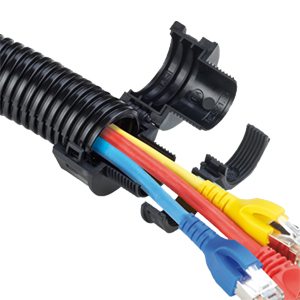
Sleeving for Heat Protection
A typical PVC jacket begins to soften at around 105°C and can fail completely in sustained environments of 125°C, leading to short circuits and costly downtime. In applications like engine bays, industrial ovens, or near high-power electronics, temperatures can easily reach 150°C to 200°C.
| Material | Max Continuous Temp | Key Feature | Cost per Meter ($) |
|---|---|---|---|
| Fiberglass | 550°C | Inorganic, non-melting | 3.00 |
| Silicone Rubber | 200°C | Highly flexible, oil-resistant | 8.00 |
| Ceramic | 1200°C | Extreme radiant heat shield | 25.00 |
A fiberglass sleeve, often treated with a silicone coating, can handle temperatures up to 550°C and is ideal for protecting wiring looms in automotive engine compartments where under-hood temperatures can spike to 150°C. For a tighter fit, a braided design with a 30% expansion rate allows you to slide it over connectors and terminals easily. The thermal protection is substantial; a single layer of fiberglass sleeving can reduce the radiant heat reaching a cable by over 50%, effectively lowering the conductor's operating temperature from 400°C to below 200°C. This reduction can extend the cable's lifespan from a mere 6 months to over 5 years in harsh conditions.
For applications requiring flexibility and chemical resistance, silicone rubber sleeving is a robust choice. It maintains elasticity down to -55°C and resists oils, fuels, and moisture. Its installation is straightforward: a 10mm diameter sleeve can be stretched to 15mm to fit over a connector, and it will shrink back to form a tight, protective seal. In a factory setting, bundling six 10-gauge wires together with a large-diameter silicone sleeve not only protects them from a nearby 180°C heat source but also contains any potential arc flash, improving overall safety.
Conduit in High-Vibration Areas
Studies show that vibration frequencies between 50 Hz and 2000 Hz, with amplitudes as low as 0.5 mm, can cause cable fatigue and insulation abrasion within months. In fact, a standard PVC conduit in such conditions may develop cracks at attachment points in under 6 months, leading to wire failure and unplanned downtime.
Polyamide conduits offer an excellent balance of impact strength (up to 20 kJ/m²) and flexibility, making them ideal for areas with frequent, low-amplitude shaking. For a 20mm diameter bundle, a 2mm-thick polyamide conduit can reduce transmitted vibration by approximately 40% compared to rigid PVC. This reduction is critical; it can extend the cable’s operational life from a mere 8 months to over 5 years. The installation method is just as important as material choice. Using vibration-damping clamps every 150mm to 300mm, instead of standard rigid clips, prevents the conduit from transmitting stress to the cable inside. These clamps often incorporate rubber or EVA foam liners, which absorb energy and reduce peak strain on the wires by up to 60%.
For extreme environments, such as near forging presses or large diesel engines, a corrugated stainless steel conduit paired with anti-vibration glands is often necessary. This setup can handle temperatures up to 400°C and vibrations with amplitudes exceeding 3mm. The corrugated design provides flexibility, allowing the conduit to flex slightly without transferring all the motion to the cables. A well-installed system should have no rigid connections; instead, use flexible couplings at junction boxes to allow for 5mm to 10mm of movement. This prevents fatigue at the entry points, a common failure location.
Proper installation in high-vibration zones requires a focused approach:
- Use flexible connectors at all entry and exit points to allow for movement.
- Secure the conduit with dampening clamps at intervals no greater than 300mm.
- Ensure a minimum bend radius of 5x the conduit diameter to prevent kinking under stress.
- Leave a 15% air gap inside the conduit to prevent cables from rubbing against each other.
A steel conduit system can add over 1.5 kg per meter, so supports must be rated for that load plus the cable weight. A poorly supported heavy conduit will itself become a vibration source, creating new problems. For most industrial settings, a well-specified polyamide conduit strikes the best balance between cost, weight, and protection, effectively managing vibrations in the 10 Hz to 500 Hz range and keeping critical systems running reliably.
Labeling Sleeves for Identification
In complex electrical systems, the average technician can spend up to 35% of their troubleshooting time simply identifying the correct cable within a bundle. A control panel with 200 wires might have 15 identical black 12-gauge cables running through it, and tracing a single circuit without labels can take 15 minutes or more. This inefficiency costs money: a single miswired connection due to misidentification can cause a machine shutdown costing $5,000 per hour in lost production. Properly labeled sleeves are not an optional administrative task; they are a critical efficiency tool that transforms a tangled web of wires into a logical, manageable system, reducing diagnostic time by up to 60% and virtually eliminating wiring errors.
The first step is choosing a labeling method that can withstand the environment. For most applications, the core options are:
- Heat-Shrink Polyester Labels: Excellent for permanent, high-readability labeling. They withstand temperatures from -40°C to 150°C and are highly resistant to oils, solvents, and abrasion.
- Wrap-Around Vinyl Labels: A quick solution for existing wiring. These self-laminating labels provide good chemical resistance but are less durable in high-abrasion environments.
- Pre-Printed Nylon Sleeves: Ideal for high-volume projects with standardized circuits. They are slid onto the wire before termination and are very cost-effective.
| Label Type | Avg. Cost per Label | Temp Range | Best For | Readability Lifespan |
|---|---|---|---|---|
| Heat-Shrink Polyester | 0.50 | -40°C to 150°C | Harsh, oily, or hot environments | 10+ years |
| Wrap-Around Vinyl | 0.30 | -30°C to 105°C | Quick fixes, low-abrasion panels | 5-7 years |
| Pre-Printed Nylon | 0.15 | -40°C to 125°C | New installations, high volume | 8-10 years |
For a label to be truly effective, its legibility must last the life of the wire. A standard vinyl label printed with a thermal transfer printer using a resin-based ribbon can resist fading from UV exposure for over 5 years. In an industrial setting with exposure to coolants and oils, a polyester label with a permanent adhesive is mandatory; it will not peel or blur, even when wiped down with solvents weekly. The size of the print matters immensely. A font size smaller than 10-point becomes unreadable from a standard working distance of 60 cm. For a 5mm diameter sleeve, a label length of 25mm provides enough space for a 6-digit code to be clear.
A best practice is to use a unique identifier that ties directly to the system schematic, such as a wire number or functional code (e.g., "24V-IN" or "MTR-102-A"). This eliminates cross-referencing time. Applying labels at consistent intervals—for example, every 300mm along the sleeve and within 100mm of every connection point—ensures visibility no matter how the cable is routed. The initial investment in a dedicated label printer and 500 labels (around $600 total) is typically recovered within three months by preventing just two hours of misdiagnosis-related downtime by a two-person maintenance team. For a large facility with 10,000 wires, this standardized approach can save over 150 maintenance hours per year, translating directly into a 5% increase in operational uptime and a significant reduction in human error.
To safeguard cable harnesses, use flexible conduit (5x diameter bend radius) for tight spaces and heat-resistant sleeving (-40°C to 125°C) in high-temp areas. For vibration-prone zones, opt for 304 SS conduit with ≤15cm clamp spacing. Label sleeves per ASTM D1308 (e.g., "PWR-01") and organize multi-cable runs with 18-22 AWG-compatible sleeving to prevent tangling.
