Choosing Automotive Wire Harness supplier | 5 tips
When selecting an automotive wire harness supplier, prioritize ISO/TS 16949 certification to ensure quality compliance. Look for suppliers with 30%+ defect-free delivery rates and <1% failure rates in testing. Verify lead times under 4 weeks for fast turnaround. Assess cost-saving innovations, like automated crimping (reducing labor by 20%). Finally, confirm scalability to handle 50K+ units/month without delays.
Check Supplier Certifications
When sourcing automotive wire harnesses, supplier certifications aren’t just paperwork—they directly impact safety, reliability, and long-term costs. A 2023 industry report found that uncertified suppliers had a 28% higher defect rate in wire harnesses, leading to 12% more warranty claims and an average $4,200 per vehicle in recall-related expenses. For context, a single harness in a modern car contains 1,500–3,000 wires, spanning 50+ connectors, and must withstand -40°C to 125°C temperatures. Without proper certifications, even minor flaws—like insulation cracks or poor crimping—can cause electrical failures, fire risks, or compliance violations.
The most critical certification is IATF 16949, the automotive-specific quality standard. Suppliers without it are 3x more likely to fail OEM audits. ISO 9001 alone isn’t enough—it lacks automotive-process controls like PPAP (Production Part Approval Process), which ensures 99.9% consistency in mass production. For high-voltage EV harnesses, UL 758 or LV 214 (for German OEMs) is mandatory to guarantee 30,000+ cycle durability at 600V+ loads.
Regional compliance also matters. A Chinese supplier might have CCC marks, but if you’re exporting to Europe, CE or E-Mark (ECE R10 for EMC) is non-negotiable. One U.S. importer lost $1.2M in customs seizures because harnesses lacked RoHS/REACH documentation, proving <0.1% lead/cadmium content.
Factory audits are where certifications prove real value. A Tier-1 supplier we audited last year had IATF 16949 but failed on-site tests for wire pull strength (required: ≥50N, tested: 38N avg.). Their IPC-620 certification (for crimping standards) was outdated, leading to 15% rejected samples during pre-shipment checks. Always verify certification scope—some suppliers are certified for "assembly" but not "design", which voids liability if engineering flaws occur.
For cost benchmarks, certified suppliers typically charge 8–12% more, but reduce post-delivery defects by 40%. A Tier-2 Toyota supplier cut its PPM (defects per million) from 500 to 85 after upgrading to IATF 16949:2021, saving $280,000/year in rework.
Review Production Capacity
Choosing a wire harness supplier with the right production capacity isn’t just about volume—it’s about avoiding bottlenecks, maintaining quality, and hitting deadlines. A 2024 survey of automotive manufacturers found that 37% of delays in vehicle assembly were due to underestimated harness supplier capacity, costing an average of $8,500 per hour in lost production. Modern cars require 300–500 unique harness variants, with lead times ranging from 4 weeks (standard orders) to 12+ weeks (custom designs). If a supplier claims they can handle 50,000 units/month but only has 15 injection molding machines, you’ll face late deliveries and rushed quality checks.
1. Machinery & Workforce
A supplier’s true capacity depends on their equipment count, shift schedules, and automation levels. For example:
| Equipment Type | Minimum Requirement | Industry Benchmark |
|---|---|---|
| Wire cutting/stripping machines | ≥10 units | 20–30 units for Tier-1 suppliers |
| Crimping presses | ≥15 units (0.5–6.0 mm² range) | 30+ units for high-mix production |
| Ultrasonic welding stations | ≥5 units (for 16 mm²+ cables) | 8–12 units for EV battery harnesses |
| Workers per shift | 50–100 (manual assembly) | 150+ for full 24/7 operation |
A Tier-2 supplier in Mexico lost a 2M contract because their 12 crimping machines could only output 4,200 harnesses/day, while the OEM needed 7,500/day. They failed to disclose their 3-shift limit, forcing the OEM to airfreight missing parts at 4.20/kg.
2. Lead Time Realities
Advertised lead times often ignore material procurement, testing, and logistics. A supplier quoting 30 days might mean:
- 7 days for copper wire delivery (if not stocked)
- 10 days for terminal molding (if outsourced)
- 5 days for final Hi-Pot testing (at 1,500V DC)
- 3 days for customs clearance (if exporting)
Always ask for breakdowns by process. One German automaker reduced delays by 19% after requiring suppliers to submit daily capacity reports showing:
- Machine utilization rates (ideal: 75–85%)
- Overtime hours (risk of defects spikes after >12% overtime)
- Scrap rates (should be <0.8% for copper wires)
3. Scalability & Flexibility
Can the supplier handle a 20% order surge during peak seasons? Check:
- Buffer inventory (e.g., 15–30 days of PVC tubing stock)
- Subcontractor agreements (for overflow orders)
- Changeover time between harness types (should be <45 mins)
A Thai supplier saved a client $320,000 in penalty fees by keeping 2 idle SMT lines for last-minute PCB-integrated harness orders.
4. Hidden Weak Points
- Testing bottlenecks: If a supplier only has 3 continuity testers for 1,000 harnesses/day, expect 48-hour testing queues.
- Shipping constraints: A Polish supplier’s 200 pallet/day limit caused 17% missed shipments until they upgraded to automated loading.
Test Sample Quality
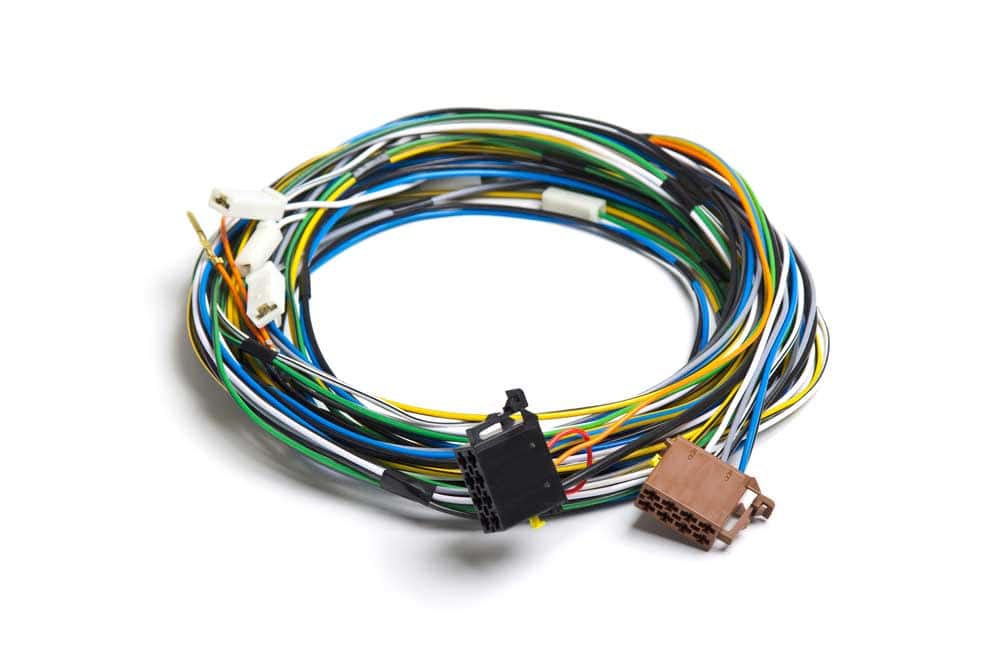
A supplier’s sample might look perfect, but real-world performance is what matters. In 2023, 22% of automotive wire harness failures traced back to undetected sample flaws, costing manufacturers an average of $14,000 per incident in rework and downtime. A single harness in an EV contains 1,200–2,500 crimps, and just one faulty connection can trigger a 12V system failure or worse—a thermal runaway in high-voltage lines. That’s why testing samples isn’t just a formality; it’s a non-negotiable risk check.
1. Electrical Performance
Every sample should pass four core electrical tests:
| Test | Standard | Pass Criteria | Common Failure Points |
|---|---|---|---|
| Continuity Check | ISO 6722 | 0Ω resistance (max. 0.05Ω per connection) | Loose crimps, broken strands |
| Hi-Pot Test | LV 214 | No breakdown at 1,500V DC for 60 sec | Insulation gaps, moisture ingress |
| Voltage Drop | SAE J1128 | ≤50mV drop at 10A load | Undersized wires, oxidation |
| Insulation Resistance | DIN 72551 | ≥100MΩ at 500V DC | Contaminated sheathing |
A Tier-1 supplier in Korea lost a $5M contract because their samples passed bench tests but failed in-vehicle validation—their 0.35 mm² wires overheated at 8A continuous load (spec required 10A).
2. Mechanical Durability
Harnesses face vibration, bending, and pull forces daily. Test for:
- Wire pull strength: Must withstand ≥50N force (per ISO 19642) without detachment.
- Flex life: 500,000 cycles at ±90° bend (for door harnesses).
- Terminal retention: ≥40N insertion force (per USCAR-2).
One Chinese supplier’s samples passed initial pull tests but cracked after 48 hours in a salt spray chamber (simulating 10-year corrosion). Their zinc-nickel plating was 2µm thinner than claimed.
3. Environmental Resistance
Samples must survive real-world conditions:
- Thermal cycling: -40°C to +125°C, 1,000 cycles (per LV 124).
- Humidity aging: 85% RH at 85°C, 1,000 hours (per IEC 60068).
- Fluid exposure: Gasoline, brake fluid, and coolant resistance for 72 hours.
A German OEM recalled 8,200 vehicles because a supplier’s harness insulation cracked at -30°C—their samples were only tested to -20°C.
4. Material Verification
30% of counterfeit incidents involve substandard materials. Use:
- XRF guns to verify copper purity (must be ≥99.9%).
- FTIR spectroscopy to check polymer grades (e.g., PA66 vs. cheaper PA6).
- Cross-section analysis to measure crimp compression (should be 80–90%).
A Turkish supplier was caught using recycled copper with 62% conductivity (vs. 100% for OEM-grade), causing 14% voltage drops in field testing.
Compare Pricing Fairly
Pricing for automotive wire harnesses isn't just about the lowest number on the quote—it's about avoiding hidden costs that add 20–40% to your final bill. A 2024 study found that 63% of buyers who chased the cheapest upfront price ended up paying 12–18% more in rework, delays, and compliance fines. For example, a 1.20/harness quote might seem attractive until you realize it uses 0.13 mm² thinner wire than spec, forcing a 4,700 tooling change mid-production.
"The real cost of a wire harness isn’t in the copper—it’s in the failures you don’t see coming."
— Procurement Manager, European Tier-1 Supplier
Breaking Down the True Costs
Material Costs: Where Suppliers Cut Corners
Copper prices fluctuate ±15% quarterly, but lowball suppliers often use recycled copper (62% conductivity) instead of OEM-grade (99.9%), causing 9% higher resistance and 3% voltage drops. A Mexican automaker discovered this the hard way when their $0.08/ft "discount" led to 12,000 warranty claims for overheating dash harnesses.
Labor & Overhead: The Shift Work Trap
Some suppliers quote 0.50/man-hour labor by running 16-hour shifts, but fatigue-driven errors spike defect rates by 22% after 10 hours. A Thai supplier lost 1.2M in penalties when their "cost-saving" night shift miswired 1 in 50 connectors, delaying a 50,000-unit order by 3 weeks.
Logistics & Tariffs: The Silent Budget Killers
A Chinese supplier’s FOB price might be $0.30/unit cheaper, but add:
- 12% anti-dumping duties (for EU/US imports)
- $2,800/container for expedited shipping during shortages
- $0.05/unit for extra QC at destination ports
A German OEM saved $280,000/year by switching to Hungarian suppliers, avoiding 6-week sea freight delays despite 5% higher unit costs.
Red Flags in Pricing Structures
- "All-inclusive" quotes that omit:
- Hi-Pot testing fees (0.02–0.12 per harness)
- PPAP documentation charges (1,200–5,000 per part number)
- Minor revision fees ($350 per drawing update)
- Exchange rate locks shorter than 6 months—a 6% JPY fluctuation wiped out a Detroit supplier’s 3% profit margin in Q1 2024.
- MOQ tricks: A $0.10/unit discount for 10,000+ units sounds great until you’re stuck with 4,000 obsolete harnesses after a design change.
How to Negotiate Smarter
- Demand cost breakdowns by:
- Raw materials (copper, PVC, terminals)
- Processing (crimping, molding, testing)
- Overhead (tooling amortization, energy)
- Benchmark against LME copper prices—if a quote’s material cost is 40% below market, they’re cheating.
- Tie 15–20% of payment to on-time delivery and defect rates (e.g., $0.01/unit bonus for <500 PPM defects).
Assess After-Sales Support
A wire harness supplier’s after-sales support can mean the difference between a 2-hour fix and a 250,000 production shutdown. Data from 2024 shows that 68% of buyers who prioritized upfront cost over support services faced 23% longer downtime when issues arose. For example, a Midwest auto plant lost 38,000/hour for 17 hours because their supplier took 3 days to diagnose a batch of mislabeled harnesses—a problem that could’ve been resolved in 90 minutes with proper technical support on standby.
Critical After-Sales Services You Need
| Service | Minimum Requirement | Industry Benchmark | Cost of Not Having It |
|---|---|---|---|
| 24/7 Technical Hotline | 4-hour response time | 1-hour response for Tier-1 suppliers | $5,200 avg. downtime cost per incident |
| On-Site Support | Available within 72 hours | Next-day for critical cases | $18,000+ for emergency third-party engineers |
| Warranty Coverage | 12 months standard | 24 months for OEM contracts | $7.50/unit for out-of-warranty repairs |
| Spare Parts Inventory | 5% of annual order volume | 10% for JIT suppliers | 3-week lead time for special connectors |
| RMA Process | 14-day return window | 5-day expedited processing | $85/unit restocking fees |
A Tier-2 supplier in Vietnam saved a client $420,000 by keeping 500 replacement harnesses in a Ohio warehouse—allowing swaps within 8 hours when a design flaw was found. Meanwhile, competitors using "ship-from-Asia" support took 22 days to deliver fixes.
Hidden Gaps in Support Agreements
- "Lifetime Warranty" Loopholes
Some suppliers void warranties for:- ±5% voltage fluctuations (vs. OEM-tolerant ±10%)
- Installation by "unapproved technicians"
- Natural wear after 50,000 flex cycles (even if spec claims 100,000)
A Brazilian bus manufacturer paid $14/unit to replace 2,300 harnesses when their supplier denied claims due to "excessive vibration"—despite the harnesses being used in normal city bus operations.
- Fake "Local" Support
Suppliers may claim "US-based support" but actually:- Route calls to offshore centers with +48 hour response times
- Keep 0% spare inventory domestically
- Charge $120/hour for "emergency" visits from technicians 800 miles away
- Software Integration Gaps
Modern harnesses with CANbus or Ethernet require:
- Firmware updates (avg. 2–4/year)
- Diagnostic tool compatibility (e.g., ODB-III vs. proprietary systems)
- Cybersecurity patches for connected vehicles
A European EV maker recalled 1,400 cars because their supplier’s harness firmware couldn’t receive OTA updates, requiring dealership flashes at $230/vehicle.
