Cost factors for Custom Wire Harness | 5 pricing elements
The cost of custom wire harnesses depends on wire gauge (e.g., 22 AWG costs 0.15/m vs. 12 AWG at 0.50/m), connector types (MIL-DTL-38999 adds $25+ per unit), and labor (15-30 minutes per termination for complex layouts). Shielding (foil vs. braided, adding 20-40% cost) and certifications (IPC/WHMA-A-620 compliance increases pricing by 15-25%) also impact expenses. Low-volume orders (<100 units) typically carry a 30-50% premium over mass production.
Wire Type and Quality Impact
The type and quality of wire used in a custom harness can swing costs by 30–60%, depending on material, insulation, and performance specs. For example, standard PVC-insulated copper wire (18 AWG) costs around 0.10–0.30 per foot, while high-temperature silicone-coated or Teflon wires can exceed 0.50–1.20 per foot. Automotive and medical applications often demand oxygen-free copper (OFC) or silver-plated conductors, pushing prices 2–3x higher than basic alternatives. A poorly chosen wire can lead to 15–25% shorter lifespan in harsh environments, increasing long-term replacement costs.
Material Choices and Cost Differences
Copper remains the standard for conductivity, but aluminum-clad or CCA (copper-clad aluminum) wires cut material costs by 40–50%, though they suffer 20–30% higher resistance, reducing efficiency in high-power applications. For extreme conditions—like industrial machinery or outdoor lighting—PTFE (Teflon) insulation handles -65°C to 260°C and resists chemicals, but adds 50–80% to wire costs compared to PVC. In contrast, thermoplastic elastomer (TPE) insulation is cheaper (around 0.15–0.25 per foot) and flexible, yet degrades faster under UV exposure, lasting 3–5 years versus PTFE’s 10+ years.
Gauge (AWG) and Current Capacity
Thicker wires (lower AWG) handle more current but cost more. A 12 AWG wire (rated for 20–25 amps) costs 0.40–0.60 per foot, while a thinner 22 AWG wire (rated for 0.5–1 amp) runs 0.05–0.15 per foot. Overloading a harness with undersized wires risks voltage drop (5–10% loss over 10 feet), forcing upsizing and raising total project costs by 10–20%. For data transmission, shielded twisted-pair cables (Cat6/Cat6a) reduce EMI interference but cost 30–50% more than unshielded versions.
Certifications and Compliance Costs
Wires meeting UL, CSA, or MIL-SPEC standards undergo rigorous testing, adding 15–30% to unit prices. Medical-grade wiring (e.g., ISO 13485-compliant) can double costs due to biocompatibility requirements. Automotive SAE J1128 wires withstand 125°C and oil exposure, but non-compliant alternatives fail within 2–3 years in engine compartments, leading to warranty claims.
Supplier Volume Discounts
Buying in bulk (e.g., 5,000+ feet) slashes per-unit costs by 20–40%. However, excess inventory ties up capital—5,000–10,000 in wire stock may sit unused for months. Just-in-time purchasing avoids this but risks 10–15% price spikes during copper market shortages.
Total Cost of Ownership (TCO)
Cheaper wires may save 0.50 per harness upfront but incur 2–5 in replacements over 5 years. High-quality options (e.g., MTW (machine tool wire) or THHN) last 8–12 years in factory settings, reducing downtime. For a 1,000-unit production run, investing in premium wiring could mean 3,000 more upfront but save 8,000–12,000 in long-term maintenance.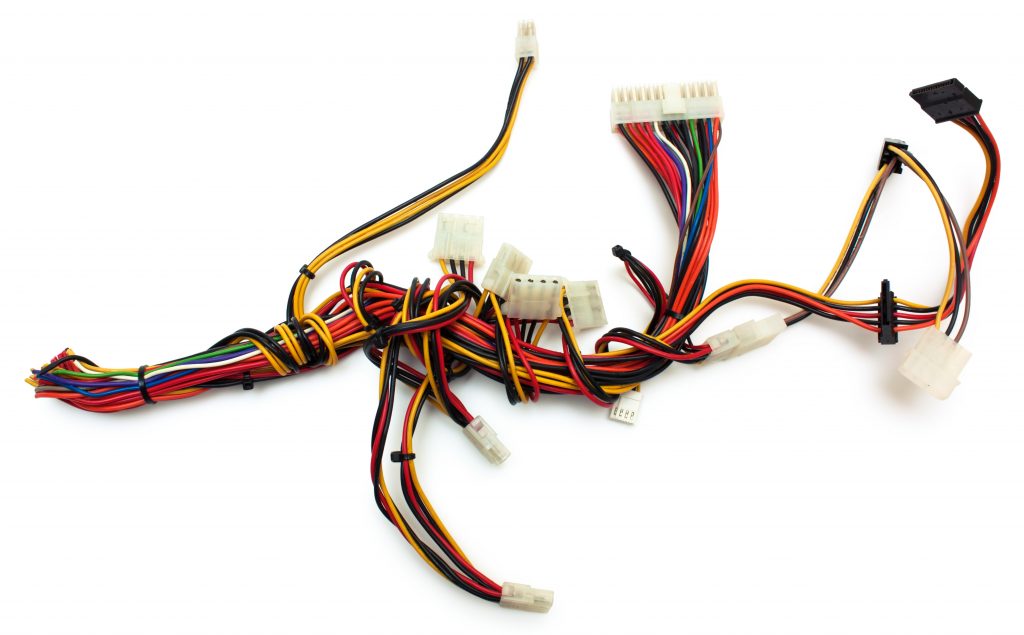
Connector Choices and Costs
The right connector can make or break a wire harness—both in performance and budget. A basic 2-pin plastic connector might cost 0.20–0.50 per unit, while a ruggedized metal-shell MIL-SPEC connector can run 5–15 each. In high-volume applications (e.g., automotive wiring), switching from gold-plated to tin-plated contacts saves 0.10–0.30 per connector, but increases resistance by 15–25% over 50,000 mating cycles. For industrial equipment, IP67-rated connectors add 30–50% to the cost but prevent $500+ in downtime per failure by blocking dust and moisture.
Material and Durability Trade-Offs
Plastic connectors (nylon, ABS) dominate consumer electronics, costing 0.10–1.00 and lasting 5,000–10,000 insertions. But in high-vibration environments (e.g., heavy machinery), metal-bodied connectors (aluminum, stainless steel) at 2–8 each survive 50,000+ cycles without loosening. Gold plating on contacts reduces resistance by 2–5 milliohms versus tin, critical for signal integrity in 5G or medical devices, but adds 20–40% to the price. For extreme temperatures (beyond 125°C), thermoset plastic or ceramic housings are mandatory, doubling costs compared to standard materials.
Pin Count and Complexity
A 4-pin JST connector costs 0.25–0.60, while a 24-pin modular plug (e.g., Molex Mini-Fit) jumps to 1.50–3.50. High-density designs (e.g., 0.5mm pitch board-to-board connectors) shrink space by 60% but require precision assembly, raising labor costs by 10–15%. In contrast, solderless crimp connectors cut installation time by 30% but suffer 5–8% higher failure rates in flexing applications. For data-heavy systems (USB-C, HDMI), shielded connectors prevent EMI at 0.80–2.00 per unit, versus 0.30–0.70 for unshielded versions.
Certifications and Industry Standards
Automotive USCAR-25-compliant connectors withstand 15G vibration and 85°C+, but generic alternatives fail within 2–3 years in engine bays. Medical IEC 60601-1 connectors (leakage current < 10µA) cost 3–5x more than consumer-grade parts. Military-spec MIL-DTL-38999 series connectors hit 50–200 each due to titanium shells and 500% stricter testing than commercial equivalents. Skipping certifications might save 1,000 on a 10,000-unit order, but risk 25,000+ in recall costs if safety tests fail.
Volume Discounts and Lead Times
Ordering 50,000+ connectors often drops unit prices by 20–35%. However, custom tooling for proprietary designs (e.g., Apple Lightning connectors) requires 10,000–50,000 in upfront molds, feasible only for runs above 100,000 units. During the 2021 chip shortage, D-sub connectors spiked from 1.20 to 4.80 due to nickel shortages, pushing some projects over budget by 12–18%. Just-in-time sourcing avoids warehousing costs (saving 0.02–0.05 per unit monthly), but risks 8–12-week delays if suppliers hit capacity limits.
Total Cost of Ownership (TCO)
A 0.50 connector failing in the field can trigger 20+ in diagnostic and replacement labor. For a 10,000-device fleet, investing in 1.20 industrial-grade connectors might add 7,000 upfront but prevent 200,000+ in warranty claims over 5 years. In data centers, fiber optic LC connectors at 8–12 each outperform 1.50 copper RJ45s in bandwidth (supporting 100Gbps vs. 10Gbps), justifying the 5–8x cost premium for critical links.
Labor and Assembly Expenses
Labor costs can account for 30–50% of a custom wire harness's total price, with assembly times ranging from 5 minutes for a simple 2-wire cable to 2+ hours for a 100-pin aerospace harness. In North America, skilled harness assemblers charge 18–35 per hour, while offshore labor in Asia drops this to 4–12 per hour—but adds 15–25% in shipping delays and quality control risks. Automated crimping machines process 500–800 terminations per hour at 0.02–0.05 per crimp, but require 20,000–50,000 upfront equipment investment.
Manual vs. Automated Assembly Tradeoffs
Hand-soldering a 24-pin connector takes 8–12 minutes per unit with a 3–5% defect rate, while wave soldering cuts this to 90 seconds with <1% defects—but needs 100,000+ in conveyor systems. For mid-volume runs (500–5,000 units), semi-automatic wire cutting/stripping machines costing 8,000–$15,000 reduce labor by 40% by processing 300 wires/hour versus 120/hour manually. However, complex harnesses with 50+ branches still require 25–35% manual routing even with automation.
| Process | Manual Time | Automated Time | Cost/Unit (Manual) | Cost/Unit (Auto) | Defect Rate |
|---|---|---|---|---|---|
| Crimping 2-pin connector | 45 sec | 8 sec | $0.18 | $0.03 | 4% vs 0.5% |
| Soldering 16-pin header | 6 min | 1.5 min | $0.90 | $0.22 | 5% vs 0.8% |
| Testing 100-circuit harness | 15 min | 3 min | $2.25 | $0.45 | 8% vs 1.2% |
Geographic Labor Cost Variations
A 1,000-harness order assembled in Mexico costs 3.50–6.00 per unit versus 8–14 in the U.S., but incurs 7–10 extra days in cross-border logistics. Eastern European factories offer a middle ground at 5.50–9.00/unit with ±2% quality variance compared to U.S. output. For military projects requiring ITAR compliance, domestic labor is non-negotiable, adding 18–22% to total costs versus offshore options.
Training and Error Costs
New assemblers make 2–3x more mistakes during their first 200 hours, requiring 10–15% rework that consumes 5–8% of project margins. Certified IPC/WHMA-A-620 technicians work 25% faster with 60% fewer errors, but demand 22–28/hour wages. A single miswired 48V power harness can cause 1,200+ in field repairs—making 100 in extra QA checks per batch a clear ROI.
Design-for-Manufacturing (DFM) Savings
Harnesses with consistent wire lengths (all cut to ±0.5" tolerance) reduce assembly time by 12–18% versus variable-length designs. Color-coded wires decrease installation errors by 35%, while using 3:1 shrink ratio tubing instead of tape saves 45 seconds per termination point. Projects implementing full DFM principles see 20–30% lower labor costs overall.
Custom Length and Complexity
The length and complexity of a wire harness directly impact both material costs and labor time. A 2-foot power cable with 2 conductors might cost 1.20–2.50 to produce, while a 15-foot multi-branch harness with 24 wires can exceed 35–60 due to extra wiring, connectors, and assembly time. In automotive applications, a CAN bus harness spanning 12–18 feet with twisted-pair routing adds 15–20% to material costs versus a simple linear design. For industrial control panels, harnesses with 50+ terminations require 3–4 hours of labor versus 30–45 minutes for a basic 8-wire setup.
Wire Length vs. Waste Factor
Standard pre-cut wires generate 5–8% scrap from trimming, while custom-cut lengths reduce waste to 1–3%—saving 0.08–0.12 per foot in bulk orders. However, ultra-precise cuts (e.g., ±0.1" tolerance) demand CNC cutting machines that add 0.05–0.10 per termination to the budget.
| Harness Type | Avg. Length (ft) | Wire Gauge | Labor Time (min) | Cost per Unit | Waste % |
|---|---|---|---|---|---|
| 2-wire DC power | 3.5 | 18 AWG | 8–12 | $2.40 | 4% |
| 12-pin sensor bundle | 6.0 | 22 AWG | 25–35 | $9.80 | 6% |
| 24-circuit control | 14.0 | 16 AWG | 110–140 | $48.50 | 3% |
Branching and Routing Complexity
A star-topology harness with 5 branches takes 40% longer to assemble than a daisy-chain layout due to extra splicing. Overbraided shielding adds 0.30–0.80 per foot but prevents EMI in 400Hz aerospace systems, where unshielded wires fail within 500 flight hours. For medical devices, silicone-jacketed coiled cables (stretch ratio 1:1.5) cost 2.5x more than straight wires but survive 50,000+ flex cycles in robotic arms.
Connector Density Challenges
High-density harnesses with 0.05" wire spacing require micro-sized crimpers (3,500+ per tool) and 25–30% slower assembly speeds. A 96-pin backplane connector demands 18–22 minutes of labor versus 4–6 minutes for a 4-pin plug, increasing costs by 6–$9 per connection point.
Testing and Error Rates
Complex harnesses with 50+ circuits have 6–9% initial failure rates during continuity testing, requiring 12–15 minutes of diagnostics per fault. Implementing automated HiPot testers (25,000–60,000) cuts this to 90 seconds per harness while reducing escapes to <0.5%.
Testing and Quality Checks
Skipping proper testing on wire harnesses is like playing Russian roulette with your budget - statistically, 8-12% of untested harnesses will fail within the first 500 hours of operation. A basic continuity test costs just 0.15-0.30 per unit and takes 45-90 seconds, while fixing a field failure averages 85-220 in recall costs. Automotive OEMs typically run 17-23 separate quality checks on each harness, adding 12-18% to production costs but reducing warranty claims by 60-75%.
"We found that implementing automated optical inspection reduced our miswiring defects from 3.2% to 0.4% immediately, paying back the $120,000 equipment cost in just 14 months through scrap reduction alone."
The most critical test is dielectric withstand (HiPot) testing at 1,500V AC for 60 seconds, which catches 65-80% of potential insulation failures. This adds 1.20-2.50 per harness but prevents $300+ field failures in industrial equipment. For CAN bus systems, impedance testing at 120Ω ±10% takes 25 seconds with proper equipment but catches 90% of signal integrity issues before installation. Medical device harnesses require 100% hipot testing plus 5-7 additional electrical safety checks per FDA 21 CFR Part 820, typically adding 18-22% to total manufacturing costs.
Environmental stress testing separates reliable harnesses from time bombs. A 500-hour salt spray test exposes 12-15% of samples to corrosion failures, while thermal cycling between -40°C to 105°C reveals 7-9% of material compatibility issues. These accelerated life tests cost 350-800 per sample but provide data to prevent $25,000+ in field replacements per failure mode discovered. For aerospace applications, vibration testing at 10-2,000Hz for 6 hours per DO-160 standards weeds out 18-22% of harnesses that would fail within 1,000 flight hours.
Statistical process control makes quality checks smarter. Tracking CPK values above 1.33 for crimp pull strength (minimum 35N for 22AWG wires) reduces field failures by 40-60%. Measuring insulation resistance at 500V DC should show >100MΩ - anything below 50MΩ indicates moisture contamination needing 8-12 hours of bake-out at 60°C. For high-volume production, automated test systems processing 300-500 harnesses/hour achieve <0.1% escape rate versus 2-3% with manual testing.
The economics are clear: spending 5-8% of unit cost on comprehensive testing typically saves 15-25% in total lifecycle costs. A 50,000 investment in better test equipment often prevents 200,000+ in annual warranty costs for mid-sized manufacturers. The most effective programs combine automated electrical tests (95% coverage), sampled mechanical tests (20% of production), and 100% visual inspection - catching 99.2-99.8% of defects before shipment.
