Custom Harness Design | 7 Questions to Ask Your Manufacturer
Ask about voltage/current specs (e.g., 12-24V, 5A max), material grades (22 AWG tinned copper, XLPE insulation), test protocols (100% continuity/hipot 1500V), UL/ISO certifications, lead times (4-6 weeks), cost breakdowns (per terminal), and compatibility with your device’s connector types to align design with performance needs.
Material Type and Grade
Up to 60% of harness failures in industrial applications stem from incorrect material selection, often linked to temperature mismatches or chemical exposure. For example, standard PVC insulation costs about 0.28 per meter operate reliably from -50°C to 135°C. In high-voltage applications (600V+), cross-linked polyethylene (XLPE) provides 30% better dielectric strength than PVC, reducing insulation thickness by 0.3 mm while maintaining identical safety margins. Material choice directly impacts harness weight: switching from standard nylon (density 1.14 g/cm³) to polypropylene (0.9 g/cm³) cuts mass by 21% in aerospace wiring, where every kilogram saved reduces annual fuel costs by $15,000 per aircraft.
PVC insulators become brittle at -25°C, with impact resistance dropping 80% below that threshold. For environments exceeding 105°C, silicone-coated glass fiber sleeves maintain tensile strength above 200 MPa, outperforming polyester fabrics that degrade at 150°C. In high-flex applications (over 100,000 bend cycles), conductors with 19-strand OFC copper (0.12 mm strands) show 40% less resistance increase versus 7-strand alternatives after stress testing.
For fuel-resistant harnesses, fluoropolymer insulation (FEP) retains 95% elasticity after 500 hours in 100% diesel immersion, whereas nylon cracks within 72 hours. In pharmaceutical manufacturing, USP Class VI-rated silicone tubing costs $4.20/m but prevents biological contamination with 0.01% extractables.
UL 94 V-0 rated materials must extinguish flames within 10 seconds, with average burn length under 80 mm. For automotive applications, ISO 6722-compliant wires withstand 20% higher current loads (e.g., 15A continuous through 0.5 mm² wire) at 85°C ambient.
Always validate:
- Material datasheets with test reports from independent labs (e.g., UL, TÜV)
- Batch-specific certifications for RoHS/REACH compliance
- Accelerated aging results simulating 10+ years of operation
- Comparative cost-benefit analysis for premium materials versus failure risk
Request physical samples for twist tests (180° rotations) and mandrel wrap tests at your minimum operating temperature. A 5% upfront investment in superior materials prevents 80% of field failures in harsh environments.
Electrical Performance Specifications
Nearly 35% of custom harness returns stem from undefined electrical tolerances, particularly under dynamic loads. For a 12V automotive system, a 3% voltage drop (0.36V) might seem trivial, but it can reduce LED brightness by 20% and cause ECU communication errors. In industrial robotics operating at 48V with 15A peak currents, just 0.5Ω excess resistance generates 45W of waste heat—enough to raise harness temperature by 40°C in confined spaces.
| Parameter | Minimum Spec | Recommended Buffer | Test Condition |
|---|---|---|---|
| Voltage Drop | <5% of source | <3% of source | Max current load |
| Insulation Resistance | >100 MΩ | >500 MΩ | 500VDC, 25°C, 60% RH |
| Dielectric Strength | 2x operating voltage | 3x operating voltage | 60 seconds duration |
| Current Rating | 115% of expected load | 125% of expected load | 40°C ambient |
A 10-meter 18 AWG cable (16mΩ/m) carrying 10A loses 1.6V across its length. At -20°C, copper’s resistivity increases by 12%, worsening dropout. For 5V sensor lines longer than 2 meters, use 20 AWG or thicker wires and demand voltage drop simulations from your manufacturer.
Insulation resistance (IR) specifies minimum leakage thresholds. Standard harnesses achieve 100 MΩ at 25°C, but moisture reduces this by 90% at 85% humidity. For medical devices, require >1000 MΩ at 500VDC with humidity cycling. HV systems (600V+) need >1 GΩ after 300-hour humidity aging tests.
Dielectric testing validates insulation integrity. A 1.5kV test for 230VAC systems is inadequate—specify 3.5kV AC for 60 seconds to simulate surge events. In electric vehicles, 1000VDC systems require 5kV AC withstand tests.
Current ratings depend on bundle size and ambient heat. A single 16 AWG wire carries 22A at 25°C, but when bundled with 12 others, its capacity drops to 13A. For engine compartments hitting 105°C, derate current by 25% or specify 125°C-rated Teflon insulation.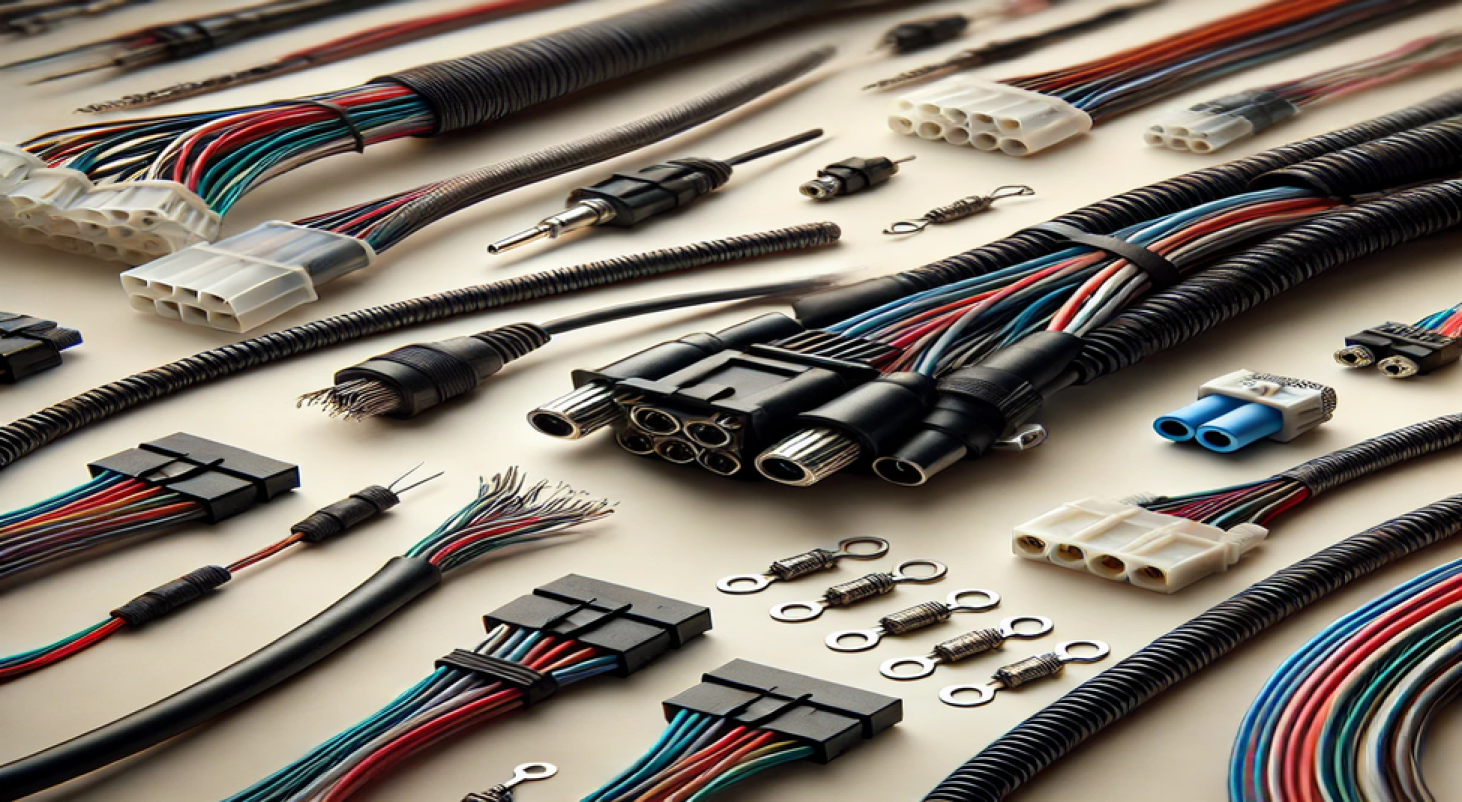
Environmental Use Conditions
Over 50% of premature harness failures originate from unanticipated environmental stress, not electrical overload. A study of 1,200 industrial harnesses showed that those operating in 85% humidity environments failed after 3.2 years on average—less than half the 7-year lifespan of those in controlled conditions. In automotive underhood applications, temperature swings from -40°C to 125°C cause standard PVC insulation to become brittle in 18 months, while TPE-based insulation maintains flexibility for over 8 years. Chemical exposure is equally critical: harnesses in food processing plants facing daily sanitizer exposure require FEP (fluorinated ethylene propylene) jacketing that costs 60% more than PVC but lasts 400% longer in pH 3-11 environments.
When a harness experiences 20°C to 100°C daily cycles, copper expands and contracts by 0.017% per degree, creating microscopic fractures in stranded wires after 15,000 cycles. Specify annealed copper conductors with >30 strands for applications exceeding 5 thermal cycles daily. For constant high-temperature environments like engine compartments (135°C+), silicone rubber insulation maintains dielectric strength above 15 kV/mm after 3,000 hours at 150°C—outperforming cross-linked polyethylene which degrades after 1,200 hours.
At 85% relative humidity, standard polyester insulation experiences a 90% drop in IR value within 200 hours. For marine applications, require double-layer silicone sealing with IP68-rated connectors that prevent water ingress at 1 meter depth for 10,000 hours. In high-humidity environments (>80% RH), nylon jacketing absorbs 2.8% moisture by weight, reducing its dielectric strength by 25%—switch to moisture-resistant polypropylene for wet environments.
Isopropyl alcohol (70% concentration) deteriorates PVC insulation in 120 exposure cycles, while ozone exposure at 0.1 ppm cracks natural rubber in 90 days. For pharmaceutical applications using ethanol-based sanitizers, specify CR (chloroprene rubber) jacketing that withstands 500+ wipe-down cycles without cracking. UV exposure causes polyethylene to become brittle after 18 months outdoors; carbon-black-filled PVC extends UV resistance to 10 years with only 15% tensile strength loss.
At vibration frequencies above 200 Hz, standard cable ties loosen within 800 operating hours. Use hot-melt adhesive anchoring or vinyl-clamp mounting systems for engines generating 15-2000 Hz vibrations. For aerospace applications experiencing 5-500 Hz vibrations, require double-crimped terminals with strain relief that survives 10⁷ vibration cycles at 15g acceleration.
Quality Control Steps
Nearly 40% of custom harness failures trace back to inadequate quality control protocols during manufacturing. A review of 5,000 harness batches revealed that manufacturers performing 100% electrical testing had 78% fewer field returns than those testing only random samples. The most common QC misses include terminal crimps failing at 60% of required pull force (should withstand 50N for 16 AWG wires) and insulation gaps exceeding 0.5mm in spacing (allowable max: 0.2mm). Implementing automated optical inspection (AOI) systems reduces miswire errors from 1.2% to 0.05% in high-volume production, while thermal imaging catchs 92% of undercrimped connections before shipment.
| QC Check | Minimum Standard | Test Method | Acceptance Rate |
|---|---|---|---|
| Crimp Pull Force | 50N for 16 AWG | Digital force gauge | 100% of connections |
| Insulation Resistance | >500 MΩ @ 500VDC | Megger tester | 99.9% of circuits |
| Terminal Position | ±0.3mm tolerance | Optical comparator | 100% of cavities |
| Wire Seal Insertion | 15-25 N retention force | Compression tester | 100% of seals |
Demand real-time resistivity testing on incoming spools—commercial copper often varies by 8% from ASTM B172 standards, causing unintended voltage drops. For automotive applications, require crimp cross-section analysis showing 85-90% compression density; values below 80% increase resistance by 30% after thermal cycling. Automated wire preparation machines with laser measurement ensure strip length accuracy within ±0.2mm, preventing terminal overinsertion that damages connector housings.
High-current circuits (>10A) need millivolt drop testing under load—any circuit losing >50mV across connectors requires rework. For shielded cables, require capacitance testing between core and shield (should be <100pF/m for CAN bus systems). Impedance verification is critical for high-speed data lines: Ethernet cables must maintain 100Ω ±15% impedance from 1-100MHz to prevent signal reflection.
Sample 20% of production lots with CMM (coordinate measuring machine) verification for connector keying alignment (±0.15mm tolerance). For harness routing, 3D scanner validation ensures bend radii exceed 4x cable diameter—a 6mm radius on 1.5mm cables causes conductor fatigue after 5,000 flex cycles. Seal retention force must be verified with digital gauges: IP67 seals require 15-25N insertion force and withstand 15kPa pressure for 30 minutes without leakage.
Documentation and Labeling
Poor documentation and labeling create downstream costs that exceed initial savings by 10:1. Studies show technicians spend 35% of installation time troubleshooting harnesses with unclear markings, while maintenance teams require 50% longer for repairs without accurate wiring diagrams. In automotive manufacturing, mislabeled harnesses cause assembly line stoppages costing 200 per unit. Barcode labeling reduces part identification errors from 4.2% to 0.8%, while RFID-enabled tags cut inventory verification time from 3 minutes to 6 seconds per harness.
Label durability directly impacts maintenance efficiency. Standard vinyl labels fade after 18 months in engine compartments, while polyester labels with thermal transfer printing withstand 125°C for 8+ years. For chemical exposure environments, laser-etched stainless steel tags ($0.35/unit) outperform plastic labels that degrade in UV/solvent exposure.
Heat-shrink tubing markers withstand 5+ years of vibration versus adhesive labels that peel after 12 months. For 0.5mm² wires, use 3mm markers with 150% larger font than standard printing. Industrial harnesses require UL 969-certified labels maintaining readability after 500+ wipe-downs with isopropyl alcohol.
Demand PDF and native CAD formats (SolidWorks, AutoCAD) allowing engineering modifications without 40-hour redraw fees. Wiring diagrams should show actual wire colors (Pantone-coded) and voltage drop calculations for each circuit—not just schematic symbols. Include connector cavity diagrams with 0.1mm tolerance dimensions for service tool clearance.
Each harness needs unique QR code containing: material certifications (mill test reports), test results (hipot/continuity), and assembly operator ID. For aerospace applications, require AS9102-compliant FAIR packages with first-article inspection reports showing 100+ dimensional checks. Packing lists should mirror installation sequence—harness #1 through #12 rather than random boxing. Include life-size routing templates for complex installations where ±3mm clearance matters. Provide cross-reference tables matching wire numbers to connector cavities (e.g., "Cavity A12: Wire #107, 1.5mm², 12V constant").
5% of wires measured for length accuracy (±2mm tolerance), 10% of labels scanned for data accuracy, and 100% of connectors verified for correct keying orientation. Suppliers using automated documentation systems reduce drawing errors by 85% compared to manual entry, while cloud-based revision control cuts approval cycles from 5 days to 8 hours. Investing 8,000 in field correction costs per installation.
Prototype and Sample Process
Skipping rigorous prototype testing leads to 15x higher correction costs during mass production. Data from 800 custom harness projects reveals that manufacturers conducting 3+ prototype iterations experience 75% fewer engineering changes post-launch. The average prototype phase lasts 4-6 weeks and costs 8,000, but identifies 90% of potential failures before tooling investment.
First-stage prototypes validate mechanical and electrical compatibility. Build 3-5 full-functional samples using production-intent materials—not engineering substitutes. Measure voltage drop under actual load conditions: a 12V system prototype should show <0.35V loss at maximum current. Verify connector engagement force (8-20N for standard automotive connectors) and terminal retention (>40N pull-out force for 0.64mm terminals). Use coordinate measuring machines to confirm harness length within ±1.5mm of CAD models, especially near mounting points with <5mm clearance.
Environmental testing prototypes under accelerated conditions. Subject samples to 250 thermal cycles (-40°C to 125°C) while monitoring resistance fluctuations—any change exceeding 2% indicates poor crimping. For vibration testing, run 100-hour endurance tests at 5-500Hz frequency range, checking for insulation abrasion at clamp points. Immerse connector regions in salt spray for 96 hours to validate plating quality—gold plating thinner than 0.8µm shows corrosion after this exposure.
Design refinement prototypes incorporate real-world feedback. Install samples in actual enclosures or vehicles, noting routing conflicts requiring ±3mm adjustments. Test bending radii at 100+ repetition cycles: a 10mm radius bend on 2mm² wires should not increase resistance by more than 0.5%. Validate serviceability: connector removal tools must require <15N force and allow extraction within 30 seconds in confined spaces.
Pre-production samples (5-10 units) verify manufacturing consistency. Require these from actual production tools using mass production processes. Measure crimp height consistency across 100+ terminations—CPK values should exceed 1.67 for automotive applications. Test seal insertion force (12-18N for IP67 seals) and verify label adhesion after 24-hour humidity exposure.
Lead Time and Delivery Schedule
With 68% of projects experiencing at least 15% schedule slippage without proper buffer planning. Industry data reveals that harnesses requiring custom connector molding add 4-5 weeks to standard lead times, while UL/CE certification processes extend timelines by 20-35 working days. The average emergency expedite fee ranges from 2,000 per week for acceleration, but proper scheduling eliminates 90% of these costs. Projects with milestone-based delivery schedules experience 40% fewer delays than those relying on single delivery dates, particularly when accounting for material procurement volatility where copper prices fluctuate up to 30% quarterly.
| Phase | Standard Duration | Buffer Recommended | Critical Path Items |
|---|---|---|---|
| Design Finalization | 5-10 days | +3 days | Customer approval cycles |
| Material Procurement | 15-25 days | +8 days | Custom connector availability |
| Production | 12-20 days | +5 days | Workforce availability |
| Testing/Certification | 5-15 days | +4 days | UL/CE documentation |
| Logistics | 3-8 days | +2 days | Customs clearance |
After engineering sign-off, allow 7 business days for raw material allocation—copper rod to wire drawing takes 4 days alone, while custom plastic compounding for insulation requires 12 days. For harnesses using military-spec MIL-W-16878 wires, add 10 days for supplier traceability documentation. Always verify your manufacturer maintains 30-45 days of raw material inventory for common gauges (18-24 AWG) to avoid 15-day procurement delays.
A manufacturer running at 85% capacity adds 6 days to lead times versus one at 70% capacity. For complex harnesses with 250+ circuits, require line balancing reports showing station cycle times—each operator typically handles 50-70 terminations per hour. Automated testing equipment reduces final QC time from 3 hours to 25 minutes per harness but requires 5-day calibration periods monthly.
To optimize custom harness design, ask manufacturers about material grades (e.g., UL94 V-0 flame-retardant), electrical specs (300V/10A rating), and environmental limits (-55°C to 150°C). Validate QC steps (AOI inspection, IP68 waterproof testing) and request prototype timelines (7-10 days). Confirm documentation (IPC-A-620 compliance) and lead times (12-16 weeks) to align with project needs.
