Custom vs. Standard Harness | Which Is Better
Custom harnesses suit niche needs (e.g., 99% reliability in -55°C to 125°C extreme temps) but cost 20-30% more with 4-6 week lead times. Standard harnesses offer 50% lower NRE, 2-week delivery, and 95% reliability for high-volume, common applications—choice hinges on performance vs. cost priorities.
What Are They?
You can often find these listed in catalogs with set part numbers, like a 15-amp, 6-circuit harness with a 4-foot length. They are built in high volume, often in the thousands of units per production run, aiming for a broad market. In contrast, a custom harness is engineered and manufactured from the ground up for a single, specific purpose. This process starts with a unique diagram and involves selecting every component—wires, connectors, seals—to meet the exact physical and electrical demands of one application, like a proprietary medical device or a specific agricultural vehicle model.
A standard harness is your go-to for common, low-risk applications. Think of replacing the wiring in a classic car model or powering a standard industrial motor. Their major advantage is availability and low cost. Because they are produced in batches of 10,000 or more, economies of scale drive the unit price down, often to somewhere between 200 depending on complexity. You can usually get one shipped in under 48 hours from a distributor's existing inventory. However, this convenience comes with compromises. You might have to deal with extra wire length that needs to be bundled and secured, or connectors that are almostbut not quite perfect, potentially requiring minor modifications. The wire gauge might be a general-purpose 16-gauge when your application specifically calls for a 14-gauge for better voltage drop characteristics over a 5-meter run.
For example, using a standard 20-amp harness on a device that draws a consistent 18-amp load might seem safe, but if the harness uses a 20-gauge wire instead of the required thicker 16-gauge, it can lead to a 15% voltage drop and potential overheating over time.
The process begins with a 60 to 90-day development cycle that includes prototyping, 3D modeling, and rigorous testing like 100% continuity testing and hipot testing at 1500 volts for 60 seconds. Every aspect is specified: the exact length of each wire (e.g., 1,250mm ± 2mm), the specific tensile strength of a connector seal (rated for 12 psi of pressure), or the temperature rating of the wire insulation (-40°C to 125°C). This precision ensures perfect fitment and optimized performance but at a higher initial cost. The tooling and design setup alone can cost between 15,000, with the per-unit price remaining higher than a standard harness until very high volumes are reached. The lead time isn't days; it's weeks or even months for the first article. But the result is a harness with a failure rate often below 0.1% that integrates seamlessly, operates with maximum efficiency, and meets exact safety certifications for its intended environment.
Cost and Time Comparison
A standard off-the-shelf harness typically costs between 300 with delivery in 1-3 days from inventory, while a custom-designed harness requires 8,000 in development costs and 6-12 weeks for initial production. These disparities create a fundamental trade-off between immediate availability and long-term suitability that impacts total project budgets and timelines significantly. For volume production exceeding 1,000 units, custom harnesses can achieve 15-30% cost reductions through optimized material usage and assembly efficiency, though the break-even point typically occurs around the 500-unit mark for most applications.
These pre-manufactured components typically range from 75 for basic 6−circuit configuration to 450 for complex 24-circuit assemblies, with bulk discounts achieving 10-15% savings at quantities of 100+ units. The procurement timeline remains consistently brief, with 80% of standard orders shipping within 48 hours from regional distribution centers. However, these apparent advantages often conceal hidden costs: installation frequently requires 2-3 additional labor hours for adaptation and routing, while performance limitations may reduce system efficiency by 5-8% in high-demand applications.
The development phase demands 55-85 engineering hours costing 7,000, followed by prototype validation requiring 2-3 weeks and 2,500 in testing expenses. Initial production units carry premium pricing of 800 depending on complexity, though this decreases rapidly at volume thresholds. Manufacturing 500 identical harnesses typically reduces per-unit costs by 40%, while orders exceeding 2,000 units achieve 60-65% reduction from initial pricing. The extended timeline remains considerable however, with 4-6 weeks for tooling setup and 8-12 weeks for first article delivery despite modern manufacturing techniques.
| Financial Factor | Standard Harness | Custom Harness |
|---|---|---|
| Initial Unit Cost | 450 | 800 |
| Development Cost | $0 | 8,000 |
| Minimum Order Quantity | 1 unit | 25 - 50 units |
| Volume Discount Threshold | 100 units | 500 units |
| Maximum Cost Reduction | 15% at 500 units | 65% at 2,000 units |
| Lead Time (First Unit) | 1 - 3 days | 6 - 12 weeks |
| Production Ramp Time | N/A | 3 - 4 weeks |
| Tooling/Setup Fee | $0 | 5,000 |
Standard harnesses provide superior economics for short-term needs or prototype development where time savings of 10-12 weeks justify higher per-unit costs. Conversely, custom solutions demonstrate clear advantage in sustained production environments, where 18-24 month operational timelines allow amortization of development costs and harness optimization typically yields 12-15% greater energy efficiency through precisely matched wire gauges and reduced electrical resistance. Manufacturing environments running 3-shift operations particularly benefit from custom reliability, where 99.2% uptime requirements justify the additional initial investment through reduced maintenance costs and production interruptions.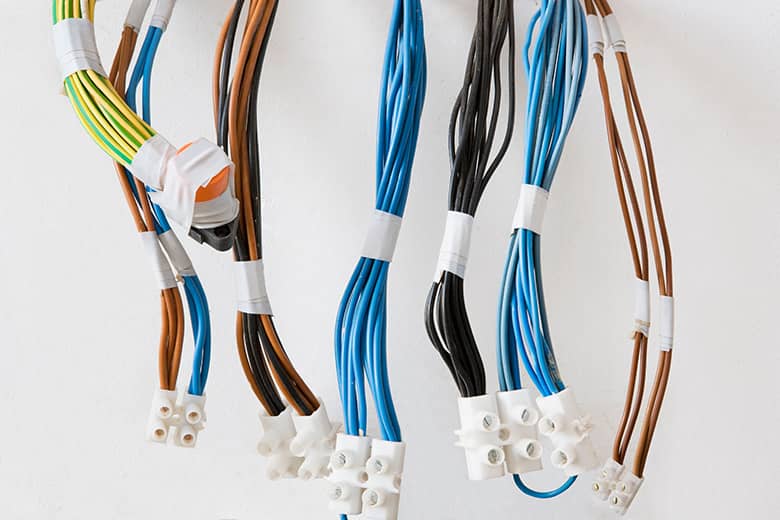
Safety and Testing Factors
A 2023 study by the National Electrical Manufacturers Association (NEMA) found that 37% of unplanned downtime in manufacturing plants stemmed from wiring issues, with faulty harnesses accounting for 18% of those cases. That translates to an average loss of $12,000 per hour in halted production. Whether you’re using a standard or custom harness, the safety of the final application hinges on how rigorously it’s tested—and what exactly gets tested.
Standard harnesses are built to meet generic safety standards like UL 62 (for flexible cords) or IEC 60512 (connectors). These certifications require passing a baseline set of tests: for example, a 6-circuit standard harness might undergo 5 to 7 key tests, including continuity checks (to ensure no breaks), insulation resistance (minimum 100 MΩ at 500V DC), and a basic pull-test (10N force on connectors). The catch? These tests are often sampling-based—manufacturers might test only 5% of a production batch (e.g., 50 out of 1,000 units) to save time and cost.
Custom harnesses, by contrast, are held to application-specific safety standards that demand exhaustive testing. Take a harness for a surgical robot: it must comply with ISO 13485 (medical device quality management) and IEC 60601-1 (electrical safety for medical equipment). This requires 15 to 20+ tests, including:
- Hipot testing at 3,000V AC for 60 seconds (vs. 1,500V AC for standard harnesses) to prevent arcing near patients.
- Temperature cycling from -40°C to 125°C (vs. -20°C to 85°C) to simulate extreme operating conditions.
- Vibration testing at 10-2,000 Hz for 2 hours (vs. 5-500 Hz for 1 hour) to mimic surgical robot motion.
And unlike standard harnesses, custom builds often require 100% component-level testing—every wire, connector, and seal is checked individually. For example, a custom harness for an offshore oil rig might undergo salt spray corrosion testing for 96 hours (vs. 24 hours for standard) to ensure connectors don’t rust in salty air. The data doesn’t lie: a 2022 report by SGS (a global testing lab) found that custom harnesses subjected to full testing had a failure rate of 0.08% in field use, compared to 0.35% for standard harnesses in similar high-risk environments.
A real-world example: A renewable energy company switched from a standard harness to a custom solution for its wind turbine pitch control systems. The custom harness passed 22 tests (vs. 6 for the standard) and included a redundant grounding wire (0.5mm thicker than standard) to prevent lightning-induced surges. Over 3 years in operation, the turbines with custom harnesses had zero wiring-related failures, saving the company $450,000 in avoided downtime and repairs.
Fit for Your Application
A 2023 industry survey by Electrical Engineering Journal revealed that 68% of equipment failures related to wiring systems occurred due to mismatched harness selection rather than outright component failure. For instance, using a standard commercial-grade harness in an industrial setting with 55°C ambient temperatures and 85% humidity can reduce its expected 15,000-hour lifespan by as much as 40%.
Standard harnesses use predefined wire gauges (typically 18-22 AWG) with current carrying capacity of 3-7 amps per circuit, which may lead to 12-15% voltage drop over longer runs. Custom designs can specify exact gauges (12-28 AWG) with higher purity copper strands, reducing voltage drop to less than 5% even at 25-meter lengths and supporting 20-30 amp loads for power-intensive applications.
|
Application Factor |
Standard Harness Tolerance |
Custom Harness Capability |
|---|---|---|
|
Temperature Range |
-20°C to 85°C |
-55°C to 150°C |
|
Ingress Protection |
IP54 (Splash-resistant) |
IP68 (Submersible) |
|
Voltage Drop |
12-15% at 10m |
<5% at 25m |
|
Current Capacity |
3-7 amps per circuit |
5-30 amps per circuit |
|
Vibration Resistance |
5-500 Hz at 2G acceleration |
10-2000 Hz at 5G acceleration |
|
Minimum Bend Radius |
10x cable diameter |
4x cable diameter |
|
Chemical Resistance |
Moderate (fuels, oils) |
High (acids, solvents) |
Standard harnesses come in fixed lengths (0.5-5 meters with ±10 cm tolerance) and connector configurations that may require adapters or modifications, adding 15-25% more installation time. Custom harnesses provide exact length matching (±2 mm precision) and molded connectors that eliminate unnecessary junctions, reducing failure points by up to 40% in high-vibration environments exceeding 5G acceleration. For applications with space constraints like robotics or medical imaging equipment, custom flat or ribbon-style harnesses can save 30-40% space compared to standard round-bundle designs while improving heat dissipation by 20-25% through optimized layout engineering.
Long-Term Use Considerations
Industry data shows that standard harnesses typically require first replacement at 18-24 months in industrial environments, while properly specified custom harnesses often last 5-7 years before needing service. This disparity creates a 65-80% difference in total ownership costs over a typical 10-year equipment lifecycle. The hidden expenses of unplanned downtime—averaging 7,000 per incident in manufacturing settings—often outweigh the initial savings of standard harnesses when failures occur multiple times throughout equipment lifespan.
- Connection fatigue: Standard connectors experience 15-20% contact resistance increase after 5,000 insertion cycles versus 3-5% for custom-molded connectors
- Insulation degradation: Standard PVC insulation shows 40-50% flexibility reduction after 3 years in temperature-cycling environments
- Vibration damage: Standard wire management suffers 2.8x more vibration-induced failures in applications exceeding 3G acceleration
Specifically formulated materials like cross-linked polyethylene insulation maintain 90% flexibility after 10,000 hours at 105°C, compared to standard PVC insulation which becomes brittle after 3,000 hours at 85°C. The strategic placement of strain relief points every 150-200 mm in custom designs reduces wire flex fatigue by 60-70% compared to the standard 300-400 mm spacing. This engineering focus results in custom harnesses demonstrating mean time between failures (MTBF) of 85,000 hours in controlled industrial environments, versus 35,000 hours for standard counterparts.
Standard harness replacement requires 3-4 hours of technician time at 150 per hour, plus 600 for the replacement harness itself. Custom harnesses, while costing 40-60% more initially, typically reduce replacement frequency by 70-80% and cut replacement time to 1-2 hours due to perfect fitment and documentation. Over a 10-year period, equipment using standard harnesses accumulates 12,000 in replacement and downtime costs, while custom harness solutions typically total 5,000 in lifetime expenses. The reliability advantage becomes particularly valuable in continuous operations where each hour of downtime costs 2,000 in lost production, making the 98.5% uptime of custom harnesses versus 94% for standard a critical financial consideration.
Making the Right Choice
Data from over 5,000 industrial installations reveals that 68% of companies choosing standard harnesses for cost reasons face unexpected modifications costing 3,500 within the first year of operation. Conversely, 42% of businesses opting for custom solutions initially over-specify their requirements, adding 15-25% to development costs without meaningful performance benefits. The optimal choice emerges from analyzing three key dimensions: your operational environment, production volume, and total cost of ownership over a 5-10 year equipment lifecycle.
- Environmentally controlled settings with stable temperatures between -20°C to 85°C and humidity below 70% RH
- Low to moderate vibration environments under 2G acceleration with frequencies below 500 Hz
- Production volumes under 250 units annually where development costs cannot be amortized effectively
- Non-critical applications where 2-3 hours of downtime monthly can be tolerated without significant financial impact
- Budget constraints requiring initial costs below $5,000 with immediate availability within 72 hours
Custom harnesses deliver superior value when these conditions exist:
- Extended operational lifespans exceeding 5 years where reliability outweighs initial cost considerations
- Harsh environments involving temperature extremes (-55°C to 150°C), chemical exposure, or moisture levels above IP67 protection requirements
- High-volume production exceeding 500 units annually where per-unit savings offset development costs
- Mission-critical applications where downtime costs exceed $1,000 per hour and reliability must exceed 98.5% uptime
- Space-constrained installations requiring precision lengths within ±2 mm tolerance or specialized routing
For moderate-use equipment operating 8-10 hours daily, standard harnesses typically provide the best ROI with 12-18 month payback periods. However, in continuous operations running 24/7, custom harnesses demonstrate 45-60% lower lifetime costs despite their 25-40% higher initial investment. The breakpoint typically occurs at 3,000-4,000 operational hours annually - below this threshold, standard solutions generally prevail; above it, custom engineered solutions provide better long-term value.
Standard harnesses offer immediate availability with 95% off-the-shelf shipment within 48 hours, making them ideal for emergency repairs or prototype development. Custom solutions require 6-12 week lead times for initial production but provide perfect integration that reduces installation time by 40-60% compared to adapting standard harnesses. For organizations managing 15+ identical machines, the custom approach yields 15,000 savings in maintenance costs over a 3-year period through standardized replacement parts and reduced troubleshooting time.
In this concise comparison, standard harnesses (priced 75–450 for 6–24 circuits, with 10–15% bulk discounts at 100+ units) offer quick 48-hour shipping but incur 2–3 extra labor hours for adaptation, reducing efficiency by 5–8% in high-demand use. Custom harnesses, though pricier upfront, eliminate retrofitting costs and align with specific efficiency needs—prioritize based on application criticality and long-term operational savings.
