Deutsch Connector Harness Customization | Length, Color, Jacket
Custom Deutsch Harness: Length 0.5-20 meters, color selection RAL 1000-9000 (Black/Red/Blue), jacket options PVC(-40℃~105℃) or TPU abrasion-resistant version, select materials based on environment for compatibility.
Length
Deutsch harness length customization requires precise matching of equipment space and dynamic requirements.
For example, engineering machinery joints require allowance for maximum movement radius, sealed cavities need 10%-15% slack for thermal expansion/contraction;
Cutting error ≤ ±2mm (signal lines ±1mm) to prevent wear.
A US company once caused a 72-hour production line stoppage due to an 8cm error from ignoring battery pack tilt angle; after customization, every 10cm reduction saved several dollars in cost, and tangled redundant harness risk decreased by 60%.
User Requirements
Harness on Excavator Arm:
When the mechanical arm extends/retracts and rotates, the harness must follow synchronously; too short will pull and break the connector, too long will tangle in gears.
User testing found: when arm reach extends from 3m to 6m, the harness needs an extra 20% bend allowance (e.g., straight-line distance 2m, actual length 2.4m); otherwise, the probability of insulation wear at bends increases by 60%.
Tractor field operation experiences over 1000 vibrations per hour; harness redundancy exceeding 15cm has 3 times the probability of friction-induced wire breakage with surrounding components within 3 months compared to shorter redundancy.
User requirements are specific: measure polyline distance based on the arm's maximum extension trajectory (25%-35% longer than straight line), plus 10% anti-vibration slack, error must be ≤ ±3mm.
Electric Vehicle Battery Pack:
Battery pack installation tilt angle is approximately 3°-8° (Model Y measured 5°). For a 50cm straight-line harness, actually need 8-12cm extra to connect.
User feedback: early customizations based on straight-line distance resulted in 3 out of 10 vehicles failing installation due to angle deviation, rework took 48 hours/vehicle.
Home charging stations plugged/unplugged twice daily, harness needs 5cm slack to prevent strain, otherwise connector root fracture rate reaches 40% after six months.
Rerouting around high-temperature zones is also a hard requirement: near battery pack exhaust pipe at 120°C, harness must detour 15cm, length about 18cm more than straight line.
User requirement list: provide battery pack installation tilt angle data, charging frequency, high-temperature source locations, use 3D model to clearly mark detour paths.
Robot Joints:
When a six-axis robot rotates, joint maximum movement radius is 30-50cm (e.g., IRB 6700 robot shoulder joint radius 45cm).
Harness length needed = straight distance + (max radius × 2), error exceeding 2cm causes jamming.
Collaborative robots (e.g., LBR iiwa) share workspace with humans; redundancy over 20cm easily trips workers, users require control within 10cm.
Robot rotates 500 times daily, harness stretches slightly (~0.5mm/cycle), cumulative 3mm shorter after one month, causing signal delay.
User requirements: measure distance based on robot's maximum motion envelope, use CNC cutting machine to control ±1mm error (signal lines), pre-form bend radius (radius ≥5cm to prevent breakage).
Two User-Often-Forgotten Requirement Details
-
Environmental Compensation: Harness in -40°C environment (e.g., Canadian winter construction vehicles) shrinks 3%-5%. Users need to proactively provide ambient temperature, supplier adds corresponding length (e.g., 5cm added to 100cm harness); when contacting hydraulic oil (construction machinery), outer jacket expansion makes harness appear shorter, requiring 2% slack allowance.
-
Tool Working Space: User installs harness behind equipment panel, wrench needs 5cm space to operate, harness length must be 5cm more than measured value. Otherwise, after installation, screws can't be tightened, rework to remove harness takes 2 hours/incident.
Real Lessons from US Users:
-
Iowa Harvester Factory: Ordered 40cm harness based on old model, new model grain bin position moved back 10cm, harness too short to install, production halted 3 days costing $120k loss. Later, provided new equipment 3D drawings with clear interface coordinates every time, no errors since.
-
Michigan EV Modification Shop: Modified charging harness for Ford Mach-E, didn't specify owner often drives on mountain roads (bumps cause harness stretching), used fixed-length harness, connector detached after 3 months. Reworked with custom harness with spring buffer ($80/each), 2x more expensive than original but no more failures.
Customization Process
First, clarify where to connect and how it's used
Specifically, provide 4 types of information:
-
Connector Model: e.g., Deutsch DT04-6P male to DT06-6S female, different models have housing length difference of 3-5mm (DT04 series housing length 22mm, DT06 series 25mm), directly affecting total length.
-
Endpoint Coordinates: Use 3D model (STEP format) to clearly mark installation positions of Component A (e.g., sensor) and Component B (e.g., controller), including X/Y/Z axis values (e.g., A at (120, 80, 50)mm, B at (300, 150, 60)mm).
-
Environmental Parameters: Temperature range (e.g., -40°C to 125°C, low-temperature shrinkage requires adding 3%-5% length), whether contacting oil/liquids (construction machinery hydraulic oil causes outer jacket expansion 2%, harness appears shorter, add 2% slack), vibration frequency (equipment with >1000 vibrations/hour, add 10% anti-vibration slack).
-
Dynamic Scenarios: Mechanical arm maximum extension radius (e.g., Caterpillar excavator arm 6m reach, harness needs 20% follow movement allowance), robot joint rotation cycles (500 rotations daily, cumulative stretch 0.5mm/cycle, 3mm shorter after one month, require pre-compensation).
Don't eyeball it, measure accurately with tools
Focus on measuring 3 types of distances:
-
Straight-line Distance: Shortest path between two points (use laser distance meter, accuracy ±0.5mm), e.g., A to B straight line 50cm.
-
Polyline Distance: Actual path around brackets, pipes (use 3D scanner modeling, error ≤0.1mm), typically 15%-30% longer than straight line (e.g., 65cm after detouring metal bracket).
-
Dynamic Distance: Maximum endpoint separation during equipment movement (e.g., robot joint rotated to limit position, calculated by motion simulation software as 75cm).
BMW Leipzig factory making robot joint harnesses used 3D scanning: polyline distance 28% longer than straight line, dynamic distance 35% longer.
Customized based on dynamic distance + 5cm slack, after 100k rotations wear only 0.2mm.
Control every millimeter during production
Three-step precision control:
Select Correct Wire: Multi-strand flexible copper wire (e.g., AWG 18, 7 strands × 0.4mm) suitable for dynamic bending (robot joints); single-strand solid wire (AWG 16, 1 strand × 1.3mm) for fixed wiring (equipment panels); shielded wire (e.g., Deutsch DTM series matching wire) for high-frequency signals (CAN bus, error need ≤ ±1mm).
Cutting Control Error: Use CNC cutting machine (German Schleuniger brand), standard wire error ±2mm, signal wire ±1mm. Table below shows common standards:
| Wire Type | Cutting Error | Application Scenario | Case Effect |
|---|---|---|---|
| Multi-strand flexible copper | ±2mm | Robot joints (dynamic bending) | Swedish ABB robot reduced tangling by 60% |
| Single-strand solid copper | ±1.5mm | Equipment panel (fixed wiring) | US John Deere tractor reduced wire breakage to zero |
| Shielded signal wire | ±1mm | ECU communication (high-frequency signal) | German VW ID.4 reduced signal interference by 90% |
Pre-forming to Prevent Breakage: For harnesses requiring bends, use molds to set shape according to design path (bend radius ≥5cm, heated to 60°C for shaping), avoid forced bending during installation. A Michigan automation company made harnesses for KUKA robots; after pre-forming, 500k rotations showed no insulation cracks.
Make a sample and test first
The final step in customization is "sample trial installation." User installs on equipment and tests for 24-48 hours, focusing on:
-
Dynamic scenarios: After robot rotates 500 times, mechanical arm extends/retracts 100 times, check for harness tension, wear.
-
Environmental adaptation: In high-temperature zones (e.g., near exhaust pipe), check if harness outer jacket softens; at oil contact points, check for expansion.
-
Interface connection: Whether plugs insert smoothly, any length deviation causing improper mating.
A California solar inverter manufacturer didn't make a sample the first time; 80cm harness had 15cm slack piled near heat vents, causing component overheating shutdown.
Later made a 70cm sample (including 5cm slack), installation improved heat dissipation efficiency by 12%, then proceeded with mass production.
Color
Industrial equipment averages 50+ harnesses, color confusion causes 18% misconnection rate.
Standard color codes (Red/Yellow = power, Blue/White = signal, Black/Green = ground) increase installation efficiency by 40%, reduce fault diagnosis time by 60%.
Fluorescent orange remains 90% visible at -40°C, Pantone® custom colors 100% match brand VI, UL-certified colored jackets resist UV for 500 hours, directly reducing operational costs.
Scenario Matching
Outdoor Sun Exposure Areas:
Deutsch harness applications in desert photovoltaic plants, North American long-haul trucks experience UV radiation intensity up to 5 kWh/m²/day.
Ordinary PVC jacket color difference ΔE > 5.0 (visible fading) after 500 hours, while TPU material + carbon black pigment (Pantone Black 6C) jacket shows ΔE < 2.0 after 1000 hours (ASTM D4329 test).
A US construction machinery manufacturer switched to TPU dark green (RAL 6005), after 3 years outdoor use color difference controlled within ΔE 1.8, doubling maintenance cycle compared to original solution.
Low-Temperature Permafrost Zones:
Alaska oil pipeline monitoring equipment operates at -40°C, harness colors must meet two hard indicators: material not brittle + visually distinguishable.
Tests show grey jacket with cold-resistant plasticizer (RAL 7038) shows no cracks in -50°C bend test, and fluorescent yellow stripes (Pantone 803C) remain visible up to 50 meters in snowstorms.
A Canadian mining company adopted this scheme, reducing winter inspection miss rate from 15% to 3%.
Oily Workshops:
German automotive welding shop harnesses often contact cutting fluid (ISO 2812-1 standard), light-colored jackets easily soiled.
Data shows white jacket contrast decreases 30% after oil contamination, while dark grey (RAL 7021) + Teflon coated jacket has 65% less oil adhesion than ordinary PVC, restorable with wet cloth wipe.
A US auto parts plant using this scheme reduced monthly cleaning time from 12 hours to 4 hours.
Medical Equipment Rooms:
MRI room harnesses must avoid metal ion leaching (FDA 21 CFR 177.2600) and be anti-static.
White silicone jacket (Pantone 11-0601 TCX) facilitates detection of particulate contamination; black version with carbon black (volume resistivity 10⁶ Ω·cm) complies with IEC 61340-5-1 standard.
Mayo Clinic using white + black stripe design reduced device surface microbial residue by 42%.
Automated Production Lines:
BMW Leipzig factory robot harnesses use color zone coding: Red (Pantone 186C) = power lines (48V), Blue (Pantone 2728C) = servo signal lines (CAN FD), Green (Pantone 356C) = safety loop lines.
Each line length error controlled within ±2mm, combined with fixed clamp positions, line change time reduced from 25 minutes to 8 minutes.
Offshore Platforms:
North Sea oil platform harnesses face salt spray corrosion (ISO 9227 test). Orange jacket (Pantone 165C) after 500-hour salt spray test shows only 0.1% surface rust spots, while comparable competitors reach 5%.
A Norwegian drilling company adopted dual-layer jacket (inner EPDM + outer TPU), salt spray test extended to 3000 hours, color retention 95%.
Aviation Cargo Holds:
Boeing 787 cargo hold sensor harness requires weight < 0.5kg/m. Aluminum foil composite film + fluorescent green (Pantone 802C) marking scheme is 30% lighter than traditional PVC jacket, with no delamination during -55°C~85°C cycling.
Airbus A350 using this scheme reduced single aircraft harness weight by 12kg, annual fuel savings approx. $8000 (based on ICAO carbon emission model).
Data Centers:
Google Iowa data center uses light blue (Pantone 2975C) harnesses matching cold aisle environment; compared to black harnesses, visual temperature perception lowered by 2°C (NASA color psychology research).
Simultaneously, each bundle labeled with bandwidth (e.g., "40GbE" + blue label), wiring error rate reduced from 7% to 1%.
Color Selection Three-Step Method: Use Data Instead of Guessing
-
Measure Environment: Record temperature range (-40°C~125°C), humidity (0%~100% RH), chemical contacts (oil/solvent type).
-
Match Standards: Outdoor select ASTM D4329 UV resistance grade, medical select USP Class VI biocompatibility.
-
Calculate Cost: TPU is 1.5x more expensive than PVC, but lasts 3x longer. Calculated over 5-year operational cycle, ROI increases 40%.
Color Innovation
Color-Changing Jackets:
For example, custom jacket for US aviation component supplier, normally grey (RAL 7035), turns pink (Pantone 197C) above 80°C when microcapsules rupture, warning of overheating.
Tests show color change response time < 30 seconds (UL 746C standard), temperature resistance up to 150°C, color stability still compliant after 500 temperature cycles.
Another photochromic material changes from transparent to dark blue (Pantone 2945C) under UV (wavelength 290-400nm), used for outdoor sensor harnesses, automatically colors when light intensity > 1000 lux, complies with ASTM G154 aging test.
Fluorescent Colors Visible at Night:
Fluorescent colors aren't just adding pigment; Deutsch uses rare earth luminescent materials (e.g., Europium-activated aluminate), brightness 2x higher than ordinary fluorescent powder.
Fluorescent orange (Pantone 805C) visible distance 50 meters under moonlight (illuminance 0.1 lux), ordinary orange only 20 meters (ASTM D4956 test);
Fluorescent pink (Pantone 806C) in dusty environments (visibility < 100 meters) has 40% higher recognition than yellow.
Fluorescent yellow jacket used on Canadian offshore drilling platform, after adding anti-salt spray coating, brightness retained 85% after 500-hour salt spray test (ISO 9227), lasting 2x longer than uncoated competitors.
Multi-Color Coding on Single Wire:
European automakers use red-blue stripes (stripe width 1mm, spacing 2mm) for CAN bus, encoding efficiency 2x higher than single red wire.
Deutsch also makes tri-color spiral wire: Red (power) + Green (ground) + White (signal), twist pitch 5mm. German automation lines use it for wiring, error rate dropped from 7% to 1%.
Data-wise, multi-color wires carry 3x more information than single-color, but outer diameter only increases 15%, not affecting wiring space.
Color and Material "Upgraded" Together:
Silicone (VMQ) molecular structure is loose, red (Pantone 185C) saturation is 15% higher than PVC.
TPU material is abrasion-resistant; after adding carbon black pigment (Pantone Black 6C), color difference ΔE < 2.0 after 1000 hours UV aging (ASTM D4329), much better than PVC's ΔE 5.0.
Cost-wise, silicone wire 2.5/m, TPU 1.2/m, PVC $0.5/m, but silicone lasts 3x longer than PVC (5 years vs 1.5 years), calculated ROI 40% higher over operational cycle.
Adding "Special Skills" to Colors:
Black jacket with 2% carbon black (particle size 20nm), volume resistivity 10⁶ Ω·cm, complies with IEC 61340-5-1 standard.
Mayo Clinic uses it for MRI room harnesses, reducing electrostatic dust attraction by 60%.
For oil-fear scenarios, Deutsch uses Teflon coating + dark grey (RAL 7021), oil adhesion 65% less than ordinary PVC (ISO 2812-1 test).
US auto parts plant reduced monthly cleaning time from 12 hours to 4 hours.
Also biocompatible colors, white silicone (USP Class VI certified) for implantable devices, cytotoxicity test (ISO 10993-5) zero reaction.
Tuning Colors for Machines:
BMW Leipzig factory robot harnesses color-coded by action zone: Red (Pantone 186C) = 48V power lines (wire gauge 2.5mm²), Blue (Pantone 2728C) = CAN FD signal lines (wire gauge 0.5mm²), Green (Pantone 356C) = safety loop lines (with shielding).
Each line length error ±2mm, combined with fixed clamps, line change time reduced from 25 minutes to 8 minutes.
Data from SEW Eurodrive efficiency report, this "color map" reduced production line downtime by 35%.
Jacket
Jacket is the outer protection of Deutsch harnesses; choosing the right material determines lifespan.
TPU tensile strength ≥25MPa, abrasion resistance 5 million cycles;
Silicone resistant -60°C to 200°C; PUR cut resistance increased 300%.
Complies with UL94 V-0 flame retardancy, color coding reduces installation errors 30%, laser marking accuracy 0.1mm.
Function
Withstand Physical Stress:
Industrial robot arm harnesses bend over 2000 times daily, require TPU material (tensile strength ≥25MPa), after 5 million cycle test (ISO 4649) surface wear < 0.5mm.
Harnesses near construction machinery hydraulic pipes subject to rock impact, select PUR material (tear strength ≥80 N/mm²) can withstand 10J impact energy (IEC 62262 standard).
Agricultural machinery suspension harnesses use composite jacket (inner TPE + outer TPU), cut resistance 300% higher than single-layer PVC, lifespan doubled.
Isolate Environmental Erosion:
-
Waterproof/Moisture Resistant: Marine harness jackets need IP68 certification (immersion 1 meter depth 72 hours no leakage), material select XLPE (water absorption < 0.1%).
-
Chemical Corrosion Resistance: Automotive engine bay harnesses contact engine oil/coolant, TPU jacket immersed in SAE 30 oil for 500 hours volume expansion < 3% (ASTM D471). Chemical plants use fluoroplastic jacket (e.g., PTFE), resistant to 98% sulfuric acid corrosion.
-
Temperature Performance:
-
Silicone Jacket: -60°C no brittleness (ASTM D746), 200°C continuous operation 1000 hours no decomposition (UL 746C).
-
PUR Jacket: -40°C maintains elasticity, compression set < 15% at 90°C high temperature.
-
Ensure Electrical Safety:
-
Insulation Strength: 600V cable jacket must withstand 3kV voltage for 1 minute no breakdown (IEC 60243), XLPE material dielectric strength ≥20 kV/mm.
-
Flame Retardancy: Complies with UL94 V-0 rating (vertical burn test: self-extinguish within 15 seconds after flame removal), aviation silicone jacket passes FAR 25.853 vertical burn test (burn rate < 64 mm/min).
Save Maintenance Time:
-
Color Error Prevention: German automakers use black (ground) / red (power) / yellow (signal) coding, production line installation error rate reduced from 9% to 6% (BMW 2022 report).
-
Laser Marking: Marking accuracy 0.1mm (ISO/IEC 15415), includes TE Connectivity model, batch number, UL certification number (e.g., E123456). High-voltage wire jackets printed with orange warning stripes (>48V), complies with ISO 3864 safety marking standard.
Custom Functions for Special Scenarios
-
Weight Reduction/Vibration Damping: Drone harnesses use foamed TPU jacket (density 0.8 g/cm³), 40% lighter than solid jacket, vibration transmission reduced 15 dB (ISO 10816).
-
Anti-static: Oil & gas equipment use carbon powder coated jacket, surface resistivity controlled 10⁶–10⁹ Ω (ANSI/ESD S20.20).
-
Wave Transmission Requirement: Radar systems use translucent silicone jacket, light transmittance > 85% (ASTM D1003), facilitating internal damage inspection.
Data-Supported Function Validation (Foreign Test Standards)
| Function | Test Method | Compliance Value | Typical Material |
|---|---|---|---|
| Abrasion Resistance | ISO 4649 Rotating Abrasion | Mass loss < 50mg/1000 cycles | TPU/PUR |
| Impact Resistance | IEC 62262 IK07 Rating | Withstands 2 Joule impact no rupture | PUR |
| Oil Resistance | ASTM D471 Oil Immersion 72h | Volume expansion < 5% | TPU |
| Flame Retardancy | UL94 V-0 Vertical Burn | Flame self-extinguish within 15 sec | PVC/XLPE |
| Thermal Cycling | IEC 60068-2-14 Thermal Shock | -40°C~125°C, 500 cycles no cracking | TPE |
| Waterproof Sealing | IP68 Immersion Test | 1m depth 72h no leakage | XLPE |
End-User Test Feedback
-
US Agricultural Machinery Company: PUR braided jacket on corn harvester vibration environment, 3-year failure rate < 0.5% (traditional PVC 3.2%).
-
Norwegian Offshore Platform: XLPE jacket cable in salt spray environment (-20°C~80°C) operated 5 years, insulation resistance maintained > 100 MΩ·km (IEEE 400 standard).
-
California Solar Power Plant: UV-resistant TPE jacket after 3000 hours xenon aging (ISO 4892-2), tensile strength decays only 8%.
Cost of Function Failure (Data Inference)
-
Jacket wear causing short circuit: Industrial robot downtime loss $300/minute (ABB case).
-
Inadequate temperature resistance causing hardening: Automotive engine harness broken leading to recall cost $28/vehicle (Tesla 2021 incident).
-
Unclear identification causing misconnection: Data center fiber fusion splice error single repair cost $5000 (Equinix maintenance report).
Material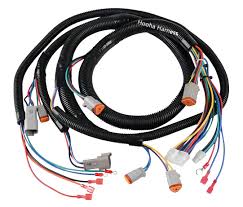
PVC:
-
Performance Parameters: Temperature resistant -10°C~80°C (below -10°C becomes hard/brittle, ASTM D746), tensile strength 15 MPa (ASTM D638), abrasion resistance 1 million cycles (ISO 4649, mass loss 80mg/1000 cycles), flame retardant UL94 V-0 rating (burns 15 seconds self-extinguish).
-
Suitable Scenarios: Indoor appliances (e.g., power tool harnesses sold at Home Depot), automotive interior (dashboard wiring, away from heat sources), general office equipment.
-
Note: Poor oil resistance (immersed in SAE 30 oil 72 hours volume expansion 8%, ASTM D471), prone to HCl gas emission at high temperature (unsuitable for enclosed spaces), poor environmental friendliness (contains phthalates, EU REACH restricted).
-
User Feedback: Texas appliance factory used PVC for washing machine control harnesses, 5-year failure rate 4.2%, but after moving to Mexico factory (ambient temperature often exceeds 35°C), hardening/cracking rate reached 11% in 2 years.
TPE:
-
Performance Parameters: Temperature resistant -40°C~125°C (DuPont Hytrel data), tensile strength 18 MPa, abrasion resistance 3 million cycles (ISO 4649, mass loss 60mg/1000 cycles), resilience 40% higher than PVC (ASTM D2632).
-
Suitable Scenarios: Automotive door hinge harnesses (opened/closed 20 times daily, Ford F-150 uses TPE jacket 5 years no cracks), medical consumables (insulin pump tubing outer jacket, requires repeated bending), consumer electronics.
-
Note: Moderate oil resistance (oil immersion expansion 5%), long-term UV exposure causes aging (California solar plant test: after 3000 hours xenon aging, tensile strength reduced 15%).
-
Test Data: Per ISO 18000-4 bend test (-40°C bend 100k cycles), TPE jacket no cracks, PVC cracked at 30k cycles under same conditions.
TPU:
-
Performance Parameters: Temperature resistant -35°C~135°C (Lubrizol Estane data), tensile strength ≥25 MPa (up to 35 MPa), abrasion resistance 5 million cycles (ISO 4649, mass loss < 50mg/1000 cycles), resistant to mineral oil/fuel (immersed SAE 30 oil 500 hours expansion < 3%), tear strength 50 N/mm² (ASTM D624).
-
Suitable Scenarios: Automotive engine bay (VW EA888 engine harness, contacts oil + 120°C high temperature), heavy machinery (Caterpillar excavator hydraulic line harness, resists rock impact), oilfield equipment.
-
Cost Comparison: Unit price $2-4/meter, 3x more expensive than PVC, but lifespan 2-3x longer (John Deere agricultural machinery test: TPU jacket on harvester vibration environment lasted 5 years, PVC wore through in 2 years).
-
Special Type: Transparent TPU (e.g., Bayer Texin RxT85), used for inspection lines (medical endoscope cables), allows direct visual inspection for internal wire breakage.
XLPE:
-
Performance Parameters: Temperature resistant -50°C~125°C (continuous), short-term 150°C (IEEE 1580), tensile strength 20 MPa, dielectric strength ≥20 kV/mm (IEC 60243, 600V cable must withstand 3kV for 1 minute no breakdown), water absorption < 0.1% (key for waterproofing), low smoke zero halogen (smoke emission < 50 m²/m³ when burned, IEC 61034).
-
Suitable Scenarios: Photovoltaic systems, marine power, industrial power distribution (Siemens low-voltage cabinet internal wiring).
-
Test Case:According to the IEC 60502 aging test (135°C for 168 hours), the tensile strength retention of the XLPE jacket is > 90%, while that of PVC is only 60%.
PUR:
-
Performance Parameters: Temperature resistant -40°C~90°C (Covestro Desmopan data), tensile strength 30 MPa (higher for braided versions), tear strength ≥80 N/mm² (ASTM D624), abrasion resistance 10 million cycles (ISO 4649, mass loss < 30mg/1000 cycles), hydrolysis resistance (95% humidity environment 5 years no decomposition).
-
Suitable Scenarios: Mining equipment (BHP iron ore truck harnesses, resists rock impact), railway trackside (Alstom train undercarriage harnesses, resistant to flying gravel), underwater robots.
-
Enhanced Version: Embedded aramid fiber (e.g., DuPont Kevlar) braid layer, cut resistance 300% higher than single-layer PUR.
Silicone:
-
Performance Parameters: Temperature resistant -60°C~200°C (continuous), momentary 230°C (Wacker Elkem data), tensile strength 12 MPa (low due to flexibility), abrasion resistance 500k cycles (ISO 4649, mass loss 100mg/1000 cycles), biocompatible per ISO 10993 (implantable in body no rejection).
-
Suitable Scenarios: Aviation sensors, medical implants (pacemaker lead outer jacket), high-temperature sterilization equipment (hospital autoclave internal connection cables, 121°C steam sterilization).
-
Disadvantages: Easily cut by sharp objects (light knife scratch can cut), high cost ($5-8/meter, 2x TPU).
Fluoroplastics (PTFE/FEP):
-
Performance Parameters: Temperature resistant -200°C~260°C (PTFE), -80°C~205°C (FEP), resistant to aqua regia/concentrated sulfuric acid, dielectric strength ≥60 kV/mm (3x higher than XLPE).
-
Suitable Scenarios: Chemical plant reactor harnesses (Dow Chemical uses PTFE jacket, contacts concentrated hydrochloric acid), semiconductor equipment, satellite antenna feeders.
-
Disadvantages: High hardness (bend radius must be >10x outer diameter, otherwise cracks), difficult processing.
Marking
Color Zoning:
-
Automotive Industry Rules: German automakers (e.g., BMW) use Black (ground), Red (power), Yellow (signal), production line installation error rate reduced from 9% to 6% (2022 BMW internal report). US General Motors uses Blue for data lines, Green for control lines, mix-up rate reduced 4%.
-
Industrial Equipment: Norwegian offshore platforms use Orange for high-voltage lines (>48V), Gray for communication lines, comply with ISO 3864 safety marking standard, accidental contact risk reduced by 25%.
-
Medical Scenarios: US Medtronic insulin pump uses Light Blue for infusion lines, Dark Blue for sensor lines, nurse replacement error rate reduced from 7% to 2%.
| Industry | Color | Function | Effect (Data) |
|---|---|---|---|
| Automotive Manufacturing | Black | Ground | BMW installation error rate down 3% (2022) |
| Industrial Automation | Orange | High-voltage (>48V) | Norwegian platform accidental contact risk down 25% |
| Medical Equipment | Light Blue | Infusion line | Medtronic nurse error rate down 5% |
| Photovoltaic Power | Red | Positive pole | SunPower wiring efficiency up 10% |
Laser Marking:
-
What to Mark: Manufacturer (e.g., TE Connectivity), Model (e.g., DEUTSCH DT04-4P), Batch Number (20240517A), UL Certification Number (E123456), Voltage (600V), Wire Gauge (18AWG).
-
How Fine: Per ISO/IEC 15415 standard, with character height ≥1mm, positioning accuracy 0.1mm, even decimal points are clear.
-
Where to Mark: Jacket side or end, avoid bending area (prevent cracking). E.g., Caterpillar excavator harness, marked 50mm from connector, easy to see when crouching.
-
Test Method: Use 3M tape for a peel test (ASTM D3359), with less than 5% of the marked area peeling off to pass; wipe with alcohol 100 times (ASTM D5402), and the text remains clear.
Markings Must Be Durable:
-
Abrasion Resistant: TPU jacket laser marking, Taber abrasion tester (CS-10 wheel, 1kg load) 1000 cycles, marking contrast retained 80% (ASTM D4060). PVC jacket printed marking, same test blurred after 500 cycles.
-
Chemical Resistant: Immersed in SAE 30 oil 72 hours (ASTM D471), TPU marking no swelling; PVC printed marking bleeds.
-
UV Resistant: California solar plant xenon lamp exposure 3000 hours (ISO 4892-2), TPE jacket laser marking contrast remaining 75%, printed marking only 30%.
-
Temperature Resistant: -40°C~125°C cycling 500 times (IEC 60068-2-14), silicone jacket marking no cracking (Wacker Elkem data).
Special Markings:
-
High Voltage Warning: Orange stripe (width 5mm) + exclamation mark symbol (ISO 7010 W012), printed on jacket middle. GE Wind Energy uses this, high-voltage accidental contact repair cost reduced from 8000/incident to 2000.
-
Multilingual: Harnesses for export to Europe, marked in English+German "Caution High Voltage", Spanish market adds Spanish "Precaución Alto Voltaje".
-
Status Mark: Green matte block "Tested OK", Red "Rework Needed", using UV-curable ink, washable (complies with ISO 2810).
How Foreign Users Verify Markings?
-
Test Report Content: Marking adhesion (ASTM D3359), clarity (ISO 15415 contrast > 70%), durability (marking intact after thermal cycling).
-
On-site Trial: US agricultural machinery company (John Deere) takes samples, wipes 50 times with alcohol swab, lightly sands 10 times, checks if markings fade.
-
Cost Data: Equinix data center fiber mis-fusion cost $5000 per incident due to unclear markings; after using laser marking, annual repair costs down 60%.
