Harness Cable Assembly Cost | 5 Factors That Influence Price
Harness cable assembly costs hinge on material grades (e.g., OFC copper vs. standard copper affects wiring by 15-20%), precision processes like laser welding adding 10-15% labor, small batches (<500pcs) incurring 8-12% premiums, and UL/ISO certifications adding 5-7%, with connector types (e.g., M12 vs. JST) varying costs by 3-5%.
Materials Used and Cost
When it comes to harness cable assembly, the materials you select don't just affect performance—they directly drive 30% to 60% of your total unit cost. The price of raw materials like copper, insulation, and connectors is highly volatile, fluctuating daily based on global market trends. For instance, copper pricing can swing by over 15% in a single quarter, directly impacting the cost of your wire.
Key factors influencing material costs include:
- Conductor material type and market price
- Insulation and jacketing material grade
- Connector terminal plating and complexity
- Shielding requirements and material dosage
While bare copper is the standard, its price per metric ton can vary by 2,000 year-over-year, creating significant cost uncertainty for large orders. For higher-performance applications requiring better conductivity or flexibility, tinned copper or silver-plated copper wires are used, adding a 5% to 12% premium to the raw conductor cost.
Standard PVC (Polyvinyl Chloride) insulation is the most economical, typically costing 0.15 per meter. However, if your assembly must operate in high-temperature or harsh environments, materials like Teflon (FEP/PTFE) or Silicone Rubber are necessary. These specialized materials can cost 3 to 8 times more than standard PVC, instantly raising the final price.
A simple nylon-housed connector with tin-plated terminals might cost 0.50 per unit. However, upgrading to a ruggedized connector with gold-plated contacts (0.5 to 1.5 microns thick) for superior corrosion resistance and signal integrity can increase the price to 5.00 or more per unit.
Order Size and Pricing
A one-off prototype harness can easily cost 500 or more due to engineering, setup, and procurement time. Order 100 units, and that price might drop to 85 per unit. Place an order for 10,000 units, and you could see a final price of $38 per unit, a 92% reduction from the prototype cost.
The initial setup for any harness order includes costs like CAD drafting and formboard creation (a physical template for assembly), which can range from 500 to 2,000. For a 5-unit prototype order, this setup cost alone adds 100-400 per unit. Ordering 500 units spreads that same setup cost to just 1-4 per unit, effectively eliminating it as a major factor. Furthermore, labor efficiency dramatically improves; an assembler might take 60 minutes to build the first unit but can reduce that time to 35 minutes per unit by the hundredth due to learned repetition and process refinement, cutting direct labor cost by over 40%.
A manufacturer buying a 250-foot spool of 20 AWG wire might pay 0.22 per foot. Committing to a 50,000-foot purchase for a large order could drop that price to 0.14 per foot, a 36% saving that is directly passed through. Connectors are often sold in reels or tubes of 1,000-5,000 units; buying 10 reels instead of 10 loose pieces can slash the per-unit connector cost by 15-25%.
| Order Quantity | Estimated Unit Price | Key Cost Drivers |
|---|---|---|
| 1 (Prototype) | $500.00 | Full NRE cost absorption, highest material markups, maximum labor time per unit. |
| 100 Units | $85.00 | NRE amortized, some material discounts, improved but not optimized labor. |
| 1,000 Units | $52.00 | Significant material discounts, optimized labor (~30 min/unit), efficient setup. |
| 10,000 Units | $38.00 | Lowest material costs (wholesale tiers), highly optimized labor (~25 min/unit), negligible NRE impact. |
A manufacturer is more likely to dedicate a dedicated production cell and senior assembly team to a high-volume, high-value order, reducing the risk of errors and improving overall consistency. They can also justify investing in semi-automated equipment like automated wire cutters or crimping machines for an order of 5,000+ units, which further drives down labor time and cost. This level of commitment is rarely feasible for small batches, which are often handled alongside other projects, leading to more changeovers and potential bottlenecks. The predictability of a large order allows for better raw material purchasing and production scheduling, avoiding rush fees and ensuring a more reliable lead time, often 4-6 weeks faster than a small batch produced in a shared workflow.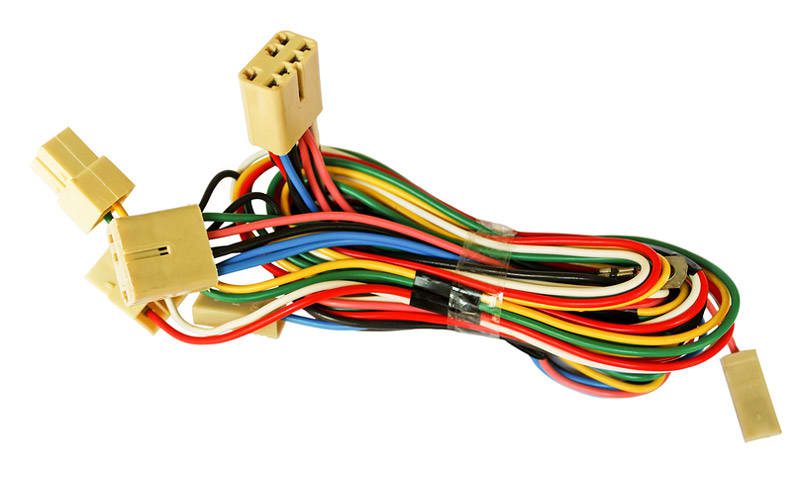
Testing and Quality Checks
The final and non-negotiable factor influencing the price of a harness cable assembly is the scope of testing and quality assurance. While often viewed as an overhead, rigorous testing is a critical insurance policy against field failures, which can be 100 to 1000 times more expensive to rectify than a caught defect at the factory.
A basic continuity and hipot (dielectric withstand) test on a simple harness might take 45 seconds and cost 1.50 per unit. However, introducing requirements for impedance testing, time-domain reflectometry (TDR) for signal integrity, or 100% functional testing can increase that cost to 8 to $25+ and 3-5 minutes of cycle time per unit. The price directly reflects the level of confidence you require in the product's performance and reliability.
The most common and fundamental test is continuity and opens/shorts testing. This verifies that every intended connection is made and that no unintended connections (shorts) exist between circuits. A skilled technician can perform a basic continuity check with a multimeter in about 90 seconds, but a automated test system with a multiplexer can complete the same test on a 50-circuit harness in under 15 seconds. The cost for this basic automated test is typically 2.00 per unit, depending on harness complexity. This is a baseline cost that is included in almost every commercial harness quote.
For any assembly that will carry mains voltage, a hipot test (high-potential or dielectric withstand test) is essential. This test applies a high voltage (e.g., 1500 VAC for 60 seconds or 1800 VDC for 2 seconds) between conductors and from conductors to shield to ensure the insulation can withstand transient surges without breaking down. The test itself is quick (30-90 seconds), but the required setup, calibration, and operator oversight mean it adds a fixed cost of approximately 8.00 per unit. This cost increases if the test requires different voltage levels for different circuits within the same harness.
| Test Type | Typical Time per Unit | Approximate Cost Add | Purpose |
|---|---|---|---|
| Continuity/Opens/Shorts | 10 - 30 seconds | 2.00 | Verifies correct wiring and absence of short circuits. |
| Hipot (Dielectric) | 30 - 90 seconds | 8.00 | Validates insulation integrity and electrical safety. |
| Insulation Resistance | 60 - 120 seconds | 9.00 | Measures the quality of insulation (e.g., >100 MΩ). |
| TDR / Signal Integrity | 90 - 180 seconds | 25.00 | Checks for impedance mismatches and signal degradation in data lines. |
| 100% Functional Test | 120 - 300 seconds | 40.00+ | Powers the assembly and verifies performance in a simulated end-use environment. |
For data harnesses, TDR testing is used to verify characteristic impedance (e.g., 50Ω or 100Ω ±5%) and to pinpoint the location of any faults like crimps or kinks that would degrade signal quality. This test requires expensive equipment and a highly skilled operator, adding 25 per unit. Environmental tests, such as thermal cycling (-40°C to +85°C) or vibration testing, are rarely performed on 100% of units but are instead conducted on a sample batch. A single 24-hour thermal cycle test on a sample of 5 units can add a one-time charge of 1,500 to the overall project cost, covering chamber time, monitoring, and reporting. The sampling frequency itself is a cost driver; moving from an AQL (Acceptable Quality Level) of 2.5 to a stricter AQL of 1.0 can double the number of units pulled for destructive testing, thereby increasing the overall quality control budget for the order by 15-25%.
A concise look at harness cable assembly costs reveals five key drivers: material expenses (e.g., copper cables cost ~30% more than aluminum), labor time (≈0.5hrs/meter for assembly), design intricacy (each added interface raises costs by 15%), order volume (1,000+ units cuts prices by 20%), and testing (15mins/unit for quality checks). These factors collectively shape pricing precision.
