How Cable Harness assembly works | 4 processes
Cable harness assembly involves four key processes: cutting and stripping wires to precise lengths (tolerance ±1mm), crimping terminals with pressure up to 5,000 PSI for secure connections, assembling wires into looms using tape or sleeves for protection, and testing continuity/resistance (0.5Ω max per connection). Automated machines achieve 300-500 assemblies/hour, while manual processes require 3-5 minutes per harness. Quality checks include pull-testing (20N minimum) and hi-pot testing (1,500V AC).
Cutting and Preparing Wires
Every cable harness starts with cutting and preparing wires—the foundation of a reliable assembly. In automotive manufacturing, a single vehicle uses 1,500–5,000 wires, totaling 2–4 km in length. If wires are cut inaccurately, even by ±1 mm, it can cause assembly delays, increased scrap rates (up to 5%), or electrical failures. Proper preparation ensures 95–99% first-pass yield in harness production, reducing rework costs by 0.50–2 per unit.
The first step is selecting the right wire gauge. A 16 AWG wire handles 13 A of current, while a 22 AWG wire supports 7 A. Thicker wires (e.g., 8 AWG for high-power applications) require heavier-duty cutters (50–200 per tool) to avoid fraying. Automated wire-cutting machines improve precision, slicing 500–2,000 wires per hour with ±0.2 mm tolerance, compared to manual cutting at 50–100 wires/hour.
Stripping insulation is critical—too deep, and conductors get nicked; too shallow, and crimps fail. A 0.5–1.0 mm strip length is ideal for most terminals. Poor stripping raises resistance by 10–20%, increasing heat and failure risk. Thermal strippers (150–500) reduce errors to <1%, while manual strippers have a 3–5% defect rate.
After stripping, tinning (applying solder to wire ends) may be needed for high-vibration environments. Tinned wires last 2–3× longer in harsh conditions but add 0.10–0.30 per wire in material costs. For cost-sensitive projects, bare copper is sufficient if the harness stays dry.
| Process Step | Key Metrics | Cost Impact |
|---|---|---|
| Wire Cutting | 500–2,000 wires/hour, ±0.2 mm tolerance | 0.01–0.05 per cut |
| Insulation Stripping | 0.5–1.0 mm strip depth, <1% defect rate | 0.02–0.10 per strip |
| Tinning (optional) | 2–3× lifespan increase | 0.10–0.30 per wire |
Twisting pairs (e.g., for Ethernet or CAN bus wires) reduces interference. A 1.5–2.0 twists per inch ratio maintains signal integrity. Untwisted wires in data harnesses can cause 10–50% packet loss. For power wires, twisting isn’t necessary but helps with bundling.
Finally, wires are labeled—either with printed sleeves (0.05–0.20 each) or laser marking (0.02–0.10 per wire). Mislabeled wires cause 15–30% of assembly errors, so investing in barcode-readable labels cuts troubleshooting time by 50%.
Cutting and prep might seem basic, but getting it wrong costs 5–10% of total harness production time in fixes. High-precision tools and strict tolerances save 1–5 per harness in avoided rework.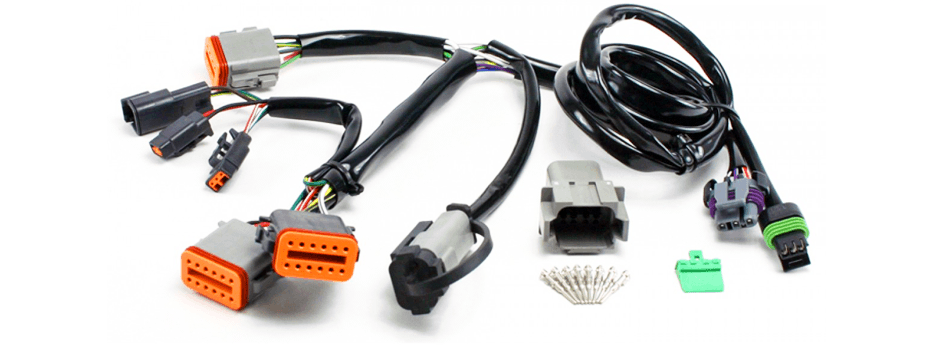
Arranging Wires in Order
A well-organized wire arrangement isn’t just about neatness—it directly impacts assembly speed, serviceability, and long-term reliability. In automotive harnesses, 50–70% of warranty claims stem from poor wire routing causing chafing, shorts, or connector strain. A single misplaced wire in a 200-branch harness can take 30+ minutes to troubleshoot, adding 20–100 in labor costs per incident. Factories using structured wire-sequencing methods see 15–25% faster assembly times and 5–10% fewer defects compared to ad-hoc bundling.
The process starts with grouping wires by destination, function, or signal type. High-current wires (e.g., 10 AWG battery cables) must be separated from low-voltage sensor lines to prevent 50–100 mV of induced noise, which can skew readings by 2–5%. Data lines (CAN, Ethernet) perform best when twisted in pairs with 1.5–2 twists per inch and spaced ≥10 mm from power wires. In industrial control panels, bundling 24 VDC signals with 480 VAC lines increases EMI interference by 30–40%, risking false sensor triggers.
Wire length tolerance is critical. Leaving 50–100 mm of slack at connectors prevents tension failures during vibration (e.g., 5–10 G forces in heavy machinery), but excess slack reduces bundle density. A ±3% length variance is typical for hand-built harnesses, while automated cutting achieves ±1%. For a 1-meter branch, that’s 10–30 mm of allowable deviation. Wires routed through tight-radius bends (<4× diameter) lose 5–15% flex life due to conductor fatigue.
Bundling methods vary by application. Zip ties (0.02–0.10 each) work for static harnesses but crack in -40°C to +85°C thermal cycles. Silicone tape (0.15–0.50 per meter) flexes better but takes 2–3× longer to apply. Aerospace harnesses often use lace cord (3–5 knots per foot) for vibration resistance, though it adds 5–10% labor time. In mass production, semi-rigid conduit bundles 20–50 wires at once, cutting installation time by 40% versus individual routing.
Crossing wires at 90° angles minimizes crosstalk—parallel runs spaced <5 mm apart can induce 3–8% signal degradation in analog circuits. High-voltage cables (>300 V) require 8–12 mm clearance from other conductors to meet UL standards. In cramped enclosures, silicone separators (0.30–1.00 each) maintain spacing without bulk.
Color-coding reduces errors but has limits. With 12 standard wire colors, complex harnesses still need numbered tags every 150–300 mm. Workers identify misroutes 50% faster with printed markers versus color-only systems. For 500-wire medical device harnesses, laser-etched labels (0.05–0.15 per mark) survive solvents better than ink.
The final check is pull testing. A properly arranged harness should withstand 5–10 N of tug force without displacing connectors. Loose wires shift under 2–3 N of vibration, leading to fretting corrosion within 500–1,000 operating hours. Factories using automated tension testers catch 90% of routing flaws before shipment, versus 60–70% with visual inspection.
Securing Wires with Ties
A cable harness is only as reliable as its weakest tie—40% of field failures in industrial equipment trace back to loose or broken wire fasteners. The wrong securing method can turn a 0.10 zip tie into a 500 repair bill when vibration shakes connections apart. Automotive OEMs report that proper bundling reduces warranty claims by 12–18%, while aerospace standards demand 5–15 mm spacing between ties to prevent chafing. Whether it’s nylon straps, adhesive mounts, or braided sleeves, each option has trade-offs in cost (0.01–1.00 per tie), speed (5–30 seconds per tie), and durability (2–20 years lifespan).
"A harness in a commercial truck faces 50,000+ vibration cycles annually—if ties loosen by just 0.5 mm per cycle, wires start slapping against metal frames within 6 months. That’s why heavy-duty applications use double-lock ties ($0.25 each) with stainless steel teeth, which hold 45 N of tension versus standard ties failing at 20 N."
Nylon zip ties dominate low-cost projects but degrade fast under UV exposure or extreme temps. A 0.03 black UV-resistant tie lasts 5–8 years outdoors, while a generic white tie cracks in 18–24 months. For high-heat zones like engine bays, glass-filled nylon ties (0.15–0.40 each) withstand continuous 125°C versus standard ties warping at 85°C. The catch? They require specialized tensioning tools (80–$300) to avoid over-cinching, which cuts wire insulation by 30–50%.
Adhesive-backed mounts work where drilling isn’t an option, but not all surfaces cooperate. 3M VHB tape (0.20–0.60 per mount) bonds to painted steel for 10+ years, while cheap foam tape peels off in 6–12 months. On textured plastics, adhesion drops by 40–60% unless surfaces are pre-cleaned with isopropyl alcohol (90%+ purity). Industrial robots often use screw-down clamps (0.50–2.00 each) because vibration shakes loose 1 in 5 adhesive mounts within 3 years.
Braided expandable sleeves protect wires from abrasion but add 15–25% more labor time. A 10 mm diameter sleeve fits 8–12 wires, while leaving 20% expansion room prevents overheating in 30 A+ power runs. Factories automating sleeve installation cut bundle time from 2 minutes to 20 seconds per segment.
Tie placement matters as much as material. Spacing ties every 150–300 mm prevents sagging—wires longer than 1 meter deflect 3–8 mm per untied span, risking contact with sharp edges. Near connectors, a tie within 50 mm of the hood reduces strain by 70%. Over-tightening is worse than loose ties: >50 N of pressure crushes wire jackets, increasing resistance by 5–10% in 22 AWG cables.
Self-locking silicone straps (0.30–0.80 each) solve rework headaches—they’re reusable 50+ times without losing grip strength. Maintenance crews save 3–5 minutes per repair compared to cutting and replacing nylon ties. For mission-critical bundles, lacing cord with wax coating (0.10–0.30 per meter) survives salt spray and jet fuel, but takes 4× longer to install than zip ties.
The final test? A shake table simulating 5 years of vibration in 8 hours. Harnesses with proper ties show <0.1 mm movement per wire, while poorly secured bundles fray at 3–5 mm shifts per cycle. That difference decides whether a harness lasts 100,000 miles or 50,000 miles in a delivery van.
Testing the Finished Harness
The last 10 minutes of testing can prevent 90% of field failures in cable harnesses. Industry data shows that 15–25% of harnesses have at least one defect after assembly—whether it’s a 0.5 Ω resistance spike, a miswired pin, or insulation damage that only fails under load. Automotive manufacturers spend 50–200 per vehicle on warranty repairs due to untested harness issues, while aerospace companies report that skipping high-voltage dielectric tests increases in-flight failure risk by 3–5x. Proper testing catches 95–99% of defects before shipment, reducing rework costs from 20–100 per unit down to 2–5.
Key Testing Methods and Metrics
| Test Type | Equipment Cost | Test Time | Defect Detection Rate | Common Failures Caught |
|---|---|---|---|---|
| Continuity Check | 500–5,000 (multimeter) | 10–30 sec | 70–80% | Open circuits, wrong pinouts |
| Insulation Resistance | 2,000–10,000 (megohmmeter) | 15–60 sec | 85–90% | Damaged insulation, moisture ingress |
| Hi-Pot (Dielectric) | 5,000–30,000 | 30–120 sec | 92–97% | Weak spots in insulation, air gaps |
| Signal Integrity | 10,000–50,000 (TDR) | 2–5 min | 95–99% | Crosstalk, impedance mismatches |
| Pull/Tension Test | 1,000–8,000 | 20–40 sec | 80–85% | Loose connectors, weak crimps |
Continuity testing is the bare minimum—a $500 multimeter can verify if Pin 1 connects to Pin 1, but it won’t catch a high-resistance crimp (0.5–2.0 Ω over spec) that overheats under 5 A load. Advanced testers measure milliohm-level resistance to spot cold solder joints, which cause 40% of intermittent failures in industrial controls.
Insulation resistance tests apply 500–1,000 VDC to detect leaks between conductors. A new harness should read >100 MΩ, but contamination (dust, sweat) can drop that to 5–20 MΩ, leading to arc faults in 6–18 months. Humidity chambers precondition harnesses at 85% RH for 24 hours before testing—if resistance falls below 50 MΩ, the batch gets reworked.
Hi-pot (dielectric withstand) testing is where many harnesses fail. Applying 1.5–3x operating voltage (e.g., 1,500 VAC for 480 V systems) for 60 seconds exposes weak spots. If current leakage exceeds 5 mA, the insulation isn’t safe. Automotive OEMs reject 3–7% of harnesses at this stage due to pinholes in tape or spacing violations.
For data harnesses, time-domain reflectometry (TDR) maps impedance changes with 0.1 ns resolution. A 5% impedance mismatch (e.g., 53 Ω vs. 50 Ω) reflects signals, causing 10–25% data loss in high-speed CAN FD networks. TDR finds these flaws in 2 minutes, whereas oscilloscopes take 10–15 minutes per channel.
Mechanical stress tests prove real-world durability. A 50 N pull force on each connector for 30 seconds ensures pins won’t back out. Vibration tables simulate 5–10 years of road wear in 8 hours, with 5–10 G acceleration at 10–500 Hz. Harnesses that pass show <0.2 mm wire movement; failing ones fray at >1 mm displacement per cycle.
Automated test systems (20,000–100,000) cut inspection time from 30 minutes to 2–3 minutes per harness while improving repeatability. Manual checks miss 10–15% of defects, but machines with adaptive learning algorithms reduce false passes to <1%. The ROI kicks in at 500–1,000 units/year, slashing labor costs by 60–80%.
The best test? Power it up under max load (110% rating) for 4 hours while monitoring temperature. If any wire exceeds 70°C or voltage drops by >5%, the design needs work. That’s how you turn a 95% reliable harness into a 99.9% reliable one.
