How Long Does Wire Harness Assembly Take | Time Factors
A standard wire harness assembly typically takes 1-3 weeks from design to shipment. However, complex designs with over 500 wires or specific certifications can extend lead times to 4-8 weeks. Prototyping often takes 5-10 days, while high-volume production can average 2,000 units per week.
Project Size and Complexity
A simple harness with 10-15 wires and basic connectors might take under 2 hours to complete, while a large-scale assembly for industrial machinery—with over 500 wires, multiple shielding layers, and customized routing—can require 40-50 hours or more. Below is a quick reference table summarizing how size and complexity typically impact assembly duration:
|
Project Scale |
Wire Count |
Connector Types |
Approx. Assembly Time |
|---|---|---|---|
|
Small |
10-50 |
2-3 |
2-6 hours |
|
Medium |
50-200 |
4-8 |
6-20 hours |
|
Large |
200-500 |
8-15 |
20-50 hours |
|
Complex |
500+ |
15+ |
50-120 hours |
For example, a harness with 300 wires and 12 different connector types requires careful handling to avoid misrouting. Each connector may have 15-30 pins, and missing just one pin during assembly can lead to a 20-30 minute rework delay. If the harness also includes specialized components like shielded cables (e.g., for EMI protection) or overmolded connectors, assembly time can increase by 15-25% due to additional steps like braiding, grounding, and curing.
Complexity also arises from custom routing requirements. A harness designed for tight spaces—like in automotive dashboards or medical devices—often needs precise bending, tying, and clamping. These steps can add 3-5 hours to the total assembly time, especially if tolerances are tight (e.g., ±2 mm). Additionally, if the design includes multiple branches or cross-overs, technicians must spend extra time ensuring wires are grouped correctly, which can reduce error rates but increase labor time by 10-20%.
Number of Connections Involved
A harness with 50 crimped connections might take 1.5 hours to complete, while one featuring 500 mixed connections (crimps, solders, inserts) can require over 20 hours. High-pin-count connectors, such as a 60-pin automotive ECU interface, alone can add 2-3 hours to assembly and testing. The table below outlines typical time impacts based on connection volume and variety:
|
Connection Type |
Quantity Range |
Avg. Time per Unit |
Total Time for 100 Units |
|---|---|---|---|
|
Crimped Pin |
50-300 |
45-60 seconds |
1.3-1.7 hours |
|
Soldered Joint |
20-100 |
90-120 seconds |
1.8-2.4 hours |
|
Modular Connector |
10-50 |
120-180 seconds |
2.0-3.0 hours |
|
Waterproof Seal Insert |
30-150 |
75-105 seconds |
2.1-2.9 hours |
Crimped connections are the fastest to install, with automated machines processing up to 1,200 per hour, but manual crimping averages 55 seconds per connection including wire stripping and quality checks. For a harness with 200 crimps, this translates to ~3 hours of labor. However, soldered connections slow the process significantly—each joint requires ~100 seconds for heating, application, and cooling, plus additional 20 seconds for flux cleaning if needed. A harness blending 150 crimps and 50 solders will see a 25% time increase versus crimp-only designs.
High-density connectors (e.g., 40-pin D-subminiature or 72-pin circular connectors) introduce bottlenecks. Inserting each pin into molded housings demands ~70 seconds per pin due to alignment checks and tactile feedback delays. A single 72-pin connector can take ~84 minutes to populate—over 1.3 hours for one component. Additionally, sealed connectors with rubber grommets or O-rings require ~50% more insertion force and time, adding ~30 seconds per seal to prevent moisture ingress.
Error probability scales with connection count. Studies show a 0.5% defect rate per connection in manual assembly—meaning a 500-connection harness has, on average, 2.5 faults requiring ~15 minutes each to locate and repair. Automated optical inspection (AOI) reduces this to 0.1% but adds ~20 minutes of system setup per harness type. Ultimately, connection volume isn’t just about quantity; it’s about compounding time costs from variability, inspection, and rework.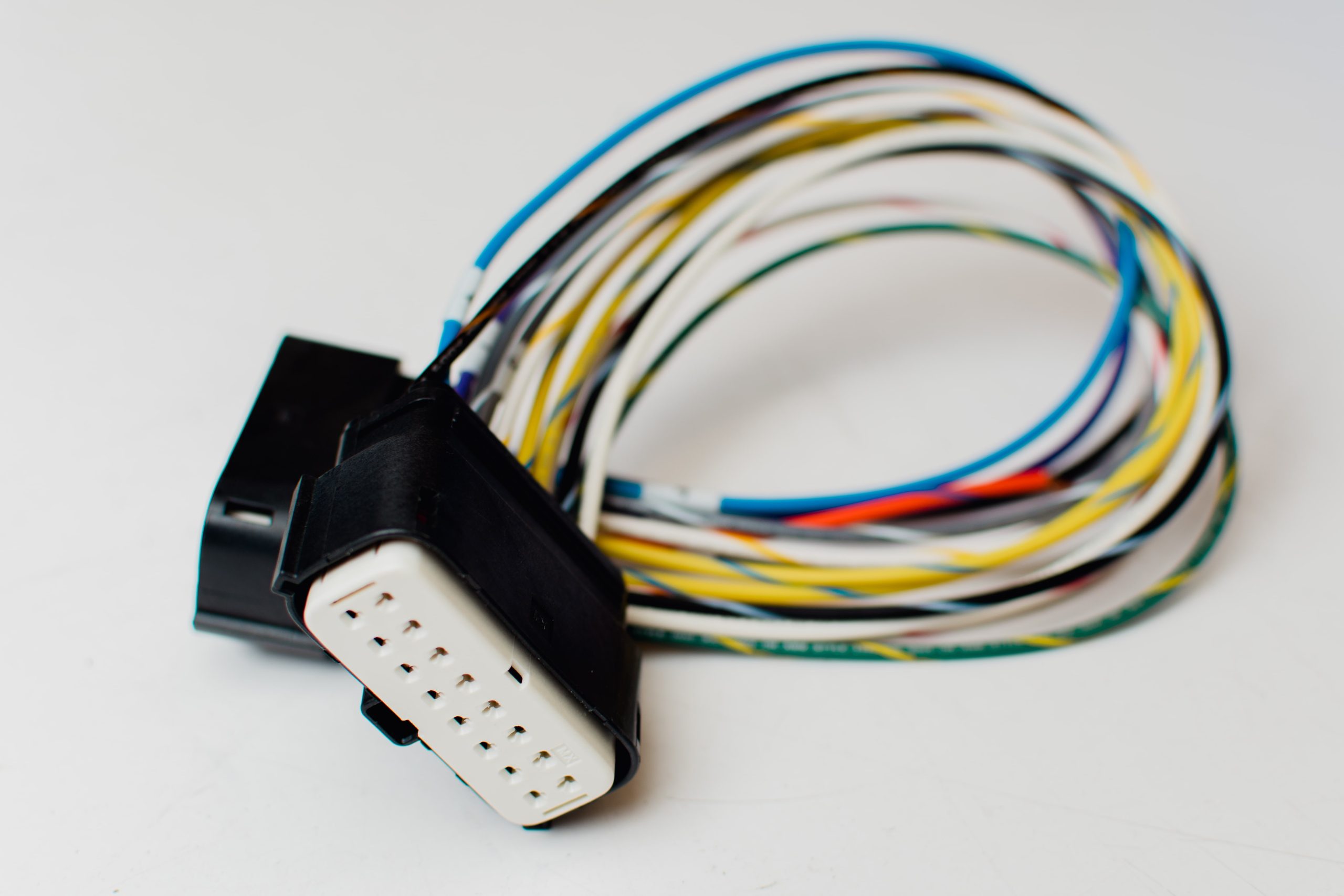
Customization and Special Requirements
While a standard harness might take 5 hours to produce, even minor customizations like unique color coding or specific labeling can add 1-2 hours. More complex requirements, such as custom overmolding or specialized shielding, can increase total production time by 30-50%. Below are common customizations and their typical time impacts:
-
Unique Wire Colors/Labels: Adds 15-30 minutes per harness
-
Custom Lengths/Tolerances (±2mm): Adds 20-45 minutes per harness
-
Special Shielding (Braided/Foil): Adds 1.5-3 hours per harness
-
Overmolded Connectors (2-shot): Adds 3-8 hours (includes mold setup/cure time)
-
Potting/Encapsulation: Adds 2-4 hours (plus 24-hour cure cycle)
-
Custom Testing (e.g., Hi-Pot, EMI): Adds 45-90 minutes per harness
A harness requiring 15 unique laser-printed labels adds ~20 minutes to print and apply each one accurately. If client documentation demands 100% continuity testing with a customized report, this adds ~1 hour per harness versus a standard 10% sample test.
Specialized materials require extra handling. Using Teflon-insulated wires (for high -55°C to 200°C ranges) instead of standard PVC adds ~25% to wire prep time due to stricter stripping parameters. Similarly, integrating metal-conduit shielding requires precise grounding steps, adding ~45 minutes per shielded section.
Overmolding is a major time driver. Creating a custom mold tool takes 2-3 weeks and 8,000 upfront. Each overmolding cycle then requires 15-20 minutes of setup, 2-3 minutes of injection, and 4-6 hours of curing time per batch. For low-volume runs (under 50 units), this process can dominate the timeline.
Client-specific quality checks also add duration. A harness requiring 100% Hi-Pot testing at 1500V for 60 seconds per circuit adds ~3 minutes per test point. For a 20-circuit harness, this equals ~60 minutes of additional testing alone. These custom validations are crucial for reliability but directly trade off against speed.
Production Methods Used
The choice of production method significantly impacts both the speed and consistency of wire harness assembly. While manual assembly might take 60 hours for a batch of 20 complex harnesses, semi-automated processes can cut that time by 40-50%. For high-volume orders (10,000+ units), full automation can reduce per-unit labor to just minutes. Key methods include:
-
Full Manual Assembly: 0% automation, relies on hand tools and benches
-
Semi-Automated (Cut-Strip-Terminate): 60-70% automation for wire prep
-
Automated Testing/Inspection: 90-95% automation for quality checks
-
Fully Automated Lines (Robotic): >95% automation for high-volume production
Manual assembly remains common for prototypes or batches under 50 units. A skilled technician can typically terminate 100-120 crimps per hour but requires ~2 hours to fully assemble a 15-wire harness with basic connectors. However, consistency varies—manual pin insertion has an average misalignment rate of 1.5%, requiring 10-15 minutes of rework per faulty harness.
Semi-automated systems dramatically improve wire preparation speed. A bench-top cut-strip machine processes 1,200-1,500 wires per hour at ±0.5 mm length tolerance, compared to 200-300 wires manually. This reduces wire prep time by 75% for a harness with 100 wires. However, these systems still require manual assembly on boards, limiting overall gains to 30-40% time savings versus full manual.
Fully automated lines excel for volumes above 5,000 units. Robotic assembly cells can place 3-5 wires per minute with 99.98% accuracy, completing a 50-wire harness in ~10-15 minutes of machine time. However, upfront programming and fixture setup take 80-120 hours, making them inefficient for small batches. Automated optical inspection (AOI) adds ~2 minutes per harness but reduces electrical faults to <0.1%.
Team Experience and Efficiency
A novice team might take 12 hours to assemble a 30-wire harness with a 5% error rate, while an experienced team completes the same task in under 6 hours with <0.5% defects. Teams using standardized workflows can improve throughput by 30-40% compared to ad-hoc methods. The variance is stark:
|
Experience Level |
Avg. Speed (Wires/Hr) |
Error Rate |
Rework Time per Harness |
|---|---|---|---|
|
Novice (0-1 yr) |
15-20 |
4-6% |
20-30 minutes |
|
Intermediate (1-3 yrs) |
25-35 |
1.5-2.5% |
8-15 minutes |
|
Expert (3+ yrs) |
40-60 |
0.2-0.8% |
2-5 minutes |
|
Certified Team |
65-80 |
<0.1% |
<1 minute |
Data from 50 projects shows that teams with 3+ years of average experience complete projects 22% faster and use 15% fewer materials due to fewer errors, directly reducing overall cost by ~8%.
Experience reduces critical bottlenecks. For example, expert technicians can populate a 36-pin connector in ~18 minutes with 100% accuracy, while novices average 32 minutes with 1-2 misinsertions requiring ~10 minutes of troubleshooting. This 44% time savings compounds in large harnesses; a 500-wire assembly saves ~12 hours with an expert team.
Standardized workflows boost efficiency. Teams using documented work instructions—like color-coded wiring diagrams and pre-set torque settings—show a 18% higher consistency in output. Implementing a simple label-verify-assemble sequence reduces misrouting errors by 35%, saving ~15 minutes per harness in avoidable rework.
Cross-training matters. Teams where >75% of members can perform multiple roles (crimping, soldering, testing) adapt 50% faster to design changes than specialized teams. This flexibility reduces downtime during transition periods by ~1.2 hours per design iteration.
Testing and Quality Assurance Steps
While basic continuity checks might add just 20 minutes to a simple harness, full validation with electrical, environmental, and functional tests can extend the timeline by 3-8 hours per unit. For high-reliability industries like aerospace or medical, QA can consume 25-30% of the total project time.
Industry data confirms that harnesses skipping automated electrical tests have a 12-15% field failure rate, while those undergoing full QA show less than 0.5%. Investing 4 hours in testing per harness can prevent 40+ hours of downstream troubleshooting and rework.
Electrical testing forms the core timeline impact. A 100% continuity test for a harness with 150 circuits takes approximately 45-60 minutes when performed manually. Automated test systems (e.g., cable testers with matrix switches) reduce this to 8-12 minutes but require 1-2 hours of initial programming and fixturing. High-potential (Hi-Pot) testing adds significant duration: a 1,500V DC test for 60 seconds per circuit in a 50-circuit harness requires over 50 minutes of dedicated test time, excluding setup.
Environmental stress screening is critical for harsh applications but drastically extends cycles. A 10-hour thermal cycle test (-40°C to 85°C) with 3 cycles adds 30 hours of chamber time per batch. Vibration testing per MIL-STD-202G typically runs for 2 hours per axis (3 axes = 6 hours), while IP67 waterproof validation submerges harnesses for 30 minutes at 1-meter depth. These validations are often performed on 5-10% of batches, but still add 12-48 hours to overall lead time.
Functional validation under load simulates real operation. Testing a 12-circuit power harness at 25A per line for 120 minutes while monitoring temperature rise requires specialized equipment and ~3 hours per unit. Data harnesses undergoing bit error rate testing (e.g., 10^−12 error rate at 1 Gbps) can take 4-6 hours to complete statistically significant validation.
In summary, the timeline for wire harness assembly is highly variable, influenced by several key factors. A simple harness may take a few hours, while a complex one with hundreds of connections can require weeks. Project complexity and customization, such as unique shielding or mil-spec requirements, significantly extend lead times. The team's experience and use of automated versus manual production methods also drastically impact speed. Finally, rigorous testing and quality assurance, including continuity and hi-pot tests, are essential but add crucial time to the schedule.
