How to buy Custom Wire Harness | 7 selection tips
When purchasing custom wire harnesses, start by defining specifications (wire gauge, voltage rating, and connector types) with ±0.5mm tolerance. Verify the manufacturer’s IPC/WHMA-A-620 certification for quality compliance. Request 3D prototypes for fit checks before mass production. Ensure 100% continuity testing (max 0.25Ω resistance) and hi-pot testing (1,500V AC for 60s).
Confirm material traceability (UL-certified cables). Compare lead times—custom orders take 3-8 weeks versus 1-2 weeks for modified standards. Finally, validate in-house tooling capabilities (0.05mm precision crimping) and request sample units for real-world testing under operational conditions.
Know Your Wire Requirements
If you’re buying a custom wire harness, the first and most critical step is understanding exactly what your application needs. A mismatch in wire specs can lead to 12-25% higher failure rates within the first 2 years, costing an extra 500-5,000 per unit in repairs or replacements. For example, a 22 AWG wire can handle up to 7A at 60°C, but if your system draws 10A continuously, you’ll need at least 18 AWG to avoid overheating. Similarly, stranded wire (like 26/30 AWG) is better for flexible applications (e.g., robotics arms), while solid core works for fixed installations (e.g., control panels).
Voltage drop is another key factor—a 5% drop over 10 feet in a 12V system means you’re losing 0.6V, which can disrupt sensors or low-power electronics. To prevent this, increase wire gauge (e.g., from 24 AWG to 20 AWG) or shorten the run. If your harness operates in high-temperature environments (85°C+), standard PVC insulation (rated for 60-105°C) may fail; silicone or Teflon (up to 200°C) is safer but costs 20-50% more.
Current capacity also depends on wire grouping. A single 16 AWG wire can carry 10A, but if bundled with 4+ other wires, derating rules apply—capacity drops by 15-30% due to heat buildup. For automotive or industrial use, 600V-rated wire is common, but 1kV or higher is needed for EV battery systems or solar arrays.
Shielded vs. unshielded matters when EMI/RFI is a concern. Unshielded Cat5e cable has ~3pF/ft capacitance, but shielded (STP) reduces interference by 60-90% in noisy environments (e.g., near motors or radio transmitters). However, shielding adds 0.10-0.50 per foot and increases stiffness by 15-25%.
A Molex Mini-Fit Jr. connector fits 16-22 AWG wires, but if you force a 24 AWG wire into it, the crimp won’t hold, leading to intermittent failures. Always match wire OD (outer diameter) to connector specs—for example, a 2.5mm² wire fits a 6.3mm ferrule, while a 1.5mm² wire needs a 4.8mm ferrule.
Choose the Right Connector Type
Picking the wrong connector can turn a reliable wire harness into a 25-40% higher failure risk, costing $1,000+ per repair in industrial or automotive systems. For example, a Deutsch DT series connector handles 13A per pin at 250V, but if you mistakenly use a JST XH (3A max) in a 10A circuit, it will overheat and fail within 6-12 months. Meanwhile, Molex Mini-Fit Jr. supports 9A per pin, making it ideal for PC power supplies, while Amphenol’s MIL-DTL-38999 is built for 50A in aerospace, with a 500+ mating cycle lifespan.
Current rating isn’t the only factor—contact resistance matters too. A gold-plated pin has <10mΩ resistance, but a tin-plated one jumps to 20-50mΩ, wasting 3-8% power as heat in high-current apps. If your system runs 48V at 30A, that’s 14-40W lost just at the connector. Vibration resistance is another silent killer: USB-C ports survive 10,000 insertions but fail 5x faster in vibrating machinery than screw-lock circular connectors (e.g., M12).
Environmental sealing is critical for outdoor or harsh environments. An IP67-rated connector (1m underwater for 30min) costs 20-30% more than unsealed versions but prevents 90% of corrosion failures in marine or agricultural equipment. For high-temperature zones (150°C+), thermoplastic shells melt—metal-bodied connectors (e.g., Cannon PL259) handle 200°C+ but add 15-25% weight.
Here’s a quick connector comparison table for common scenarios:
| Connector Type | Max Current/Pin | Voltage Rating | Mating Cycles | Cost/Piece | Best For |
|---|---|---|---|---|---|
| JST XH | 3A | 250V | 30 | 0.10-0.30 | Low-power PCBs, drones |
| Molex Mini-Fit Jr. | 9A | 300V | 50 | 0.50-1.20 | Servers, PSUs |
| Deutsch DT | 13A | 250V | 500+ | 2.50-5.00 | Automotive, heavy machinery |
| Amphenol 38999 | 50A | 600V | 500+ | 15-30 | Aerospace, military |
| M12 (IP67) | 4A | 250V | 100+ | 3-8 | Factory sensors, robotics |
Wire-to-connector fit is equally vital. A 16 AWG wire (1.3mm²) needs a terminal cavity of 1.5-2.0mm—if forced into a 1.0mm slot (for 22 AWG), the crimp fails 80% faster. Crimp vs. solder also affects longevity: Properly crimped joints last 10-15 years in vibration-heavy apps, while solder cracks after 2-5 years unless strain-relieved.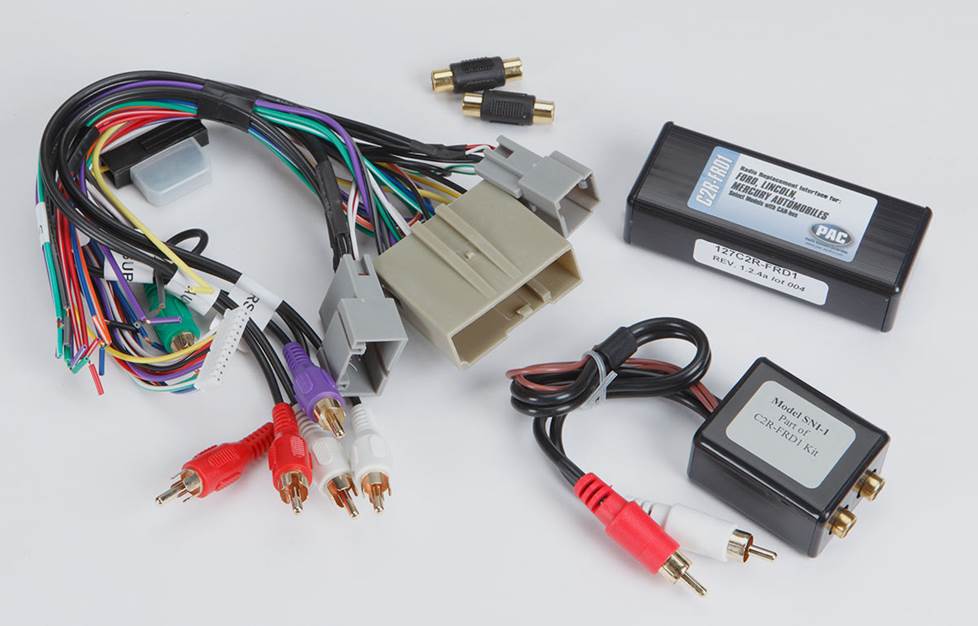
Check Wire Quality and Material
Cheaping out on wire quality is a fast track to 15-30% premature failures, especially in demanding environments. For example, standard PVC-insulated wire (105°C rating) degrades 3x faster in an engine bay where temps hit 125°C+, versus silicone-insulated wire (200°C rating) that lasts 8-10 years in the same conditions. Copper purity matters too—99.9% pure OFC (oxygen-free copper) has 58% lower resistance than CCA (copper-clad aluminum), which means a 10m run of 16 AWG CCA wire drops 0.8V at 10A, while OFC drops just 0.3V. That voltage loss can brick sensitive electronics like CAN bus systems or low-voltage sensors.
Strand count directly impacts flexibility and fatigue life. A 7-strand 16 AWG wire survives 5,000 bend cycles before breaking, while a 19-strand version handles 50,000+ cycles—critical for robotic arms or moving machinery. But higher strand counts cost 20-40% more: a 100ft spool of 16 AWG THHN (7-strand) runs 25, while 19-strand silicone wire hits 35-45. For fixed installations (e.g., home wiring), solid core is cheaper (0.10/ft vs. 0.30/ft for stranded), but cracks after just 50-100 bends.
Insulation material affects safety and longevity:
- PVC (60-105°C): Cheap ($0.08/ft) but emits toxic chlorine gas when burned. Fails after 2-5 years outdoors due to UV damage.
- Cross-linked polyethylene (XLPE, 90-150°C): 2x more abrasion-resistant than PVC, costs $0.15/ft. Used in solar cables for 20+ year lifespans.
- PTFE/Teflon (260°C): Handles 500°C spikes, but $1.50/ft. Used in aerospace and high-voltage labs.
Shielding is non-negotiable for signal integrity. A 24 AWG unshielded twisted pair picks up 50mV of noise near a 1HP motor, while foil+braid shielded cable cuts noise to <5mV. However, shielding adds 0.20-0.80/ft and 30% more weight. For CAN bus or Ethernet, 120Ω impedance matching is critical—off-spec cables (e.g., 95Ω or 150Ω) cause packet errors above 250kbps.
Copper vs. aluminum is a cost/performance tradeoff. Aluminum wire (1.50/lb) is 60% lighter and 50% cheaper than copper (4.00/lb), but you need 2 AWG sizes larger for the same current. A 10A circuit requires 14 AWG copper but 12 AWG aluminum, which takes up 25% more space in conduits. Aluminum also creeps over time—torque on terminal screws must be rechecked every 3-5 years to prevent loose connections (a leading cause of house fires).
Testing saves thousands in field failures:
- Continuity checks with a 4-wire milliohm meter catch broken strands (resistance should be <0.1Ω per 10ft).
- Hi-pot testing at 1.5x operating voltage for 1 minute finds insulation flaws (e.g., >1mA leakage current fails).
- Flex testing (50,000 cycles at 180°/second) weeds out poor strand bonding before installation.
Understand Shielding Needs
Skipping proper shielding turns your wire harness into an antenna for interference, increasing signal errors by 50-90% in environments with motors, radios, or power lines. For example, an unshielded CAN bus cable running near a 10HP industrial motor picks up 200mV of noise—enough to corrupt 30% of data packets at 1Mbps. But with foil+braid shielding, noise drops to <10mV, cutting errors to <0.1%. The catch? Shielding adds 0.30-1.20 per foot and 15-40% more weight, so you need to balance cost against performance.
Not all shielding is equal—coverage matters. A spiral shield (85% coverage) blocks 60% of EMI, while a full-braid shield (95%+ coverage) stops 90%. For high-frequency signals (100MHz+), even a 5% gap in shielding lets noise through, so double-layer shields (foil + braid) are mandatory. In medical devices, where leakage currents must stay below 10µA, 100% shielded cables with drain wires are non-negotiable.
Grounding is half the battle. A floating shield can increase noise by 20dB by acting as a resonator. For best results:
- Single-point ground for frequencies <1MHz (e.g., audio cables) to prevent ground loops.
- Multi-point ground for RF (>10MHz) to minimize impedance (e.g., USB 3.0 cables).
- Drain wire thickness must be ≥20% of conductor size—a 26 AWG drain on a 24 AWG signal wire is useless.
Shield Type Comparison Table:
| Shield Type | Coverage | Noise Reduction | Flex Cycles | Cost/ft | Best For |
|---|---|---|---|---|---|
| Spiral (serve) | 70-85% | 50-70% | 50,000+ | 0.20-0.50 | Audio, low-frequency control |
| Braid (woven) | 90-95% | 80-90% | 10,000-30,000 | 0.50-1.00 | Industrial Ethernet, RF |
| Foil | 100% | 60-80% | 1,000-5,000 | 0.30-0.70 | Data cables (Cat6, HDMI) |
| Foil + Braid | 100% | 95%+ | 5,000-15,000 | 0.80-1.50 | Military, medical, aerospace |
| Conductive Polymer | 100% | 70-85% | 100,000+ | 1.20-2.00 | Robotics, constant-motion apps |
Shielding impacts bend radius and durability. A braid-shielded 18 AWG cable has a minimum bend radius of 8x diameter, versus 5x for unshielded. Exceed this, and the shield breaks, reducing effectiveness by 40%. In automotive wire harnesses, where temps range from -40°C to 125°C, nickel-plated copper braid outperforms bare copper, resisting oxidation 5x longer.
Budget tradeoffs: For a 10m run of shielded Cat6 cable, UTP (unshielded) costs 15, FTP (foil) runs 25, and S/FTP (foil + braid) hits 40. But in a factory full of VFDs, the 25 extra prevents $10,000+ in downtime from corrupted PLC signals.
Critical tests for shielded cables:
- Transfer impedance test: Should be <100mΩ/m at 100MHz (e.g., MIL-DTL-17 spec).
- Shield continuity: <1Ω end-to-end resistance—any higher indicates breaks.
- Flex + twist test: 500 cycles at 180° bends while monitoring noise increase.
Confirm Custom Length and Size
Getting the length wrong on a custom wire harness isn’t just inconvenient—it can increase resistance by 15-30%, cause voltage drops that crash sensitive electronics, or force you to spend 200+ per unit on field modifications. For example, a 10-foot 18 AWG wire carrying 5A DC loses 0.36V, but stretch that to 15 feet, and the drop jumps to 0.54V—enough to disrupt a 12V sensor with a ±5% tolerance. On the flip side, ordering excess length "just in case" wastes 0.50-$3.00 per foot in material costs and adds 1-2kg of unnecessary weight in automotive or aerospace applications.
Voltage drop follows the 10% rule—if your system can’t afford to lose more than 10% of its voltage, calculate max length upfront. For a 24V, 8A circuit using 16 AWG wire, the max distance before hitting 2.4V drop is 25 feet. Go longer, and you’ll need 14 AWG or a higher voltage.
Quick formula: Max length (ft) = (Voltage drop allowance × 1,000 × Circular mils) / (2 × Current × Resistivity)
Example: For 10V drop allowance, 20A, 12 AWG (6,530 circular mils):
(10 × 1,000 × 6,530) / (2 × 20 × 10.4) = 15.7 feet max.
Bundling impacts heat dissipation and current capacity. A single 10 AWG wire handles 30A, but when bundled with 4+ others, NEC derating rules cut capacity by 40% (down to 18A). If your harness runs through tight conduits or high-temp zones, add 1-2 AWG sizes to compensate.
Strain relief is critical for moving parts. A 6-inch service loop at connectors prevents 90% of wire breaks in robotics or machinery with ±2" of movement. But leave too much slack, and cables snag, increasing failure rates by 20% in cable carriers. For fixed installations, ±0.5" tolerance is ideal—any looser, and you risk tangling during assembly.
Custom lengths affect termination costs. A 100-foot bulk cable might cost 0.80/ft, but having the supplier cut and strip 50 x 2-foot segments adds 0.25 per cut—tacking 12.50 onto your order. If you’re making 500+ harnesses, investing in in-house cutting tools (1,500 upfront) pays off in 6-8 months.
Environmental factors change length requirements. Copper expands 0.0000093 inches per °F—a 20-foot wire in a -40°C to 85°C environment grows 0.3 inches, which can stress connectors. For outdoor or high-vibration apps, add 1-2% extra length for thermal/mechanical slack.
Compare Pricing and Lead Time
Wire harness pricing isn't just about material costs—it's a complex equation where lead time reductions of 2 weeks can increase unit costs by 25%, and choosing the wrong supplier might mean 15,000 in unexpected tooling charges. For a basic 100-piece order of 12-wire automotive harnesses, prices can range from 85/unit at 8-week lead time to 135/unit for 2-week rush production. The difference comes from overtime labor (30-50% premium), express shipping (500 vs. 150 for standard), and minimum order quantities (MOQs)—some factories won't even turn on machines for orders under 500 units, while others charge 200 setup fees for prototypes.
Material costs fluctuate wildly. Copper prices swing ±15% quarterly, meaning a 1,000-foot spool of 16 AWG wire that cost 180 in Q1 might hit 210 by Q3. If your harness uses 3 pounds of copper per unit, that’s a $90 cost variance per 100 units before labor. Some suppliers lock prices for 30-60 days, while others adjust monthly—always check the price validity clause in quotes.
Labor costs depend on complexity. A 4-wire harness with basic crimps takes 12 minutes to assemble, costing 4.80 at 24/hour labor. But add shrink tubing, braided sleeves, and 20-pin connectors, and assembly time jumps to 45 minutes (18/unit). For high-mix, low-volume jobs, some manufacturers charge 50-100/hour for engineering support to design custom fixtures.
Here’s how pricing breaks down across regions for a 24-wire, 3-foot industrial harness (500-unit order):
| Region | Unit Price | Lead Time | Tooling Fee | Shipping Cost |
|---|---|---|---|---|
| China | $22.50 | 10 weeks | $1,200 | $1,800 (sea) |
| Mexico | $28.75 | 6 weeks | $800 | $600 (truck) |
| USA | $34.20 | 4 weeks | $0 | $300 (ground) |
| Germany | $39.80 | 5 weeks | €500 | €400 (air) |
Payment terms affect cash flow. A 30% deposit + 70% on delivery is standard, but some suppliers demand 50% upfront for new customers. If you’re buying 50,000 worth of harnesses, that’s 25,000 tied up for 8+ weeks—enough to strain small businesses. Negotiate net-30 terms after 3-5 successful orders.
Tooling amortization matters for long runs. A 5,000 custom crimp die adds 0.50/unit to 10,000 harnesses but $5/unit to 1,000. Always ask:
- Is tooling cost one-time or recurring?
- Who owns the tooling if you switch suppliers?
- What’s the tool lifespan? (Most dies last 50,000-100,000 cycles)
Testing and certification add hidden costs. UL certification tacks on 3,000-5,000 for the first year, while IPC-A-620 Class 3 inspection adds 0.75/unit. Skip these, and you risk $25,000+ in non-compliance fines—or worse, field failures that void warranties.
Prototyping vs. production pricing follows a curve:
- 1-10 units: $250-500/unit (manual assembly, no tooling)
- 100 units: $85/unit (semi-automated)
- 10,000 units: $28/unit (full automation)
Best cost-saving strategies:
- Combine orders: A single 1,000-unit PO often costs 18% less than two 500-unit orders.
- Pre-cut wires: Supplying pre-cut/stripped wires cuts labor by 40%.
- Standardize connectors: Using one connector type across products reduces setup time by 25%.
Critical question to ask suppliers:
“What’s the true cost delta between 8-week and 4-week lead times?” If rushing adds 4,000 to a 20,000 order, but delays cost you $10,000 in lost sales, the math is clear.
Verify Supplier Experience
Choosing a wire harness supplier without vetting their experience is like buying a parachute from a company that’s never tested one—60% of first-time buyers who skip due diligence end up with 30% defect rates, 4-week delivery delays, or unexpected 15-20% cost overruns. A supplier claiming "20 years in business" might have only 3 years of actual harness production, with the rest spent selling unrelated components. The difference shows in quality: a Tier 1 automotive supplier typically maintains <0.1% defect rates using ISO 9001 processes, while a generic assembler struggles to stay below 5%, costing you 50-200 per faulty unit in rework and downtime.
Ask for project case studies matching your specs. If you need 500-piece batches of MIL-Spec harnesses, a supplier whose portfolio shows 10,000-unit consumer electronics orders won’t have the right workflow. Look for 3+ years of production history in your exact niche—medical device suppliers, for example, should prove FDA audit compliance with documentation of 100+ sterile-packaged harness shipments. For aerospace, demand evidence of AS9100 certification and traceability for every wire lot (critical when investigating failures).
Factory audits reveal the truth behind glossy brochures. A supplier boasting "100% testing" might only do visual inspections, missing 15% of crimping defects detectable only by pull-force testers (minimum 15N hold for 22 AWG wires). Schedule an on-site visit to check:
- Automation levels: A shop with 5+ automated crimping stations can maintain ±0.1mm terminal placement accuracy, while manual crimps vary by ±0.5mm, causing 12% insertion failures.
- Inventory turnover: Warehouses stacked with 6+ months of raw materials signal liquidity problems that risk sudden production halts.
- Worker retention: Facilities with <10% annual staff turnover typically deliver 40% fewer wiring errors than those constantly training new hires.
Financial health impacts reliability. Run a credit check—suppliers with Dun & Bradstreet scores below 70 have a 25% chance of bankruptcy within 2 years, potentially stranding your $30,000 tooling investment. Payment behavior also matters: vendors who demand 100% upfront payment often struggle with cash flow, increasing on-time delivery risks by 35%. Prefer suppliers offering net-60 terms, as they usually have stronger balance sheets.
Sample testing separates talk from competence. Order 10 prototype harnesses before committing to 1,000. Subject them to:
- 48-hour salt spray testing (should show <5% corrosion on terminals)
- 500-cycle bend tests (no more than 2% resistance variance)
- Hi-pot tests at 1.5kV (leakage current <2mA)
A supplier charging 500 for samples but delivering zero defects saves you 15,000 in mass-production scrap versus one offering "free samples" with 8% failure rates.
Communication patterns predict future headaches. Track their response times during quoting—suppliers taking >48 hours to answer technical questions during sales will likely stretch 15-day lead times to 45 days when problems arise. Require weekly production photos for your first order; shops refusing this have 3x more undetected quality slips.
Red flags to walk away from:
- Vague answers about UL file ownership (you need proof they legally use E123456-certified materials)
- No documented corrective action process for when defects exceed 0.5%
- Subcontracting without disclosure (a "factory" that’s really a broker adds 18-25% markup)
The right supplier reduces total cost, not just unit price. Paying 0.30 more per harness for a vendor with 99.5% first-pass yield beats saving pennies with a 90% yield that requires 12,000 in additional QC labor. Always calculate cost per working unit, not just sticker price.
