How to Choose a Wire Harness Assembly Supplier | 4 Tips
Select a wire harness supplier by first verifying their certifications like ISO 9001 and IPC-620. Assess their manufacturing capabilities, requesting a sample to test quality. Ensure they offer full design support and request a detailed quote to compare costs and lead times effectively.
Verify Their Core Capabilities
A mismatch here can lead to 15-20% longer lead times, a 5% increase in project costs due to rework, and critical delays in your time-to-market. For instance, a supplier without automated cutting machines might struggle with orders exceeding 5,000 units, introducing human error and consistency issues.
The first step is to move beyond marketing claims and conduct a deep dive into their actual production equipment and engineering staff's expertise. You need a clear, data-backed understanding of their capacity.
Manufacturing Capacity & Automation
The type of equipment a supplier uses directly dictates their output quality, speed, and scalability. For high-volume projects (e.g., over 50,000 units/year), automated machinery is non-negotiable for consistency.
-
Ask for their equipment list. Do they use automated wire cutting and stripping machines? Modern machines can process over 2,000 wires per hour with a strip length accuracy of ±0.5 mm, drastically reducing material waste and errors compared to manual processing.
-
Inquire about terminal crimping. High-precision pneumatic crimpers with force monitoring are essential. This ensures every terminal is crimped within a ±5% tolerance of the specified compression force, preventing future failures. A supplier relying on manual, hand-operated crimpers may have a defect rate above 500 ppm (parts per million), while an automated setup should aim for under 50 ppm.
-
Check for molding capabilities. If your harness requires overmolding or potting, ask about their injection molding machines' clamp force (e.g., 50 tons) and whether they have in-house capabilities to create and test molds. This avoids adding 2-3 weeks of lead time by outsourcing.
A mid-sized automotive client once switched to a supplier with automated crimping and testing. This single change reduced their field failure rate related to connector issues by 7% annually, saving an estimated $250,000 in warranty claims and recall prevention.
Engineering & Design Support
A great supplier doesn't just build to print; they help you optimize the design for manufacturability and cost. Probe the competency of their engineering team.
-
What is the average experience of their lead engineers? Look for a team where key personnel have 8+ years in the industry.
-
Do they have in-house CAD capabilities? Can they work with your native SolidWorks Electrical or AutoCAD files? This avoids costly and error-prone file conversions. A supplier that can provide DFM (Design for Manufacturability) feedback within 48 hours of receiving your drawings is invaluable.
-
Request a case study. Ask for a specific example where their engineering team suggested a change that reduced the harness's part count by 10% or cut assembly time by 15%. This demonstrates proactive value, not just basic execution.
Assess Their Quality Control Process
A robust Quality Control (QC) process is the primary defense against field failures and costly recalls. While many suppliers claim "high quality," only those with a data-driven, deeply embedded system can prove it. For example, a 1% defect rate in a 10,000-unit order means 100 faulty harnesses could reach your assembly line, potentially halting production and costing over $50,000 in downtime and rework. A truly qualified supplier operates at defect rates measured in parts per million (PPM), not percentages.
To move beyond claims, you must scrutinize their QC infrastructure. Focus on these critical, measurable components:
-
Inspection Technology and Methodology
-
Testing Protocols and Equipment
-
Certifications and Continuous Improvement Data
The first line of defense is how they inspect components and finished goods. Ask if they use 100% automated optical inspection (AOI) for PCB-based connectors or complex harnesses. AOI systems can check hundreds of connection points in under 30 seconds per harness, identifying issues like misplaced wires or faulty seals with an accuracy of 99.95%. For high-volume orders, this is far superior to random batch sampling, which might only check 5% of units and statistically could miss smaller defect batches. Inquire about their crimping force monitoring; modern machines log every crimp, ensuring compression is within a ±5% tolerance of the specified force. This creates a digital trace for every connection, a crucial tool for root cause analysis if an issue arises later.
Beyond inspection, electrical and functional testing is non-negotiable. A basic continuity test is not enough. Demand to know if they perform 100% hi-pot (dielectric withstand) testing on every harness. This test applies a high voltage (e.g., 1500 VAC for 60 seconds) to check for insulation breaches that could cause short circuits. Furthermore, ask if their test rigs can simulate real-world operating conditions.
For an automotive harness, this might mean testing under a thermal cycle from -40°C to 85°C to ensure connector integrity doesn't fail with expansion and contraction. The test equipment itself must be calibrated to a known standard, like NIST-traceability, with calibration performed every 6 months to ensure accuracy. The goal is zero test escapes—faulty products passing final QC.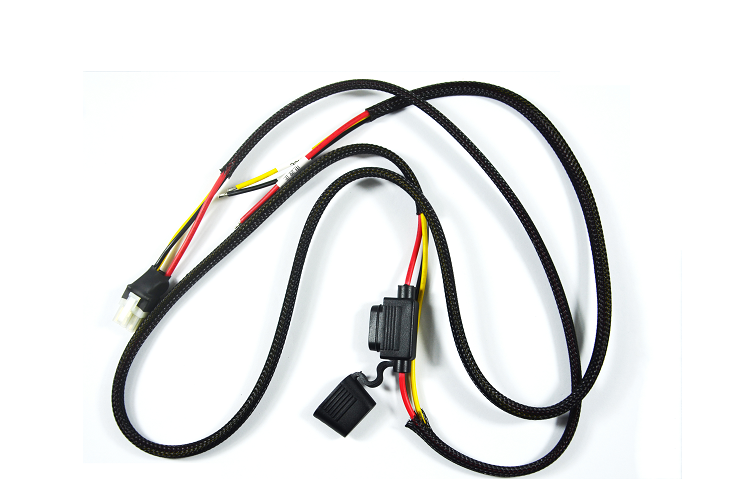
Review Their Project Management
A poorly managed project can add 4-6 weeks of unexpected delays, incur 15-20% cost overruns from expedited shipping and last-minute changes, and create communication breakdowns that stall production. For a project requiring 50,000 harnesses, this mismanagement could directly impact $2M in downstream revenue. The right PM structure ensures visibility, agility, and accountability from prototype to mass production.
To evaluate this, you need to look beyond a simple promise of "good communication" and examine their structured process. Focus on these three pillars:
-
Dedicated Team Structure and Responsiveness
-
Formalized Tracking and Reporting Systems
-
Change Order and Risk Management Processes
The first question to ask is: "Who is my single point of contact?" A dedicated Program Manager with 8+ years of experience should be assigned to your account, not a generic salesperson. This individual's sole focus is your project's success. Probe their escalation protocol. For example, if a critical component has a >3-day delay, how quickly will you be notified? A best-practice supplier guarantees notification within 4 business hours of identifying a potential delay. Furthermore, ask about the core team's composition. You want a cross-functional unit that meets weekly to discuss your project:
|
Role |
Responsibility |
Key Metric |
|---|---|---|
|
Program Manager |
Primary client contact, overall schedule & budget |
On-Time Delivery (OTD) %, Project Margin % |
|
Quality Engineer |
Manages QC data, leads CAPA initiatives |
Defect Rate (PPM), Test First-Pass Yield % |
|
Supply Chain Lead |
Manages component procurement & inventory |
Material Availability %, Supplier OTD % |
A professional supplier operates on data, not guesses. They should use a cloud-based Project Management platform (like MS Project, Smartsheet, or Jira) that provides you with read-only access to the live project plan. This allows you to see real-time progress against >100 milestone tasks, not just a vague percentage complete. Key items to track include engineering sign-off dates, first article inspection (FAI) completion, and production ramp-up schedules. You should receive a standardized weekly report that includes:
-
Schedule Performance: Planned vs. Actual progress for all milestones, highlighting any tasks with a >2-day variance.
-
Cost Performance: Actual expenditures vs. budget, flagging any line items with a >5% overage.
-
Risk Register: A live list of 5-10 potential risks (e.g., "IC lead time extended to 20 weeks"), each with a mitigation plan and probability score.
Compare Pricing and Value
A quote that is 15% lower than competitors often signals cut corners in materials, testing, or support, leading to a 50% higher failure rate in the field. For a 5,000-unit order, this could mean 250 additional failures, resulting in over $100,000 in warranty repairs, not to mention the irreversible damage to your brand's reputation. True cost is measured as Total Cost of Ownership (TCO), which encompasses unit price, quality, reliability, and the supplier's ability to prevent expensive disruptions throughout the product's 5-7 year lifecycle.
The initial step is to demand a fully transparent, itemized quotation. A professional supplier will break down the cost per harness into clear categories: raw material cost (~60-70% of total), direct labor (~15-20%), overhead (~10-15%), and profit margin (~5-10%). This transparency allows you to see exactly what you are paying for. Scrutinize the material section. Does it specify not just the wire gauge (e.g., 22 AWG) but the exact copper purity (99.95%) and the OD tolerance (±0.05mm)? A lower quote might use copper-clad aluminum (CCA) wire, which has 55% higher resistance and can lead to voltage drop and overheating over time, instead of pure copper. For connectors, the quote should list the manufacturer and part number (e.g., Molex 43025-0800), not a generic description. This prevents later substitution with inferior clones that have a 30% higher mating cycle failure rate.
Beyond the bill of materials, you must quantify the cost of quality and reliability. Ask the supplier to provide their average defect rate in PPM (Parts Per Million). A rate of <50 PPM might come with a 5% higher unit price than a supplier quoting 500 PPM, but the latter will incur massive hidden costs. Calculate the potential impact: 500 PPM on a 50,000-unit order means 25 defective harnesses. If each failure takes 2 hours of technical support and 3,750 in unexpected expenses, erasing the initial savings.
Furthermore, inquire about their mean time between failure (MTBF) ratings for harnesses in similar applications. A harness with a calculated MTBF of 100,000 hours offers significantly more value than one rated for 50,000 hours, as it reduces the likelihood of field returns and associated logistics costs, which can average $200 per incident.
In summary, selecting a wire harness supplier requires evaluating four critical areas. First, verify core capabilities by ensuring they have experience with your industry's complexity, such as mil-spec or medical-grade assemblies. Second, assess their quality control; demand evidence like IPC 620 certification and a 0.1% or lower defect rate. Third, scrutinize their project management for clear communication and on-time delivery history. Finally, compare total value, not just unit cost, analyzing how their pricing structure aligns with volume and engineering support to ensure a reliable partnership.
