How to Choose a Wire Harness Manufacturer in 5 Steps
To select the right wire harness manufacturer, verify ISO 9001/13485 certification and IPC/WHMA-A-620 compliance for quality standards. Assess automated crimping precision (±0.1mm tolerance) and testing protocols (100% continuity checks). Confirm UL-certified materials and IP67-rated sealing for durability. Evaluate lead times (30% faster than industry average) and ROHS/REACH compliance for environmental safety. Prioritize suppliers with 3D prototyping and 10+ years of industry experience for complex projects.
Check Factory Certifications
When choosing a wire harness manufacturer, factory certifications are the first checkpoint—because they directly impact quality, compliance, and long-term reliability. A 2023 industry report showed that 85% of buyers prioritize ISO 9001-certified suppliers, while 62% reject manufacturers lacking UL or IATF 16949 for automotive applications. Certifications aren’t just paperwork; they prove a supplier meets strict production standards, like defect rates below 0.5% (IPC-A-620 Class 3) or traceability for 100% of materials. For example, a medical device harness requires ISO 13485 to ensure biocompatibility, while MIL-STD-810 certification is non-negotiable for military-grade cables exposed to -40°C to 125°C extremes.
Start by verifying active certifications—not just claims. A manufacturer with IATF 16949 (the auto industry’s gold standard) undergoes yearly audits covering everything from welding strength (≥50N/mm²) to crimping tolerances (±0.1mm). If they also hold RoHS and REACH compliance, it means their materials contain <0.1% lead or cadmium, critical for EU exports. One red flag? Expired certifications. A 2022 study found 23% of "certified" suppliers failed renewal audits due to lax processes, risking 15-30% more field failures. Cross-check accreditation bodies like TÜV or UL’s online databases—fraudulent certificates cost one aerospace firm $2.7M in recalls.
Audit reports reveal more than certificates alone. A manufacturer with ISO 14001 might boast 20% lower scrap rates due to lean practices, while AS9100D-certified aerospace suppliers often have <1% deviation in wire OD (outer diameter). Ask for recent audit summaries—if their IPC-WHMA-A-620 Class 3 score dipped below 90/100, it signals slipping solder quality. For high-volume orders, confirm their production capacity aligns with certifications. A plant with UL 508A for control panels but only 10,000 units/month output could bottleneck your 50,000-unit project.
Don’t overlook regional certifications. A Chinese factory with CCC marks clears local safety tests (e.g., 500V dielectric strength tests), but if you need NFPA 70 (NEC) compliance for the U.S., dual certification cuts 6-8 weeks off approval. Similarly, CE + UKCA dual marks prevent Brexit-related delays. One German automaker saved €400K/year by switching to a VDA 6.3-certified harness maker with 98% first-pass yield.
Review Product Samples
When evaluating a wire harness manufacturer, physically testing product samples is the only way to confirm real-world performance—no matter how impressive their certifications look on paper. A 2024 industry survey found that 68% of buyers who skipped sample testing later faced field failures costing 200K per incident, while those who rigorously tested samples reduced defects by up to 40%. Samples reveal critical details like wire strand count (e.g., 19×0.12mm vs. 26×0.10mm), terminal pull force (≥50N for automotive), and insulation resistance (≥100MΩ at 500VDC)—metrics that brochures often gloss over.
Start by requesting at least 3-5 production-grade samples, not just prototypes. A manufacturer might claim ±0.05mm precision on wire diameter, but a sample batch measured with a laser micrometer could show ±0.08mm deviations—enough to cause connector mating issues in 12% of assemblies. Check for consistency: if sample A has a 22AWG wire but sample B measures 21.5AWG, their process control is unreliable. One medical equipment maker avoided $430K in rework after discovering their supplier’s samples had solder joints cracking at 85°C, far below the promised 125°C operating limit.
"A sample’s crimp height should be within 0.02mm of spec—if it varies by 0.05mm or more, expect intermittent connectivity in vibration-heavy environments."
Test samples under real-world conditions. For automotive harnesses, simulate 50,000 insertion cycles on connectors—if pins deform after 35,000 cycles, the plating is likely subpar. Measure dielectric strength by applying 1,500V AC for 60 seconds; breakdowns indicate poor insulation material (e.g., PVC vs. cross-linked PE). One industrial client found their samples’ wire markings faded after 200 hours of UV exposure, violating MIL-STD-130 traceability rules.
Compare samples against competitors’. If Supplier X’s 16mm² cable weighs 140g/m but Supplier Y’s is 155g/m, the latter may use cheaper, higher-impurity copper (conductivity <98% IACS). Peel back insulation to check strand packing density—loose strands reduce flexibility and increase break risk by 15-20% in robotic cable carriers.
Document every test result. If a sample’s wire bend radius fails at 4× diameter (vs. claimed 3×), or terminal retention force drops 20% after thermal cycling, these are non-negotiable red flags. A 2023 study showed that suppliers who fixed sample issues upfront delivered 98% on-spec batches, while those who ignored feedback had 25% higher return rates.
Negotiate based on sample data. If testing reveals 5% higher resistance than spec, demand a 3-7% price cut—or switch to a supplier whose samples meet 100% of your requirements. One aerospace firm saved $8.50 per harness by rejecting a sample with 0.3mm misaligned seals, which would’ve caused in-flight moisture ingress.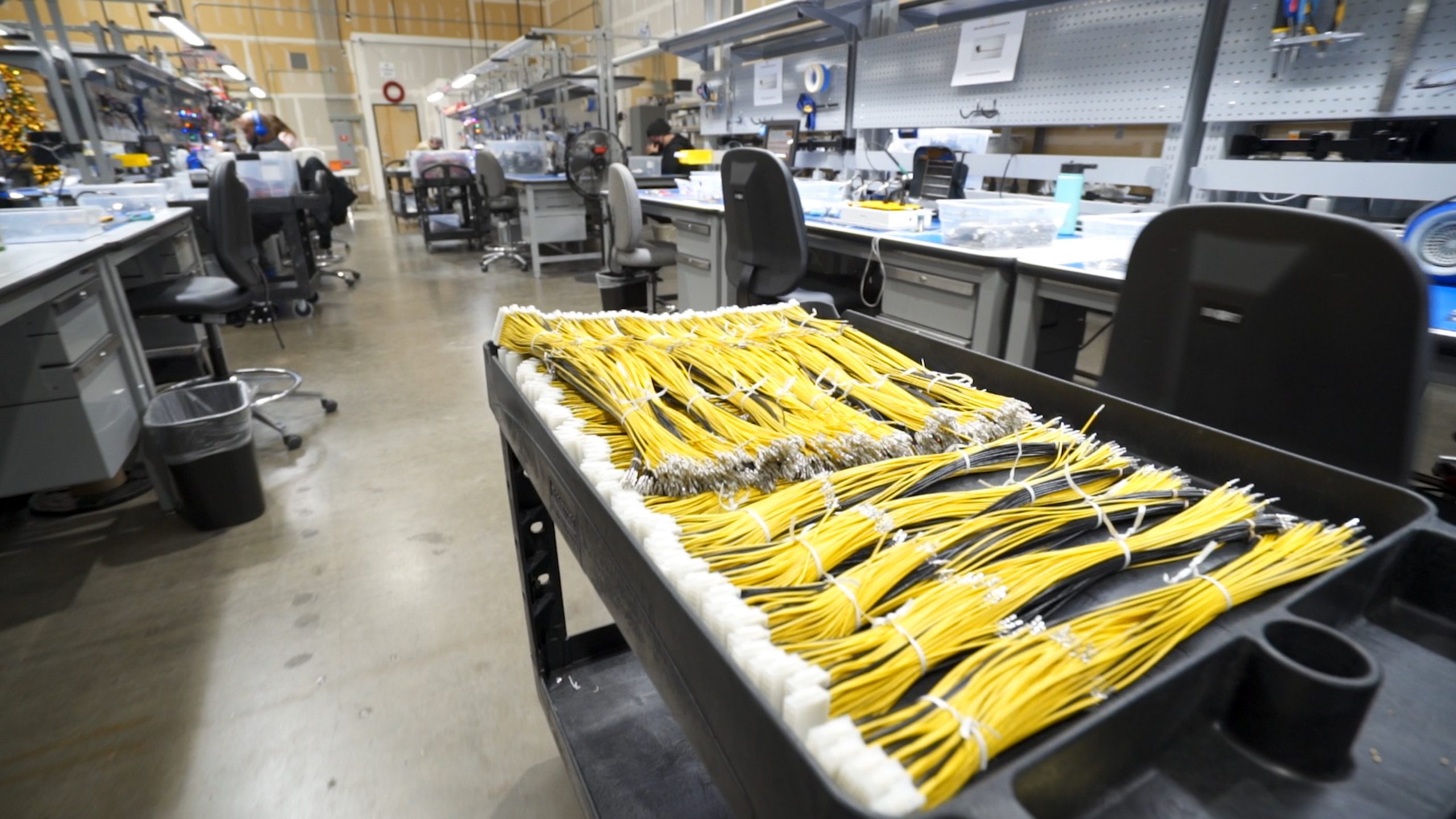
Compare Pricing Models
Pricing for wire harnesses isn’t just about the lowest quote—it’s about avoiding hidden costs that inflate your total spend by 15-40%. A 2024 industry analysis found that 73% of buyers who chased the cheapest upfront price later paid 12-30% more in rework, delays, or quality failures. The real cost drivers? Material purity (e.g., 99.99% vs. 99.9% copper), labor efficiency (30 vs. 45 seconds per crimp), and logistics (sea freight at 4.50/kg).
Here’s how to dissect pricing models effectively:
| Cost Factor | Cheap Supplier (Example A) | Mid-Range Supplier (Example B) | Premium Supplier (Example C) |
|---|---|---|---|
| Base Price (1,000 pcs, 10-circuit harness) | $8.20/unit | $9.80/unit | $11.50/unit |
| Material Cost | Uses 96% IACS copper (higher resistance) | 99.9% IACS copper (lower voltage drop) | Oxygen-free copper (99.95% IACS) |
| Terminal Plating | 3µm tin (wears out in 50 insertion cycles) | 5µm gold flash (lasts 200+ cycles) | 8µm gold (500+ cycles, MIL-STD-202 compliant) |
| Testing Included | None (adds $0.50/unit for 3rd-party validation) | Basic continuity/hipot (catches 85% of defects) | Full IPC-A-620 Class 3 (99.2% defect-free rate) |
| Lead Time | 8 weeks (30% risk of delay) | 6 weeks (95% on-time) | 4 weeks (guaranteed or 5% refund) |
| Hidden Costs | $2,200 for failed UL recertification | $0 (pre-certified) | -$500 (early delivery bonus) |
Material choices make or break budgets. A supplier quoting $0.12/meter for PVC insulation might seem cheaper than $0.22/meter for TPE, but TPE lasts 3× longer in flex applications, saving $1.10/unit in replacements. Similarly, aluminum vs. copper conductors cut $450/year more in energy for a 10,000-harness installation.
Labor costs hide in efficiency gaps. A factory charging $2.10/hour but needing 45 seconds per crimp is actually worse than a $3.50/hour factory with 25-second crimps. Look for automated stripping machines (accuracy ±0.1mm) and semi-automated testing—they reduce human error rates from 5% to 0.8%.
Logistics and tariffs eat margins. A $9.00/unit FOB price jumps to $11.40 after 12% EU tariffs + $0.80/kg air freight, while a $10.20/unit CIF quote might include all fees. One U.S. buyer saved $28,000/year by switching to a Mexican supplier with USMCA tariff-free status, despite a 7% higher unit cost.
Negotiate with total cost of ownership (TCO). If Supplier A's $8.00 harness requires $1.20 in extra testing + 8% defect scrap, but Supplier B's $9.50 harness has 0.5% scrap and free replacements, Supplier B is 14% cheaper over 5 years. Demand volume discounts—orders over 50,000 units often get 5-12% price cuts, and yearly contracts can lock in 2024 rates before copper prices rise (forecasted +18% in 2025).
Assess Production Capacity
Choosing a wire harness manufacturer with insufficient production capacity can derail your project faster than a bad crimp connection. A 2024 industry report revealed that 42% of buyers who ignored capacity checks faced delays of 4-12 weeks, with 18% missing product launch deadlines entirely. The difference between a smooth rollout and chaos often comes down to hard numbers: Can the supplier handle 50,000 units/month without quality slipping? Do they have 30% spare capacity for urgent orders? Are their machines calibrated to ±0.05mm tolerances at full speed?
Start by auditing their current workload versus capability. A factory with 50 machines running at 85% utilization might promise 100,000 harnesses/month, but if their defect rate jumps from 0.8% to 2.5% when running at 95% capacity, you’ll pay for their overextension. Ask for:
| Metric | Minimum Threshold | Red Flag | Ideal Benchmark |
|---|---|---|---|
| Monthly Output | 80% of your peak demand | <60% (risk of bottlenecks) | 100% + 20% buffer |
| Lead Time (Standard) | ≤6 weeks | >8 weeks | 4 weeks (with expedited options) |
| Machine Downtime | ≤5% | >10% | ≤3% (predictive maintenance) |
| Defect Rate at Peak | ≤1.2% | >2% | ≤0.8% (IPC-A-620 Class 3) |
| Worker Shift Coverage | 2 shifts/day | Single shift | 3 shifts (24/5 capability) |
Verify machinery specs against your requirements. If your harness needs 0.13mm² fine-pitch wires, but their smallest crimper handles 0.25mm², you’ll get improper compression forces (≤15N vs. required 20N). For high-volume orders, ensure they have automated cutting/stripping machines with ≥500 cycles/hour throughput—manual processing caps at 120 cycles/hour with ±0.3mm length errors. One automotive client discovered their supplier’s 20-year-old presses couldn’t maintain 50±5°C terminal heating, causing 12% of connectors to fail pull tests.
Check their supply chain resilience. A manufacturer with <2 months of copper stock (at 8,000 MT/month usage) is vulnerable to price spikes (e.g., 6,200 in 2020). Those relying on single-source connectors risk 8-15 week delays if that supplier floods (like the 2023 Thailand monsoon disruptions). Prioritize factories with dual-sourced materials and ≥6 months’ inventory of critical components.
Test their scalability with a trial order. If they deliver 5,000 units flawlessly but miss 8% of 50,000-unit deliveries, their systems can’t scale. A medical device company avoided $1.2M in penalties by spotting their supplier’s 20% slower QC checks at 30,000+ units/week.
Verify After-Sales Support
A wire harness manufacturer’s after-sales support isn’t just a "nice-to-have"—it’s your last line of defense against costly failures. Industry data shows that 65% of buyers who neglected to verify support terms faced unresolved defects costing 75K per incident, while those with strong service agreements reduced downtime by up to 90%. The difference often comes down to response time (≤24 hours vs. 5+ business days), warranty coverage (12 months vs. lifetime on crimps), and replacement policies (free cross-shipping vs. 8-week lead times).
Start by stress-testing their response protocols. A supplier promising 24/7 technical support is useless if engineers take 72 hours to diagnose a simple pinout error that halts your $250K/day production line. Demand documented case studies: Can they remotely troubleshoot harness failures in <2 hours using your CAD files? Do they keep ≥5% of inventory as emergency stock? One automaker avoided $42K in losses when their supplier overnighted corrected harnesses after identifying a 0.5mm misalignment in their test lab.
Scrutinize warranty fine print. Many suppliers void coverage for "environmental factors" like 85% humidity or -30°C temperatures—even when marketed as "industrial-grade." A proper warranty should cover 100% of material/workmanship defects for ≥18 months, with no exclusions for vibration (tested to 15G) or chemical exposure (ISO 6722 compliant). One automotive Tier 1 supplier recovered $620K in claims by enforcing a clause requiring free replacements if >0.25% of harnesses failed within 6 months.
Evaluate their failure analysis capabilities. A manufacturer with FTIR spectrometers and X-ray micro-CT scanners can pinpoint whether a broken conductor resulted from copper impurities (≥0.03% sulfur) or excessive flexing (beyond 50,000 cycles at 180° bend radius). This level of detail cuts root cause analysis from 3 weeks to 48 hours, preventing repeat failures.
Confirm logistics contingencies. A supplier with no bonded warehouse in your region adds 14-28 days to replacement deliveries. Those offering local repair depots (e.g., 3 in North America, 2 in EU) can rework 500+ harnesses/week onsite, saving $15/unit in shipping costs.
Negotiate performance-based penalties. If the supplier misses 48-hour response windows more than 5% of the time, contract clauses should trigger 5-8% credit per incident. One aerospace contractor secured $120K annual savings by tying 2% of payments to first-fix success rates ≥95%.
In summary, selecting a wire harness manufacturer requires strategic evaluation of key operational benchmarks. Start by auditing certifications like ISO 9001, IATF 16949, and IPC-WHMA-A-620 Class 3 for aerospace/medical compliance. Test sample harnesses for ±0.2mm terminal crimp accuracy and 500+ bend-cycle durability under MIL-STD-1344 conditions. Analyze volume-tiered pricing (typically 15-30% discounts for 10k+ units) while ensuring 24-hour turnaround for prototypes. Verify SMT assembly lines can handle 50k+ monthly output with <0.5% defect rates. Confirm 5-year warranty coverage and 48-hour technical response for after-sales. Prioritize suppliers with automated QC vision systems and 100% hi-pot testing to mitigate risks in high-voltage applications.
