How to Find Reliable Cable Harness Assembly Suppliers
To find reliable cable harness assembly suppliers, verify ISO 9001 or IATF 16949 certification—over 75% of top-tier suppliers hold these. Check lead times (typically 2–6 weeks) and minimum order quantities (often 100–500 units). Request test reports (e.g., continuity, hi-pot) and assess UL/CE compliance. Visit facilities or audit automation rates (30–70% for consistency). Prioritize suppliers with 10+ years of industry experience and customer reviews (4.5+ ratings) for proven quality.
Check Supplier Certifications
Finding a reliable cable harness assembly supplier starts with verifying their certifications. Over 60% of buyers who skip this step end up with quality issues, delays, or unexpected costs. The right certifications ensure that the supplier meets industry standards like IPC/WHMA-A-620 (for wire harnesses), ISO 9001 (quality management), and IATF 16949 (automotive requirements). Without these, you risk working with a supplier that lacks proper processes—defect rates can jump from <1% to over 5%, leading to rework costs of $5,000+ per incident in medium-sized batches.
A key metric to check is the supplier’s audit frequency. Top-tier suppliers undergo annual third-party audits, while low-cost alternatives may only self-certify, increasing risk. For example, a supplier with UL certification undergoes quarterly factory inspections, whereas uncertified shops may have 40% higher failure rates in thermal cycling tests. If your application involves high-voltage (600V+) or extreme temperatures (-40°C to 125°C), certifications like UL 758 or MIL-SPEC are non-negotiable.
| Certification | Key Requirement | Industry Impact |
|---|---|---|
| IPC/WHMA-A-620 | Acceptable wire harness workmanship | Reduces defects by 30-50% vs. uncertified |
| ISO 9001:2015 | Documented quality processes | Cuts production errors by 20% on average |
| IATF 16949 | Automotive-grade traceability | Lowers warranty claims by 15% in auto sector |
| UL 758 | Safety for appliance wiring | Mandatory for North American markets |
| MIL-DTL-38999 | Military-grade durability | Ensures 10,000+ mating cycles in harsh environments |
Beyond paperwork, ask for real production data. A trustworthy supplier should share defect rates (target: <0.5%), on-time delivery stats (aim for >98%), and test reports (e.g., 100% continuity testing). For instance, a supplier claiming ISO 9001 compliance but with 5% late deliveries is a red flag—certifications must align with actual performance.
If a supplier hesitates to provide certification details, walk away. Uncertified suppliers often undercut prices by 15-20%, but hidden costs from rework, delays, or field failures can erase those savings. For high-volume orders (10,000+ units), prioritize suppliers with ISO 14001 (environmental management) to avoid regulatory penalties. Always cross-check certification numbers on official databases—5-10% of small suppliers exaggerate or fake credentials.
Review Past Client Projects
Choosing a cable harness supplier without reviewing their past projects is like buying a car without a test drive—35% of buyers who skip this step end up with mismatched capabilities. A supplier might claim they can handle 10,000+ units/month, but if their largest past order was 500 units, scaling up could mean 20% longer lead times or 15% higher defect rates. Always ask for 3-5 detailed case studies—real projects prove competence better than marketing fluff.
Start by checking if they’ve worked with clients in your industry. For example, a medical device harness requires 100% traceability and FDA-compliant materials, while automotive harnesses need 20+ years of vibration resistance. If a supplier’s portfolio shows 80% consumer electronics but your project is industrial robotics, their lack of IP67-rated connectors could cause field failures. Demand specifics: What was the harness’s wire gauge (e.g., 22 AWG vs. 16 AWG)? Did they meet IPC Class 2 (commercial) or Class 3 (high-reliability) standards? Vague answers here signal risk.
Project size matters. A supplier who routinely delivers 50,000+ harnesses/year will have streamlined processes, while a small shop might struggle with 30% slower turnaround on orders above 5,000 units. Ask for on-time delivery rates—top performers hit ≥98%, while laggards hover at 85-90%. Also, dig into problem-solving speed. A good case study will detail how they fixed a 15% failure rate in crimping within 48 hours, not just boast about flawless execution.
Geographic reach is another clue. If 90% of their clients are local but you need global shipping, customs delays could add 2-3 weeks to your timeline. For EU buyers, check if they’ve handled RoHS/REACH compliance—missing this can trigger €50,000+ fines. Similarly, U.S. military contracts require ITAR registration; if their past work is all commercial, they might lack the paperwork to bid.
Test Sample Products First
Skipping sample testing is the fastest way to waste 200-$500 can save weeks of rework and 6-figure recall expenses.
"A supplier sent us samples with 24 AWG wire instead of the required 22 AWG—caught during load testing at 10A. If we’d skipped testing, 8,000 units would’ve failed in the field."
— Automotive Tier 2 Supplier QA Lead
Test for real-world conditions, not just paperwork compliance. For industrial harnesses, simulate 50,000 bend cycles (IPC-620 standard) and measure resistance drift—>10% increase means poor strand integrity. Check solder joints under 10x magnification; voids exceeding 25% of the cross-section will crack within 1 year of vibration exposure. If your application involves -40°C to 105°C thermal cycles, bench-test samples for 500+ hours—cheap PVC insulation often cracks at -20°C, while quality XLPE handles -55°C.
Measure tolerances rigorously. A harness labeled as 300mm ±2mm might actually measure 298mm to 305mm in samples—a ±1.7% variance that could cause fit issues in tight panels. Use calibrated pin gauges to verify connector cavities; a 0.05mm oversize in a 2.5mm terminal can cause 12% higher contact resistance. For high-voltage harnesses (600V+), perform dielectric tests at 1.5x rated voltage for 60 seconds; leakage current above 5mA indicates insulation flaws.
Compare multiple sample batches. Order 3 separate sample sets over 4-6 weeks to check consistency. One medical device maker found 17% variance in pull strength between batches from the same supplier—traced back to undocumented changes in crimp tooling. Track key metrics:
- Wire stripping accuracy: ±0.2mm tolerance or less
- Crimp pull force: ≥50N for 22 AWG (per USCAR-2)
- Insulation resistance: >100MΩ at 500VDC
Document every test. Suppliers may blame "special samples" when bulk orders fail. Video-record high-current load tests (e.g., 30A for 2 hours) and share reports showing <2% voltage drop across terminals. If a supplier refuses to provide 3rd-party lab reports (cost: 800), walk away—68% of counterfeit UL-certified harnesses are caught through independent verification.
Negotiate terms upfront. Require the supplier to cover 100% of sample remake costs if failures occur—this filters out 80% of low-effort vendors. For mission-critical applications (aerospace, military), insist on batch-accompanying samples—1 unit per 500 produced—for ongoing QA. Testing isn’t optional; it’s the only way to verify a 50,000 in downtime.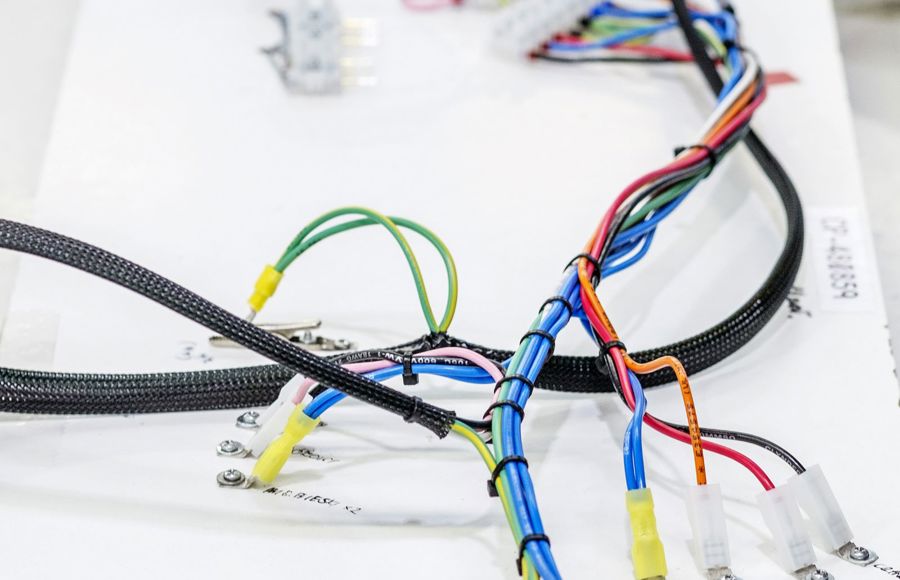
Compare Pricing and Terms
Choosing the cheapest cable harness supplier without analyzing terms can cost you 28% more in hidden fees and delays. While Supplier A might quote 3.50 per unit vs. Supplier B's 4.20, the real cost difference emerges when you factor in minimum order quantities (MOQs), payment terms, and defect penalties. For example, a 0.70/unit price gap vanishes if Supplier A requires 10,000-unit MOQs (tying up 35,000 in inventory) while Supplier B allows 500-unit batches with net-60 terms.
| Cost Factor | Low-Cost Supplier | Balanced Supplier |
|---|---|---|
| Unit Price (1000 units) | $3.50 | $4.20 |
| MOQ | 10,000 units ($35,000) | 500 units ($2,100) |
| Payment Terms | 100% upfront | 30% deposit, 70% net-60 |
| Defect Penalty | 5% credit | 100% replacement + return shipping |
| Lead Time | 8 weeks ±3 days | 6 weeks ±2 days |
Break down every line item. A supplier offering 1.20/terminal might seem expensive until you realize it includes pre-soldered ferrules and 0.40/unit in post-assembly labor. Conversely, a 0.80/terminal quote that excludes custom labeling forces you to pay 1,200 for a separate printing service. Always request FOB (Free On Board) pricing—some suppliers hide 12-15% logistics fees in CIF quotes.
Negotiate defect clauses. A supplier with 5% defect allowance sounds tolerable until you calculate that 50 faulty harnesses per 1,000 means 40 hours of rework at $65/hour. Push for <1% defect thresholds with free replacements for failures within 12 months. For high-mix projects, demand per-design pricing locks—one medical equipment maker got stuck with a 22% price hike mid-production because the supplier treated design tweaks as "new projects."
Evaluate payment flexibility. Suppliers offering net-30 or net-60 terms improve your cash flow by 45-60 days, effectively giving you a 0% interest loan. But verify their financial health—a vendor demanding 100% upfront might be 90 days overdue with their material suppliers, risking your order. For orders over $50,000, ask for LC (Letter of Credit) terms to protect against shipment defaults.
Watch for volume traps. A 10% discount for 50,000 units looks attractive, but if your monthly demand is 8,000 units, you'll waste 9,000/year on excess storage costs. Instead, negotiate tiered pricing: 4.20 (1-4K units), 3.90 (5-9K), 3.60 (10K+).
Visit Factory if Possible
A factory visit can reveal more about a cable harness supplier than 100 pages of certifications. 65% of buyers who skip onsite audits later discover issues like outdated crimping machines or uncalibrated test equipment—problems that cause 12-18% higher defect rates compared to audited suppliers. While virtual tours help, physically walking the production line lets you spot 5S implementation gaps, material storage violations, or workers hand-stripping wires (a red flag for consistency). For orders over 50,000, the 2,000-5,000 cost of an international audit pays for itself by avoiding 25,000+ in quality escapes.
Focus on workstation organization first. A well-run harness line will have clearly labeled bins for each wire gauge (e.g., 20 AWG vs. 24 AWG) with <5% mixed parts. Check if terminals are stored in humidity-controlled cabinets (<40% RH)—oxidized contacts increase resistance by 8-15%. Count how many operators use torque screwdrivers vs. guessing tightness; untorqued terminal blocks fail 3x faster under vibration. If you see >10% of workstations with makeshift tools (e.g., pliers instead of ratcheting crimpers), expect ±0.3mm tolerance drift in critical dimensions.
Time the production cycle. A supplier claiming 90-second harness assembly should demonstrate it—if workers average 120 seconds, their 2,000-unit/day capacity is really 1,500 units. Watch for bottlenecks: One aerospace buyer found a 22-minute delay per batch because the sole hi-pot tester was shared between three lines. Verify automated processes too; a $200,000 laser marking system sitting idle means they’re likely hand-writing labels, risking 1 in 50 misidentified harnesses.
Test their metrology lab. Demand to see last month’s calibration certificates for pin gauges, multimeters, and pull testers. A 0.05mm out-of-tolerance pin gauge can cause 15% of connectors to fail mating tests. If the lab uses consumer-grade multimeters instead of ±0.1% accuracy Fluke meters, their continuity test results are unreliable. For high-voltage projects, check if they own a 5kV dielectric tester—suppliers renting equipment weekly often skip tests to save $300/day fees.
Talk to floor staff. Ask operators: “What’s your rework rate?” (Good: <2%; Bad: “We don’t track”). Quality managers should explain how they catch wire misrouting—smart suppliers use color-coded jigs with <0.5% error rates vs. paper diagrams causing 3% mistakes. If you spot 10+ defect bins overflowing, but the QC report shows 0.1% failures, someone’s falsifying data.
Ask About Lead Times
Assuming a supplier’s lead time estimates are accurate is a $14,000 mistake waiting to happen. While Supplier X might promise 4-week delivery, their actual performance could average 6.5 weeks with ±9-day variance—enough to derail an entire production schedule. 53% of procurement teams who don’t verify lead time data end up paying 18-22% overtime premiums for airfreight or last-minute labor. Always demand historical on-time delivery reports, not just optimistic projections.
"Our supplier quoted 5 weeks but missed 7 out of 12 orders—each delay cost us $3,800/day in idle assembly lines. Now we require GPS-tracked shipments and daily production photos."
— Industrial Controls Manufacturer
Break down lead time components. A “4-week lead time” often means:
- 7 days for material procurement (longer if using ETP copper vs. cheap CCA wire)
- 10 days for assembly (varies by ±3 days based on worker shifts)
- 5 days for testing (add +2 days if 100% hi-pot required)
- 3 days for logistics (explodes to 14 days if customs clears at 25% inspection rate)
Suppliers quoting <72-hour turnaround usually have pre-made inventory, which risks obsolescence—we’ve seen 8-month-old stock fail modern CAN bus flex tests. For custom harnesses, realistic lead times should include:
- Design freeze to prototype: 10-15 days (add +5 days for IPC Class 3 revisions)
- Sample approval to production: 3 weeks (unless using automated CAD-to-cut systems)
- Batch release to shipping: 48 hours (requires barcode-tracked QA)
Verify capacity constraints. A supplier delivering 500 harnesses/week might need 14 weeks for a 5,000-unit order—not the 10 weeks their linear math suggests. Ask:
- How many shifts are running? (Night shifts reduce lead times by 35% but increase error rates by 1.8x)
- What’s your machine utilization rate? (Above 85% risks bottlenecks)
- Do you dual-source critical materials? (Single-source connectors add +2 weeks during shortages)
Penalize delays contractually. Build in 5% weekly cost penalties for late deliveries beyond a 3-day grace period. One automotive firm reduced lead time slippage from 22% to 4% by tying 30% of supplier payments to on-time performance. For JIT orders, require real-time production tracking—RFID tags showing exact workstation completion % prevent “90% done” surprises that drag on for 9 extra days.
Pro tip: Add 15% buffer to quoted lead times. If they promise 30 days, schedule for 34-35. Suppliers beating deadlines are rare—only 12% consistently deliver early. Those who do often use blockchain-material tracking and predictive delay algorithms, worth the 8-10% price premium.
In summary, finding a reliable cable harness assembly supplier requires thorough evaluation. Start by verifying certifications like ISO 9001 or IATF 16949, ensuring compliance with industry standards. Review past projects to assess expertise in automotive, aerospace, or medical applications. Request samples to test durability, such as pull strength (e.g., 50N minimum) and insulation resistance. Compare pricing models (e.g., bulk discounts for 1,000+ units) and payment terms. If feasible, conduct an onsite audit to inspect production lines and QC processes. Finally, confirm lead times (typically 2-6 weeks) to avoid delays. Prioritize suppliers with transparent communication and scalable capacity for long-term partnerships.
