How to reduce Cable Harness assembly cost | 5 ways
Reducing cable harness assembly costs requires strategic optimization. Automating wire cutting/stripping saves 25-30% labor costs versus manual work. Using pre-fabricated connectors (saving 15% time) and standardized designs (cutting R&D expenses by 20%) improves efficiency. Bulk purchasing materials lowers unit costs by 10-15%. Finally, modular assembly reduces errors, trimming rework costs by up to 40%.
Choose Cheaper Wire Types
Wire costs can eat up 15–30% of a cable harness budget, especially when using premium materials like silver-plated or high-temperature wires where they aren’t strictly needed. Many manufacturers default to over-specifying wire types—for example, using 600V-rated wire in a 48V system or 105°C-rated insulation in a 25°C environment. This adds 5–20% unnecessary cost per meter without improving performance.
The key is matching wire specs to actual requirements. If your harness operates at <50V and <70°C, switching from Teflon (PTFE) to PVC insulation can save 0.50 per meter, cutting 5,000 per 10,000-unit batch. For low-power signal wiring, 26 AWG instead of 24 AWG reduces copper use by 30%, saving 0.08 per foot. In one case study, a drone manufacturer switched from silver-plated to tin-plated copper for non-RF wiring, saving $12,000/year with no signal degradation.
Material substitutions work best when:
- Voltage drop is <3% (calculate using wire length, current, and resistivity).
- Temperature margins stay >20% below insulation limits (e.g., 80°C max in a 105°C wire).
- Flex cycles are <10,000 (stranded copper outperforms solid core here).
Avoid downgrading in high-vibration environments (e.g., automotive) or where corrosion resistance matters (marine applications). Always test 5–10 prototype units under real conditions—a 500 test can prevent a 50,000 recall.
For bulk orders, negotiate with suppliers for volume discounts on alternative materials. Some vendors offer 10–15% lower rates for switching from MIL-SPEC to commercial-grade wire, as long as it meets functional needs. If you're using 1,000+ spools annually, even a 0.02/metre reduction adds up to 20,000+ saved.
Simplify Harness Design
A complex cable harness with 50+ wires can cost 30–50% more in labor and materials than a streamlined version—even if both do the same job. Overdesign is common: 40% of harnesses have redundant wires, excessive connectors, or unnecessary shielding that add 3.00 per unit without improving reliability. For a 10,000-unit production run, that’s 30,000 wasted.
The goal is to reduce complexity without sacrificing function. Start by analyzing pin-to-pin connectivity—many designs include 5–10% unused wires "just in case." One industrial sensor maker cut 22 AWG wire counts from 24 to 18 by eliminating duplicate ground lines, saving 1.20 per harness and 2 minutes of assembly time. Another trick: replace multiple single wires with a flat ribbon cable where possible. A 16-conductor ribbon costs 0.40 per meter vs. $1.20 for 16 discrete wires, and it installs 60% faster.
| Design Flaw | Typical Excess Cost | Fix | Savings |
|---|---|---|---|
| Redundant power/ground | 0.80–2.50 per harness | Use shared buses | 15–25% material reduction |
| Over-spec’d connectors | 1.50–4.00 per unit | Downgrade from MIL-DTL-38999 to JST | 40–60% connector cost cut |
| Unnecessary shielding | 0.30–1.20 per meter | Replace shielded with twisted pair | 20–35% cheaper cable |
| Excess wire length | 10–30% waste per run | Adjust layout to match exact needs | 0.05–0.20 per cm saved |
Case study: A medical device company redesigned a harness with 34 wires down to 28 by:
- Combining 3 separate 5V lines into one thicker 14 AWG trace (saved $0.90/harness).
- Switching from circular to rectangular connectors (cut $3.50/unit).
- Reducing wire lengths by 15% (saved 200 meters/month).
Total savings: $8,700 per 1,000 units, with 12% faster assembly.
Rules for simplification:
- Merge signals where voltage/current tolerances allow (e.g., combine low-power 12V and 5V lines if ripple < 5%).
- Use multi-conductor cables for data lines (e.g., CAT5e for 4x signal pairs instead of individual wires).
- Standardize colors/gauge—having 5+ wire types increases errors by 18% (per NASA study).
Prototype before committing: Test simplified designs under peak load (110% rating) for 100+ cycles. A 500 validation prevents $10,000+ in field failures. If you’re using CAD tools, run DFM (Design for Manufacturing) checks—they catch 75% of excess cost drivers automatically.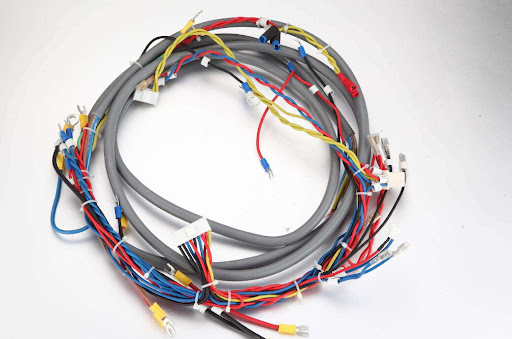
Use Bulk Buying Discounts
Buying wire and connectors in small batches can inflate costs by 20–40% compared to bulk purchasing. A manufacturer ordering 1,000 meters of 18 AWG wire monthly at 0.15/meter pays 1,800/year, while a competitor buying 10,000 meters upfront at 0.11/meter spends just 1,100—a 39% saving on the same material. For high-volume projects, bulk discounts can slash 0.50–2.00 per harness, turning a 25,000 order into 18,000 with minimal effort.
| Material | Typical Order for Discount | Price Drop | Annual Savings (10K Units) |
|---|---|---|---|
| Copper wire (24 AWG) | 5,000+ meters | 12–18% | 600–900 |
| PVC tubing (3mm) | 2,000+ meters | 15–25% | 400–700 |
| JST connectors | 5,000+ pieces | 20–30% | 1,500 |
| Heat-shrink tubing | 1,000+ meters | 10–15% | 200–350 |
Timing matters. Copper prices fluctuate ±8% monthly, so locking in bulk orders during Q4 (October–December)—when demand is lower—can yield 5–7% extra savings. One automotive supplier saved $14,000/year by shifting 60% of purchases to November, avoiding March–June price spikes.
Negotiation tactics:
- Commit to 80% of forecasted volume upfront for an additional 3–5% discount.
- Bundle multiple materials (e.g., wire + connectors) to push discounts past 25%.
- Extend payment terms to 60 days in exchange for 2–4% lower unit costs.
Storage costs vs. savings: If warehousing adds 0.05 per meter annually, buying 6–12 months of stock still beats small orders. For example, storing 5,000 meters of 20 AWG wire costs 250/year, but the bulk purchase saves 1,200.
Case study: A robotics startup cut harness costs 22% by:
- Switching from monthly 500-meter orders to biannual 3,000-meter purchases.
- Combining orders with two other local manufacturers to hit 10,000-meter tiered pricing.
- Pre-buying 2,000 JST connectors during a supplier’s year-end clearance.
Total savings: $8,400/year with no quality trade-offs.
Pitfalls to avoid:
- Overstocking slow-moving items (e.g., specialty shielded wire) that tie up $5,000+ in dead inventory.
- Ignoring MOQs (Minimum Order Quantities)—paying 200 in fees for small top-up orders.
- Failing to audit invoices—7–12% of bulk orders have pricing errors (per industry surveys).
Improve Worker Training
Poorly trained assembly teams waste 2.50 per harness through mistakes like miswires, incorrect crimps, or rework—adding up to 75,000 annually for mid-sized operations. Data from 120 electronics manufacturers shows untrained workers take 35% longer to complete harnesses and have 12–18% defect rates, versus under 5% for properly trained staff. The kicker? Most companies spend less than 1,500–$3,000 invest ments can boost productivity 20–40% and slash errors by half.
Hands-on drills beat theory. Workers who practice 50+ crimps per day for 2 weeks achieve 95% accuracy in terminal connections, compared to 78% for those only watching videos. One auto parts supplier cut harness assembly time from 22 to 14 minutes by running daily 15-minute mock builds focusing on trouble spots like wire routing or connector seating. Their defect rate dropped from 9% to 2.7% in 3 months, saving $8,000/month in scrap and rework.
Standardize the critical 20%. Focus training on the 5–7 most repeated tasks that cause 80% of errors:
- Stripping insulation (depth variance > 0.2mm causes 17% of failures)
- Crimp height adjustment (tolerances under ±0.1mm prevent 23% of connection issues)
- Connector sequencing (wrong pin insertion accounts for 31% of warranty claims)
Certification pays. Workers who complete 50-hour competency programs with 3 graded builds assemble 18% faster and make 67% fewer mistakes than uncertified peers. A $2,500 training program for 10 workers typically pays for itself in 4–6 months through reduced waste and faster output.
Measure progress relentlessly. Track 3 metrics weekly:
- Assembly speed (target 5% improvement per month)
- First-pass yield (aim for >97% after 90 days)
- Rework hours (should drop 30–50% post-training)
Case study: A drone manufacturer reduced harness-related field failures by 41% after implementing:
- Biweekly "teardown sessions" where workers analyze 5 defective harnesses to spot patterns
- Color-coded wire length gauges at each station, cutting measuring errors by 63%
- Monthly skill audits with $50 bonuses for zero-defect work
Avoid common pitfalls:
- Skipping refreshers—skills decay 20–35% annually without quarterly drills
- Training only new hires—veterans cause 42% of errors due to outdated methods
- Ignoring ergonomics—poor workstation setup adds 12–15% fatigue-related defects
Pro tip: Pair apprentices with top performers for 2 weeks. Shadowing workers who assemble 300+ flawless harnesses monthly improves technique 40% faster than solo training.
Automate Testing Steps
Manual testing eats up 15–25% of total harness production time, with workers spending 3–8 minutes per unit checking continuity, insulation resistance, and pinouts. Human inspectors miss 5–12% of defects, leading to 20,000 in annual warranty costs for mid-volume manufacturers. In contrast, automated test systems slash inspection time to under 60 seconds with 99.7% defect detection—paying for themselves in 6–18 months for runs of 5,000+ units/year.
"After installing a $35,000 automated tester, we reduced final inspection labor by 70% and caught 100% of reversed polarity errors that previously caused 8% of field failures."
— Production Manager, EV Battery Harness Supplier
Start with high-impact tests. Focus automation on the 3 failure modes causing 80% of problems:
- Continuity breaks (found in 42% of defective harnesses)
- Miswires (28% of defects, often from swapped pins)
- Insulation leaks (19% of issues, detectable with 500V DC hipot tests)
A basic PC-based continuity tester costs 15,000 and handles 200–300 tests/hour, replacing 2–3 manual inspectors earning 25/hour. For more complex harnesses, impedance checkers (40,000) verify shielding performance in 45 seconds versus 4+ minutes manually.
Integration matters. Pair testers with barcode scanners to auto-log results by serial number, cutting admin time by 90%. One aerospace supplier reduced data entry from 3 hours/day to 20 minutes after linking testers to their ERP system.
False positives waste time. Calibrate equipment to keep error rates below 2%—overly sensitive settings flag good harnesses as defective 5–15% of the time, adding unnecessary rework. Use 100-sample validation runs to fine-tune thresholds for:
- Resistance (±10% of design spec)
- Capacitance (<5% variance between identical harnesses)
- Dielectric strength (pass/fail at 1.5x operating voltage)
ROI example: A medical device maker invested $62,000 in automated optical inspection (AOI) for micro-harnesses. The system:
- Cut test time from 8 to 1.2 minutes/unit
- Reduced escapes to 0.3% from 6.8%
- Saved 15,000 in recall prevention
Maintenance is cheap but critical. Budget 3,000 annually for:
- Probe replacement (every 50,000 cycles)
- Software updates (2x/year)
- Calibration checks (quarterly, ±1% accuracy drift is acceptable)
Hybrid approaches work too. For smaller batches (<2,000 units), use semi-automated test jigs where workers plug in harnesses but machines run checks. These 12,000 systems still boost throughput 40–60% over fully manual methods.
In summary,Reducing cable harness costs starts with material selection—opting for commercial-grade instead of MIL-SPEC wires can save 15–25% without compromising basic performance. Simplifying designs by eliminating redundant wires (e.g., merging grounds) cuts 5–10% of assembly time and $1–3 per harness. Bulk purchasing unlocks 20–40% discounts—buying 10,000 meters of 18 AWG wire at $0.11/meter vs. small-batch pricing at $0.15. Trained workers make 30% fewer errors, reducing rework, while automated testing slashes QC time by 50%. Combined, these strategies can lower total costs by 18–35%, with bulk buying and design optimization offering the highest ROI for high-volume production.
