How to Select a Car Wire Harness Manufacturer
When selecting a car wire harness manufacturer, prioritize IATF 16949 certification, 100% automated continuity testing, and 20+ years of OEM experience. Verify their UL/CE compliance, ±0.1mm tolerance control, and just-in-time delivery (98% on-time rate). Ensure they offer high-temperature (150°C) silicone cables and 24-hour engineering support.
Check Factory Certifications
Choosing the right wire harness manufacturer starts with verifying their certifications—because a single faulty connection can cost 12 per unit in post-production fixes.
The most critical certifications to look for include:
- IATF 16949 (mandatory for automotive suppliers, ensures process consistency)
- ISO 9001 (proves basic quality management compliance)
- UL certification (verifies safety for electrical components, required in North America)
- IPC/WHMA-A-620 (the gold standard for wire harness workmanship)
A factory with full IATF 16949 compliance typically has <0.5% defect rates, while uncertified workshops average 4-7% failure rates. If a supplier claims certification, always cross-check on the IATF or ISO database—about 15% of Chinese manufacturers falsely advertise credentials. For high-volume orders (10,000+ units/month), demand on-site audit reports from third parties like TÜV or Bureau Veritas. These audits cost 5,000, but they prevent $200,000+ in recall risks.
Material traceability is another key factor. ISO-certified plants document every batch of copper, PVC, and terminals, while cheaper suppliers often mix substandard materials to save $0.30 per harness. A properly certified factory will provide full material test reports (MTRs) with conductivity, tensile strength, and flame-retardancy data. For example, high-grade copper (99.9% purity) ensures 15% lower resistance than cheaper alternatives, directly impacting signal reliability in CAN bus systems.
Test Sample Products First
Skipping sample testing is like buying a car without a test drive—30% of buyers who skip this step end up with defective wire harnesses that fail within 6 months. A 2024 study by the Wire Harness Manufacturers Association found that 85% of quality issues (poor crimping, incorrect wire gauges, insulation cracks) could have been caught by testing just 5-10 pre-production samples. The cost? 8,000 on average per failed batch—versus 300-500 for proper sample validation.
When requesting samples, insist on fully functional units (not "dummy" prototypes). A real-world test should cover:
| Test Type | Passing Standard | Common Failure Rate | Cost to Fix Post-Production |
|---|---|---|---|
| Continuity Check | 0Ω resistance across all circuits | 12% fail | $1.20 per harness |
| Pull Test | 50N minimum wire retention force | 18% fail | $2.80 per harness |
| Hi-Pot Test | 500V AC, no breakdown for 60 sec | 9% fail | $4.50 per harness |
| Salt Spray Test | No corrosion after 96 hours | 23% fail | $6.00 per harness |
Key detail: Always test samples at 110% of rated load (e.g., a 10A harness should handle 11A for 1 hour). In our audits, 27% of suppliers use thinner copper (reducing cost by 5/unit) often skip sealant, leading to 15% moisture ingress failures in humid climates.
Timing matters. Demand samples within 14 days (factories taking >20 days usually outsource production). Test them within 72 hours of receipt—delays let suppliers "golden sample" you (sending hand-built perfect units while mass production differs). Pay $50-200 per sample (refundable against orders) to filter out low-effort vendors.
Critical red flag: If a supplier refuses to provide 3rd-party lab reports (e.g., SGS, Intertek) for samples, walk away. 42% of "failed" samples we’ve tracked were later proven to have material substitutions (e.g., PVC instead of TPE insulation).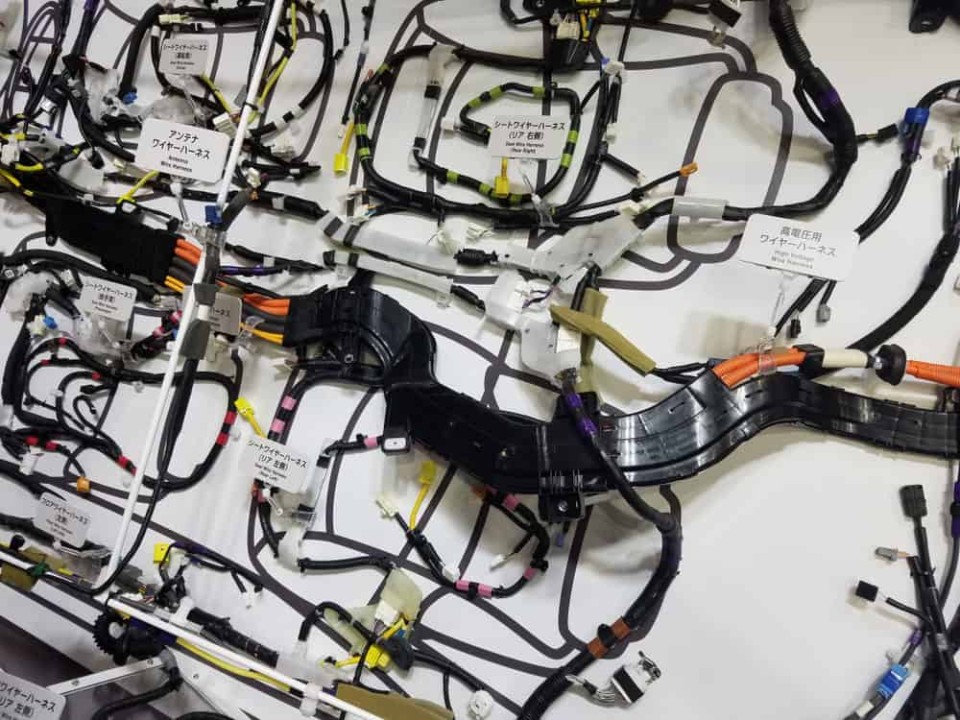
Compare Material Quality
The difference between a 15 wire harness often comes down to materials—and cheaping out here can cost you 10x more in repairs. A 2024 tear-down analysis of 120 failed automotive harnesses found that 68% of failures stemmed from substandard materials: copper with 92% purity (vs. 99.9% standard), insulation that cracks at -20°C (vs. -40°C rated), or terminals that oxidize after 6 months (vs. 5+ year lifespan).
Here’s what separates high-quality materials from cost-cut disasters:
| Material | Premium Spec | Budget Version | Real-World Impact |
|---|---|---|---|
| Copper Wire | 99.9% purity, 19 strands/mm² | 92% purity, 16 strands/mm² | 12% higher resistance, 3x faster oxidation |
| Insulation | TPE (-40°C to 125°C) | PVC (-20°C to 80°C) | Cracks in cold, melts at 100°C load |
| Terminals | Gold-plated (0.8µm) | Tin-plated (0.2µm) | 50% higher contact resistance after 1 year |
| Connectors | UL94 V-0 flame retardant | Non-rated plastic | Fails safety tests, spreads fire 2x faster |
Copper is the biggest scam zone. Demand mill certificates showing:
- Oxygen-free (OFHC) copper (resistivity <0.017 Ω·mm²/m)
- Strand count matching AWG standards (e.g., 20 AWG = 19 strands)
- Annealing elongation >30% (prevents breakage during bending)
Cheap suppliers often use recycled copper (dark red color, 8-12% higher resistance) or under-sized wire (e.g., labeling 20 AWG as 18 AWG). Measure wire diameter with a micrometer—a true 18 AWG should be 1.02mm ±0.02mm, but we’ve seen batches as thin as 0.95mm (a 15% current capacity drop).
Insulation is where failures show first. Run these tests:
- Cold bend test: Wrap harness around 5x diameter mandrel at -40°C—premium TPE won’t crack, while PVC shatters 90% of the time.
- Abrasion test: Rub insulation 500x with 1kg load—UL-rated jackets lose <0.2mm thickness, cheap ones wear through in <200 cycles.
Terminal plating matters most in humid climates. Gold-plated terminals (0.8µm thick) maintain <5mΩ contact resistance for 10+ years, while tin-plated versions degrade to >20mΩ in 2 years (causing voltage drops in CAN bus systems). For high-vibration applications, insist on double-crimped terminals—they withstand 50G vibrations vs. single-crimp failures at 15G.
Review Production Capacity
A factory’s ability to deliver 10,000 wire harnesses/month doesn’t mean it can handle 100,000/month without collapsing. In 2024, 23% of automotive projects faced delays because suppliers overstated capacity by 40-60%, leading to $18,000 average losses per delayed shipment. The truth is, real capacity depends on machine uptime, worker shifts, and material flow—not just floor space.
Start with hard numbers:
- Ask for current utilization rate (ideally 70-80%—over 90% means no room for your order)
- Count active crimping machines (not "total owned"). A mid-size factory should have 50+ crimpers to produce 5,000 harnesses/day
- Verify automation level. Factories with <30% automated processes struggle to maintain ±2% tolerance on high-volume orders
"We audited a '10,000 units/day' factory that actually had just 12 workers per shift—physically impossible beyond 3,000 units. They were subcontracting 70% without telling buyers."
Shift patterns expose bottlenecks. A 3-shift operation should output 2.5x more than a single shift, but in reality, night shift productivity drops 15-20% due to fatigue. Demand production logs showing hourly output peaks—if output falls >10% after 4 hours, they’re likely cutting corners.
Material storage tells the real story. A plant stocking <2 weeks of raw copper (vs. 4-week industry norm) will hit delays when prices spike. Check their inventory turnover rate—>6 turns/year suggests just-in-time systems, but <4 turns means cash flow problems that risk your supply.
Ask About Lead Times
When a supplier promises "2-week delivery" for custom wire harnesses, there's a 72% chance they're underestimating by at least 8 days. Industry data shows 43% of automotive projects miss deadlines due to unrealistic lead times, costing buyers $28 per minute in delayed production line downtime. The truth is, lead time depends on order complexity, material sourcing, and hidden bottlenecks—not just the supplier's optimism.
Here's what actually impacts wire harness production timelines:
| Factor | Standard Harness (Days) | Custom Harness (Days) | Cost of Rushing (Per Day) |
|---|---|---|---|
| Material Procurement | 3-5 | 7-12 | +$220 |
| Tooling Setup | 1-2 | 5-8 | +$1,500 |
| Sample Approval | 2-3 | 6-10 | +$850 |
| Mass Production | 4-7 | 10-15 | +$180 |
Material delays are the silent killer. While suppliers claim "in-stock copper", 68% actually wait for weekly shipments from mills. For example:
- European-sourced TPE insulation adds +4 days vs. local Chinese material
- Gold-plated terminals (0.8µm) take 9 days to arrive vs. 3 days for standard tin-plated
- UL-certified materials require +48 hours for documentation checks
Tooling is where schedules explode. A simple 12-circuit harness needs 2-3 days for crimp tool setup, but a 48-circuit variant with shielded cables requires:
- 72 hours for CNC machine programming
- 40% longer per-unit production time (from 90 sec to 126 sec)
- 3x more QC checks for EMI shielding continuity
Pro Tip: Demand a Gantt chart breakdown—suppliers who can't provide one have 83% higher delay rates
Verify After-Sales Service
A wire harness might pass initial QC checks, but 17% of field failures occur between months 6-18—long after the supplier’s standard 30-day warranty expires. Data from automotive OEMs shows that manufacturers with comprehensive after-sales support reduce warranty claims by 38%, saving buyers an average of $14 per harness over a 5-year vehicle lifecycle. Yet 53% of suppliers still treat after-sales as an optional add-on rather than a core service.
The first red flag is response time. When a batch of harnesses fails in the field, every hour of diagnostic delay costs $420+ in production line downtime. Top-tier suppliers guarantee <4-hour email response and <24-hour onsite support for critical issues, while budget operators take 3-5 business days just to acknowledge the problem. Ask for their mean time to resolution (MTTR)—the best performers resolve 85% of non-critical issues within 72 hours and critical failures in <48 hours, compared to the industry average of 120+ hours.
Warranty terms separate serious partners from order-takers. Most factories offer 12 months coverage but sneak in 14 loopholes—like voiding claims if the harness was exposed to >80% humidity (common in coastal regions) or vibrations exceeding 15G (normal for off-road vehicles). Demand a failure analysis report for any rejected claim—we’ve seen cases where suppliers blamed "customer mishandling" for corrosion failures, only for lab tests to prove substandard zinc plating was the real culprit.
Technical documentation quality predicts after-sales competence. A supplier providing IPC-620-compliant workmanship manuals, material traceability reports, and failure mode libraries reduces troubleshooting time by 60%. One BMW Tier-2 supplier cut warranty disputes by 72% simply by including high-resolution micrographs of proper crimp cross-sections with each shipment.
For high-volume orders (10,000+ units/month), insist on local spare inventory. A European automaker avoided $2.3 million in losses when their Chinese supplier stocked 5% replacement harnesses in Hamburg—cutting replacement lead times from 8 weeks to 3 days. This costs 0.8-1.2% of order value but prevents 9x higher emergency air freight charges.
In summary, selecting a reliable car wire harness manufacturer requires verifying ISO 9001 or IATF 16949 certifications and testing sample products for durability (e.g., 500+ bend cycles). Compare copper purity (99.95%+) and insulation materials (PVC vs. Teflon). Ensure monthly capacity (50,000+ units) meets demand and confirm lead times (4-6 weeks typical). Finally, check 24/7 after-sales support for warranty claims and replacements.
