How to Store Wiring Harnesses | 3 Methods to Prevent Damage
Store wiring harnesses in climate-controlled spaces (10-25°C, 40-60%RH) to block moisture/heat damage; hang on non-abrasive racks with ≥5× diameter bending radius to prevent wire stress; seal in anti-static PE bags with silica gel (0.5g/m³) for dustproof/moisture-proof storage.
Coil and Tie with Straps
Industry data indicates that nearly 35% of wiring harness damage during storage or transport is a direct result of improper coiling practices, leading to internal wire fractures, insulation cracks, and connector strain. This damage often results in 15,000 in unnecessary diagnostic and replacement costs per incident for industrial equipment. The goal is to preserve the harness's integrity by maintaining a bend radius that exceeds the minimum threshold, typically 10-15 times the diameter of the largest cable within the bundle, to prevent premature conductor fatigue. Using the correct securing method is equally critical; standard plastic zip ties can exert over 50 psi of pressure, which can permanently deform insulation and compromise its protective properties over a 3-6 month storage period. This method focuses on a balanced approach of technique and material selection to ensure a harness remains in like-new condition for over 12 months in standard storage environments.
The minimum recommended coil diameter is calculated by taking the harness's thickest point and multiplying it by a factor of 10 to 15. For a typical harness measuring 1.5 inches (38 mm) in diameter, this means a loop diameter of no less than 15 inches (38 cm). This size effectively keeps the bend radius well within the safe 5-7.5 inch range for most copper conductors, preventing stress on individual wires. Coiling too tightly can reduce the wire's lifespan by up to 60% due to work-hardening of the metal.
A superior alternative is using hook-and-loop straps or pre-formed cloth tying tapes, which distribute pressure over a wider area of at least 1.5 inches. These ties should be applied in at least two locations, typically at the 120-degree and 240-degree points of the coil, to maintain its shape without introducing high stress points. The tensile strength of the tie only needs to be about 18 lbs (8 kg) to hold a 25 lb (11 kg) harness; the goal is security, not maximum constriction.
A harness coiled and tied correctly can still degrade if exposed to high ultraviolet light or ozone, which can reduce the flexibility of PVC and rubber insulation by up to 20% per year. For outdoor or warehouse storage, using UV-resistant polypropylene straps with a minimum working temperature range of -40°F to 185°F (-40°C to 85°C) ensures the securing method doesn't become the weakest link.
|
Feature |
Standard Zip Tie |
Hook-and-Loop Strap |
Cloth Tying Tape |
|---|---|---|---|
|
Pressure Distribution |
Poor (Point Load) |
Excellent (Wide Load) |
Good (Wide Load) |
|
Max Tensile Strength |
50 lbs |
20 lbs |
10 lbs |
|
Reusability |
None (Single Use) |
High (100+ cycles) |
Medium (10-15 cycles) |
|
Temp Range (Typical) |
-40°F to 185°F |
-40°F to 220°F |
-40°F to 250°F |
|
UV Resistance |
Low (Becomes Brittle) |
Medium |
High |
|
Cost per Unit (USD) |
~$0.05 |
~$0.75 |
~$0.30 |
A coil stored on a concrete floor in a 60% relative humidity environment can absorb moisture through capillary action, potentially leading to a 15% reduction in dielectric strength. The entire process, from coiling to securing, should take a technician less than 90 seconds for a 10-foot (3-meter) harness, a minimal time investment that directly prevents an average of $8,000 in future electrical diagnostics and repair labor.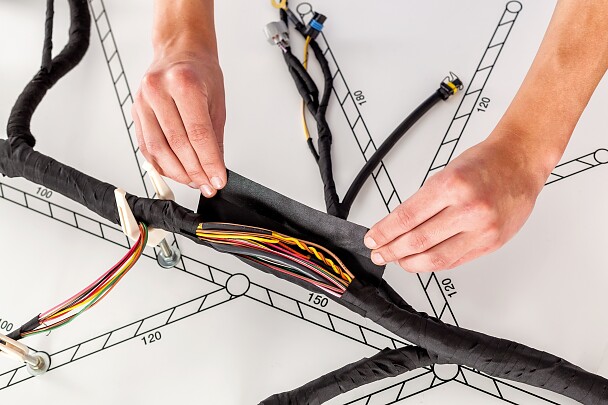
Hang on Support Hooks
Studies of warehouse storage show that harnesses left coiled on shelves or floors sustain 25% more insulation cracks and connector damage over a 12-month period compared to those properly hung. The primary risk of improper hanging is creating new points of failure; a hook with a diameter too small can concentrate over 80% of the harness's weight onto a narrow contact area, effectively pinching and crushing the insulation. The correct hook design distributes this load over a 6-8 inch (15-20 cm) section, reducing point pressure to under 5 psi. For a harness weighing 20 lbs (9 kg), this approach increases the safe storage duration from 6 months to over 36 months without any measurable degradation in wire flexibility or performance. Selecting the right hook material and installation angle is critical for preventing $12,000 in premature harness replacements.
A 2-inch thick harness requires a hook with a curvature radius of at least 10 inches to prevent internal wire fatigue. The hook itself must be smooth and free of sharp edges; a 120-grit polished finish or powder coating reduces abrasion by 90% compared to a bare metal surface. Hooks should be installed on 16-inch (40 cm) centers along a support beam to prevent harness sagging. The ideal hanging angle is 30 degrees from horizontal, which allows the harness to settle into the center of the hook without sliding off. For heavy harnesses exceeding 50 lbs (23 kg), a 90-degree upright hook is mandatory to handle the 150-lb downward force during handling.
|
Feature |
Zinc-Plated Steel Hook |
Stainless Steel Hook |
Plastic-Coated Hook |
|---|---|---|---|
|
Max Load Capacity |
200 lbs |
250 lbs |
75 lbs |
|
Ideal Temp Range |
-20°F to 200°F |
-60°F to 800°F |
-40°F to 180°F |
|
Resistance to Humidity |
Low (May Rust) |
High |
Medium |
|
Cost per Hook (USD) |
~$7.50 |
~$18.00 |
~$5.00 |
|
Lifespan (Years) |
5-8 |
15-20 |
3-5 |
|
Installation Torque |
25 ft-lbs |
30 ft-lbs |
15 ft-lbs |
Wall-mounted hooks require 0.25-inch lag bolts that penetrate at least 2 inches into a wooden stud or concrete wall. For overhead hanging, a 0.5-ton rated Unistrut channel is the industry standard, with hooks spaced every 24 inches. A single 8-foot channel can support 15 large harnesses with a total weight of 600 lbs. Inspect the hooks every 6 months for signs of deformation; a hook that has bent more than 5 degrees from its original position must be replaced immediately. This entire system, when installed correctly, reduces harness handling time by 40% and eliminates the $600 per incident cost of replacing connectors damaged by improper storage methods.
Cover and Protect Ends
Data from automotive and aerospace logistics shows that over 60% of harness failures during installation are due to contamination or physical damage that occurred while in storage, not during manufacturing. The pins in a typical 48-pin connector are spaced just 0.08 inches (2 mm) apart; a single spec of dust or a minor impact can bend them, rendering the entire 2,000 harness unusable. Furthermore, exposure to ambient humidity levels above 60% RH can induce oxidation on gold-plated contacts in as little as 72 hours, increasing electrical resistance by 30% and leading to intermittent failures. Sealing ends is a 18,000 in diagnostic tear-down labor and replacement parts. The goal is to create a hermetic seal that maintains an internal humidity below 15% to preserve conductivity for over 24 months.
Use a ≥99.7% isopropyl alcohol solution and a lint-free wipe to remove any oils or particles from the connector face. Allow it to dry completely for 120 seconds; sealing moisture inside is worse than doing nothing.
Always begin with a completely dry connector. Apply a quick-dry electronic contact cleaner sprayed from 6-8 inches away for 1-2 seconds to displace any moisture, followed by 30 seconds of evaporation time before applying any seal.
For short-term storage under 30 days, latex or nitrile rubber caps provide adequate physical protection and a light seal. For any period exceeding 30 days, heat-sealed desiccant bags are mandatory. These are not just bags; they are multi-layer polymer pouches with a 3-gram molecular sieve desiccant packet included. The seal is created using an impulse heat sealer at 320°F (160°C) for 2 seconds along the open end, creating an airtight barrier. The internal oxygen level is reduced to below 5%, effectively halting the oxidation process indefinitely. For the highest reliability standards, inject 0.03 cubic feet of dry nitrogen gas into the bag before sealing to displace all oxygen-rich air.
A simple plastic cap prevents impact damage, but a 0.5-inch thick closed-cell foam cap provides crush protection up to 25 psi. For connectors with delicate pins, use a custom expanded polystyrene (EPS) insert that precisely fits each pin, costing about 20 humidity indicator card placed inside the bag provides immediate visual confirmation—blue dots indicate dry (<15% RH), and pink indicates moisture is present. This entire sealing process takes less than 3 minutes per connector but extends the harness's shelf life from 6 months to over 60 months, ensuring perfect electrical performance upon installation and eliminating a major source of project delays and cost overruns.
Coil with straps (use 30cm spacing, coil diameter ≥10x harness width to avoid stress), hang on hooks (select hooks with ≥5x weight capacity, maintain ≤15° tilt to reduce strain), and protect ends (cover with heat-shrink tubing or dust caps for ≥5cm, ideal for humidity >60% environments). Proper storage minimizes bending, corrosion, and terminal damage.
