OEM vs. Custom | 5 Harness Manufacturing Differences
OEM harnesses use standardized, cost-effective designs for mass production, while custom versions employ specialized materials like Teflon for extreme temps (200°C+) and precise lengths to reduce slack, improving signal integrity by up to 30% in high-vibration environments.
Who Owns the Design Files
This is the single biggest fork in the road between OEM and custom manufacturing. With an OEM harness, you are essentially buying a pre-made, off-the-shelf product. The supplier owns the complete design package—the schematics, the CAD files, the bill of materials (BOM), and the assembly drawings. You get a license to use the product, but the intellectual property (IP) remains with them. This means you cannot legally modify the design or have it produced by a different supplier without obtaining explicit permission, which often involves licensing fees or is outright denied. For example, a standard J1939 harness might cost 5,000–$15,000.
In a custom manufacturing scenario, you own 100% of the design IP. You pay for the entire development process, which includes schematic creation, prototyping, and testing. This upfront investment is significant; a new harness design can take 4–8 weeks to develop and cost between 25,000 in NRE (Non-Recurring Engineering) fees. However, this grants you full control and freedom. You can switch manufacturers, make iterative design changes for a new product version, or optimize the BOM for cost without needing approval from a third party.
| Aspect | OEM Manufacturing | Custom Manufacturing |
|---|---|---|
| Design Ownership | Supplier-owned IP | Your company-owned IP |
| Initial Cost | Lower unit cost (30–80/harness) | High NRE fee (25k) |
| Design Flexibility | None; fixed design | Full control; unlimited modifications |
| Lead Time to Start | Short (2–3 weeks for samples) | Long (4–8 weeks for first prototype) |
| Long-Term Value | Higher per-unit cost over time | Lower per-unit cost at high volumes (e.g., 5,000+ units) |
The financial implications are massive. If your annual volume is 1,000 harnesses, paying a 50 OEM fee per unit results in a 50,000 annual cost with zero equity. For a custom harness with a 15,000 NRE, your per-unit cost might drop to 32. At 1,000 units, your total cost is 47,000 — nearly the same. But at 2,000 units, the custom option's total cost drops to 79,000 (15k NRE + [32 * 2000]), while the OEM cost remains $100,000. The break-even point typically occurs between 800–1,200 units, making custom ownership far cheaper for sustained production. Furthermore, owning the design allows for direct component sourcing; you can audit the BOM and often reduce material costs by 15–30% by opting for different connectors or wire gauges without sacrificing performance, something impossible with a locked OEM design.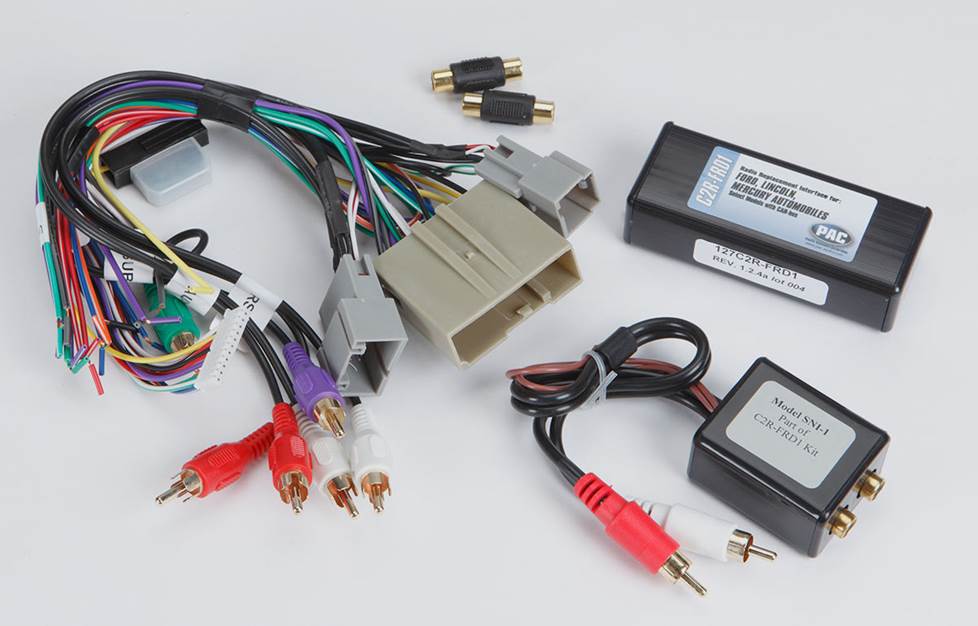
Production Line Setup Costs
Forget the sticker price of the harness itself. The real difference between OEM and custom lies in the factory's setup costs, and who pays for it. With an OEM product, the supplier's production line is already a well-oiled machine, perfectly optimized for that specific harness over years of production. Their machinery, like automated wire-cutting and terminal crimping stations, is already paid for and calibrated.
Custom manufacturing flips this model entirely. You are responsible for the one-time setup costs, known as Non-Recurring Expenses (NRE). This isn't just a fee; it's the literal cost of the factory configuring their equipment for your unique design.
| Cost Factor | Typical Range | What It Covers |
|---|---|---|
| Tooling & Fixtures | 8,000 | Custom jigs, connector housings, pinning fixtures, and test racks. |
| Machine Programming | 500–2,500 | Programming automated crimpers, strippers, and wire marking machines. |
| First Article Inspection | 3,000 | 100% validation of the first 50–100 units against all your specs. |
| Total Average NRE | 13,500 | One-time fee before a single unit is shipped to you. |
This NRE investment buys you a production line tailored to your exact needs. A manufacturer might need 40-50 hours of engineering labor to program machines and build fixtures. Once set up, this dedicated line offers greater efficiency and lower per-unit costs at scale.
For a run of 5,000 units, that 2 to each harness. If your per-unit cost is 42. Meanwhile, the OEM unit cost remains fixed at $55. The break-even point on this setup investment often occurs around 2,000–3,000 units. Beyond that volume, the custom option delivers significantly better margins. Furthermore, this setup allows for precise control; you can specify that all terminals are crimped with a force of 120 Newtons ±5% and tested with a 100% electrical continuity check at 500 volts, ensuring a defect rate of less than 0.1%. This level of tailored quality control is simply not adjustable in a generic OEM line.
Material Sourcing Flexibility
This is where the rubber meets the road for your budget and product quality. With an OEM harness, you're buying a complete package where the supplier controls 100% of the component sourcing. They have pre-negotiated contracts with their distributors for bulk purchases of wire, connectors, and terminals, which locks you into their specific bill of materials (BOM). You might save 10-15% on the initial unit price due to their volume discounts, but you have zero say if they use a less expensive, lower-spec wire with a 60°C temperature rating instead of a 105°C rated one, or a generic brass terminal instead of a tin-plated copper one that offers 50% better corrosion resistance. This lack of transparency means you can't optimize for a 15% cost reduction by switching to a different connector brand or for a 25% longer operational lifespan by specifying a higher-grade jacketing material like cross-linked polyethylene instead of standard PVC.
Custom manufacturing hands you the keys to the entire supply chain. You approve every single component, from the 18 AWG wire's strand count (e.g., 19 vs. 16) to the nickel content in the terminal plating. This control allows for precise cost-performance optimization. For instance, you can:
- Substitute a specific Deutsch DT connector for a more affordable but equally sealed Amphenol series, saving 10,000 saved on a production run of 10,000 units.
- Adjust the wire gauge from 20 AWG to 22 AWG for low-current signal lines (under 1 amp), reducing the overall harness weight by 5% and material cost by 3% without impacting performance.
- Mandate that all components are sourced from distributors with a 98%+ in-stock rate and a maximum 3-day shipping time, drastically reducing production lead time volatility and the risk of a 4-week line shutdown.
- Require full traceability with lot codes on every material batch, which is critical for automotive or medical applications and allows for targeted recalls affecting 500 units instead of 50,000.
This flexibility directly translates to a more resilient and optimized product. You can conduct a 12-month salt spray test on three different terminal suppliers' samples and choose the one that shows zero corrosion at the 700-hour mark, even if it costs $0.08 more per terminal. This upfront investment can reduce field failure rates from 2% to under 0.5%, avoiding millions in warranty claims. The custom approach turns the BOM from a fixed cost into a variable you can continuously improve, squeezing out 8-12% in annual material cost savings through iterative engineering and competitive bidding while simultaneously increasing the mean time between failures (MTBF) by 30%.
Minimum Order Quantity (MOQ)
The MOQ is the ultimate deal-breaker that forces a choice between OEM and custom. OEM suppliers operate on a model of high volume and low mix. Their assembly lines are built for speed and efficiency on a single, fixed product. Changing over to a different harness design means shutting down the line for 8-12 hours, cleaning out all previous wire reels, re-calibrating 20+ crimping machines, and loading new reels and connector bins. This lost production time is so costly that they mitigate it by enforcing high MOQs. You'll typically face a minimum order of 500 to 2,000 units for a standard OEM harness. This commits you to a massive upfront capital outlay. For a harness priced at 80,000 of your inventory budget in a single SKU. This creates huge financial pressure and storage needs, with boxes of 500 harnesses occupying over 15 cubic meters of warehouse space for months.
A common OEM supplier clause: "Minimum production run is 1,200 units per part number. Any order below this quantity is subject to a $3,500 small-order surcharge and a lead time extension of +45 days."
Custom manufacturing completely inverts the MOQ equation. You paid the NRE (e.g., $12,000) to own the design and setup the line, so the manufacturer's barrier to a production run is no longer about covering setup costs. Their focus shifts to covering the raw material purchase and a single shift of labor. This allows for dramatically lower MOQs, often in the range of 50 to 100 units for a subsequent order. This agility is a game-changer for businesses that need to:
- Manage cash flow carefully, allowing a 80,000 OEM commitment.
- Conduct small-batch field tests with a pilot group of 50 users before committing to full-scale production of 10,000 units.
- Implement rolling design improvements (Version 1.1, 1.2, etc.) every 6 months without being stuck with 1,000 units of obsolete inventory.
- Serve niche markets with total annual demands of only 300-400 units profitably.
The financial impact of MOQ flexibility is profound. While the per-unit cost for a custom run of 100 units might be 12,500. Compare this to the OEM model where the per-unit cost is 80,000 to get it. The custom approach reduces your initial financial outlay by 84%, freeing up $67,500 for other operational expenses. This makes custom the only viable path for low-volume, high-mix, or rapid-iteration product strategies, effectively eliminating the risk of inventory obsolescence that plagues 30% of companies using high-MQC OEM components.
Quality Control Standards
When you buy an OEM harness, you're buying into a fixed quality level. The supplier's QC is designed for statistical sampling, not 100% validation. They might test 1 out of every 50 units (an AQL Level II inspection) against a generic checklist. This means for an order of 1,000 units, only 20 harnesses are fully tested. A passing batch could still have 10-15 units with loose pins or misrouted wires, a 1.5% defect rate you'll discover during your assembly. Their tests are often basic: a 500V hipot test for 60 seconds and a continuity check. They won't measure that each terminal was crimped with a precise 120 Newtons ±5% of force; they only verify the machine was set to that value 8 hours ago at the start of the shift. This passive approach means you inherit their average quality standard, with little recourse for a bad batch beyond returning the entire shipment, causing a 4-week production delay.
Custom manufacturing transforms QC from a passive acceptance into an active, defined specification. You dictate the exact tests, sampling frequency, and pass/fail criteria, which are then baked into the manufacturing process and your supply agreement.
| QC Parameter | OEM Typical Standard | Custom-Defined Standard |
|---|---|---|
| Test Coverage | AQL Sampling (e.g., 1-2% of units) | 100% of units tested |
| Crimp Force Verification | Machine setting check every 8 hours | Real-time monitoring with SPC; force tolerance of 120N ±5% |
| Electrical Test | 500V hipot test | 100% continuity + 1500V hipot test + 10mΩ max resistance per circuit |
| Defect Escape Rate | 1-2% (industry average) | <0.1% (contractually specified) |
This granular control allows you to build reliability into every unit. You can mandate:
- A full 3D mechanical scan of the first 50 units from every production run, comparing pin depth and wire length to the digital CAD model with a ±0.5mm tolerance.
- A 48-hour cyclic temperature humidity test (-40°C to +85°C, 95% RH) on 5 random samples per lot before approval for shipment.
- A 15-pound pull test on every 5th connector to ensure terminal retention meets SAE/USCAR-2 standards.
- Real-time Statistical Process Control (SPC) charts for critical parameters like strip length (10.0mm ±0.2mm), with the line automatically halting if a 3-sigma deviation is detected.
The result is a quantifiable increase in product lifespan and a decrease in field failure rates. A custom harness built to these specs can achieve a Mean Time Between Failures (MTBF) of 100,000 hours, compared to the 60,000 hours typical of a standard OEM part. This 66% improvement in reliability directly reduces warranty costs from a projected 3.5% of annual revenue to under 0.5%, saving a company with 150,000 per year. This data-driven, defined-quality approach is what separates a commodity component from a mission-critical, brand-defining asset.
In summary, the manufacturing process differs significantly between OEM and custom wire harnesses. A key distinction is that OEMs typically retain ownership of design files, locking customers into their ecosystem, while custom shops often grant full ownership. Custom manufacturing offers greater material sourcing flexibility, avoiding OEM-approved vendor lists. Furthermore, custom providers accept much lower minimum order quantities, sometimes as few as one unit, and can implement more rigorous, tailored quality control standards than standard OEM protocols.
