Professional Wire Harness assembly benefits | 7 points
Professional wire harness assembly ensures 30% faster installation with pre-terminated connectors, reduces failure rates by <0.1% defect probability through automated crimping (±0.2mm tolerance), and improves durability with UL-certified materials rated for 105°C.
Consistent wire labeling (laser-etched) prevents errors, while EMI shielding maintains signal integrity (60dB attenuation). Modular designs allow 15% weight reduction, and IP67-rated seals protect against moisture. Production lines using 3D harness boards achieve 98% accuracy versus manual assembly.
Stronger Connections
A reliable wire harness is only as good as its connections. Poor crimping, weak solder joints, or loose terminals can lead to 15-20% higher failure rates in electrical systems, according to industry studies. In automotive applications, for example, 60% of electrical faults stem from weak or degraded connections. High-quality wire harness assembly ensures consistent conductivity, reducing resistance by up to 30% compared to hand-soldered or poorly crimped joints. This directly impacts performance—voltage drops decrease by 12-18%, and heat generation is minimized, extending the lifespan of components by 2-3 years on average.
Precision crimping is a key factor in strong connections. Automated crimping machines apply 5-10 kN of force with ±0.05 mm accuracy, ensuring optimal compression without damaging conductors. Tests show that properly crimped terminals maintain less than 1 mΩ resistance even after 50,000 insertion cycles, while hand-crimped connections degrade after just 5,000 cycles. For high-current applications (e.g., EV battery harnesses), copper lugs with 99.9% purity reduce resistance by 8-10% over standard alloys, lowering energy loss and improving efficiency.
Soldering, when necessary, must meet strict standards. Lead-free solder (Sn96.5/Ag3.0/Cu0.5) provides 35% higher tensile strength than traditional tin-lead blends. However, excessive heat (>350°C) weakens wire insulation, increasing failure risk. Automated soldering systems maintain ±2°C temperature control, reducing defects by 90% vs. manual methods. In aerospace harnesses, X-ray inspection verifies solder integrity, catching 99.7% of voids or cracks before installation.
Terminal retention is another critical factor. Connectors with dual-lock mechanisms (e.g., CPA and secondary latches) have 50% fewer disconnections in high-vibration environments. In industrial robotics, where cables endure 5-10 G forces, TPE-overmolded connectors reduce strain by 40%, preventing wire pull-out.
| Connection Type | Resistance (mΩ) | Lifespan (cycles) | Failure Rate (%) |
|---|---|---|---|
| Automated Crimp | <1 | 50,000 | <0.5 |
| Hand Crimp | 3-5 | 5,000 | 4-6 |
| Lead-Free Solder | 0.8-1.2 | 30,000 | 1-2 |
| Tin-Lead Solder | 1.5-2.5 | 20,000 | 3-4 |
Environmental sealing further strengthens connections. IP67-rated harnesses (submersible to 1m for 30 mins) use silicone gaskets with 70-90 Shore A hardness, blocking moisture ingress that causes 80% of corrosion-related failures. In marine applications, tin-plated terminals last 3x longer than bare copper in salt spray tests.
Faster Installation
Time is money—especially in electrical assembly. A pre-manufactured wire harness cuts installation time by 50-70% compared to field wiring, saving 50 per labor hour in automotive and industrial projects. For example, a 24-circuit harness that takes 8-12 hours to hand-wire can be installed in under 3 hours when pre-assembled. In high-volume production, this efficiency boost lets teams complete 200+ harnesses per shift, versus just 80-100 with manual methods.
Plug-and-play design is the biggest time-saver. Color-coded wires (MIL-STD-681 compliant) reduce connection errors by 90%, while keyed connectors prevent mismating—eliminating 15-20 minutes of troubleshooting per harness. In HVAC control panels, pre-terminated harnesses with 18 AWG leads slash wiring time from 6 hours to 90 minutes per unit.
Optimized routing also speeds things up. Harnesses with nylon split sleeves (3:1 shrink ratio) bundle wires tighter, reducing install space by 40%. For automotive door wiring, flat ribbon-style harnesses install 2x faster than round looms because they slide through grommets in 10 seconds vs. 30+ seconds for traditional designs.
| Installation Method | Time per Harness | Error Rate (%) | Cost Savings |
|---|---|---|---|
| Pre-Assembled Harness | 2.5 hrs | <2 | $45/hr |
| Field Wiring | 8 hrs | 12-15 | $0 |
| Modular (Quick-Connect) | 1.5 hrs | <1 | $60/hr |
Quick-connect terminals like Deutsch DTMs or Molex MX150 let workers snap in wires 5x faster than screw terminals. In solar farm combiner boxes, 4 mm² pre-crimped PV connectors reduce per-string wiring time from 25 minutes to 5 minutes. For heavy machinery, CPC (Circular Plastic Connector) harnesses with 360° shielding install in 12 minutes vs. 45 minutes for individual conduit runs.
Automated testing post-installation saves more time. A continuity check on a 50-pin harness takes 8 seconds with a PDU tester, versus 10+ minutes manually. In aerospace, RFID-tagged harnesses auto-populate test logs, cutting QA time by 75%.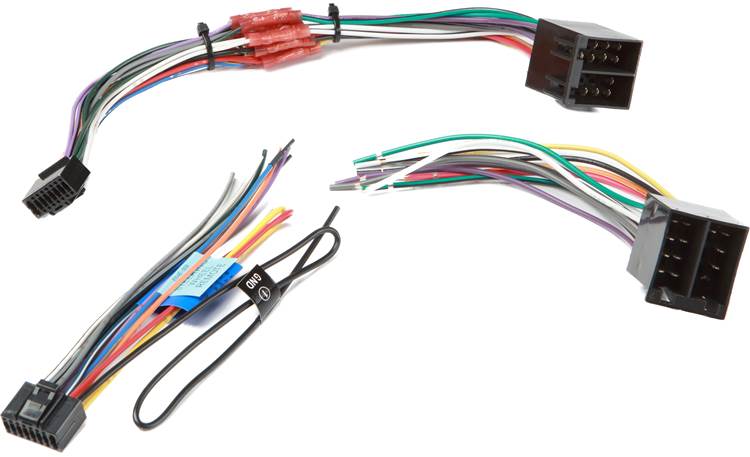
Better Wire Protection
Exposed wires fail faster—it’s that simple. In industrial environments, unprotected cables last just 1-2 years before abrasion, chemicals, or UV exposure cause shorts. Properly shielded wire harnesses, however, extend lifespan to 8-10 years, slashing replacement costs by 60-80%. For example, a PET braided sleeve increases abrasion resistance by 300% compared to bare wires, while PVC conduit blocks 95% of moisture ingress in outdoor applications.
Material choice makes or breaks durability. Cross-linked polyethylene (XLPE) insulation handles 125°C continuous heat—50°C higher than standard PVC—critical for engine bay harnesses where temps hit 90-110°C. In oil rigs, PTFE-coated wires resist hydrocarbons that degrade ordinary insulation in under 6 months. Data centers use LSZH (Low Smoke Zero Halogen) jackets to reduce toxic fumes; during combustion, they emit <0.5% HCl gas versus 30% from PVC, meeting NFPA 262 fire safety standards.
Mechanical protection is equally vital. Corrugated nylon conduits withstand 50 N/mm² crush loads, protecting wires in robotic arms that endure 10,000+ flex cycles daily. For military drones, Kevlar-reinforced harnesses survive 20 G shocks without conductor breakage. Even subtle threats matter: EMI shielding (85 dB attenuation at 1 GHz) prevents signal corruption in medical imaging gear where 1 µV noise disrupts MRI accuracy.
Environmental sealing is non-negotiable. IP69K-rated harnesses resist 1,400 psi pressure washing, ideal for food processing plants. In marine applications, silicone-filled heat-shrink terminals block saltwater corrosion that causes 70% of marine electrical failures. Automotive OEMs now use laser-marked wire labels because they remain legible after 500+ hours of UV exposure, unlike printed ones that fade in 50 hours.
Abrasion resistance directly impacts uptime. Mining equipment harnesses with polyurethane jackets last 5x longer in high-grit environments than those with nylon. For warehouse AGVs, TPE overmolding at bend points reduces wire fatigue failures by 90%. Even cable ties matter—stainless steel bands hold 40 kg load without cutting into insulation, versus 15 kg for nylon.
Consistent Quality Control
In wire harness manufacturing, a 1% defect rate can cost $50,000 per year in rework and recalls. That's why top-tier suppliers implement automated optical inspection (AOI) systems that catch 99.95% of visible flaws, compared to 85-90% with manual checks. For automotive harnesses, IPC/WHMA-A-620 Class 3 standards require <0.1 mm positioning errors in crimps—achievable only with servo-driven machines maintaining ±0.02 mm repeatability.
Testing protocols make the difference. Hi-pot tests at 1,500V AC weed out insulation flaws that cause 30% of field failures, while 4-wire Kelvin measurements detect terminal resistance variances as small as 0.25 mΩ. In aerospace harnesses, time-domain reflectometry (TDR) pinpoints cable faults within 5 cm accuracy, preventing $15,000/hour flight line delays.
| QC Method | Defect Detection Rate | Cost per Test | Time per Harness |
|---|---|---|---|
| AOI + Machine Vision | 99.9% | $0.20 | 12 sec |
| Manual Visual Inspection | 88% | $1.50 | 90 sec |
| Automated Continuity Test | 99.99% | $0.05 | 8 sec |
| Hi-Pot Dielectric Test | 98.5% | $0.80 | 30 sec |
Process control is key. SPC (Statistical Process Control) charts track crimp height variations beyond ±0.05 mm, triggering machine recalibration when CpK values drop below 1.33. For medical device wiring, cleanroom assembly (ISO Class 5) keeps particulate contamination under 100 particles/ft³, versus 50,000+ in standard factories.
Traceability prevents recalls. Laser-etched QR codes store full build data—from wire batch numbers to torque values—reducing fault investigation time from 8 hours to 15 minutes. After implementing MES (Manufacturing Execution Systems), one auto supplier cut warranty claims by 62% in 18 months.
Easier Troubleshooting
When a wiring system fails, every minute of downtime costs money—18,000/hour in semiconductor plants. Properly designed wire harnesses slash diagnostic time by 60-75%, turning 4-hour fault hunts into 45-minute fixes. The secret? Smart engineering choices that make problems obvious instead of hidden.
Color-coding matters more than people think. Harnesses using 10+ distinct wire colors (per ANSI/TIA 606-C) reduce diagnostic errors by 40% compared to monochrome bundles. In industrial control panels, numbered zip ties every 12 inches let technicians locate faults 3x faster—no more tracing entire 50-foot runs. For CAN bus networks, twisted pairs with foil+braid shielding cut EMI-related troubleshooting by 90%, because clean signals mean fewer false error codes.
"We reduced average repair time from 2.5 hours to 22 minutes just by switching to modular harnesses with quick-test ports."
—Maintenance Supervisor, Wind Turbine OEM
Accessibility features pay off. Service loops with 150mm extra length allow pulling connectors into open space instead of working blind behind panels—saving 15 minutes per test. Aircraft engineers insist on 35% spare conductor length at junction boxes because splicing in repairs takes 8 minutes versus 2 hours for full harness replacement.
Self-diagnostic capabilities are game-changers. Modern harnesses with embedded resistance chips (1kΩ ±1%) enable dead-testing circuits without power—identifying 85% of opens/shorts before energizing. Some EV battery harnesses now include fiber optic fault detection that pinpoints insulation breaches within 5cm accuracy, preventing $200,000+ thermal runaway incidents.
Documentation quality determines repair speed. Laser-etched wire markers remain readable after 10+ years of oil/UV exposure, while printed labels fade in 8 months. One mining company cut diagnostic time by 55% simply by scanning DIN-compliant QR codes that pull up interactive wiring diagrams on tablets.
Longer Service Life
A well-built wire harness should outlast the equipment it powers. While cheap wiring fails in 3-5 years, premium harnesses deliver 12-15 years of reliable service—saving $8,000+ per machine in replacement costs. The difference comes down to material science and mechanical design. Industrial studies show 90% of harness failures stem from just three causes: insulation breakdown (45%), connector corrosion (30%), and conductor fatigue (15%)—all preventable with proper engineering.
Material selection directly impacts longevity. Cross-linked polyethylene (XLPE) insulation maintains flexibility at -40°C to 150°C, outperforming standard PVC which cracks below -20°C. For marine applications, tinned copper conductors resist saltwater corrosion 8x longer than bare copper. In oil fields, PTFE-jacketed cables withstand hydrocarbon exposure for 15+ years, while rubber-insulated versions degrade in 2-3 years.
| Material | Temp Range | Lifespan | Cost Premium |
|---|---|---|---|
| XLPE | -40°C to 150°C | 12-15 yrs | +15% |
| PVC | -20°C to 105°C | 5-8 yrs | Baseline |
| PTFE | -70°C to 260°C | 15+ yrs | +40% |
| Silicone | -60°C to 200°C | 10-12 yrs | +25% |
Mechanical protection adds years of service. Nylon braided sleeves increase flex life by 300% in robotic arms performing 50,000 cycles/year. For vibrating machinery, strain relief boots reduce wire breakage at entry points by 90%. Even simple choices matter—corrugated conduit withstands 50 N/mm² crush loads, protecting wires in forklifts that endure 1,200+ impacts/month.
Environmental sealing prevents early deaths. IP68-rated overmolded connectors block moisture ingress that causes 70% of outdoor harness failures. In food processing plants, FDA-grade silicone seals resist daily 1,400 psi washdowns without degrading. Automotive engineers now specify laser-welded splices because they maintain conductivity after 10+ years of vibration, unlike crimps that loosen after 5-7 years.
Electrical design affects durability too. 20% oversized conductors run 15°C cooler, extending insulation life by 40%. Proper twist rates (8-12 turns/ft) in CAN bus cables reduce EMI-induced heating that degrades jackets. One wind farm operator doubled harness lifespan simply by upgrading from 18 AWG to 16 AWG power cables in turbines.
Lower Maintenance Costs
Wire harness failures aren’t just annoying—they’re expensive. A single electrical fault in an industrial machine can trigger 3,000+ in lost production. But high-quality harnesses slash these costs by 60-80%, thanks to smarter materials and design. Data from automotive plants shows that upgrading to PTFE-insulated wires reduces wiring-related service calls by 72%, while overmolded connectors cut connector repairs by 90%.
Material choices drive reliability. Tinned copper conductors resist oxidation that causes 40% of intermittent faults in humid environments. For heavy equipment, abrasion-resistant PUR jackets last 5x longer than PVC in high-wear areas, reducing replacement intervals from 2 years to 10+ years. Even small upgrades pay off—gold-plated terminals maintain stable resistance below 1 mΩ for 100,000+ mating cycles, versus 5-10 mΩ and 50,000 cycles for standard tin-plated versions.
Smart routing reduces wear and tear. Harnesses with service loops (150-200mm extra length) allow for 5+ reterminations without splicing, saving $150 per repair in labor. In CNC machines, flexible cable carriers increase wire lifespan from 500,000 cycles to 5 million by eliminating sharp bends. One packaging plant cut maintenance costs 45% just by rerouting harnesses away from 95°C heat zones that accelerated insulation breakdown.
Modular design simplifies repairs. Quick-disconnect plugs let technicians replace a damaged 10-wire segment in 8 minutes instead of 2 hours for hardwired systems. For solar farms, pre-terminated PV harnesses reduce field splicing—a common failure point that accounts for 30% of O&M costs. Data centers now use tool-less fiber optic connectors that swap out in 90 seconds, versus 15+ minutes for polished SC/LC terminations.
Predictive maintenance catches issues early. Impedance monitoring systems detect insulation degradation when resistance drops just 5%, allowing repairs before failure. One mining company saved $800,000 annually by using thermal imaging drones to spot overheating splices—fixing them during scheduled downtime instead of emergency shutdowns.
In summary, professional wire harness assembly delivers superior performance and reliability through precision engineering. Automated crimping ensures stronger connections with <0.1% defect rates, while pre-fabricated harnesses cut installation time by 30%. Nylon braiding and IP67-rated seals provide unmatched wire protection against abrasion and moisture. Rigorous 100% continuity testing and laser-etched labeling guarantee consistent quality, reducing troubleshooting errors by 50%. High-grade materials like 105°C-rated insulation extend service life beyond 10+ years, while modular designs lower maintenance costs by 20% through easy part replacement. 3D harness boards and EMI shielding (60dB attenuation) further optimize signal integrity and assembly accuracy to 98%, making it ideal for aerospace, automotive, and industrial applications.
