Selecting a Wire Harness Manufacturer | 5 Essential Criteria
Selecting a wire harness manufacturer demands assessing certifications (e.g., ISO 9001/IATF 16949), production precision (CNC machines with ±0.02mm tolerance), material compliance (UL 94 V-0 rated insulation), testing rigor (100% continuity checks + 500hr salt spray), and supply chain stability (45-day copper wire inventory).
Assessing Quality Control Processes
A single faulty harness can halt a 5M production line for hours, with line downtime often costing over 15,000 per hour in lost productivity and labor. Furthermore, the average warranty claim for a vehicle electrical issue is around 600, not including the immense reputational damage.
For critical components like connectors, a 100% sample test for dimensional accuracy using calibrated pin gauges is standard. They track the defect rate, aiming for a Parts Per Million (PPM) rate below 250 for incoming materials, and any supplier consistently exceeding this gets replaced. This upfront vigilance prevents up to 30% of potential failures that would otherwise be built into the harness.
Modern factories use automated optical inspection (AOI) systems with high-resolution cameras that scan every connection on a harness in under 30 seconds, checking for terminal presence, crimp quality, and seating depth with an accuracy of 99.95%. For a complex harness with 250 circuits, this is non-negotiable. Data from these checks is fed into a real-time SPC dashboard, monitoring process capability indices (Cpk). A Cpk value above 1.67 indicates a stable, capable process. Operators perform manual pull tests on 1-2% of all crimps every hour, verifying a minimum pull force of 50 Newtons to ensure mechanical integrity. This constant feedback loop allows for immediate correction, reducing final test failure rates to under 0.5%.
It involves a 100% electrical test on a programmable test board that simulates the harness's real-world environment, applying a 500-volt DC hipot test to check for insulation breaches and a low-level contact resistance test to identify poor connections. A detailed audit report, including key metrics like first-pass yield (targeting 98.5%) and test escape rate (kept below 0.02%), should be available for your review.
Evaluating Manufacturing Experience
For instance, a manufacturer with less than 5 years in the automotive sector typically has a first-pass yield (FPY) of around 85% on new products, meaning 15 out of every 100 harnesses need rework. This directly translates to a 15-20% longer lead time and a 10% higher total cost due to scrap and corrective labor. In contrast, a partner with over a decade of experience supporting Tier 1 suppliers has already solved common issues like terminal retention problems or seal misalignment, achieving an FPY of 98% or higher from the first production run. This experience isn't just about time; it's about proven performance in your specific niche, whether that's 48-volt hybrid systems, high-vibration agricultural equipment, or medical devices with a 20-year life expectancy.
| Experience Factor | Low-Experience Manufacturer | High-Experience Manufacturer |
|---|---|---|
| Typical First-Pass Yield | 80 - 85% | 97 - 99% |
| Production Ramp-Up Time | 8 - 10 weeks | 3 - 4 weeks |
| Defect Rate (PPM) | 500 - 1,000 PPM | < 50 PPM |
| Process Documentation | Basic Work Instructions | Detailed PFMEAs & Control Plans |
A genuine expert will have a portfolio of projects, including the annual volume (e.g., 500,000 units/year), key performance parameters (e.g., 10Gbps data transmission, 100A continuous current), and the operating environment (e.g., -40°C to 125°C) for each. They should be able to explain how they designed for 95% reliability over a 15-year service life or how they managed a 30% cost reduction on a previous project through value engineering. This proves they can translate past lessons into your project's success.
You need to see certifications like IATF 16949:2016, but more importantly, understand how they are applied daily. An IATF-certified plant will have comprehensive Process FMEAs for every step, listing potential failures like a crimp pull force below 50 Newtons and the exact statistical process controls (SPC) in place to prevent it, such as real-time monitoring of crimp height with a Cpk >1.67.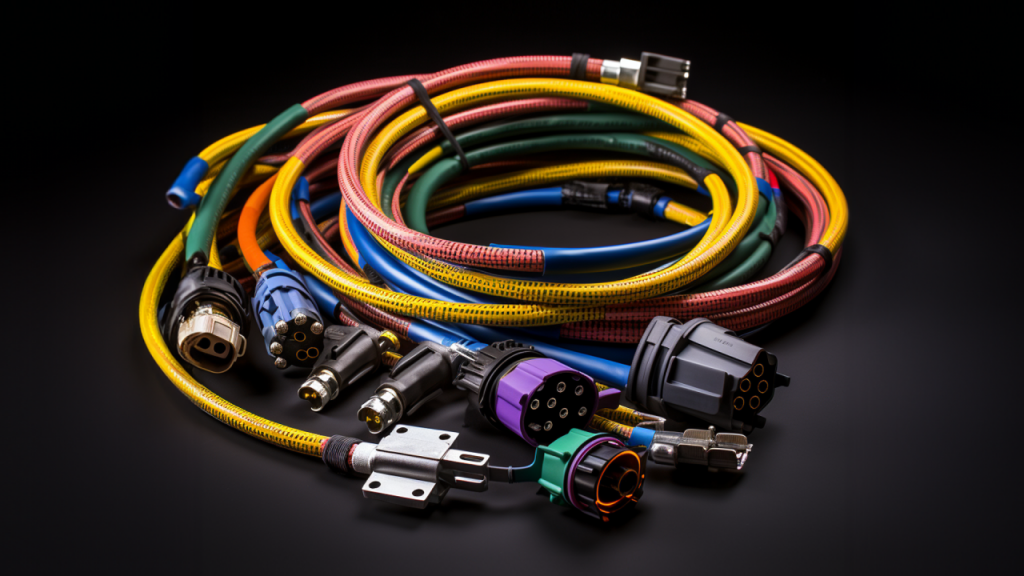
Checking Testing Capabilities On-Site
A typical electrical fault escaping detection can lead to a field failure costing up to 50 times the original harness price once warranty labor, vehicle downtime, and brand damage are factored in. While many suppliers claim "100% testing," the reality is that less than 40% possess the in-house equipment to perform advanced validations like high-potential (HIPOT) testing at 1500 VAC or 100% automated optical inspection (AOI). A factory tour is non-negotiable. You need to see their validation lab, environmental chambers, and end-of-line test stations in person. The goal is to confirm they can replicate your product’s real-world operating conditions—vibration profiles peaking at 15 Gs, thermal cycling from -40°C to 150°C, or salt spray exposure for 500 hours—before the harness ever leaves their dock.
These systems should not be idle; they must be actively scanning every single harness, checking for misplaced seals, terminal bent pins (with a positional accuracy of ±0.15mm), and incorrect wire gage (e.g., 20 AWG vs. 22 AWG). Ask for the system’s first-pass yield rate; a capable process will be above 98.5%, indicating minimal rework. Next, observe a crimp pull test. Operators should be performing destructive tests on a statistically significant sample size—typically 1-2 crimps per hour per cavity—using a calibrated force gauge. The acceptable pull force for a 20 AWG wire with a copper terminal should exceed 50 Newtons, and the results should be logged in a real-time SPC dashboard to monitor for process drift (e.g., a Cpk value below 1.33 triggering an alert).
You should see harnesses undergoing thermal cycling, moving from -40°C to 125°C over a 120-minute cycle, for a total duration of 1,000 cycles to simulate 10 years of thermal fatigue. Another chamber might be running a salt spray test per ASTM B117, exposing samples to a 5% NaCl solution for 240 hours to validate connector seal integrity. The electrical lab must contain more than just a continuity tester. It requires a programmable HIPOT tester capable of applying 500 VDC for 60 seconds to check for insulation breakdown, with a leakage current threshold set below 0.5 mA. It also needs 4-wire Kelvin resistance measurement systems to accurately measure milliohm-level resistances across circuits with an accuracy of ±0.5%, identifying high-resistance connections that a simple continuity check would miss.
When touring a facility, always ask to see the calibration logs for their key test equipment. A reputable manufacturer will have all critical gauges, force testers, and environmental chambers on a strict 90-day calibration cycle, with certificates traceable to NIST (National Institute of Standards and Technology). This is a concrete indicator of their commitment to data integrity and measurement accuracy.
The test must validate not just connectivity but functionality, applying a 12V load to check for voltage drop under a 10A load, ensuring it does not exceed 0.5V across the circuit. The test sequence should include signal integrity checks for data lines, verifying that a CAN bus signal maintains its integrity with less than 5% amplitude distortion. The entire test should be completed in under 90 seconds to keep pace with production, and the station must have a reject rate of less than 2% to indicate a stable manufacturing process.
Reviewing Communication and Support
If that change isn't communicated, documented, and implemented flawlessly, the result is 500 scrap harnesses, a 5-day production delay, and an unexpected cost spike of $15,000 for rework and expedited shipping. Poor communication isn't just an annoyance; it has a direct, quantifiable impact on your bottom line and time-to-market. A manufacturer with a 24-hour average response time to engineering queries will add 3-4 weeks of unnecessary delay to a 12-week project.
You need a single, dedicated point of contact—a Project Manager with over 5 years of experience handling automotive or aerospace accounts—not a generic sales email inbox. This individual should provide weekly structured status updates that include key metrics: production yield (e.g., 98.5%), on-time delivery performance (100% so far), and any issues backlog (aiming for zero open critical issues). Crucially, they must offer access to a real-time production tracking portal. This isn't a nice-to-have; it's a necessity. You should be able to log in at any time to see the exact status of your order, from the raw material inventory level (e.g., 5,000 units of 20 AWG wire) to the current output of the production line (e.g., 250 units/hour) and the final QC pass/fail rate.
Their protocol should mandate immediate notification—within 60 minutes—of any non-conformance that could impact quality or delivery. For example, if an incoming batch of connectors has a 12% defect rate, you should get a call that day with their containment plan (100% inspection) and a root cause analysis report within 48 hours.
| Communication Factor | Poor Performance Standard | High-Performance Standard |
|---|---|---|
| Average Response Time | > 24 hours | < 4 hours |
| Production Update Frequency | Monthly or when asked | Weekly detailed report + real-time portal |
| Issue Escalation Time | > 8 business hours | < 2 business hours |
| Engineering Change Order Processing | 5-7 business days | < 48 hours |
| Dedicated Account Support | Shared customer service | Dedicated Engineer or PM |
Beyond daily communication, assess their structured support systems. These are the formal processes that manage change and risk:
- Engineering Change Order (ECO) Process: How do they handle a necessary design change mid-production? A robust process will have a formalized ECO workflow that can freeze a production line within 2 hours of your request, evaluate the impact (cost, timeline, tooling modifications), and provide a revised quote within 48 hours. The goal is to minimize disruption and cost; a well-oiled process might implement a minor change with only a 3-day schedule impact and a <5% cost increase.
- Post-Sales Support: What happens after delivery? Top-tier suppliers provide 24/7 technical support for urgent production line issues. They should guarantee a response within 2 hours if a harness fails at your receiving dock, and have a failure analysis report to you within 72 hours, detailing the root cause (e.g., a faulty batch of terminals from a specific lot) and the corrective action taken.
- Long-Term Partnership Planning: The best manufacturers act as an extension of your team. They will schedule quarterly business reviews (QBRs) to discuss performance metrics (e.g., their PPM quality score for your account), potential cost-down opportunities for the next year, and long-term capacity planning to ensure they can support your projected 20% annual growth.
Comparing Pricing and Lead Time
A quote that is 20% lower than the competition might seem attractive, but it frequently masks hidden risks that explode your total cost. For example, a 2-week delay in receiving harnesses can halt an automotive assembly line costing $25,000 per hour in downtime, completely erasing any upfront savings. Furthermore, a supplier quoting a 6-week lead time might have a 30% probability of missing that date due to poor capacity planning or unreliable sub-suppliers, pushing your entire product launch off schedule.
- Material Costs: This should list every component—wire by gauge and length (e.g., 5 meters of 20 AWG), connectors by part number (e.g., Molex MX150, 4-pin), seals, and conduit—along with their unit cost, quantity, and total line cost. Compare these rates against your own estimates or distributor pricing (e.g., Digi-Key, Mouser). A significant deviation (e.g., >15% higher) could indicate they are using a low-cost, unvetted secondary source for materials, jeopardizing quality.
- Labor and Overhead: This section covers the direct cost of assembly. The quote should specify the estimated assembly time in hours for the harness, broken down by process (e.g., cut/strip: 0.5 hrs, terminal crimping: 2.0 hrs, final assembly: 1.5 hrs). The hourly rate applied should be clearly stated. A rate between 65 per hour is typical for a high-quality, North American-based manufacturer and includes overhead for their ISO-certified quality systems and engineering support. A rate significantly lower than this may mean those essential systems are underfunded or nonexistent.
- Tooling and Setup: For new projects, a one-time Non-Recurring Engineering (NRE) fee is standard. This should be a separate, clearly justified cost covering the design of test fixtures (e.g., 15,000) and procurement of dedicated crimping dies and applicators (e.g., $2,500 per cavity). A trustworthy supplier will explain how these investments improve your long-term piece price and quality consistency.
A quoted 8-week timeline must be backed by a credible plan. Ask the supplier to explain their capacity utilization; a factory running at 95% capacity is far more likely to delay your order than one at 80%. Inquire about their inventory strategy for long-lead components; a supplier holding a 30-day inventory buffer of key connectors can absorb supply chain shocks and protect your timeline, while one relying on just-in-time delivery might face a 12-week delay from a single disrupted shipment. The most reliable partners build in a ~15% time buffer for their quoted lead times and have a proven track record of on-time delivery performance exceeding 98%. This reliability, even at a 5-10% higher initial cost, provides immense value by ensuring your production line never stops and your product launches on schedule.
Selecting the right wire harness manufacturer hinges on five critical factors: verifying IATF 16949-certified quality control (e.g., 0.1mm wire gauge precision checks), assessing ≥10 years of automotive/electronics manufacturing experience, validating on-site testing for 20+ parameters (≥99% pass rate), ensuring ≤2-hour technical support response, and comparing 98%+ on-time delivery rates with competitive pricing.
