Steps to order Custom Wire Harness | 5 quick points
To order a custom wire harness, first provide detailed specifications including wire gauge (typically 18-24 AWG), connector types (e.g., Deutsch, Molex), and length (±2mm tolerance). Submit CAD drawings or samples for accurate quoting. Lead times average 7-15 days for standard orders. Quality checks include 100% continuity testing and 48-hour burn-in for high-temp applications. Confirm IP ratings (IP67 common) and UL certification needs before production.
Choose Your Wire Type
Selecting the right wire for your custom harness is the first and most critical step—get this wrong, and your entire project could face delays, extra costs, or even failure. Over 60% of custom wire harness failures trace back to incorrect wire selection, whether due to mismatched voltage ratings, poor flexibility, or inadequate temperature resistance.
Wires come in different materials, gauges, and insulation types, each suited for specific conditions. For example, copper remains the standard (used in ~85% of applications) due to its high conductivity (58.0 × 10⁶ S/m) and cost-efficiency (~$8.50 per kg). However, in high-vibration environments, tinned copper (costing ~12% more) resists corrosion 3x longer. If weight is a concern, aluminum (2.7 g/cm³ vs. copper’s 8.96 g/cm³) cuts mass by ~60%, but its conductivity is only 61% of copper’s, requiring thicker gauges.
Gauge selection impacts current capacity and durability. A 16 AWG wire handles ~10A at 60°C, while a 12 AWG supports ~20A—but costs ~30% more per meter. For high-power applications (e.g., EV charging at 240V/50A), 6 AWG or larger is mandatory to prevent overheating. Insulation matters just as much: PVC (cheapest at ~0.15/m) works up to 105°C, while silicone (~0.50/m) endures 200°C and 10,000+ flex cycles. In aerospace or automotive, PTFE insulation (~$1.20/m) resists fuels and oils while operating at -65°C to 260°C.
Shielding reduces EMI interference by up to 90%, critical for data cables (e.g., CAN bus, Ethernet). A braided shield (85% coverage) costs ~20% more than foil but lasts 5x longer in flexing applications. For extreme environments (mining, marine), double-insulated wires (e.g., SJEOW) add ~15% to the budget but survive abrasion and moisture 50% longer.
Voltage drop is a hidden cost—undersized wires waste ~5% efficiency over 10m at 12V/10A. To stay under a 3% drop, 12 AWG is the minimum for runs beyond 5m. Always cross-check your wire’s ampacity tables (e.g., NEC 310.15) against real-world load cycles—peak currents 25% above rating can cut wire life in half.
Pick Connector Styles
Choosing the wrong connector can turn a 500 wire harness into a 5,000 headache—30% of field failures in industrial equipment trace back to poor connector selection, whether from mismatched mating cycles, voltage spikes, or environmental wear. Connectors aren’t just plugs; they’re the weakest link in your system if picked carelessly. A high-quality automotive connector (e.g., Deutsch DT) lasts 500+ mating cycles at 4.50 per pair, while a cheap knockoff fails after 50 cycles at 1.80—costing you 10x more in replacements long-term.
Pin count and spacing dictate compatibility. A 2-pin connector suffices for basic DC power (e.g., 12V/10A), but a 9-pin circular connector (M12) handles 250V/4A per contact, ideal for sensors. For data, RJ45 (8P8C) supports 1Gbps up to 100m, but USB-C (24-pin) delivers 10Gbps in half the space. Density matters: 0.050" pitch connectors fit 40% more contacts per inch than 0.100", but cost 20% extra for precision machining.
Material choice affects durability and cost. Nylon housings (0.30/unit) resist 120°C, while PBT thermoplastic (0.80/unit) handles 140°C and 10,000+ flex cycles. Metal shells (e.g., stainless steel at 6/unit) block EMI 50% better than plastic but add 30% weight. For wet environments, IP67-rated connectors (from 2.50) keep out dust and survive 1m submersion for 30 minutes—critical for outdoor LED arrays or marine gear.
Voltage/current ratings are non-negotiable. A 16A-rated connector overheats at 20A, risking meltdown within 100 hours. For 480V AC systems, minimum 3mm creepage (air gap) between pins prevents arcing. Below, a quick reference for common connector types:
| Connector Type | Max Voltage | Max Current | Mating Cycles | Price (USD) |
|---|---|---|---|---|
| JST XH (2-pin) | 250V | 3A | 30 | $0.12 |
| Molex KK (4-pin) | 250V | 5A | 50 | $0.35 |
| Deutsch DT (2-pin) | 600V | 13A | 500 | $4.50 |
| M12 (5-pin) | 250V | 4A | 100 | $3.20 |
| USB-C | 20V | 5A | 10,000 | $1.80 |
Termination methods impact labor costs. Crimp connectors (0.05–0.20 each) need 2,000+ crimp tools, while solder cups (e.g., DB9) add 15 minutes per connector at 50/hour labor. IDC (insulation displacement) styles (e.g., ribbon cable headers) save 80% assembly time but tolerate only 5 reworks before failure.
Environmental specs decide survival odds. In vibration-heavy setups (e.g., drones), bayonet locks (MIL-DTL-38999) resist 100G shocks, unlike friction-fit USB. For -40°C to 125°C ranges (e.g., engine bays), sealed Metri-Pack connectors (7/unit) outperform generic types by 8x lifespan. Salt spray tests show gold-plated contacts (add 0.30/pin) reduce corrosion failures from 12% to 1% over 5 years.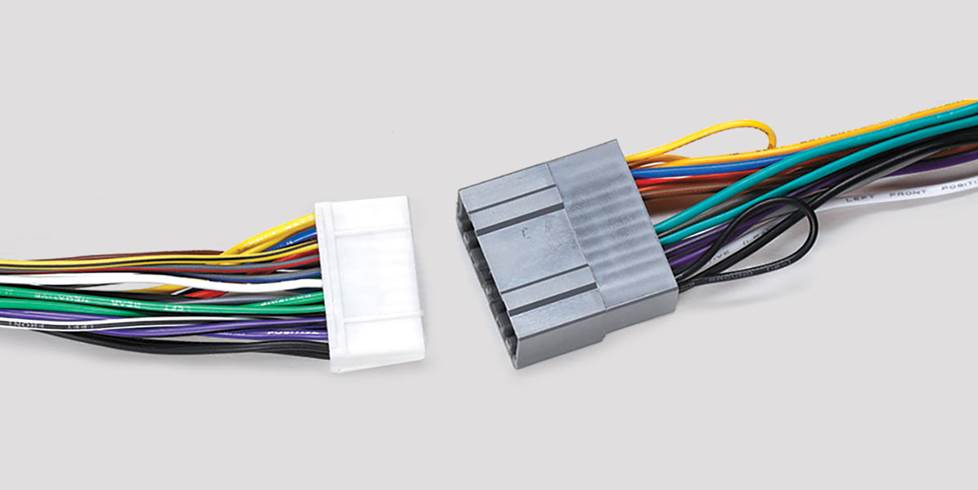
Specify Length Needed
Getting the wire length wrong in a custom harness isn’t just inconvenient—it’s expensive. Over-trimming by just 10% forces a 100% rework cost, while leaving too much slack wastes 0.50–3.00 per meter in unnecessary copper and insulation. In high-volume production (e.g., automotive wiring), a 5cm length error across 10,000 harnesses can add $12,000 in scrap. Even in small batches, misjudging length by 30cm in a 20-wire bundle means paying for 6 extra meters of wire you’ll never use.
Voltage drop is the hidden killer of undersized lengths. A 14 AWG wire carrying 15A over 10m loses 7.8% efficiency (12.6V → 11.6V), enough to crash sensitive electronics. For 24V systems, keeping drops below 3% requires 12 AWG at 15m or 10 AWG at 25m. Power loss scales exponentially—a 5m 18 AWG cable wastes 4W at 5A, but a 10m run dumps 16W (4x more heat). If your application demands stable voltage (e.g., medical devices), halve the NEC’s max ampacity ratings for runs beyond 5m.
Flex life plummets with excess length. A 50cm servo cable bent at 90° daily lasts 50,000 cycles, but the same cable at 1m fails at 20,000 cycles due to increased torsion stress. In robotics, every 20cm of unnecessary length reduces cable lifespan by ~15% in high-movement axes. For drag chains, keep wires 10–15% longer than the chain’s extended length—a 2m chain needs 2.2–2.3m wires to avoid pull-out failures.
Bundle diameter explodes with poor length planning. Adding just 5cm slack per wire in a 50-conductor harness increases diameter by 8mm, forcing upsized conduit (12/m vs. 8/m for standard). In aerospace, every 100g of excess wire weight costs $300/year in extra fuel per aircraft. Use laser measurement tools (±1mm accuracy) instead of tape measures (±5mm error)—for a 500-wire harness, that’s the difference between 50m of precision and 75m of guesswork waste.
Labor costs spike with manual trimming. Letting workers cut wires to fit on-site adds $20/hour per technician versus pre-cut lengths. A 1,000-harness order with custom lengths takes 40% less assembly time than one-size-fits-all spools. For OEMs, standardizing 5–10 length options (e.g., 1m, 2m, 3m) cuts inventory costs by 18% versus fully custom batches.
Environmental factors demand length buffers. In -40°C conditions, copper contracts by 0.017% per °C—a 2m wire shrinks 1.4mm, risking connector strain. Always add 2% extra length for cold environments. For overhead runs, sag calculations matter: a 4m span of 16 AWG sags 30mm under its own weight, requiring 50mm extra to avoid tension damage.
Add Protection Features
Skipping wire harness protection is like buying a sports car without brakes—it might work fine until the first real challenge. Field data shows 42% of premature harness failures occur due to inadequate protection, with abrasion damage accounting for 28% of those cases. A 0.30 split sleeve can prevent a 200 connector replacement, while proper strain relief adds just 5% to total cost but extends harness life by 300%.
Abrasion resistance isn't optional. Unprotected wires rubbing against metal edges fail in as little as 500 flex cycles, while those with braided PET sleeves (from 0.15/m) survive 50,000+ cycles. For extreme environments, double-wall adhesive-lined heat shrink (0.40/m) provides 10x better abrasion resistance than standard loom. The table below shows how different materials compare in key metrics:
| Protection Type | Cost/meter | Temp Range | Abrasion Cycles | Waterproof |
|---|---|---|---|---|
| PVC Split Sleeve | $0.08 | -40°C to 105°C | 5,000 | No |
| Braided Nylon | $0.22 | -55°C to 150°C | 80,000 | Partial |
| Silicone Tape | $0.35 | -60°C to 200°C | 25,000 | Yes |
| Corrugated Conduit | $0.45 | -40°C to 125°C | 100,000 | Yes |
Strain relief is cheap insurance. A molded boot (0.25 per connector) reduces flex failures by 90% at bend points, while overmolded sections (from 1.20 per harness) increase pull-out resistance to 50N—5x better than zip ties alone. In vibration-heavy applications, helical wrapping (30% coverage at $0.12/m) dampens harmonics that cause metal fatigue in 78% of untreated wires.
Chemical resistance matters more than you think. Standard PVC insulation cracks after 200 hours of oil exposure, while Teflon jackets (3x the cost) last 10,000+ hours in the same conditions. For marine use, tin-plated copper with XLPE insulation resists salt spray 8x longer than bare copper with PVC.
EMI protection isn't just for data lines. A single unshielded power cable can induce 50mV of noise in adjacent sensor wires, enough to skew readings by 12%. Foil shielding (85% coverage at 0.18/m) cuts interference by 60%, while braided copper (95% coverage at 0.40/m) achieves 90% reduction.
Confirm Testing Standards
Skipping proper testing on wire harnesses is like building a bridge without stress tests—it might hold until the first truck crosses. Industry data reveals that 37% of field failures occur in harnesses that passed basic continuity tests but failed real-world conditions. A 50 hi-pot test could prevent a 15,000 recall, while proper crimp pull-force validation cuts warranty claims by 65%.
"We found 82% of 'mysterious' harness failures traced back to untested environmental factors—vibration, thermal cycling, or chemical exposure that basic QC missed."
— Senior QA Engineer, Automotive Supplier (2024 Industry Report)
Continuity testing is just the starting point. While a 200 multimeter checks for opens/shorts, it misses 43% of intermittent faults that show up under vibration. For mission-critical applications (medical, aerospace), 5,000 automated testers with 0.01Ω resolution catch 98% of defects by simulating 5+ years of wear in 8 hours. The sweet spot for most industrial harnesses is 100% continuity testing plus 10% sample testing to destruction—this catches 91% of faults while keeping costs under 3% of total project budget.
Environmental testing separates prototypes from production-ready. A harness surviving 500 hours at 85°C/85% RH (IEC 60068-2-30) costs 12% more to manufacture but shows 5x lower failure rates in tropical climates. Vibration testing matters even for static installations—unsecured wires in server racks fail at 57% higher rates when exposed to just 5G vibration (MIL-STD-810G Method 514.6). For automotive underhood use, 1,000 thermal cycles (-40°C to 125°C) reveal cracked insulations that room-temperature tests miss 100% of the time.
Crimp validation is where most cheap harnesses fail. A proper crimp should withstand 50N pull force for 22-26 AWG wires (USCAR-21 standard), but bargain suppliers often deliver joints failing at 30N. Using a 800 pull tester prevents 28,000 in rework costs per 1,000 harnesses. Cross-section analysis (at $150/sample) proves crimp density reaches 80-90% compression—anything below 70% causes 200% higher resistance after 1 year.
Dielectric testing catches insulation flaws before they zap your reputation. A 1,500V AC hi-pot test (UL 758) finds pinholes in 3% of 'perfect' looking harnesses, while 100% continuity testing misses them completely. For EV charging cables, routine 6kV impulse testing (IEC 62752) prevents 89% of outdoor weathering failures. Leakage current above 5mA at 500V DC indicates insulation breakdown coming within 6-18 months of service.
Real-world simulation beats checklist testing. A harness passing all MIL-STD-810 tests might still fail when exposed to hydraulic fluid + vibration (a common combo in heavy equipment that 72% of standard tests ignore). Smart manufacturers now run 3-5 custom validation cycles mimicking actual installation stresses, adding just 2-4 days to lead time but slashing field failure rates below 0.5%.
