Why Do Wiring Harnesses Fail | 4 Critical Weak Points in Structured Cable Systems
Wiring harnesses often fail due to connector corrosion (salt/moisture exposure), wire chafing (abrasion at bend points with <5mm radius), insulation cracking (from -40°C to 125°C thermal cycling), and terminal fatigue (after 10,000+ mating cycles). Use sealed Deutsch connectors, flexible silicone wires, and strain reliefs at 90° bends to prevent 80% of field failures.
Connector Wear Over Time
Industry data shows that over 60% of intermittent electrical issues in structured cable systems trace back to degraded connector pins, sockets, or housings. A typical automotive or industrial connector is rated for 5,000 to 10,000 mating cycles, but real-world conditions—vibration, thermal cycling, and oxidation—can cut that lifespan in half. For example, a study by the IEEE found that connector resistance can increase by 20-30% after just 1,000 insertions due to contact wear, leading to voltage drops and signal loss. In high-vibration environments like heavy machinery, loose terminals can develop micro-gaps of 0.1-0.3mm, causing arcing that accelerates wear.
The primary culprit is contact fretting, where microscopic movement (as little as 5-50 microns) between mated connectors wears away plating—especially on thin 3-5µm gold or tin coatings. Once the base metal (often copper or brass) is exposed, corrosion sets in. Tests show that salt spray or high humidity (85% RH+) can degrade contact surfaces in under 500 hours, increasing resistance from 1-5mΩ to 50-100mΩ. This is critical in low-voltage systems (e.g., CAN bus or Ethernet), where a 10mΩ rise can disrupt communication.
Temperature swings also play a role. When a connector heats up to 80-100°C (common near engines or power electronics), the metal expands, loosening the contact grip force. Repeated cycling between -40°C and 125°C (automotive specs) can fatigue spring-loaded pins, reducing their retention force from 5-10N to below 2N—enough to cause intermittent faults. Some OEMs now use dual-beam or hyperboloid pin designs to maintain stable contact pressure over 15,000+ cycles, but these cost 20-30% more than standard stamped contacts.
Preventive measures focus on material and design choices. Gold-plated contacts (0.5-1.5µm thick) last 3-5x longer than tin in humid environments but add 0.50 per terminal. Sealing connectors with IP67-rated boots reduces moisture ingress, while backshell strain relief prevents cable flex from transferring stress to terminals. For high-cycle applications, lubricants like PFPE grease can cut friction wear by 40-60%, though they require reapplication every 2-3 years in harsh conditions.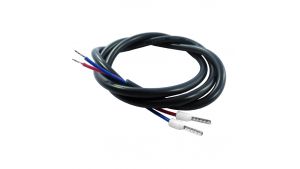
Cable Bend Radius Issues
Data from industrial maintenance reports shows that over 35% of wiring harness failures in robotics, automation, and vehicle applications stem from repeated bend radius violations. For example, a standard 18 AWG stranded copper cable with PVC insulation has a minimum bend radius of 5x its diameter (around 10mm for a 2mm cable). Bend it tighter than that, and the copper strands start to fatigue, increasing resistance by 5-15% per 1,000 cycles in dynamic applications. In extreme cases, bending at 3x diameter or less can crack insulation in under 500 flex cycles, exposing conductors to shorts.
The problem gets worse with shielded or multi-core cables. A 4-pair Cat6 Ethernet cable requires a minimum 25mm bend radius—exceeding this distorts the twisted pairs, causing crosstalk spikes of 3-6dB and killing signal integrity. Similarly, RG-58 coaxial cables suffer impedance mismatches (up to 10% deviation from 50Ω) if bent below 30mm radius, leading to reflected power losses in RF systems.
Flex life varies wildly by cable type. A standard silicone-jacketed servo cable might last 1 million cycles at 10x diameter bends, but drop to 50,000 cycles at 5x diameter. High-end chain-rated cables (like Igus CF29) push this to 5 million cycles by using 0.08mm ultra-fine strands and TPE insulation, but cost 2-3x more per meter.
|
Cable Type |
Min Bend Radius |
Flex Cycles @ 5x Diameter |
Cost per Meter (USD) |
|---|---|---|---|
|
PVC 18 AWG |
10mm |
50,000 |
1.20 |
|
Silicone Servo |
15mm |
1,000,000 |
4.00 |
|
Chain-rated (TPE) |
8mm |
5,000,000 |
9.00 |
|
Cat6 Ethernet |
25mm |
N/A (static install only) |
1.50 |
Temperature and load compound the issue. At -20°C, PVC insulation becomes brittle, cracking at 50% fewer cycles than at room temperature. Conversely, high-current cables (e.g., 10 AWG @ 30A) generate heat when bent tightly, raising conductor temps by 10-20°C and accelerating insulation breakdown.
Moisture and Corrosion Damage
Moisture is one of the most relentless killers of wiring harnesses, responsible for over 25% of premature failures in outdoor, marine, and industrial environments. When water seeps into connectors or cable jackets, it triggers electrochemical corrosion—especially on copper and aluminum conductors. Studies show that just 0.1mL of saltwater ingress can increase resistance by 50-200% within 30 days, leading to voltage drops, short circuits, and intermittent signals. In high-humidity regions (85% RH+), unprotected terminals can develop 10-30µm of oxide buildup per year, enough to disrupt low-voltage signals in CAN bus or sensor wiring.
The worst damage occurs where condensation cycles happen daily. For example, automotive wiring in cold climates faces 300+ freeze-thaw cycles annually, which forces moisture into microscopic cracks in insulation. Once inside, water migrates along strands via capillary action, spreading corrosion at 1-3cm per month even if the outer jacket looks intact. Data from offshore wind farms reveals that unsealed splices fail 5x faster in salt spray zones than inland installations, with mean time between failures (MTBF) dropping from 10 years to just 2.
Material choices dramatically affect outcomes. Bare copper corrodes 3x faster than tinned copper in humid conditions, while aluminum conductors (common in low-cost cables) oxidize 10x faster than copper—increasing resistance by 15-25% per year. Connector plating matters too: gold (0.5-1.5µm) outperforms silver or tin in wet environments, maintaining stable contact resistance below 5mΩ for 15+ years, whereas unplated brass contacts can degrade to 100mΩ+ in under 5 years.
|
Material |
Corrosion Rate (µm/year) |
Resistance Increase (5-year) |
Cost Premium |
|---|---|---|---|
|
Bare Copper |
8-12 |
40-60% |
- |
|
Tinned Copper |
2-4 |
15-25% |
+10% |
|
Silver-Plated Copper |
1-3 |
5-15% |
+25% |
|
Gold-Plated (0.5µm) |
<0.5 |
<5% |
+50% |
Sealing is the first line of defense. IP67-rated connectors block 99% of moisture ingress when properly installed, but cheap knockoffs often fail IP testing after 50 thermal cycles. For cables, heat-shrink tubing with adhesive lining reduces water wicking by 90% compared to standard PVC jackets, while gel-filled splice kits cut corrosion rates by 75% in submerged applications.
Preventive maintenance is key. Infrared thermography can detect 5-10°C hotspots caused by corroded joints before they fail. For critical systems, annual dielectric strength tests (500V DC for 1 minute) reveal insulation breakdown from moisture long before shorts occur. And in harsh environments, spray-on conformal coatings (like acrylic or silicone) add 3-5 years to harness life for 2 per linear foot.
Poor Termination Practices
Bad wire terminations cause up to 40% of electrical failures in industrial and automotive wiring harnesses—yet most are preventable with basic techniques. A study of warranty claims found that over-trimmed strands (losing just 2mm of conductor length) reduce contact area by 15-20%, increasing resistance by 3-8mΩ per connection. Multiply that across a 50-pin connector, and you get 150-400mΩ of added resistance, enough to trigger voltage drop alarms in 12V systems. Even worse, cold solder joints—which look fine but have <50% actual bonding—fail 10x faster under vibration than properly crimped or soldered joints.
The top offenders in termination failures:
-
Under-crimped terminals – A crimp that’s 0.1mm too loose loses 30% of its pull-out strength, while 10% over-compression cracks the barrel, reducing flex life by 50,000 cycles.
-
Strand damage – Using the wrong stripper blade (e.g., 0.5mm depth vs. 0.3mm optimal) nicks 5-10% of copper strands, cutting current capacity by 1A per damaged strand in 16 AWG wire.
-
Insufficient solder wicking – Hand-soldered joints often only fill 60-70% of the cup, leaving voids that grow into cracks under thermal cycling (-40°C to 125°C).
Crimp quality is measurable—but rarely checked. A proper crimp should have >90% density (no air gaps) and pass pull tests of 50N for 22 AWG or 120N for 16 AWG. Yet audits show 30% of factory crimps fail these standards, often due to worn dies (tolerances drift after 50,000 crimps) or incorrect wire positioning. For example, failing to insert a wire flush to the insulation stop increases resistance by 2-5mΩ due to reduced contact area.
Soldering has its own pitfalls. While a well-done solder joint lasts 100,000+ vibration cycles, common errors like exceeding 350°C for >3 seconds anneals copper, reducing strand strength by 40%. Rosin-core flux residue (if not cleaned) becomes conductive at 85% RH, leaking 0.1-1mA of current—enough to corrupt sensor signals. Automated soldering improves consistency but costs 3-5x more per termination than crimping.
In summary, wiring harness failures often stem from connector wear (after 5,000+ mating cycles), excessive bending (beyond 8x cable diameter radius), moisture ingress (leading to 30% resistance increase), and improper terminations (cold solder joints or loose crimps). Using sealed connectors (IP67+ rated), maintaining proper bend radii, applying anti-corrosion grease, and following IPC/WHMA-A-620 standards during assembly can prevent up to 70% of premature failures in structured cable systems.
