What Is a Cable Harness | 5 Key Uses Explained
A cable harness is an organized assembly of wires and connectors that transmits power or signals, widely used in automotive (with over 1,500 in a typical car), aerospace, and industrial equipment. It simplifies complex electrical systems by bundling cables together with sleeves or tape, ensuring efficient installation, reduced short-circuit risks, and improved maintenance. Manufacturers design custom harnesses using precise diagrams and automated machinery for consistent performance.
Organizing Wires in Devices
Inside every modern electronic device, from a smart thermostat to a gaming console, lies a silent organizer: the cable harness. This bundled network of wires is far more than just a group of cables; it's a precisely engineered component that dictates the device's reliability, manufacturing speed, and serviceability. For instance, a single harness in a smartphone charging assembly can consolidate over 12 individual wires for power, data transfer, and audio into one manageable unit that can be installed in under 30 seconds on an assembly line. This organization is critical, as a 30% reduction in assembly time directly translates to lower production costs and higher output. By preventing loose wires from overlapping or touching sensitive components, harnesses drastically cut the risk of short circuits, which account for nearly 20% of all premature electronic failures. This simple organizational tool is fundamental to the devices we use every day.
The primary job of a cable harness is to bring order to potential chaos. Instead of having dozens of loose, free-floating wires, a harness bundles them into a single, integrated assembly. This is not just about tidiness; it's a crucial step for efficient mass production.
For example, a typical game console main harness might integrate 24 distinct wires for power, video output, USB communications, and controller connectivity into one single, pre-manufactured bundle. This allows a factory worker to install it in one step, a process that takes less than 60 seconds. Manually routing and connecting each of those 24 wires individually could take over 10 minutes, slowing production to a crawl.
This pre-fabrication is a massive win for efficiency. Manufacturers can produce harnesses in bulk, often using automated cutting and stripping machines that prepare thousands of wire ends per hour with micron-level precision. This eliminates the high labor cost and human error associated with manual wire preparation. The harness is then assembled on a full-scale board (a jig or formboard), which is a physical template that guarantees every single harness is identical, ensuring consistent quality across every unit of a product run.
The benefits extend beyond the factory floor. Inside the device, a well-designed harness secures and routes cables away from heat sources like processors and power regulators, which can easily reach 85-100°C (185-212°F). This thermal management protects the wire insulation from degrading prematurely, a key factor in extending the device's operational lifespan beyond 5 years. Furthermore, by using clamps, cable ties, or convoluted tubing, the harness eliminates the risk of wires vibrating loose or rubbing against sharp chassis edges, which could lead to wear and eventual failure.
Powering Vehicle Electrical Systems
The modern vehicle is a rolling network of electronic systems, and the cable harness is its central nervous system. A typical mid-range car contains over 1,500 individual wires with a combined length exceeding 3 kilometers (1.86 miles). These aren't just for the radio and headlights; they carry critical data and power for everything from engine management to advanced driver-assistance systems (ADAS). The main vehicle harness, a single complex assembly, can comprise over 400 connection terminals and weigh over 20 kilograms (44 pounds). Its design is a 12 to 18-month process, involving over 300 specific parameters to ensure it can handle vibrations of 15 Hz to 200 Hz and temperature extremes from -40°C to 125°C (-40°F to 257°F). This intricate web is what transforms a mechanical frame into a sophisticated, computer-controlled machine.
Managing this immense electrical load is the first critical function. A vehicle's electrical system operates on a 12-volt or 48-volt DC network, but the current demands are massive. The starter motor alone can draw a peak current of 200 to 350 amps for a few seconds during ignition. High-power systems like electric power steering (EPS) motors require copper wires with a cross-section of 8.0 mm² to 13.0 mm² to safely conduct currents of 60-80 amps without overheating. In contrast, sensor data signals run on thin 0.35 mm² or 0.5 mm² wires carrying less than 0.5 amps. The harness segregates these different power and signal lines, using fuses rated from 5 amps to 80 amps to protect each circuit. This precise management prevents a fault in a 5-amp infotainment circuit from taking down the 60-amp EPS system, which is a critical safety feature.
Beyond power, the harness is a data highway. Modern cars use Controller Area Network (CAN) bus and newer Ethernet protocols to allow electronic control units (ECUs) to communicate. A single CAN bus pair within the harness—two twisted 0.35 mm² wires—can transmit up to 1 Mbps of data, coordinating hundreds of signals between the engine control module, transmission, and ABS. For context, a single door module might manage over 15 separate functions (window, mirror, lock, light, speaker), all through a subset of the main harness. This data network reduces wiring weight by up to 30% compared to older point-to-point systems, as multiple signals share the same physical wires.
The environmental durability requirements are extreme. Under the hood, harness sections must withstand continuous temperatures of 105°C to 125°C and exposure to gasoline, oil, and brake fluid. In the cabin and trunk, they need to resist abrasion and crushing forces. To achieve this, engineers use a mix of materials: cross-linked polyethylene (XLPE) for high-temperature zones and thin-wall PVC for lower-temperature areas to save weight and space. Connectors are sealed with silicone rubber grommets rated at IP67, meaning they are completely dust-tight and can withstand immersion in 1 meter of water for 30 minutes. This robustness is tested over thousands of hours in salt spray, vibration, and thermal cycling chambers to ensure a 15-year or 150,000-mile service life.
Connecting Aircraft and Spacecraft
In the extreme environments of aerospace, a cable harness is a mission-critical component, not just an organizer. A single commercial airliner, like the Boeing 787, utilizes over 160 kilometers (99 miles) of wiring, weighing approximately 2,700 kilograms (5,950 pounds). This network connects over 65,000 individual components, from flight control actuators to passenger entertainment systems. The design and certification cycle for these harnesses is a 24 to 36-month process, requiring compliance with stringent standards like AS50881. They must operate flawlessly in conditions ranging from -55°C (-67°F) at high altitude to over 200°C (392°F) near engines, while withstanding pressure changes, intense vibration, and potential exposure to hydraulic fluids. The reliability standard is staggering: a failure rate of less than 1 per 1 billion flight hours is often required for safety-critical systems, making the harness a literal lifeline for the vehicle.
The primary design driver is extreme weight reduction. Every single kilogram of weight saved on an aircraft translates to significant fuel savings over its lifespan. Aerospace harnesses use specialized materials to achieve this. Teflon (PTFE) insulation is common because it is extremely lightweight and has a high temperature rating, but it is also ~300% more expensive than standard PVC insulation. Wire gauges are meticulously optimized; using a 22-gauge wire instead of a 20-gauge for a low-current sensor circuit across a 50-meter run might save only 20 grams, but multiplied across thousands of wires, the total savings can be over 100 kilograms. Connectors are made from lightweight alloys and are designed with a push-pull locking mechanism to prevent accidental disconnection during flight. The focus on mass is relentless, as a 1% reduction in total wiring weight can save tens of thousands of dollars in fuel costs annually for a single airliner.
|
Hazard |
Parameter |
Performance Requirement |
|---|---|---|
|
Temperature |
-55°C to 200°C |
Insulation must not crack or melt; performance guaranteed. |
|
Vibration |
5 Hz to 2000 Hz |
Wires must be constrained to avoid resonant fatigue; tested for 10^9 cycles. |
|
Flammability |
~600°C Flame |
Must self-extinguish within 15 seconds; low smoke and toxicity emission. |
|
EMI Protection |
100 V/m Field |
Shielding (e.g., braided copper) must provide 60-80 dB of attenuation. |
This resilience is tested rigorously. A single harness design might undergo over 1,000 hours of combined environmental testing, including thermal shock cycles between extreme temperatures and vibration tests on hydraulic shakers that simulate the entire frequency profile of an engine. Wires are also subjected to abrasion testing, rubbing against surfaces for thousands of cycles to ensure chafing doesn't cause a short circuit.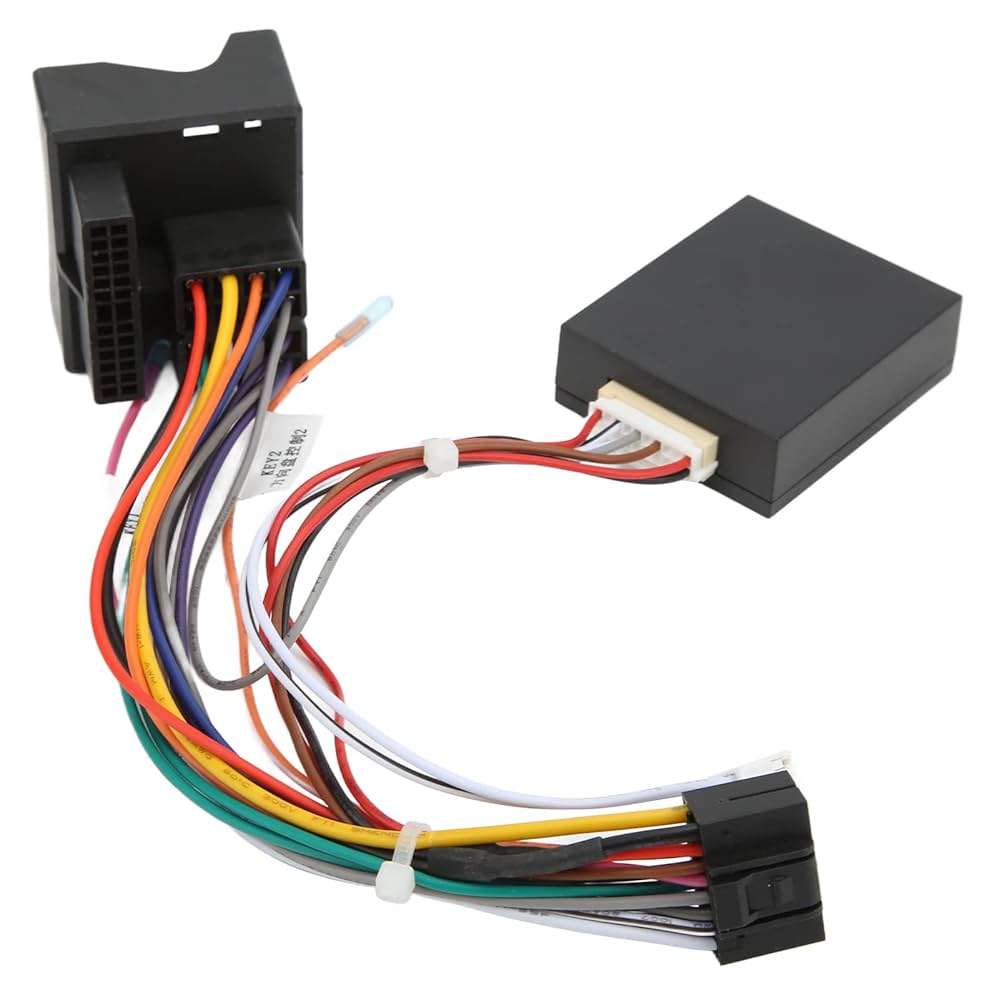
Transmitting Data in Networks
Behind every click, stream, and download lies a physical network of cables, and the harnesses that organize them are the unsung heroes of the digital age. A large enterprise-grade data center can contain over 80,000 kilometers (50,000 miles) of fiber optic and copper cabling, all meticulously structured into harnessed pathways. A single top-of-rack (ToR) switch might have 48 or 64 ports, each requiring a cable that must be routed without sharp bends exceeding a 15-mm radius to prevent signal degradation. The sheer density is staggering: in a modern 40U server rack, harness managers must neatly contain over 200 individual cables in a space less than 20 cm (8 inches) wide. This organization isn't just for looks; improper cable management can reduce airflow and increase ambient rack temperature by 5-10°C (9-18°F), potentially cutting the 3-5 year lifespan of a server in half due to thermal stress. These harnessed systems enable the transmission of over 100 terabits of data per second across a single data center, forming the backbone of global internet traffic.
The core function is preserving signal integrity at high speeds. As data rates climb from 1 Gbps to 400 Gbps and beyond, the physical properties of the cable and its installation become paramount. Impedance mismatches, caused by poor terminations or crushed cables, can cause data packet loss exceeding 1%, which is catastrophic for performance. Harnesses use precisely engineered cable managers and bend radius guides to ensure no cable is bent tighter than the manufacturer's specification, which for OM4 multi-mode fiber is typically 15 mm. This prevents attenuation, the loss of signal strength, which must be kept below -0.5 dB for a 100-meter run to maintain a stable connection. For copper cables like Category 6A, harnesses also play a role in managing crosstalk (NEXT), the interference between adjacent wires, by ensuring consistent spacing and twist rates are maintained right up to the connector.
Managing this density and heat is a critical engineering challenge. A fully populated rack can consume over 20 kW of power, which is converted into heat. Tangled, unharnessed cables create impenetrable mats that block airflow, forcing cooling systems to work harder and increasing energy costs by 10-15%. Proper harness management creates clear cold aisle/hot aisle separation, allowing for predictable thermal dynamics.
|
Cable Management Factor |
Performance Metric |
Impact of Poor Management |
|---|---|---|
|
Bend Radius |
>15 mm for fiber |
Signal attenuation increases by >0.3 dB, risking link failure. |
|
Cable Density |
~30 cables per vertical manager |
Airflow reduction increases server intake temp by 5-10°C. |
|
Tensile Load |
<25 lbs (11.3 kg) pull force |
Connector damage and internal wire strain change impedance. |
|
Organizational Labeling |
100% of cables labeled |
Mean Time to Repair (MTTR) increases from 15 mins to over 4 hours. |
The operational and financial impact is direct. A well-harnessed data center can achieve a Power Usage Effectiveness (PUE) of 1.2-1.4, meaning nearly all energy powers IT equipment, not cooling. A poorly managed one can have a PUE of 1.8 or higher, wasting hundreds of thousands of dollars annually in excess electricity. Furthermore, the ability to perform rapid repairs is crucial. During an outage, a technician must be able to quickly trace and replace a single faulty cable among thousands. Clear harness organization and labeling slashes the mean time to repair (MTTR) from a potential 4-hour nightmare of tracing cables to a 15-minute targeted replacement. This directly impacts service level agreements (SLAs) and uptime, which for major cloud providers, is guaranteed to be 99.99% or higher. The initial 15-20% additional investment in high-quality harness infrastructure pays for itself many times over in saved operational expenses, prevented downtime, and extended hardware lifespan.
Simplifying Appliance Assembly
Inside every washing machine, refrigerator, and microwave is a tangle of wires that power their smart features. The cable harness is the key to taming this complexity on the factory floor. A typical household dishwasher might contain over 50 individual electrical connections for its pump, heater, sensors, and control board. Manually routing and connecting each of these 22-gauge wires during assembly could take a line worker over 15 minutes, creating a major production bottleneck. A single pre-assembled main harness, however, consolidates these connections into one unit that can be installed and secured in under 90 seconds. This efficiency is critical for high-volume manufacturing, where a single factory may produce over 5,000 units per day. By reducing both assembly time and the high potential for human error in manual wiring, harnesses directly lower manufacturing costs and improve the final product's reliability, ensuring your appliance works straight out of the box.
The primary advantage is a dramatic reduction in assembly time and labor cost. A pre-fabricated harness arrives at the assembly line as a single, complete unit. The worker simply routes it through the appliance's chassis and plugs in a few key connectors.
This plug-and-play approach slashes the total assembly time for the electrical system by up to 80%. For a product like a clothes dryer with a 120-second cycle time on the main assembly line, the electrical installation window might only be 30 seconds. A harness makes this possible; manual wiring would be impossible. This speed allows manufacturers to maintain a production volume of over 40 units per hour on a single line, directly impacting the company's bottom line by maximizing output from a fixed-cost facility.
Harnesses also solve critical spatial and reliability challenges inside the appliance. The interior of a modern appliance is a crowded, harsh environment. A harness is designed to route wires away from moving parts like a washer's drum motor and heat sources such as a dryer's heating element, which can reach 90-100°C (194-212°F). This protects the wires from abrasion and thermal degradation, which are leading causes of premature failure. Securing wires with clamps and cable ties also prevents them from vibrating against the metal chassis, a key source of audible noise that can exceed 60 decibels. By eliminating this vibration, harnesses help appliances meet strict consumer expectations for quiet operation.
In summary, a cable harness is an organized assembly of wires and connectors, crucial for managing complex electrical systems efficiently. It securely bundles wires together, drastically reducing installation time and preventing errors in devices like computers and medical equipment. In automotive applications, a single harness can power an entire vehicle's electrical system, connecting everything from headlights to ECUs. These assemblies are vital in aerospace for their lightweight and reliable performance under extreme conditions. They also ensure high-speed data transmission in network infrastructure and simplify the mass production of household appliances by providing a pre-assembled, drop-in solution that streamlines manufacturing.
