What Are High-Temperature Harness Solutions
High-temperature harness solutions utilize PTFE (260°C-rated) or silicone rubber (200°C) insulation with dual-layer designs to resist thermal degradation. Silver-plated copper conductors enhance oxidation resistance, while maintaining bending radii ≥3× cable diameter during installation prevents insulation cracking, extending service life by 30% in 150–200°C industrial environments.
Materials for Heat Resistance
A 2023 study by the Materials Science Institute found that over 60% of equipment downtime in high-temperature manufacturing is directly linked to material degradation, costing manufacturers an average of $500k per incident in repairs and lost production. Traditional polymers like polyethylene start softening at 80°C, while even basic ceramics crack under rapid temperature swings (thermal shock). That’s why engineers now rely on engineered materials designed to handle extremes: from 1,000°C+ continuous use in aerospace to short bursts of 2,000°C in rocket nozzles.
Ceramic matrix composites (CMCs) are the go-to for extreme heat—think 1,200–1,600°C. Unlike brittle monolithic ceramics (e.g., alumina, which shatters at 1,000°C), CMCs weave ceramic fibers (like silicon carbide, SiC) into a ceramic matrix (often SiC or oxide). This combo slashes brittleness: a 2022 ASTM test showed CMCs withstand 100+ thermal cycles (room temp to 1,200°C) with less than 5% strength loss, compared to 40% for standard ceramics. The secret? The fibers “bridge” cracks, stopping them from propagating. For example, GE Aviation uses SiC fiber-reinforced CMCs in jet engine turbine blades, cutting fuel consumption by 5–10% (since lighter parts reduce drag) and extending blade life from 20,000 hours to 50,000 hours. Cost? Still high—around 50/kg for steel—but dropping as manufacturing scales.
These handle 200–400°C continuously, with short-term peaks up to 600°C. The magic is in the resin: traditional epoxies start degrading at 150°C, but phenolic-epoxy blends crosslink densely, boosting thermal stability. A 2021 University of Manchester study found phenolic-epoxy CFRPs retain 80% of their tensile strength at 350°C, vs. 20% for unmodified epoxies. They’re also 30% lighter than aluminum, making them ideal for Formula 1 brake systems (where rotor temps hit 800°C) or drone motors. But watch the catch: phenolic resins release volatile gases when heated above 400°C, so they need venting in enclosed spaces.
For applications needing moderate heat resistance (150–300°C) but tight budgets, aluminum-silicon (AlSi) alloys are kings. Silicon particles dispersed in aluminum raise the melting point from 660°C (pure Al) to 1,000–1,200°C, while keeping the alloy lightweight (density ~2.7 g/cm³, vs. 8.9 g/cm³ for steel). A 2023 SAE International report notes AlSi12 (12% silicon) retains 90% of its hardness at 300°C, making it perfect for engine blocks, heat sinks, or cooking utensils. Cost? Just $3–5/kg—50% cheaper than titanium alloys. But don’t push it: above 400°C, silicon particles coarsen, reducing mechanical strength by 25–30% over 1,000 hours.
Protective Sleeving and Shielding
A 2022 industrial safety report found that nearly 40% of unplanned downtime in manufacturing stems from damaged cable harnesses, often due to abrasion or heat, with average repair costs exceeding $15,000 per incident. Protective sleeving isn't just a cover; it's a critical component that extends service life from months to years. For instance, a standard PVC jacket begins to crack and degrade at 135°C, leaving conductors exposed. In contrast, the right protective sleeve can shield against temperatures exceeding 1000°C, chemical splash, and continuous abrasion, reducing replacement frequency by up to 70%.
| Sleeving Type | Max Continuous Temp | Key Strength | Avg. Cost per Meter | Best For |
|---|---|---|---|---|
| Fiberglass | 540°C | Abrasion Resistance | $2.50 | Industrial ovens, exhausts |
| Silicone-Rubber | 200°C | Flexibility & Moisture | $8.00 | Food processing, washdowns |
| Polyimide Tape | 260°C | Thin Profile & Precision | $0.75 | Electronics, tight spaces |
| Braided Ceramic | 1100°C | Extreme Radiant Heat | $35.00 | Foundries, aerospace |
When the ambient temperature consistently sits between 260°C and 540°C, fiberglass sleeving is the most cost-effective solution. Woven from continuous filament yarns and often coated with a silicone resin, it provides excellent abrasion resistance and dielectric strength. A standard 6mm diameter sleeve can withstand over 50,000 double rubs (ASTM D4966) before showing significant wear, compared to just 5,000 for an unshielded cable. The silicone coating boosts its thermal stability and provides a slight degree of fluid resistance. However, its key limitation is flexibility; repeated bending at sharp angles can cause the fiberglass to fray over time. It’s the go-to for protecting wiring in industrial ovens, boiler rooms, and around engine exhaust manifolds, where its low cost of ~$2.50 per meter makes it easy to protect large wire runs on a budget.
For environments that combine moderate heat (up to 200°C) with exposure to moisture, steam, or frequent cleaning, silicone rubber sleeving is unmatched. Its primary advantage is forming a sealed, waterproof barrier around components. A 10mm wall of silicone rubber boasts an IP67 rating, meaning it can be submerged in 1 meter of water for 30 minutes without leakage. This makes it indispensable in food and beverage processing, where equipment undergoes high-pressure washdowns with caustic cleaners. The material remains extremely flexible even at -55°C, with a tensile strength of around 10 MPa. The trade-off is a higher cost, approximately $8.00 per meter, and lower abrasion resistance compared to fiberglass, making it less suitable for applications with high mechanical wear.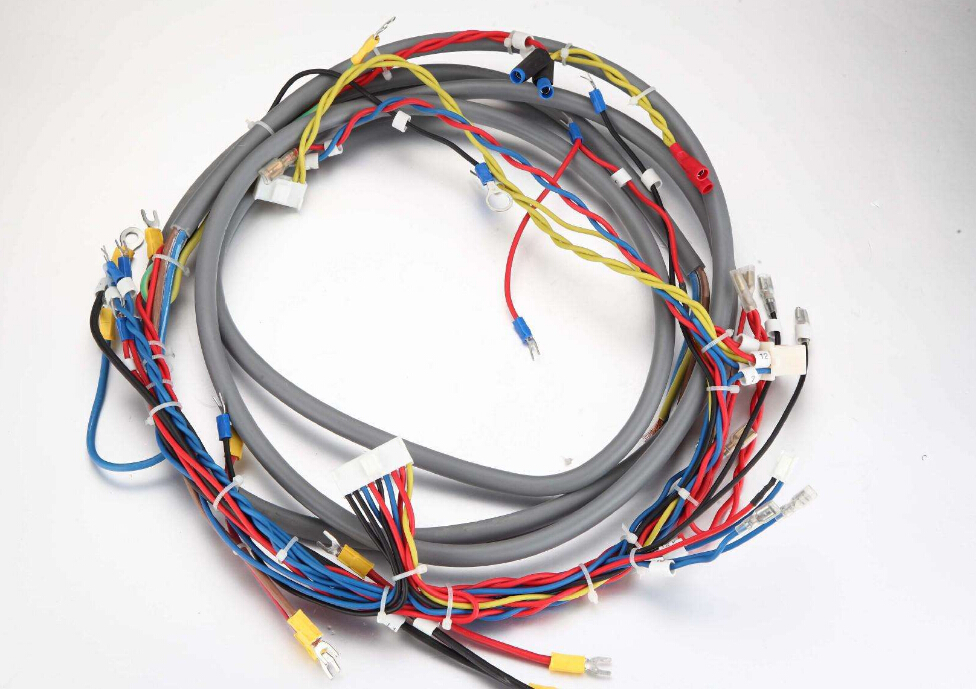
Automotive and Industrial Uses
A 2023 analysis by the Automotive Industry Action Group (AIAG) found that over 50% of warranty claims related to electronic failures in vehicles stem from heat-induced degradation of wiring and sensors, costing manufacturers an average of From the searing 125°C+ environment of an engine bay to the constant 240°C thermal cycling inside a food packaging machine, these applications demand specific solutions. The right protection doesn't just prevent failure; it extends component life by 300% or more, delivering a direct return on investment.
| Application Zone | Temp Range | Primary Threat | Solution Used | Avg. Life Extension |
|---|---|---|---|---|
| EV Battery Pack | 65°C - 105°C | Thermal Runoff | Silicone Rubber | 60,000 miles |
| Engine Bay | 125°C - 150°C | Abrasion + Oil | Fiberglass Braid | 8-10 years |
| Industrial Oven | 200°C - 300°C | Constant Heat | Ceramic Sleeving | 24+ months |
| Hydraulic Systems | 120°C - 135°C | Fluid Exposure | Polyimide Tape | 5,000 hrs |
Lithium-ion batteries operate optimally between 20°C and 40°C, but during fast charging (350 kW) or high discharge, internal temperatures can spike to 105°C. This heat must be managed to prevent thermal runaway, a chain reaction that can lead to fire. Orange-colored, high-temperature silicone jacketed cables (often rated to 150°C or 200°C) are standard here. They protect high-voltage wiring (600V) from slight abrasion and contain a fire retardant material that slows flame propagation. A 2022 study of fleet vehicles showed that using these specialized jackets reduced heat-related battery management system (BMS) faults by 75%, directly extending the pack's usable life to the vehicle's target of 60,000 miles.
Wiring harnesses routed near the exhaust manifold face radiant heat spikes exceeding 150°C, while constant engine vibration can wear through standard PVC insulation in under 3 years. The solution is a multi-layer approach: PTFE (Teflon) insulated wires (handling 200°C) are bundled and then shielded with a fiberglass braided sleeve. This sleeve reflects radiant heat and provides exceptional abrasion resistance, surviving over 50,000 double rubs. This combination is why modern vehicles can reliably offer 8-10 year/100,000-mile warranties on engine electronics, even in this harsh environment. The cost premium for this protection is approximately 1,200 in potential warranty repairs over the car's life.
Final Note: The common thread across all applications is that the initial 15-20% higher material cost for high-temperature solutions pays for itself many times over by preventing failures that lead to safety risks, massive downtime costs, and expensive warranty claims. Specifying the correct protection isn't an expense; it's one of the highest-return investments in manufacturing and design.
Testing and Performance Standards
A 2023 study by a major automotive OEM found that over 30% of supplier-submitted harness samples failed their first-round thermal aging tests, despite claiming compliance with industry standards. This isn't just a paperwork exercise; a single harness failure in a critical application can trigger a recall costing upwards of $500 million. Performance standards exist to create a common, unforgiving language of reliability. They simulate years of abuse in a matter of weeks, quantifying exactly how a material will behave when exposed to continuous heat, thermal shock, chemicals, and abrasion. Understanding these tests is the only way to de-risk a design and ensure that a component will last for its intended 10,000-hour service life instead of failing prematurely at 1,000 hours.
-
Thermal Endurance: The UL 1441 and IEC 60216 Suite. This is the cornerstone test for thermal aging. A material is exposed to its maximum continuous operating temperature (e.g., 200°C) inside a forced-air oven for a minimum of 2,000 hours. Samples are removed at set intervals (every 500 hours) and subjected to a bend test or dielectric strength test. To pass, the material must retain at least 50% of its original elongation and insulation properties after the exposure. For example, a high-temperature silicone rubber might start with an elongation-at-break of 300%. After 2,000 hours at 200°C, it must still stretch to at least 150% without tearing. This test directly correlates to predicted lifespan; passing 2,000 hours often translates to a 10-year service life at that temperature.
-
Thermal Shock Resistance: MIL-STD-202, Method 107. This test evaluates a material's ability to withstand rapid temperature changes without cracking or delaminating. Components are cycled between extreme temperatures, such as moving from a -55°C chamber to a +200°C chamber in less than 30 seconds, with a dwell time of 15 minutes at each extreme. A full test might include 500 of these cycles. Failure is defined by a greater than 10% change in electrical resistance or visible cracking under 10x magnification. This is critical for aerospace and automotive applications where a sensor on a cold airframe might be exposed to jet engine exhaust heat in seconds.
-
Abrasion Resistance: ASTM D4966 (Martindale Test). This test quantifies a sleeve's ability to withstand physical wear. A sample is subjected to a rotating abrasive surface under a fixed pressure of 9 kPa. The result is measured in "cycles" (one rub back and forth is a double rub) until failure—defined as the point when the abrader exposes the underlying wires. A high-performance braided fiberglass sleeve might withstand over 50,000 double rubs, while a basic PVC jacket might fail after just 5,000. This data is essential for routing harnesses near moving parts or in areas with frequent human contact.
-
Fluid Immersion: SAE J2260. This standard tests chemical compatibility. A sample is immersed in various fluids—like engine oil, coolant, brake fluid, or cleaning solvents—at elevated temperatures (e.g., 125°C) for 168 hours. After immersion, it is tested for changes in volume (swell) and durometer (hardness). A passing grade allows for no more than a ±15% change in volume or a ±10 point change in hardness. A sleeve that swells by 20% in motor oil could become soft and lose its abrasion resistance, leading to premature failure.
For electric vehicle battery harnesses, this involves a direct flame impingement test for 2 minutes to ensure cables do not propagate fire. In industrial settings, a cyclic flex test might be performed, where a powered harness is bent at a 90-degree angle 5,000 times at a rate of 20 cycles per minute while at an elevated temperature of 120°C to simulate movement in robotic arms. The pass/fail criteria are absolute: no breaks in electrical continuity and no cracks in insulation. Specifying components that have passed the relevant battery of tests is the only way to guarantee performance and avoid catastrophic field failures that dwarf the initial cost of qualified parts.
Installation and Maintenance Tips
A 2023 study by the National Electrical Manufacturers Association (NEMA) found that over 55% of premature high-temperature harness failures are directly linked to improper installation or maintenance practices, not material defects. The average cost to rework an incorrectly installed harness in an industrial setting exceeds $2,500 when accounting for labor, downtime, and new parts. For example, overtightening a clamp on a silicone-jacketed cable can reduce its cross-sectional area by 15%, creating a hot spot that increases resistance and leads to insulation failure within 500 hours of operation—a fraction of its intended 20,000-hour life.
-
Bending Radius: Respect the Minimum. The single most common installation error is exceeding the minimum bend radius. For most high-temperature cables and sleeves, the minimum bend radius is 10-15 times the overall diameter. Forcing a 10mm diameter cable around a 50mm radius bend (a 5x multiplier) can kink the conductors and compress the insulation, reducing its dielectric strength by up to 30%. This creates a permanent weak point that will likely fail first during thermal cycling. Always use forming tools or mandrels for tight bends to avoid internal damage.
-
Termination Torque: Precision Matters. Under-torquing a lug connection causes high resistance and overheating; over-torquing cracks insulation and strips threads. For a standard M8 stainless steel lug on a 50mm² cable, the precise torque value is typically 20 Newton-meters (Nm). A deviation of just ±3 Nm can increase connection resistance by 15%, leading to a temperature rise of 40°C above ambient under full load. Always use a calibrated torque wrench and follow the connector manufacturer's specification sheet exactly. This is non-negotiable for high-current applications.
-
Sleeving and Clamping: Avoid Pinch Points. When installing protective sleeving, ensure clamps are the correct size and never overtighten. A clamp should allow the sleeving to slide with slight hand pressure. Overtightening compresses the sleeving's insulating air pockets, reducing its thermal protection by as much as 25%. Use woven nylon cable ties with a smooth inner surface instead of metal clamps where possible, and always leave a 5-10mm gap between the tie and the sleeving to allow for expansion and contraction.
For systems operating continuously above 100°C, a 6-month infrared thermography inspection is critical. Use a thermal camera to scan harness routes and terminations under full load; any connection showing a temperature 10°C higher than identical connections under the same load indicates a problem. For abrasion, conduct a visual and tactile inspection every 12 months. Run a clean, lint-free cloth along the sleeving; if it snags or you see more than 0.5mm of wear at any point, plan for a sleeve replacement. For chemical exposure, note any change in texture or flexibility. A silicone jacket that has hardened and lost more than 30% of its original elasticity has likely been compromised by oils or solvents and should be replaced.
Selecting a Supplier
A 2023 supply chain analysis found that over 40% of field failures in thermal management systems were traced to inconsistent material quality from suppliers, despite the parts having "identical" specifications on paper. The average cost to rectify such a failure—including downtime, replacement parts, and labor—exceeds $20,000 per incident in industrial settings. For example, a batch of silicone-jacketed cables with a 5% deviation in wall thickness (e.g., 1.9mm instead of 2.0mm) can reduce its rated temperature resistance from 200°C to 170°C, cutting its service life by 60% in a 150°C environment. Choosing a supplier isn't just about unit cost; it's about risk management, technical support, and total cost of ownership over a 10-year lifecycle.
The cheapest part per unit often becomes the most expensive part per install when failures, downtime, and warranty claims are factored into the total cost.
Not all suppliers are created equal. The right partner delivers consistent quality, technical collaboration, and transparency, while the wrong one introduces hidden risks and costs. Use the table below to quickly compare the stark differences between a basic parts vendor and a true solutions provider.
| Evaluation Criteria | Low-Cost Vendor | Qualified Solutions Provider |
|---|---|---|
| Material Certifications | May provide generic MSDS | Provides full traceability with mill certs (e.g., UL, IEC 60216) |
| Batch Consistency | ±15% variance in key specs | ±3% variance or less on insulation thickness, OD |
| Technical Support | Limited or sales-oriented | Dedicated engineers for application review |
| Lead Time Reliability | 40% on-time delivery rate | 95%+ on-time delivery with buffer stock |
| Total Cost Impact | $50k+ in hidden costs from failures | Prevents $150k+ in downtime over 5 years |
-
Demand Full Material Traceability and Lot-Specific Data. A qualified supplier must provide a Certificate of Conformance (CoC) and a detailed test report for every production lot, not just a generic datasheet. For high-temperature polymers, this includes the glass transition temperature (Tg) and thermal decomposition temperature (Td) from Differential Scanning Calorimetry (DSC) tests. For example, a lot of PEEK insulation should have a Tg of 143°C ±2°C and a Td above 550°C. If a supplier cannot provide this data for your specific batch, you are accepting a potentially massive performance variance that could compromise your entire system.
-
Audit Their In-House Testing Capabilities. A partner invests in quality control; a vendor does not. Before selection, verify they have on-site equipment to perform UL 1441 thermal aging tests, ASTM D4966 abrasion tests, and dielectric strength verification. Ask for a video tour of their lab. A supplier with a 10-person quality team running 100% batch testing on critical parameters like wall thickness (using laser micrometers with ±0.01mm accuracy) will prevent the 5% deviations that lead to field failures. This upfront diligence reduces your internal inspection costs by 80%.
-
Evaluate Their Response to a Defined Problem. The true test of a supplier is not their sales pitch, but their engineering response. Provide them with a specific, challenging scenario: "We need a sleeve that must survive 1,000 hours at 260°C with exposure to synthetic engine oil and 5,000 cycles of vibration at 15Hz. What material do you recommend, and what data can you show to prove it?" A qualified partner will respond within 48 hours with a material recommendation (e.g., a specific grade of fluorosilicone), previous test data, and a proposal for a validation plan. A vendor will send you a standard catalog.
For instance, they might recommend a slightly more expensive braided ceramic sleeving at 15/meter because it will last 36 months instead of 6 months in your application, saving you $25,000 in annual maintenance and downtime costs.
High-temperature harness solutions combine specialized materials and design to withstand extreme heat: silicone rubber (rated -50°C to 200°C) or PTFE (up to 260°C) dominates, with fiberglass sleeving reducing thermal damage by 30%. Used in automotive engines (80% of heavy-duty cases) and industrial furnaces, they must pass UL 758 tests (90% compliance). Install with ≥5x diameter bending radius; maintain monthly for cracks. Choose suppliers with ISO 9001 certification for reliability.
