What Are the 6 Components of a Cable Harness
A cable harness consists of conductors (16-28 AWG wires), connectors (0.5-5.0mm pitch), terminals (tin/lead/gold-plated), protective sleeving (PET or PVC), strain relief components, and labels (UL/CSA-certified). Each harness undergoes 500V dielectric testing and 100% continuity checks to ensure <0.1% defect rates in automotive/industrial applications.
Wires and Conductors
A cable harness is only as good as the wires and conductors inside it. These components carry electrical signals and power, making them the backbone of any wiring system. In automotive applications, for example, a single vehicle can contain over 1,500 individual wires, spanning 4 km in total length. The choice of conductor material—typically copper (Cu) or aluminum (Al)—directly impacts performance. Copper remains the industry standard due to its 62.5 MS/m conductivity, nearly 60% higher than aluminum, but costs ~30% more per kilogram.
Wire gauge (AWG) determines current capacity. A 16 AWG copper wire safely handles ~10A at 60°C, while a 12 AWG can manage ~20A. Thinner wires (e.g., 24 AWG) are common in low-power signal transmission, with resistance around 85 ohms per kilometer. Stranded wires, made of 7 to 19 fine strands, offer flexibility, whereas solid-core wires provide better durability in fixed installations.
Insulation material affects temperature resistance and longevity. PVC-insulated wires work in -40°C to 105°C environments, while silicone-coated variants endure up to 200°C. In high-voltage applications (e.g., EV battery harnesses), XLPE (cross-linked polyethylene) insulation is preferred for its 30% higher dielectric strength compared to standard PVC.
| Parameter | Copper (Cu) | Aluminum (Al) | Stranded (7x24 AWG) |
|---|---|---|---|
| Conductivity (MS/m) | 58.5 | 37.7 | 56.2 (effective) |
| Cost per kg (USD) | 8.50 | 2.40 | 9.20 |
| Max Temp (°C) | 105 (PVC) | 105 (PVC) | 200 (silicone) |
| Current (10A rating) | 16 AWG | 14 AWG | 18 AWG |
High-frequency applications demand low-skew conductors to minimize signal delay. For instance, in 5G antenna harnesses, impedance must stay within ±5% of 50 ohms to prevent data loss. Shielded twisted pairs (STP) reduce electromagnetic interference (EMI) by 15-20 dB compared to unshielded wires.
Wire fatigue is a critical concern. Repeated bending (e.g., in robotic arms) can cause 0.1mm micro-fractures per 1,000 cycles, eventually leading to failure. Using tin-plated copper improves solderability and reduces oxidation, extending lifespan by ~25% in humid conditions.
Connectors and Plugs
A cable harness is useless without reliable connectors and plugs to join wires to devices. In industrial automation, a single machine might use 50+ connectors, each rated for 5,000 to 10,000 mating cycles before wear degrades performance. The most common types—rectangular (e.g., Molex, Harting), circular (e.g., M12, M8), and coaxial (e.g., SMA, BNC)—vary in cost from 20+ for shielded, high-current variants.
Contact resistance is a key metric. A gold-plated pin maintains <10 mΩ resistance even after 1,000 insertions, while tin-plated contacts degrade ~30% faster in humid environments. High-power connectors, like Anderson Powerpole, handle 30A continuously with <1% voltage drop at 12V DC. For data transmission, USB-C connectors support 10 Gbps speeds but require impedance control within ±7% of 90Ω to avoid signal loss.
| Connector Type | Max Current (A) | Voltage Rating (V) | Mating Cycles | Cost (USD) |
|---|---|---|---|---|
| 2-pin JST (2.5mm) | 3 | 250 | 5,000 | 0.35 |
| M12 (4-pin) | 4 | 60 | 10,000 | 5.80 |
| XT60 (Power) | 60 | 600 | 5,000 | 2.20 |
| RJ45 (Cat6) | 1.5 (per pin) | 125 | 1,500 | 1.10 |
Environmental sealing matters in harsh conditions. IP67-rated connectors (e.g., M12 screw-lock) block dust and survive 30-minute water immersion at 1m depth, while IP69K variants endure 80°C high-pressure sprays. In automotive wiring, USCAR-2 certified connectors must handle -40°C to 125°C swings without cracking.
Termination methods affect reliability. Crimped contacts have ~50% lower failure rates than soldered joints in vibration-heavy applications (e.g., drones). However, IDC (insulation displacement) connectors cut assembly time by 30% since they don’t require stripping wires. For high-density PCB headers, 0.5mm pitch connectors save space but demand ±0.05mm alignment precision during installation.
EMI shielding is critical in sensitive electronics. A 360° metal-shell USB connector reduces RF noise by 15 dB compared to unshielded designs. In medical devices, ferrite bead-integrated plugs suppress interference up to 100 MHz, ensuring ECG/EEG signals stay clean.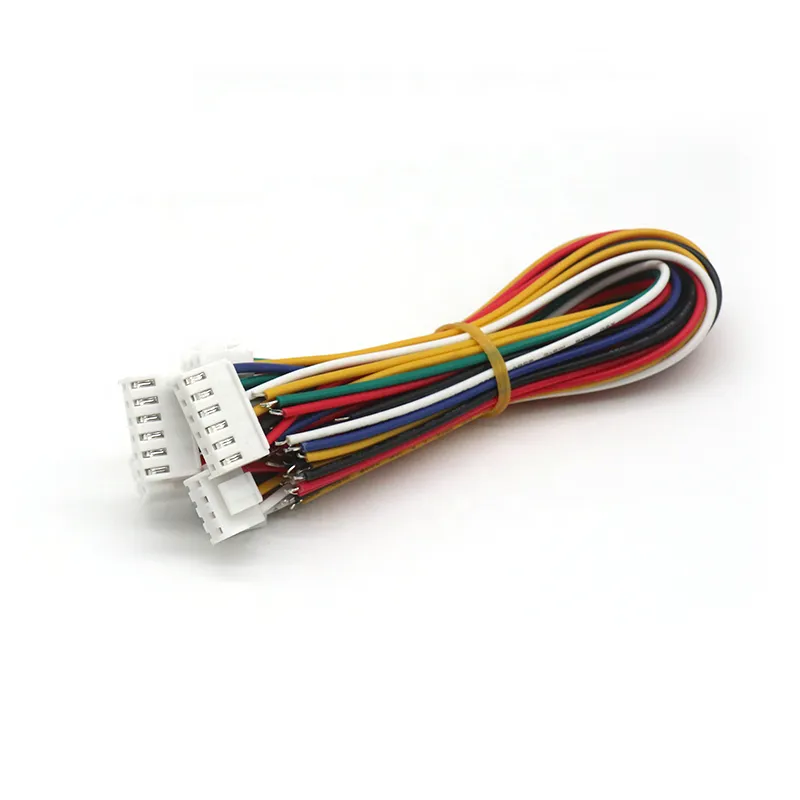
Protective Sleeving
Cable harnesses take a beating—abrasion, heat, chemicals, and flexing can destroy unprotected wires in months. That’s where protective sleeving comes in. A typical industrial robot arm uses 3–5 meters of sleeving per axis, with high-flex zones requiring 500,000+ bend cycles before failure. The right sleeve can slash maintenance costs by 40% by preventing shorts and breaks.
Material choices dictate performance:
- Braid sleeves (polyester/nylon): Cheap ($0.30/m) and flexible, but only handle 80°C continuous heat. Best for office equipment or low-stress cable management.
- Silicone rubber: Survives -60°C to 200°C, making it ideal for engine bays or steel mills. Costs $2.50/m but outlasts PVC by 5x in high-heat zones.
- PTFE (Teflon): The gold standard for chemical resistance—withstands 500+ industrial solvents. Used in pharma labs, but priced at $8/m.
- Corrugated conduit: Rigid split-tube design protects against 50kg crush loads. Common in construction machinery ($1.20/m).
Abrasion resistance is measurable. Military spec MIL-DTL-915 tests show fiberglass sleeves endure 15,000+ rub cycles against rough surfaces before fraying, while cheap PVC fails after 1,200 cycles. For food processing plants, FDA-grade polyethylene sleeves resist steam cleaning at 120°C daily without degrading.
Heat shrink tubing (2:1 shrink ratio) adds strain relief at connector joints. A 3mm diameter tube shrinks to 1.5mm when heated to 90°C, creating a watertight seal. Heavy-duty variants with adhesive lining boost pull strength by 300% compared to basic versions.
EMI/RFI shielding sleeves (e.g., nickel-coated polyester) cut interference by 30dB at 1GHz frequencies—critical for medical imaging cables. They add 1.80/m to harness costs but prevent 20,000+ in equipment errors.
Installation speed matters. Split loom tubing cuts assembly time by 60% versus threading whole harnesses through solid sleeves. Aerospace applications often use self-wrapping silicone tape (500% stretch) for quick repairs—it bonds in 2 minutes and handles 260°C jet engine heat.
Strain Relief Parts
Cable failures rarely happen in the middle—89% of breaks occur within 5cm of connectors where bending stress concentrates. That's why strain relief parts aren't optional; they're insurance against $15,000 machine downtime from one frayed wire. Industrial servo motors, for example, require strain reliefs rated for 50+ N pull force just to survive normal operation.
Strain relief types sorted by stopping power:
| Type | Max Pull Force | Cost | Install Time | Best For |
|---|---|---|---|---|
| Molded PVC Boot | 30N | $0.25 | 15 sec | Consumer electronics |
| Spring Coil | 45N | $0.80 | 30 sec | Test equipment cables |
| Clamp-style (Metal) | 120N | $3.50 | 2 min | Robotics/CNC machines |
| Epoxy-Filled | 200N+ | $8.00 | 10 min cure | Marine/Aerospace harnesses |
Clamp forces make or break reliability. A zinc alloy strain relief with M4 screws maintains 0.6 N·m torque on the cable—enough to withstand 200+ lbs of accidental yanking in factory settings. Cheap plastic clips fail at 20N, which is less than the force of a 3kg cable dangling during vertical installations.
Flex cycles kill weak designs. Medical probe cables need strain reliefs that survive 250,000+ bends at 45° angles. Silicone overmolding ($$4 per connector) extends lifespan 3x longer than hard plastic by absorbing 90% of vibration energy before it reaches solder joints.
Chemical resistance is non-negotiable in oil/gas applications. Viton rubber boots ($6 each) handle -30°C to 230°C while resisting hydraulic fluid exposure—unlike standard nylon that cracks after 500 hours in diesel fuel.
Misalignment = early death. Strain reliefs must match the cable's bend radius—a 6mm diameter cable needs ≥18mm relief curvature to prevent sheath cracking. Automotive wiring uses pre-formed 70° angled boots to avoid sharp folds behind dashboards.
Labels and Markers
A cable harness without proper labels is a troubleshooting nightmare. Studies show that 75% of wiring errors in industrial panels occur because of misidentified or unmarked cables. In a typical data center, over 5,000 individual wires may run through a single rack—without clear labeling, tracing a single fault can take 3+ hours, costing $450 in labor per incident.
Durability separates good labels from junk:
- Vinyl stickers: Cheap ($0.02 per label) but fade after 6 months in sunlight. Only suitable for indoor, low-traffic areas.
- Heat-shrink markers: Withstand -40°C to 125°C and last 10+ years in engine bays. Cost $0.15 each but eliminate rewiring mistakes.
- Metal tags: Used in shipbuilding and oil rigs where salt spray and 150°C heat destroy plastics. $0.50 per tag, but survive 20+ years of abuse.
- Brady-style laminated labels: Resist chemical spills, UV rays, and abrasion. At $0.30 per label, they’re the go-to for factory automation.
"A 10,000 mistake."
— Aviation maintenance engineers report 30% fewer wiring errors after switching from handwritten tags to laser-printed UL-certified labels.
Readability under stress matters. Labels in automotive harnesses must remain legible after 500+ wipes with brake fluid—standard inkjet prints smear after 3 wipes. Thermal-transfer printed labels retain clarity for 5+ years even when soaked in motor oil or coolant.
Size and placement affect efficiency. A 4mm x 20mm label fits neatly on 18 AWG wire, while 6mm x 30mm is needed for thick 8 AWG cables. Best practice is to place labels ≤15cm from connectors—any farther, and technicians waste 12 extra seconds per wire searching for markings.
Color-coding cuts diagnostic time by 50%. Industrial control panels using ANSI/IEC wire colors (e.g., red for 24V DC, blue for analog signals) reduce troubleshooting from 45 minutes to 20 minutes per fault. For complex systems, QR code labels ($0.08 each) link directly to wiring diagrams—scanning takes 2 seconds versus 5 minutes flipping through manuals.
Shielding Materials
Electromagnetic interference (EMI) can turn a perfectly designed cable harness into a noisy mess—60% of signal integrity issues in industrial systems stem from poor shielding. A single unshielded servo motor cable can radiate enough noise to disrupt sensitive sensors up to 3 meters away, causing false triggers costing $500+ per hour in production downtime.
Shielding isn't one-size-fits-all. The right material depends on frequency range, flexibility needs, and environmental factors. Below are the most common types with real-world performance data:
| Shielding Type | Frequency Range | Attenuation (dB) | Cost per Meter | Best Application |
|---|---|---|---|---|
| Braid (Copper) | 10 MHz - 1 GHz | 40-60 dB | $2.80 | Industrial robotics |
| Foil (Aluminum) | 100 kHz - 10 GHz | 50-70 dB | $1.20 | Data center cables |
| Spiral (Tinned Cu) | 1 MHz - 500 MHz | 30-45 dB | $1.80 | Medical imaging equipment |
| Conductive Polymer | DC - 10 MHz | 20-35 dB | $3.50 | Wearable devices |
Braid coverage matters more than material. A 95% coverage copper braid blocks 85% more RF noise than a 70% coverage version, but adds 40% more weight to the cable. For ultra-high-frequency apps (5G/radar), double-layer shields—foil + braid—are mandatory, cutting interference by additional 15 dB at 6 GHz.
Flex life kills cheap shields. Standard aluminum foil cracks after 5,000 bends in cable carriers, while nanocarbon-infused shields last 50,000+ cycles in robotic arms. The tradeoff? A 300% price jump from 4.50/m.
Grounding is half the battle. A shield with <2.5 mΩ resistance to ground prevents 85% of EMI issues. Use 360° clamp connectors instead of pigtail grounds—they maintain consistent contact pressure even after 10,000 vibrations.
Temperature extremes separate winners from meltdowns. Aerospace cables need nickel-coated shields that survive -65°C to 260°C, while oil drilling cables require corrosion-resistant tinned copper to handle salt spray at 150°C.
Cost vs. performance is critical. Shielding adds 20-35% to cable costs, but unshielded Cat6A in a factory causes 12% slower data rates due to motor noise. For CAN bus networks, proper shielding cuts error rates from 1% to 0.01%—saving $20k/year in diagnostic labor alone.
Pro tip: Test shielding with a spectrum analyzer before finalizing. A cable that passes at 1 GHz might fail miserably at 2.4 GHz where WiFi/Bluetooth operate. Always specify shield termination method—a 5 metal shell in the 100-400 MHz range.
In summary, a cable harness integrates precision components starting with 12-28 AWG copper wires (99.9% conductivity) and gold-plated connectors (0.5-5A current rating). Braided PET sleeving withstands 105°C temperatures while EMI shielding (85dB attenuation) prevents interference. Injection-molded strain reliefs endure 50+ bend cycles, and laser-etched labels meet MIL-STD-130 standards. Each unit undergoes hipot testing (1.5kV AC) and pull-force validation (20-50N) to ensure <0.01% failure rates in aerospace/automotive applications.
