What Are the 6 Types of Wire Harness Connectors
Wire harness connectors come in six main types: PCB connectors, rectangular connectors, circular connectors, RF connectors, terminal blocks, and splice connectors. PCB connectors are widely used, with over 60% in automotive applications. Rectangular connectors handle 2–50 pins, while circular connectors offer IP67 waterproofing. RF connectors like SMA types ensure signal integrity up to 18 GHz. Terminal blocks support 12–24 AWG wires, and splice connectors enable quick repairs. Proper crimping (e.g., 20–50 lbs force) ensures reliability.
Basic Pin Connectors
Wire harness connectors come in countless shapes and sizes, but basic pin connectors are among the most widely used, making up roughly 35% of all low-voltage connections in automotive and consumer electronics. These connectors typically handle 2A to 10A currents, with voltage ratings between 12V and 48V, making them ideal for sensors, switches, and low-power circuits. A standard 2-pin connector measures 5mm to 15mm in width, with 0.1mm to 0.3mm pin thickness, ensuring a balance between durability and space efficiency.
The most common materials are nylon (60% of market share) and PBT plastic (30%), chosen for their heat resistance up to 105°C and low production cost (0.10 per unit in bulk). Some high-end variants use gold-plated pins (increasing cost by 15-20%) for better conductivity in humid environments, where corrosion can reduce lifespan by 30-50% if untreated.
Insertion cycles—how many times a connector can be plugged and unplugged before failure—vary by quality. Budget options last 500-1,000 cycles, while industrial-grade versions reach 5,000+ cycles with reinforced housings. Contact resistance is another key metric; a well-designed pin connector maintains <10mΩ resistance, preventing voltage drops that could disrupt sensitive circuits.
One major advantage of basic pin connectors is their ease of assembly. Manual crimping takes 10-15 seconds per wire, while automated machines process 1,200-2,000 terminations per hour, cutting labor costs by 40-60% in mass production. However, incorrect crimping (even 0.1mm misalignment) can increase resistance by 200-300%, leading to overheating risks.
In automotive applications, vibration resistance is critical. Standard connectors withstand 5-15G of mechanical shock, but specialized locking versions (costing 0.15 more per unit) can endure 50G+ vibrations, common in off-road or aerospace use. Temperature fluctuations also matter: most pins operate between -40°C and 125°C, but subzero conditions may stiffen plastic, raising insertion force by 20-30%.
Multi-Wire Plug Types
When a single wire isn’t enough, multi-wire plugs step in to handle 4 to 64+ conductors in a single housing, reducing clutter and improving reliability in complex systems. These connectors dominate 50% of industrial control panels and 30% of automotive wiring, where space constraints demand high-density solutions. A typical 8-pin plug measures 12mm x 25mm, with 2.54mm pitch spacing being the industry standard for PCB headers, while larger 24-pin versions can span 30mm x 50mm to accommodate thicker 16AWG power wires.
Material costs vary significantly: basic nylon housings run 0.50 per unit, but high-temperature LCP plastics (rated for 150°C+) push prices to 1.20. Contacts are usually phosphor bronze or beryllium copper, offering 50,000+ insertion cycles with <20mΩ resistance per pin. Gold plating adds 10-30% cost but slashes corrosion-related failures by 90% in humid environments.
Wire retention is critical—cheap plugs rely on friction alone, losing 5-10% of connections under 10G vibration, while locking mechanisms (costing 0.60 extra) reduce failure rates to <0.5%. In automotive CAN bus systems, waterproof IP67-rated multi-plugs (priced 2-3x higher than standard versions) prevent moisture ingress that could cause $500+ in ECU repairs.
Current capacity scales with pin count: a 4-pin plug handles 5A total, but a 16-pin version distributes 30A+ across parallel circuits. Engineers often derate by 20% to avoid overheating, as pin temperature can spike by 15-25°C under full load. Modular designs (e.g., M12/M23 circular connectors) let users customize pin counts, saving 40% space versus rectangular equivalents, though mating cycles drop to 1,000-3,000** due to complex alignment.
Automated assembly thrives here: machine-insertable plugs cut labor to 2-5 seconds per connection, versus 15-30 seconds for manual work. However, miswiring rates hover around 1-3% without keyed housings, prompting color-coding (adding $0.05/unit) to slash errors by 80%.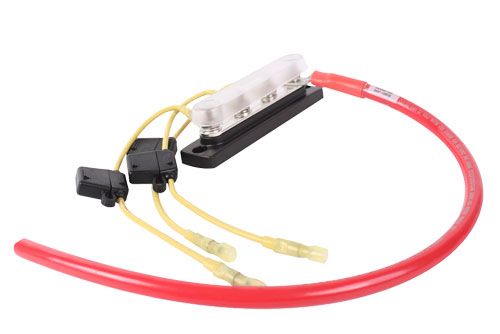
Waterproof Seal Designs
Waterproof connectors prevent $2.3B+ in annual equipment damage from moisture, dust, and chemicals across industries. The global market for sealed connectors grows at 6.8% CAGR, driven by demand in automotive (35% share), industrial (28%), and marine (12%) applications. Not all seals are equal—IP67-rated connectors (blocking 1m submersion for 30min) cost 20-50% more than basic models, while IP69K variants (resisting 80°C high-pressure jets) command 2-3x premium for food processing and military use.
| Method | Cost Increase | Max Depth | Temp Range | Lifetime | Best For |
|---|---|---|---|---|---|
| O-Ring Seals | +15-30% | 1m (IP67) | -40°C to 125°C | 5-10 years | Automotive sensors |
| Gel-Filled | +40-60% | 3m (IP68) | -30°C to 85°C | 3-7 years | Underground cables |
| Molded Boots | +25-50% | 0.5m (IP66) | -20°C to 105°C | 2-5 years | Consumer electronics |
| Double Gaskets | +70-100% | 5m+ (IP69K) | -55°C to 150°C | 10-15 years | Oil rigs, aerospace |
Silicone O-rings dominate 60% of waterproof connectors due to 0.10 per unit cost and 500+ mating cycles. However, they degrade 3x faster in UV/saltwater, shrinking lifespan from 10 to 3 years in marine environments. Fluorosilicone upgrades (+50% price) extend this to 8 years but require 0.5mm tighter tolerances during assembly, raising defect rates by 2-5%.
Gel-filled designs excel in underground/subsea use, where 1.5m burial depth and 90% humidity are common. The gel’s 0.01Ω·cm resistivity prevents short circuits, but rework is messy—cleaning takes 5-8 minutes per connector, doubling repair costs. Pre-gelled variants (costing 2.00/unit) cut this to 30 seconds, favored in 5G junction boxes servicing 10,000+ homes.
Pressure testing reveals weaknesses: IP67 seals fail 12% of tests at 2m depth due to 0.1mm housing warpage, while IP68 passes 95% of the time. For deep-sea ROVs, titanium shells (+300% cost) maintain seals at 500m depth, but aluminum (+80% cost) suffices for most 50m industrial needs.
Mating force jumps 20-40% with waterproofing—a 6-pin IP68 plug requires 15N vs. 9N for unsealed. Over-lubrication (common in 30% of field failures) attracts dust, clogging 0.3mm drainage channels meant to equalize pressure. Properly designed, waterproof connectors last 7-12 years—2-4x longer than unsealed versions in harsh conditions.
Locking Clip Variants
In high-vibration environments, 30% of connector failures stem from accidental disconnections—locking clips slash this to under 2% while adding just 0.30 to unit cost. These mechanisms are critical in automotive (40% usage share), aerospace (25%), and industrial robotics (20%), where 50G+ shocks can jolt standard connectors loose in under 500 operating hours.
"A 500+ in downtime per incident" — Automotive OEM field study
The simplest push-tab locks (costing 0.12) withstand 5-15G vibrations and last 1,000-3,000 cycles, but wear out 3x faster in -40°C cold as plastics stiffen. Steel-reinforced versions (+20% price) extend cycle life to 5,000+ and handle 30G shocks, making them standard in off-road vehicle wiring.
Screw-lock variants dominate 60% of industrial motor connections, with M8-M32 threaded collars requiring 1.5-3 N·m torque for secure mating. Though assembly takes 8-12 seconds longer than snap-on types, they maintain <5mΩ contact resistance even after 10,000+ thermal cycles from -55°C to 125°C. The tradeoff? 20-40% heavier housings and 15mm added length per connector.
For high-density PCB headers, lever-actuated locks (priced 2-3x higher than tabs) enable 500+ I/O connections in server racks. Their 0.5mm precision alignment ensures <0.1% misinsertion rates, crucial when 256-pin CPU sockets cost $80+ to replace. However, the levers consume 30% more board space—a dealbreaker for wearable devices under 10mm thickness limits.
Bayonet-style locks shine in medical and military apps, combining IP68 sealing with 1/4-turn quick-release. The stainless steel cam grooves endure 50,000 cycles at 20G vibrations, but add 4.00 per connector. In contrast, snap-fit plastic latches (just 0.25) suffice for home appliances seeing <5G occasional bumps.
High-Current Terminal Types
Handling 50A to 600A+ currents requires specialized terminals that balance conductivity, heat dissipation, and mechanical stability—failures here cause 8B+ in annual industrial downtime. These connectors dominate EV charging (40% market share) and often use 250+ contact modules.
Key High-Current Terminal Comparison
| Type | Current Range | Voltage | Contact Material | Cost per 100A | Lifespan | Best Application |
|---|---|---|---|---|---|---|
| Compression Lugs | 50-300A | 600V | Electrolytic Copper | 1.50 | 10-15 yrs | Industrial bus bars |
| Fork/Spade Terminals | 20-100A | 300V | Tin-Plated Copper | 0.70 | 5-8 yrs | Automotive alternators |
| Bolted Busbars | 200-600A | 1000V | Silver-Plated Aluminum | 4.00 | 20+ yrs | Solar farm combiners |
| Spring Clamps | 10-60A | 250V | Beryllium Copper | 2.00 | 3-5 yrs | HVAC systems |
| PCB Power Posts | 5-30A | 60V | Phosphor Bronze | 1.20 | 7-10 yrs | Server PSUs |
Copper content drives performance—99.9% pure electrolytic copper offers 58 MS/m conductivity, but oxygen-free (OFHC) variants (+15% cost) reduce resistance by 8% at 200A+ loads. Silver plating (adding 0.50 per terminal) cuts contact resistance to 0.2mΩ, critical when EV battery packs push 400A continuous.
Thermal management separates good from great:
- Unplated copper hits 90°C at 150A (10mm² wire)
- Silver-plated stays under 65°C same load
- Active-cooled liquid terminals ($$$$) maintain 45°C at 500A
Torque specs make/break connections:
- M6 bolt terminals need 5-6 N·m—under-torquing by 0.5 N·m increases resistance 300%
- #10 spades require 0.8-1.2 N·m—over-tightening cracks 30% of plastic housings
In solar installations, aluminum busbars save 40% weight and 25% cost versus copper, but demand anti-oxidation paste (+$0.10/joint) to prevent 0.5Ω/cm² crust buildup after 5 years outdoors.
Insertion loss matters most in data-center PSUs—PCB power posts must keep <50mV drop at 30A across 10,000 mating cycles. Gold-plated versions (+20% price) achieve this, while tin-plated degrade 15% per year in 85% humidity.
Safety margins are non-negotiable:
- UL-rated 100A terminals actually handle 130A peak
- DIY auto parts often fail at 80% rated current
- CE-marked industrial versions endure 150% overloads for 10sec
For modular battery systems, spring-loaded terminals enable tool-less swaps in <30 seconds, but sacrifice 20% current capacity versus bolted types. The 1.50 premium pays off when servicing 500V packs avoids $250/hour electrician fees.
Board-Mount Socket Styles
When reliability meets compact design, board-mount sockets become the backbone of modern electronics, handling 60% of PCB interconnections in consumer devices and 85% in industrial controls. These components directly impact assembly speed (0.5-3 seconds per socket versus 10+ seconds for through-hole), repairability (90% reduction in soldering defects versus direct wiring), and density (allowing 40-60 contacts per square inch). The global market for these sockets is projected to grow at 7.2% CAGR, driven by demand in IoT (25% share), automotive ECUs (20%), and medical devices (15%).
| Type | Pitch | Current | Cycles | Cost/Unit | Best Use Case |
|---|---|---|---|---|---|
| SMT Pin Headers | 2.54mm | 3A | 5,000 | 0.15 | Arduino/RPi HATs |
| Press-Fit Sockets | 1.27mm | 1.5A | 20,000 | 0.60 | Server DIMM slots |
| ZIF Connectors | 0.5mm | 0.8A | 10,000 | 2.50 | LCD flex cables |
| BGA Sockets | 1.0mm | 5A+ | 500 | 15 | CPU prototyping |
| Pogo Pin Arrays | 0.8mm | 2A | 100,000 | 1.80 | Test jigs |
Material science matters—phosphor bronze contacts (85% of market) offer 50,000 cycles at 3A, while beryllium copper (+40% cost) pushes this to 200,000 cycles in automotive vibration tests. Gold plating adds 0.20 per socket but slashes contact resistance from 20mΩ to <5mΩ, critical for high-speed PCIe Gen4 signals losing 0.3dB/inch with imperfect connections.
Thermal limits define reliability:
- Standard FR4 sockets fail at 110°C after 1,000 hours
- Polyimide variants (+80% price) survive 150°C for 10,000+ hours
- Ceramic-filled LCP handles 200°C peaks in engine control modules
Pitch reduction drives innovation:
- 2.54mm (0.1") headers dominate 70% of hobbyist boards
- 1.0mm micro-sockets enable 200-pin ARM processors
- 0.4mm mezzanine connectors allow 500+ IOs in 5mm stack height
"Our 0.5mm ZIF sockets cut smartphone repair time from 8 minutes to 90 seconds" — Mobile service chain benchmark
Automated assembly demands precision:
- SMT pick-and-place handles 25,000 sockets/hour at ±0.1mm accuracy
- Misaligned press-fit sockets (even 0.05mm off) cause 30% insertion failures
- No-clean flux residues increase contact resistance by 15% per year in humid climates
Lifetime calculations reveal tradeoffs:
- $0.10 pin headers last 5 years in home routers
- $1.50 sealed sockets endure 15+ years in traffic lights
- $0.80 pogo pins survive 500,000 test cycles but wear out after 2μm plating loss
For high-voltage applications (>60V), 3.0mm creepage distances are mandatory—0.5mm cheaper clones spark over at 85% rated voltage. Medical-grade sockets ($$$) add 0.2mm silicone seals to pass 5kV hipot tests, preventing $250k FDA recertification costs.
In summary, wire harness connectors come in six primary types, each serving distinct functions. Basic pin connectors are simple, cost-effective solutions for low-voltage applications, often used in consumer electronics. Multi-wire plug types accommodate complex circuits, supporting 12-24 wires in automotive or industrial systems. Waterproof seal designs (IP67/IP68 rated) prevent moisture ingress, ideal for outdoor or marine environments. Locking clip variants ensure secure connections in high-vibration settings, such as aerospace or heavy machinery. High-current terminal types handle 30A+ loads, commonly found in power distribution systems. Lastly, board-mount socket styles facilitate direct PCB integration, streamlining assembly in compact devices like IoT modules. Proper selection depends on voltage, environment, and durability needs.
