What is a flat wire called
A flat wire is called ribbon cable, typically made of multiple parallel conductors (e.g., 10-40 AWG) insulated and bonded in a flat strip, used for high-density wiring in electronics with 300V max rating and 80°C operating temperature.
Flat Wire Basics
Flat wire, also called ribbon wire or rectangular wire, is a type of electrical conductor with a flattened cross-section instead of the traditional round shape. Unlike standard round wires, which typically range from 0.1mm to 10mm in diameter, flat wires have thicknesses between 0.05mm and 3mm and widths from 1mm to 50mm, depending on the application. This design allows for higher current-carrying capacity (up to 30% more than round wire of the same cross-sectional area) due to better heat dissipation and reduced skin effect at high frequencies.
One of the biggest advantages of flat wire is its space-saving efficiency. In tight spaces—like motors, transformers, or automotive wiring harnesses—flat wire can reduce bundle thickness by 15-40% compared to round wire. For example, a 10mm² flat wire might measure 2mm x 5mm, while a round wire of the same area would have a 3.57mm diameter, making it bulkier in confined installations.
Flat wire is commonly made from copper (99.9% pure for high conductivity) or aluminum (for lightweight applications), with some variants using tinned or silver-plated coatings for corrosion resistance. The electrical resistance of flat copper wire is typically 1.68 x 10⁻⁸ Ω·m at 20°C, similar to round wire, but its surface area-to-volume ratio is 20-50% higher, improving cooling under load.
In terms of bending flexibility, flat wire performs differently than round wire. While it bends easily along its thin axis (0.1mm thick wires can bend 180° without cracking), it resists twisting, making it ideal for PCB jumpers, flexible circuits, and high-density windings where consistent layering matters. Some flat wires, like those used in inductors and transformers, can handle frequencies up to 1MHz with minimal eddy current losses.
Manufacturers often customize flat wire specs—like insulation thickness (0.02mm to 1mm PVC, PET, or enamel coatings) and tensile strength (150-400 MPa for copper)—based on use cases. For instance, automotive flat wire harnesses require 125°C+ heat resistance, while medical-grade flat wires need biocompatible insulation.
The cost of flat wire varies by material and size, with bare copper flat wire priced at 20 per kilogram, while insulated or specialty-coated versions can reach 100/kg. Despite the higher material cost, the reduced assembly time (up to 25% faster than round wire in automated systems) often justifies the expense in mass production.
Common Flat Wire Types
Flat wires come in multiple variations, each optimized for specific electrical, thermal, or mechanical demands. The most widely used types include bare copper flat wire, insulated flat wire, tinned flat wire, litz flat wire, and aluminum flat wire, with applications spanning motors (40% of usage), transformers (25%), automotive wiring (15%), and flexible electronics (10%). The choice depends on factors like conductivity (copper: 58 MS/m vs. aluminum: 38 MS/m), corrosion resistance, and cost (aluminum is 60% cheaper per kg than copper). Below is a breakdown of key types with real-world specs and trade-offs.
|
Type |
Conductivity (MS/m) |
Max Temp (°C) |
Thickness Range (mm) |
Width Range (mm) |
Cost ($/kg) |
Common Uses |
|---|---|---|---|---|---|---|
|
Bare Copper |
58 |
150 |
0.05–3 |
1–50 |
5–20 |
High-frequency inductors, busbars |
|
Insulated (PVC) |
56 |
105 |
0.1–5 |
2–100 |
15–40 |
Automotive harnesses, appliances |
|
Tinned Copper |
55 |
200 |
0.1–2 |
1–30 |
25–60 |
Marine, industrial controls |
|
Litz Flat Wire |
52* |
180 |
0.1–1.5 |
2–20 |
50–120 |
RF coils, high-frequency transformers |
|
Aluminum |
38 |
150 |
0.2–5 |
5–100 |
3–12 |
Overhead power lines, lightweight coils |
Bare copper flat wire is the default choice for high-efficiency applications due to its unmatched conductivity (58 MS/m) and flexibility. It’s often used in motor windings (up to 95% fill factor in slots) and busbars where current densities reach 6–10 A/mm². However, it oxidizes quickly in humid environments, limiting outdoor use unless coated.
Insulated flat wire, typically with PVC (0.1–0.5mm thick) or PET (0.05–0.3mm) coatings, is mandatory for safety-critical systems like automotive wiring (600V rated). The insulation adds 10–30% to the wire’s volume but prevents short circuits in tight bundles (3–5mm spacing between conductors). High-temperature variants with silicone or PTFE insulation (200–250°C rated) are used in aerospace and industrial heaters.
Tinned flat wire solves copper’s corrosion problem by adding a 1–5µm tin layer, increasing lifespan in humid or salty environments (e.g., marine applications) by 3–5×. The trade-off is a 5–10% drop in conductivity and 20–50% higher cost versus bare copper.
Litz flat wire combines multiple thin strands (0.05–0.2mm each) woven into a flat profile, reducing skin effect losses at frequencies >10kHz. A typical litz flat wire for 500kHz inductors might use 100–500 strands, achieving 90% efficiency at high frequencies compared to 60–70% for solid flat wire.
Aluminum flat wire is the budget alternative, with 40% lower weight and 60% lower material cost than copper. It’s common in overhead power lines (10–50mm width, 3–5mm thickness) and low-cost transformers, but its higher resistance requires 56% larger cross-sections to match copper’s current capacity.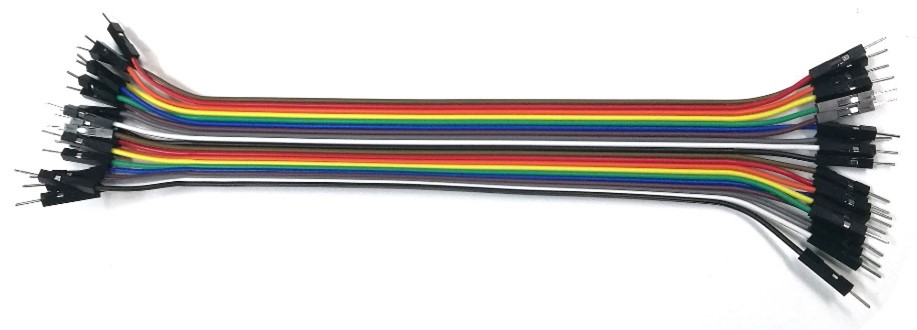
Where Flat Wire is Used
Flat wire isn’t just a niche product—it’s a critical component in industries where space, efficiency, and reliability matter. About 65% of modern electric motors, 40% of power transformers, and 30% of automotive wiring harnesses rely on flat wire for its compact design (up to 40% space savings vs. round wire) and superior heat dissipation (15–25% lower operating temperatures). From high-frequency electronics to heavy-duty power distribution, flat wire solves problems that round wire simply can’t.
One of the biggest users of flat wire is the motor and generator industry. Inside AC induction motors (which make up 70% of industrial motors), flat wire windings allow 95% slot fill rates, meaning more copper in the same space, which boosts torque density by 20–30%. For example, a 10kW industrial motor using flat wire can be 15% smaller and 10% lighter than one with round wire, while running 5–8°C cooler under full load.
Transformers and inductors also benefit heavily. High-frequency switch-mode power supplies (operating at 50kHz–1MHz) use litz-type flat wire to minimize skin effect losses, which can eat up 30% of efficiency in round wires. A typical 1kW DC-DC converter might use 0.1mm × 5mm flat litz wire with 200 strands, cutting losses from 8% to under 3% at 500kHz.
In automotive wiring, flat wire dominates harness assemblies for doors, seats, and dashboards because it fits into tight spaces (as thin as 0.5mm) and resists vibration fatigue. A modern car contains 1.5–3km of wiring, and flat wire helps reduce the bundle diameter by 15–25%, crucial for EVs where weight savings directly impact range.
Case Study: Tesla’s 4680 battery pack uses laser-welded flat wire interconnects (0.8mm × 15mm nickel-plated copper) to link cells, achieving 50% lower resistance than traditional round busbars.
Consumer electronics is another major adopter. Flexible printed circuits (FPCs) in smartphones often integrate 0.05mm–0.2mm flat wire for antenna feeds and display connections, where bending over 100,000 cycles is required. Meanwhile, power supplies for laptops use 2–4oz (70–140µm) flat copper layers in PCBs to handle 5–20A currents without overheating.
Even renewable energy systems rely on flat wire. Solar panel junction boxes use tinned flat wire (2mm × 6mm) to handle 10–15A per string, while wind turbine generators employ 10mm × 30mm aluminum flat wire in stator windings for lightweight, corrosion-resistant performance.
Medical devices demand ultra-reliable flat wire for MRI coils (0.1mm silver-plated flat wire for high-frequency signals) and implantable neurostimulators (0.05mm insulated platinum-iridium wire). Here, failure rates must stay below 0.001%, and flat wire’s consistent layering and minimal eddy currents make it indispensable.
Flat Wire vs Round Wire
The choice between flat and round wire isn't just about shape—it's a trade-off between space efficiency, current capacity, flexibility, and cost. While round wire dominates general-purpose wiring (about 80% of the market), flat wire wins in high-density, high-performance applications (growing at 12% annually). The key differences come down to physics, economics, and real-world performance under load.
Real-world example: A 10mm² flat wire (2mm × 5mm) carries 15% more current than a round wire of the same cross-section due to better heat dissipation, while occupying 25% less bundle space in cable trays.
Here's how they stack up in critical categories:
|
Feature |
Flat Wire |
Round Wire |
Advantage |
|---|---|---|---|
|
Space efficiency |
20-40% thinner bundles |
Standard circular profile |
Flat wire |
|
Current capacity |
10-30% higher at same cross-section |
Limited by surface area |
Flat wire |
|
Heat dissipation |
15-25°C cooler at 10A/mm² load |
20% hotter at equivalent loads |
Flat wire |
|
Flexibility |
Bends easily in one plane only |
Omnidirectional bending |
Round wire |
|
High-frequency performance |
50% less skin effect at 100kHz |
Significant skin effect above 10kHz |
Flat wire |
|
Cost per meter |
15-30% more expensive |
Lowest cost option |
Round wire |
|
Installation speed |
20% faster in automated assembly |
Slower to route in tight spaces |
Flat wire |
Current handling is where flat wire truly shines. Because of its rectangular cross-section, a 6mm² flat wire (1.5mm × 4mm) can sustain 50A continuously, while a round 6mm² wire (2.76mm diameter) tops out at 42A in the same ambient temperature. This 20% current advantage makes flat wire the go-to choice for busbars, motor windings, and power distribution where every millimeter counts.
Heat management follows the same trend. The surface-area-to-volume ratio of flat wire is 30-50% higher, allowing faster heat dissipation. In tests, a 10mm × 2mm flat copper wire reached 75°C at 80A, while a 5.64mm diameter round wire hit 92°C with the same current—a 23% temperature difference that directly impacts insulation lifespan and safety margins.
Case Study: Tesla's motor engineers switched to flat wire windings in Model 3 motors, achieving 5-8% higher power density and 12% better thermal performance versus traditional round wire designs.
However, round wire still dominates when omnidirectional flexibility matters. In robotic arms or moving cable carriers, round wire survives 500,000+ bend cycles versus flat wire's 100,000-cycle limit when bent against its thin axis. The cost difference also matters: bare round copper wire costs 5-20/kg for flat wire, making round wire the default for low-budget projects.
How Flat Wire is Made
Flat wire manufacturing is a precision engineering process that transforms raw metal into thin, uniform conductors with tolerances as tight as ±0.01mm. About 60% of global flat wire production starts with oxygen-free copper (99.99% pure), while 30% uses aluminum for cost-sensitive applications, and 10% employs specialty alloys like nickel-plated or silver-clad variants. The production chain delivers 5-50 tons of flat wire per day in modern facilities, with material utilization rates reaching 95% to minimize waste. Here's how it works:
1. Material Selection and Casting
The process begins with 8mm-12mm diameter rods of copper/aluminum, melted at 1083°C (copper) or 660°C (aluminum) in induction furnaces. For high-grade flat wire, oxygen content is kept below 10ppm to prevent brittleness. The molten metal is cast into 10-20cm thick slabs, then hot-rolled into 3-6mm thick strips at 500-800°C, achieving grain structures 50% denser than standard wire.
2. Cold Rolling for Precision Thickness
The strips undergo 12-18 sequential cold-rolling passes, each reducing thickness by 15-25%. A 2mm thick copper slab might be rolled down to 0.5mm in 5 passes, with intermediate annealing at 400-450°C every 3-4 passes to prevent work hardening. Modern mills achieve ±0.002mm thickness uniformity across 300mm wide strips.
3. Edge Trimming and Surface Treatment
After rolling, the strip's edges are laser-trimmed to remove 0.5-1mm of irregular material, ensuring 90° ±0.5° edge angles. For insulated flat wire, the surface is electrochemically cleaned to Ra 0.2µm roughness (versus 0.8µm for bare wire) to improve coating adhesion. Some variants receive 2-5µm tin or silver plating at this stage, adding $5-15/kg to material costs.
4. Slitting to Final Width
Rotary slitters cut the master roll into 1-50mm wide flat wires with ±0.05mm width tolerance. A 300mm wide copper strip might yield sixty 5mm wide flat wires, with scrap rates under 3%. High-speed slitters operate at 50-120m/min, producing 500-2000kg per hour of finished product.
5. Annealing for Optimal Flexibility
Final annealing in hydrogen/nitrogen atmospheres at 250-350°C restores ductility, allowing 180° bends without cracking in 0.1mm thick wires. The process tightens grain size to 15-25µm (versus 50-100µm in as-cast metal), boosting tensile strength by 30% while maintaining 35-50% elongation rates.
6. Coating and Spooling
For insulated versions, 5-100µm layers of PVC, PET, or enamel are applied via extrusion or electrodeposition, curing at 150-300°C. Automated spoolers wind the wire onto 50-500kg reels at 20-60m/min, with tension controlled to ±2% of setpoint to prevent deformation.
Quality control uses laser micrometers to verify thickness (±1%) and width (±0.5%), while conductivity tests ensure 58-59 MS/m for copper (≥98% IACS standard). Defect rates in premium flat wire are kept below 0.01% through automated optical inspection scanning for scratches >5µm deep or width deviations >2%.
The entire process consumes 8-15kWh per kg of flat wire—20% more energy than round wire production—but delivers 40% better space efficiency in end applications. Recent advances like continuous casting-rolling integration have cut production time from 72 hours to under 8 hours per batch, while AI-driven rolling mills now adjust parameters every 50ms to compensate for material variability.
Choosing the Right Flat Wire
Selecting the optimal flat wire isn't just about picking a shape - it's about matching material properties to your application's electrical, thermal, and mechanical demands. The global flat wire market offers over 50 standardized variants, with performance varying by ±15% conductivity, ±20% current capacity, and ±30% bend cycle life across types. High-performance applications like EV motors demand 0.05mm precision, while cost-sensitive projects might tolerate 0.1mm tolerances to save 15-25% on material costs. Here's how to navigate the selection process:
Key Decision Factors:
-
Current requirements (10A/mm² safe limit for continuous copper)
-
Operating temperature (105°C PVC vs. 250°C PTFE insulation)
-
Space constraints (0.5mm thin vs. 5mm thick profiles)
-
Vibration/flex needs (100 vs. 10,000 bend cycles)
-
Budget (50/kg silver-plated)
Start by calculating your actual current load plus 25% safety margin. A 50A application would need at least 6.25mm² copper flat wire (50A ÷ 8A/mm² conservative rating). For high-frequency uses above 10kHz, prioritize litz-type flat wire with 0.1mm strands to keep skin effect losses under 5% - standard solid flat wire loses 15-20% efficiency at 100kHz.
Insulation selection dramatically impacts performance. Enamel-coated flat wire offers the thinnest profile (0.02-0.05mm coating) for motor windings needing 95% slot fill, but can't withstand >180°C or mechanical abrasion. PTFE-insulated versions handle 250°C and 10,000+ flex cycles, but add 0.2mm thickness and 300% cost versus enamel. For automotive harnesses, cross-linked polyethylene (XLPE) strikes a balance with 125°C rating and 0.15mm thickness at 40% lower cost than PTFE.
Material choice follows similar trade-offs:
-
Oxygen-free copper (OFHC) delivers 58 MS/m conductivity for premium applications
-
Tinned copper adds 5-10% cost but extends saltwater corrosion resistance 5x
-
Aluminum cuts weight and cost by 60%, but requires 56% larger cross-sections
For high-vibration environments like aerospace, specify annealed copper (soft temper) with 35% elongation to prevent fatigue cracks. Medical implants need platinum-clad flat wire for biocompatibility, despite $5,000/kg pricing.
In summary, flat wire—also called ribbon wire—is a flattened conductor offering unique advantages over round wire in specific applications. Common types include rectangular magnet wire (0.1–5mm thick) for motors and litz wire (0.05mm strands) for high-frequency circuits. It’s widely used in transformer windings (reducing space by 20%), medical implants (flexible, kink-resistant), and aerospace harnesses (weight savings). Flat wire provides 15–30% better heat dissipation than round wire due to its surface area but requires precise edge insulation to prevent shorting. Manufacturing involves roll-pressing round wire or extruding flat profiles, with tolerances as tight as ±0.02mm. When selecting flat wire, consider current capacity (e.g., 10A/mm² for copper), bend radius (≥3x thickness), and insulation material (polyimide for 200°C+). Its space-efficient stacking makes it ideal for compact electronics.
