What is an engine wiring harness
An engine wiring harness is a bundled set of wires (typically 50-200 strands) that connects sensors, actuators, and ECUs, using 18-22 AWG copper wires with heat-resistant (up to 125°C) insulation. Proper routing avoids chafing—maintain 10mm clearance from hot surfaces. Modern harnesses integrate 15-30 connectors with color-coded terminals for accurate installation.
Wiring Harness Basics
An engine wiring harness is the central nervous system of a vehicle’s electrical setup, bundling 50-1,200+ wires into a single, organized unit. In modern cars, these harnesses stretch 15-50 feet in length, connecting sensors, ECUs, lights, and other components with 95-99% accuracy in signal transmission. A typical harness weighs 5-20 lbs, depending on the vehicle’s complexity—luxury and electric models often hit the higher end due to added tech like ADAS or battery management systems.
"A damaged harness can cause 30-70% of electrical failures in cars, with repair costs ranging from 2,500—far cheaper than replacing the entire harness, which can exceed $5,000 in high-end models."
Harnesses use 16-24 AWG wires, with thicker gauges (e.g., 8-12 AWG) for high-current paths like starter circuits. Insulation materials (PVC, cross-linked polyethylene) withstand -40°C to 125°C, critical for engine bay durability. 90% of harness failures stem from three issues: chafing (40%), corrosion (30%), and connector wear (20%). Preventive measures like split-loom tubing reduce abrasion risks by 50-80%, extending harness life beyond 10-15 years.
Modern designs prioritize modularity, with 30-50 connectors per harness for easier repairs. For example, a Toyota Camry’s harness contains ~700 wires, while a Tesla Model 3 integrates ~1,200 due to its high-voltage battery and infotainment demands. Labor time for replacement varies: 4-8 hours for compact cars vs. 12-20 hours for full-size trucks, with shop rates averaging 150/hour.
Main Parts Explained
An engine wiring harness isn’t just a tangle of wires—it’s a precisely engineered assembly with distinct components, each serving a critical role. The average harness contains 300-1,200 individual wires, grouped into 12-50 separate circuits, depending on the vehicle’s complexity. High-end models, like the BMW 7 Series or Tesla Model S, push these numbers higher due to advanced driver-assist systems (ADAS) and battery management networks.
1. Wires (Conductors)
The backbone of any harness, wires range from 0.5mm² to 6mm² in cross-section, handling currents from 0.5A (sensor signals) to 150A (starter motors). Copper (99.9% pure) is the standard, with some hybrid models using aluminum-coated wires (10-15% lighter but 25% less conductive). Thicker wires (4-6mm²) power high-load components like fuel injectors, while thinner ones (0.5-1.5mm²) manage data signals for sensors.
2. Connectors (Terminals & Housings)
A single harness uses 30-150 connectors, each with 2-120 pins. The most common types:
-
Weatherproof (IP67-rated) connectors—used in engine bays, resisting -40°C to 140°C and 100% humidity.
-
FAKRA (RF coaxial connectors)—for GPS, radio, and camera signals, with ≤0.3dB signal loss.
-
High-voltage connectors (630V rated)—in EVs, featuring orange insulation and locking mechanisms to prevent arcing.
Poor connector contact increases resistance by 0.5-2Ω, leading to voltage drops and 5-20% performance loss in critical systems.
3. Protective Sleeving (Conduits & Tapes)
To prevent abrasion, wires are bundled in:
-
PVC split loom tubing (1.5-10mm thickness)—cheap and flexible, but degrades above 105°C.
-
Braided nylon sleeves—handles 150°C+, common in turbocharged engines.
-
Tesa tape (adhesive cloth)—wraps vulnerable sections, reducing chafing failures by 40%.
4. Fuses & Relays
Integrated fuse boxes (usually 10-40 fuses per harness) protect circuits from overloads. Mini fuses (5-30A) dominate modern cars, while older models use blade fuses. Relays (12V-24V, 20-80A load) control high-power devices like headlights and fuel pumps. A failed relay can spike current by 300%, risking wire insulation meltdown.
5. Grounding Points
Every harness has 5-20 grounding straps, typically 4-8mm thick, bolted to the chassis. Poor grounding causes 25% of electrical gremlins, like flickering lights or ECU errors. Resistance at grounding points should stay below 0.1Ω—test with a multimeter.
6. Shielding (For EMI Protection)
Sensitive circuits (CAN bus, oxygen sensors) use foil or braided shielding, blocking 90% of electromagnetic interference (EMI). Unshielded wires in high-EMI zones (near alternators) suffer 10-50% signal distortion, triggering false error codes.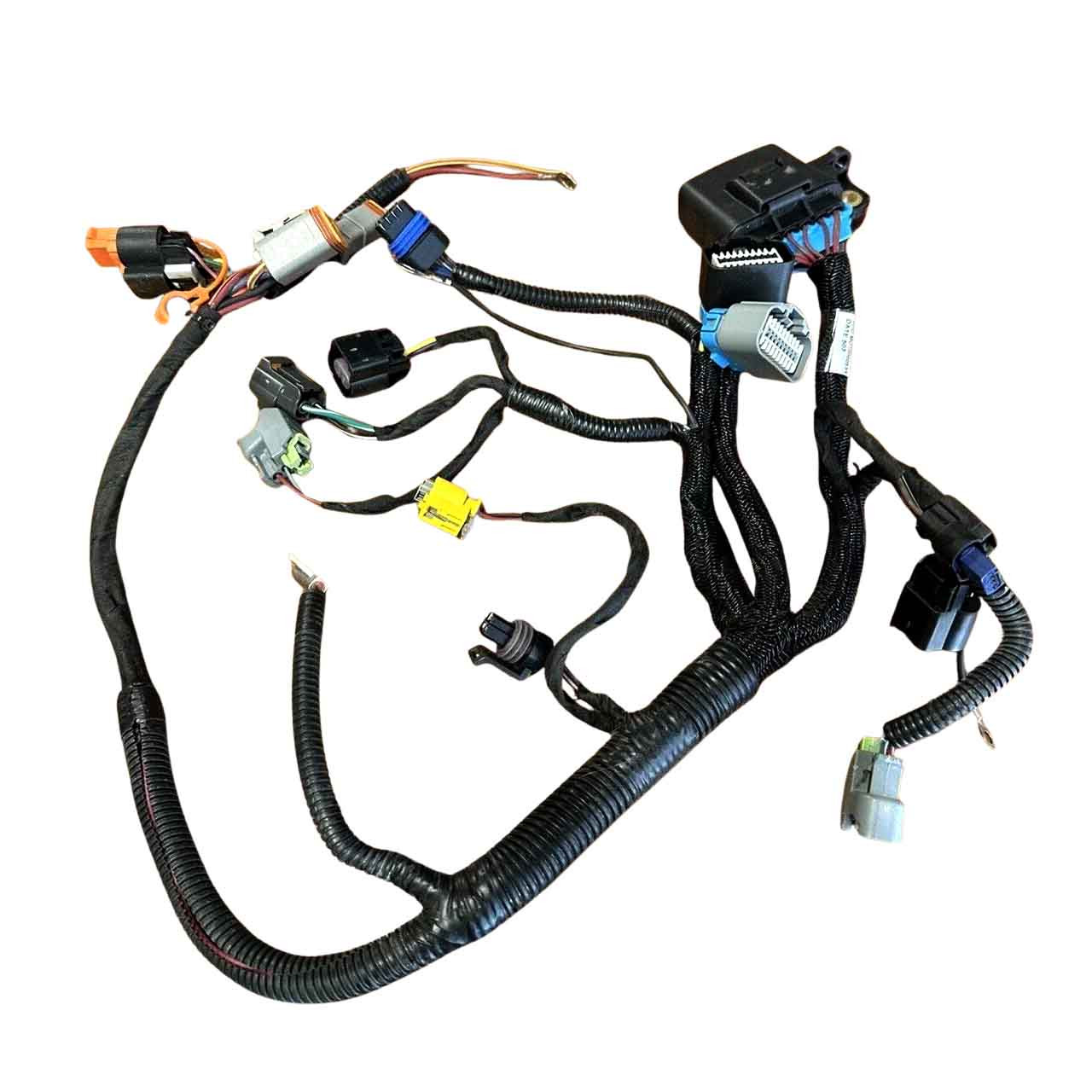
How It Works
An engine wiring harness doesn’t just carry electricity—it’s a high-precision network that routes power and data at 12V, 24V, or 48V (mild hybrids), with some EVs pushing 400-800V through dedicated high-voltage lines. A typical sedan’s harness processes 1,500-3,000 electrical signals per minute, from simple on/off commands (like brake lights) to 500Hz+ PWM signals controlling fuel injectors.
The system relies on three core functions:
-
Power Distribution
- The battery supplies 12V DC (14.4V when charging), split into 30-60 fused circuits with current ratings from 5A (interior lights) to 150A (starter motor).
- Voltage drop must stay below 0.5V across any circuit—exceeding this causes 10-30% performance loss in critical components like fuel pumps.
-
Signal Transmission
- Sensors (oxygen, crankshaft, etc.) send 0.1-5V analog signals or CAN bus digital data (500kbps to 2Mbps).
- Shielding reduces EMI interference by 90%, preventing false readings that could trigger check-engine lights.
-
Fault Protection
- Fuses blow within 0.1-5 seconds of overload, while relays handle 20-80A loads without arcing.
- Grounding points must maintain <0.1Ω resistance—poor grounding causes 25% of electrical faults.
Critical Performance Metrics
| Parameter | Acceptable Range | Failure Threshold |
|---|---|---|
| Voltage drop | ≤0.5V per circuit | >0.8V causes malfunctions |
| Wire resistance | 0.1-5Ω (varies by gauge) | >10Ω indicates damage |
| Insulation resistance | ≥1MΩ (megohmmeter test) | <0.5MΩ risks shorts |
| CAN bus signal integrity | ≤10% distortion | >20% causes ECU errors |
Real-World Example: A Ford F-150’s harness routes ~800 wires through 45 connectors, handling 12V for lights and 5V for sensors. If a single ground strap corrodes (resistance >0.5Ω), the ECU may misread throttle position by 5-15%, cutting fuel efficiency by 2-4 MPG.
High-Voltage Systems (EVs/Hybrids) use orange-jacketed cables with 630V+ insulation, monitored by insulation resistance detectors (IRDs). If leakage exceeds 500Ω/V, the car disables the high-voltage system—a safety measure preventing 500mA+ leakage currents, which can be lethal.
Common Problems Found
Wiring harnesses are built to last 10-15 years, but real-world conditions can cut that lifespan by 30-50%. The most frequent issues stem from physical wear, environmental damage, and poor maintenance, with repair costs ranging from 3,000+ for full harness replacement in luxury vehicles. Older cars (8+ years) are especially vulnerable—corrosion and brittle insulation account for 60% of failures in vehicles with 100,000+ miles.
Chafed or cracked insulation is the #1 culprit, causing 40% of harness-related breakdowns. Engine heat cycles (ranging -30°C to 140°C) gradually degrade plastic sleeves, exposing copper wires. When bare strands touch metal frames, short circuits spike current by 300-500%, blowing fuses or frying control modules. Common trouble spots include near sharp brackets (e.g., alternator mounts) and areas with constant vibration (firewall pass-throughs). A 2mm tear in insulation can lead to a 5-10Ω resistance increase, enough to disrupt sensor signals.
Corrosion at connectors causes another 30% of failures, particularly in humid climates or road-salt-heavy regions. Exposed terminals develop 0.5-3Ω of extra resistance per pin, leading to voltage drops that confuse ECUs. For example, a 0.8V drop in a throttle position sensor circuit can cause 10-15% hesitation during acceleration. The worst offenders are low-lying connectors (below wheel wells) and those near battery acid fumes, where green oxide buildup appears within 2-3 years of neglect. Dielectric grease can slow corrosion by 70-90%, but once pins turn green, cleaning only buys 6-12 months before replacement is needed.
Rodent damage peaks in fall and winter, accounting for 15% of insurance claims related to wiring. Mice and squirrels chew through 3-5mm thick insulation to access soy-based wire coatings, favoring engine harnesses (60% of attacks) and cabin wiring (30%). The repair bill averages $1,200, with the worst cases requiring entire harness swaps due to 50+ chewed wires. Ultrasonic deterrents reduce infestation risks by 40-60%, but steel mesh wrapping is the only near-100% solution.
Repair and Replacement
Wiring harness issues can range from 5,000+ full replacements, depending on damage severity and vehicle complexity. Modern cars (2015+) average 2-3x higher repair costs due to densely packed wiring and proprietary connectors—replacing a BMW 5 Series harness takes 15-25 hours of labor at 180/hour, while a Chevy Silverado might only need 8-12 hours. Insurance data shows 60% of harness repairs address localized damage (under 3 feet of wiring), while 30% require section replacements, and 10% demand complete overhauls.
Temporary fixes like electrical tape last 3-6 months in dry conditions but fail rapidly when exposed to engine heat (140°C+) or road salt. Proper repairs use heat-shrink tubing with adhesive lining, which withstands -40°C to 150°C and provides 10+ years of service. For corroded connectors, cleaning with contact spray (like DeoxIT D5) reduces resistance by 50-80%, but heavily oxidized pins need replacement—a 80 job per connector, depending on pin count.
| Scenario | Repair Cost | Replacement Cost | Recommended Action |
|---|---|---|---|
| 1-2 damaged wires | 100 | 3,000 | Repair with OEM-grade splices |
| 3+ broken wires in one loom | 400 | 4,000 | Replace entire section (1-3m) |
| Rodent damage (>5 wires) | 600 | 5,000 | Full harness replacement |
| Corroded main ECU plug | 200 | 2,500 | Replace connector + repin harness |
High-voltage harnesses (EVs/PHEVs) require specialized tools and certifications—a single 400V cable repair costs 2,500 due to mandatory insulation testing and 30+ safety checks. Mechanics must verify >500MΩ resistance post-repair to prevent leakage currents exceeding 2mA, which can disable the vehicle.
Aftermarket harnesses cost 40-60% less than OEM but often lack proper gauge markings or factory-sealed connectors. A $300 aftermarket kit might save money upfront but fail within 2-3 years in harsh climates, while OEM harnesses typically last 10-15 years. For critical systems (ECU, ABS), OEM is 90% safer—aftermarket variants have 15-25% higher defect rates in crash tests.
Choosing the Right One
Picking the correct wiring harness isn’t just about compatibility—it’s a 5,000 decision that impacts your vehicle’s electrical reliability, safety, and resale value. OEM harnesses typically last 10-15 years, while aftermarket versions average 5-8 years before issues arise. For modern cars (2015+), 85% of harnesses are model-specific, meaning a generic replacement often requires 3-5 hours of modifications to fit properly.
| Factor | OEM Harness | Premium Aftermarket | Budget Aftermarket |
|---|---|---|---|
| Price | 5,000 | 2,500 | 1,200 |
| Lifespan | 10-15 years | 7-10 years | 3-6 years |
| Wire Gauge Accuracy | 100% match | 90-95% match | 70-85% match |
| Connector Quality | Sealed, gold-plated | Weatherproof | Basic plastic |
| Warranty | 2-3 years | 1-2 years | 6-12 months |
Wire gauge mismatches are the #1 issue with cheap harnesses. A 10% undersized wire (e.g., using 18 AWG instead of 16 AWG) increases resistance by 25%, causing 3-8°C higher temperatures under load. For high-current circuits like fuel pumps, this can lead to premature insulation cracking within 2-3 years. OEM harnesses use 105°C-rated insulation as standard, while budget options often settle for 85°C, failing faster in engine bays where temps hit 120°C+.
Connector compatibility makes or breaks a harness install. Late-model Fords and Chevys use 30-50 proprietary connectors per harness—getting these wrong means 150 per connector in adapters or repinning labor. Aftermarket harnesses claiming "plug-and-play" status still require 1-2 hours of tweaking in 40% of installations, especially for CAN bus systems where pinout variances trigger U-codes (communication errors).
High-voltage EV harnesses demand even stricter criteria. A 400V battery harness must have orange UL-certified insulation with double-layer shielding—knockoffs often use single-layer shielding, allowing 10-30% more EMI interference that disrupts BMS signals. OEM EV harnesses undergo 500+ quality tests, while aftermarket versions average 50-100 tests, leading to 5-15% failure rates in the first year.
In summary, an engine wiring harness is a critical network of 50-200 insulated wires (typically 18-22 AWG) that connects sensors, ECUs, and actuators, ensuring proper engine function. It includes heat-resistant sleeves (withstanding up to 125°C) and 15-30 color-coded connectors for precise installation. Common issues include chafed wires (30% of failures) and corroded terminals, often requiring multimeter testing for continuity. Replacement involves matching OEM specs—0.5-1.5mm wire thickness and proper routing with 10mm clearance from hot surfaces. High-quality harnesses reduce failure rates by 40%, making material and routing key factors when selecting one.
