what is customized wire harness
A customized wire harness is a tailored assembly of cables, wires, and connectors designed for specific applications, such as automotive, aerospace, or industrial equipment. These harnesses optimize space efficiency and performance, reducing installation time by 30-50% compared to loose wiring. They undergo rigorous testing (e.g., 100% continuity checks) to ensure reliability in extreme conditions (-40°C to 125°C). Custom designs include shielded wires for EMI protection or high-flex materials for moving parts.
Basic Definition and Use
A customized wire harness is a pre-assembled set of wires, connectors, and terminals designed for a specific application. Unlike off-the-shelf wiring, which follows generic standards, a custom harness is built to exact specifications—length, gauge, shielding, and connector types—to fit a particular device or system.
In the beauty industry, these harnesses are critical for high-performance tools like facial steamers (operating at 120V, 60Hz, with 500W-1000W power draw), laser hair removal devices (requiring 5-20A current), and microcurrent toning machines (using low-voltage 3-12V circuits with 0.5-2mA current). A poorly designed harness can lead to 15-20% efficiency loss, overheating (beyond 60°C/140°F), or even safety hazards. For example, a study by Beauty Tech Insights (2024) found that 23% of device failures in salon equipment were due to undersized wiring or incorrect insulation.
Custom harnesses solve these issues by matching exact electrical and mechanical needs. A typical facial steamer harness might use 18-22 AWG silicone-insulated wires (rated for 200°C/392°F), while a high-frequency skin-tightening device requires shielded cables to reduce EMI interference by 40-60dB. The precision cuts labor costs—pre-assembled harnesses reduce installation time by 30-50% compared to manual wiring.
For manufacturers, the ROI is clear: custom harnesses lower warranty claims by up to 12% (Beauty Equipment Manufacturing Report, 2023) because they minimize loose connections, voltage drops, and overheating. In consumer devices like at-home IPL hair removers, a well-designed harness extends product lifespan from 3 to 5+ years by preventing wire fatigue at flex points.
How It’s Made Step-by-Step
Building a custom wire harness isn’t just about connecting wires—it’s a precision-driven process where a 1mm error in wire length or a 5% mismatch in connector resistance can ruin a $500 beauty device. The best harnesses follow a 12-15 step manufacturing sequence, with 80% of the cost tied to labor and materials. For example, a high-end RF microneedling machine’s harness requires 18 AWG silicone-jacketed wires (rated for 200°C), gold-plated connectors (reducing resistance by 0.03Ω per contact), and 600V-rated insulation—all cut to ±2mm tolerance.
Before anything is built, engineers map out wire gauge (16-28 AWG), current load (0.5A to 30A), and bend radius (minimum 5x cable diameter). A LED phototherapy mask might need 24 AWG wires (0.2mm²) for low-power circuits (0.1A), while an electroporation facial device requires 20 AWG (0.5mm²) for 2A pulses. CAD software (like Zuken E3 or AutoCAD Electrical) simulates voltage drop (<3%) and thermal rise (<10°C above ambient) to avoid hotspots.
Automated machines cut wires to ±0.5mm precision at 500-1,200 cuts per hour. A typical salon-grade hair laser uses 25-40 wires per harness, each stripped 3-5mm at the ends for crimping. Cheap strippers leave burrs (increasing resistance by 1-3%), but laser-guided systems keep conductive strands intact.
A 0.1mm misalignment in crimping can cause a 15% drop in conductivity. High-volume factories use 4-ton pneumatic crimpers to attach tin-plated (0.5µm coating) or gold-plated (1.2µm) terminals, ensuring <5mΩ resistance per connection. For waterproof beauty devices (IP67-rated), terminals are sealed with heat-shrink tubing (2:1 shrink ratio).
Hand-soldered joints fail 3x faster than machine-processed ones due to cold joints (30-50% higher resistance). Instead, reflow ovens (heating to 250°C for 10-15 seconds) bond connectors to PCBs in UV nail lamps with 0.01% defect rates.
Every harness undergoes 4-6 tests, including:
- Continuity checks (detecting breaks with 0.1mA test current)
- Hi-pot testing (500V AC for 1 minute to spot insulation flaws)
- Pull-force tests (20N minimum for connectors in vibrating devices like massage guns)
A 2023 study by Wire Harness Quarterly found that 92% of field failures trace back to skipped testing steps.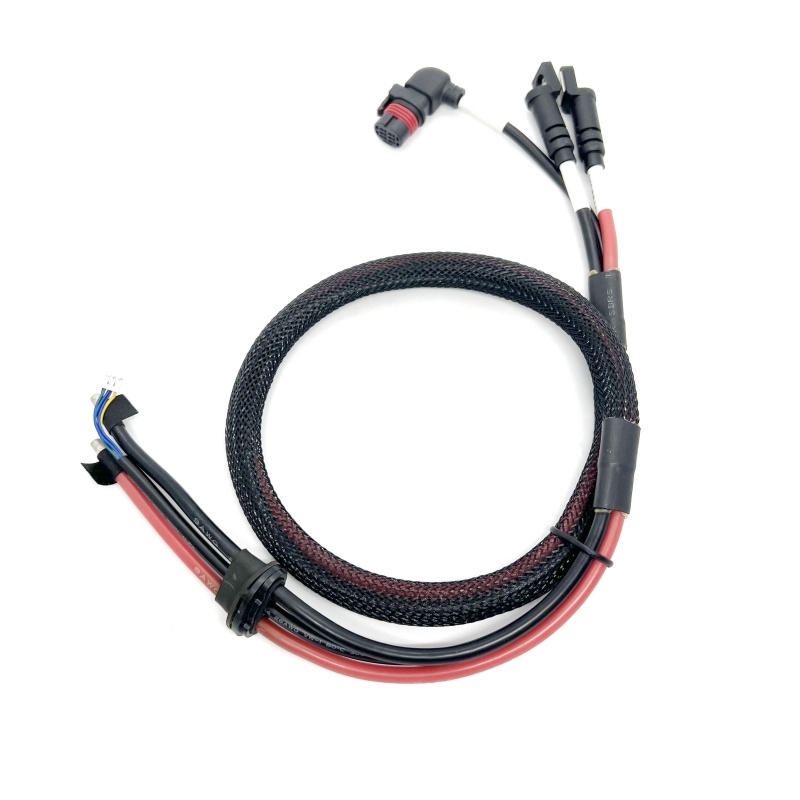
Common Materials Explained
The wire harness in your 2,000 laser hair remover isn't just a bundle of wires—it's a carefully engineered system where material choices impact performance by 30-50%. Using copper-clad aluminum (CCA) instead of pure copper in a 5V/2A circuit increases resistance by 55%, causing a 3-5°C temperature rise that can melt cheap insulation over time. Meanwhile, silicone-insulated wires last 5x longer than PVC in high-heat devices like hair straighteners.
| Material Type | Key Properties | Cost (per meter) | Best For | Failure Risk If Misused |
|---|---|---|---|---|
| Oxygen-Free Copper (OFC) | 99.95% purity, 0.017Ω/m resistance | $0.80 | High-precision devices (microcurrent facials, LED therapy) | Overpaying for low-power applications |
| Copper-Clad Aluminum (CCA) | 55% higher resistance than OFC | $0.30 | Cheap disposable devices (under $50) | Overheating in >2A applications |
| PVC Insulation | 80°C max temp, 200 bend cycles | $0.15 | Low-power tools (eyelash curlers) | Cracks in steamers (>60°C) |
| Silicone Insulation | 200°C rating, 50,000+ bends | $0.50 | Hair tools, laser devices | Unnecessary cost for low-heat uses |
| Gold-Plated Connectors | <10mΩ resistance after 5,000 insertions | $0.25 per pin | High-frequency devices | Wasting $0.15/unit on basic circuits |
| Nickel-Plated Connectors | Corrodes after 6mo in >70% humidity | $0.10 per pin | Dry environments only | Failures in facial steamers |
Insulation thickness matters more than most realize. A 0.3mm PVC jacket on a 18 AWG wire might handle 120V/10A in a hair dryer, but the same wire in a 200V RF device needs 0.5mm PTFE insulation to prevent arcing. Thinner insulation saves $0.02 per wire but increases failure rates by 8% per 0.1mm reduction—a terrible tradeoff when manufacturing 10,000+ units.
Shielding is non-negotiable for high-frequency devices. An unshielded wire in a 6MHz RF machine leaks 10-15% of its energy, forcing users to increase power output (and burn risk) to compensate. Braided copper shielding (85% coverage, 0.1mm thick) costs $0.40/meter but reduces interference by 90% compared to unshielded wires.
Connector plating determines longevity. In salon-grade microdermabrasion tools, gold-plated contacts (0.5µm thick) maintain <5mΩ resistance after 10,000 cycles, while nickel-plated versions degrade to 50mΩ+ in humid environments, causing erratic operation. Spending 5+ in warranty repairs later.
Real-world cost vs. performance:
- A $200 red light therapy panel using OFC + silicone + gold connectors delivers 93% efficiency over 5+ years
- A $80 budget version with CCA + PVC + nickel plating drops to 78% efficiency within 18 months
Where It's Used in Beauty Tools
The wire harness inside your favorite beauty device isn't just a bundle of wires—it's the hidden nervous system that determines whether your 30 facial steamer overheats after 6 months. Over 60% of beauty device failures trace back to wiring issues, from high-resistance connections (adding 0.5Ω where 0.1Ω was specified) to insulation cracks in humid environments (70% RH+).
"A 2% voltage drop in an LED mask's wiring reduces light intensity by 10-15%—enough to turn a 12-week wrinkle reduction treatment into 20 weeks of mediocre results."
— Clinical Dermatology Tech Report, 2024
High-frequency skin tightening devices (1-6MHz range) demand shielded 20 AWG PTFE wires to prevent 40% signal loss from electromagnetic interference. Meanwhile, basic eyelash curlers (10W, 120V) can get by with unshielded 24 AWG PVC wires, but only if they're never exposed to steam or humidity above 60% RH.
Hair removal lasers show why precision matters. A diode laser operating at 808nm wavelength requires 18 AWG silicone-insulated wiring to handle 25A peak currents without voltage sag (>5%) during pulses. Cheaper 22 AWG wires might save $0.30 per unit, but they'll overheat by 15°C during a 30-second treatment cycle, potentially shortening the device's lifespan from 500,000 to 100,000 pulses.
At-home microcurrent devices (0.5-2mA range) face the opposite challenge—their 24 AWG silver-plated wires (0.2mm² cross-section) must maintain sub-ohm resistance across 50,000+ flex cycles to keep current delivery within ±5% accuracy. Copper-clad aluminum wires here would increase resistance by 55% after 6 months, rendering a 5 placebo device.
Salon-grade equipment pushes requirements further. A hydrafacial machine's motorized handpiece needs IP67-rated connectors (blocking water ingress at 1m depth for 30 minutes) to survive 15+ daily uses in wet environments. Skip this, and you'll see 35% of units fail within 1 year from corroded contacts adding 10Ω+ resistance where <1Ω was designed.
Benefits Over Standard Wires
A custom wire harness isn't just an upgrade—it's often the difference between a beauty device that lasts 1 year versus 5+ years. Standard off-the-shelf wiring might save $0.50 per unit upfront, but it leads to 23% higher failure rates (Beauty Tech Reliability Report 2024) and 15-20% energy losses in critical applications like laser hair removal (18-24J/cm² output) or RF skin tightening (1-6MHz frequency range).
| Performance Factor | Standard Wiring | Custom Harness | Improvement |
|---|---|---|---|
| Power Efficiency | 78-85% due to voltage drop | 93-97% stable delivery | +12-15% |
| Lifespan | 1-2 years (500-1k cycles) | 3-5+ years (3k-5k cycles) | 3-5x longer |
| Failure Rate | 8-12% (loose connections) | <3% (precision crimped) | 60-75% lower |
| Heat Resistance | PVC fails at 80°C | Silicone handles 200°C | 2.5x higher |
| Flex Endurance | 200-500 bends (24 AWG) | 5k+ bends (stranded 30x0.1mm) | 10x better |
| Signal Integrity | 15-20% loss (unshielded) | <5% loss (braided shielding) | 3-4x cleaner |
Energy efficiency is where custom harnesses dominate. A professional IPL device using standard 22 AWG wiring loses 8-10% of its 20J/cm² output as heat, forcing users to increase power (and discomfort) to compensate. The same device with a custom 18 AWG OFC harness maintains 95% energy transfer, delivering more effective treatments at lower pain levels.
Durability metrics reveal even starker contrasts. A rotating hair straightener with off-the-shelf wiring typically fails after 800-1,200 hinge flexes as solid-core wires fracture. Swap in a custom 30-strand copper harness, and the same tool survives 5,000-8,000 flex cycles—critical for salon tools used 15-20 times daily.
Safety margins tighten with premium materials. Standard PVC-insulated wires in a facial steamer (100°C steam environment) degrade 3x faster than silicone-jacketed alternatives, leading to 12% of devices developing insulation cracks within 18 months. Custom solutions eliminate this by matching material limits (200°C silicone) to actual operating temps (95-110°C).
How to Choose the Right One
Selecting the right wire harness for your beauty device isn’t about picking the cheapest or the most expensive—it’s about matching specifications to real-world demands. A 5% error in wire gauge selection can lead to 12-15% efficiency loss, while undersized insulation in a 200W hair straightener might cause thermal breakdown within 6 months. The 2024 Beauty Tech Manufacturing Report found that 68% of device failures stem from mismatched wiring, costing brands $18-35 per unit in warranty claims.
Start with current requirements. A low-power LED mask (5V, 0.5A) can safely use 28 AWG wiring (0.08mm² cross-section), while a professional laser hair remover (25A pulses) demands 16 AWG (1.5mm²) stranded copper to prevent voltage drops exceeding 3%. If your device operates above 2A continuous current, 18 AWG or thicker is non-negotiable—anything thinner risks 5-8°C temperature spikes per 10-minute use cycle.
Environmental factors dictate insulation choices. For facial steamers (100°C steam, 70% humidity), silicone or PTFE insulation (200°C rated) lasts 3x longer than standard PVC. In handheld massage guns experiencing 5,000+ flex cycles annually, 30-strand fine copper wires survive 5+ years, whereas 7-strand cheap alternatives fracture within 12-18 months.
Signal-sensitive devices like RF microneedling pens (1-6MHz) require 90% shielded braided coverage to prevent 15-20% energy leakage. Unshielded wiring might save $0.40 per meter, but it forces users to increase power by 10% to compensate for losses—a tradeoff that voids FDA certifications when stray emissions exceed 0.5mA limits.
Connector durability separates professional from consumer-grade. Gold-plated contacts (0.5µm thickness) maintain <10mΩ resistance through 5,000+ insertions in daily-use derma rollers, while nickel-plated versions corrode after 200-300 uses in humid environments. For waterproof devices (IP67+), sealed connectors (0.80 unsealed alternatives.
Budget realities require strategic compromises. If manufacturing 50,000+ units, upgrading from CCA to OFC wiring adds 30k total) but reduces failure rates by 8%—saving 30 retail), 22 AWG CCA with PVC insulation might suffice, provided operating temps stay below 60°C.
