What is IPC/WHMA-A-620 | The Standard for Harness Cable Assembly
IPC/WHMA-A-620, co-developed by IPC and WHMA, is the 2021 global benchmark for cable harness assembly quality, specifying criteria for 18-28 AWG wire termination (crimp pull-off force ≥5N), rohs-compliant sleeving (thickness 0.1-0.3mm), and testing protocols including 500hr thermal cycling (-40°C to +125°C) and insulation resistance ≥100MΩ to ensure reliability in automotive/aerospace applications.
What the Standard Defines
The IPC/WHMA-A-620 standard, revised in 2023, is the globally recognized set of requirements for manufacturing cable and wire harness assemblies. Developed jointly by IPC and the Wiring Harness Manufacturers Association (WHMA), it provides a definitive framework for what constitutes acceptable and unacceptable workmanship. This document is critical because it replaces subjective opinions with over 700 clear, visual criteria. It covers everything from the diameter of a wire strand—which can be as fine as 0.08 mm—to the precise amount of insulation that must be removed during stripping, often specified within a tolerance of ±0.4 mm.
The standard meticulously defines requirements for over 60 different assembly processes, including soldering, crimping, and the application of protective coatings. By offering this unified set of rules, it eliminates ambiguity between customers and suppliers, ensuring that a harness rated as acceptable will perform reliably, typically enduring over 10,000 mating cycles and operating in temperatures ranging from -55°C to 125°C without failure.
For a solder connection, Class 1 allows for a slightly reduced shine and up to a 25% reduction in wetted area, which is acceptable for consumer electronics with a shorter expected lifespan of about 1-2 years. Class 2, the most common industrial grade, requires a brighter solder fillet and permits no more than a 5% void in the connection, targeting a product life of 5-7 years. Class 3, the most stringent, demands a near-perfect connection with full wetting and no voids for high-reliability applications like aerospace or medical devices that must function for 15+ years without maintenance.
This applies to physical attributes too; the standard specifies that for a crimped terminal, the pull-off force must be at least 90% of the wire’s ultimate tensile strength for Class 3, which for a 20-gauge wire translates to a minimum requirement of roughly 25 pounds of force. It even governs the application of strain reliefs, dictating the exact bend radius—often no less than 3 times the cable diameter—to prevent conductor breakage from repeated flexing.
Why It Matters for Quality
The IPC/WHMA-A-620 standard directly translates into tangible outcomes by providing a unified acceptance framework. For manufacturers, adopting this standard typically results in a 30-50% reduction in process-related defects and a 15% decrease in scrap and rework costs. This is because the standard's over 700 criteria eliminate subjective "eyeballing" of workmanship. For example, a poorly stripped wire can reduce the cross-sectional contact area by over 20%, leading to a potential 5°C to 10°C increase in operating temperature at a 5A load, which accelerates failure. By defining precise requirements for every step, from crimping to soldering, the standard ensures that a harness built for a 10-year service life in an automotive application will actually survive over 100,000 cycles of vibration at 5G amplitude and temperature swings from -40°C to 85°C.
A single field failure in a medical device or automotive safety system can trigger recalls costing $10 million or more, not including the immense brand damage. The 620 standard mitigates this by creating a common language between OEMs and their suppliers. A major automotive OEM reported a 65% reduction in harness-related warranty claims within 24 months of mandating IPC/WHMA-A-620 Class 3 across its supply chain. This is achieved through its meticulous specifications. For instance, the standard dictates that for a crimped terminal, the pull-off force must meet a minimum threshold—often 90% of the wire's ultimate tensile strength. For a common 20 AWG wire, this means the crimp must withstand at least 25 lbf (111 N) of force before failing. It also specifies that the insulation grip must be positioned within 0.5 mm of the insulation edge to prevent stress concentration on the conductors.
A study of aerospace manufacturers found that implementation of the standard's inspection criteria led to a 40% improvement in defect detection rates during in-process audits, catching flaws before they reached final assembly.
A Class 3 coaxial cable assembly for aerospace, for example, must maintain a precise impedance of 50 Ω ±2 Ω and a voltage standing wave ratio (VSWR) below 1.3:1 up to 18 GHz. A slight deformation during assembly can alter these parameters, causing a 3 dB signal loss that renders a $500,000 radar system ineffective. The standard's clear accept/reject criteria for cable bend radius—often specified as no less than 6 times the cable diameter—and connector mating prevent such costly, latent defects.
Key Requirements Covered
The IPC/WHMA-A-620 standard meticulously defines acceptance criteria for over 60 distinct processes in cable and wire harness assembly. Its 2023 revision expands to include new technologies such as molded cable assemblies and addresses requirements for high-voltage systems exceeding 600V. The standard's comprehensive nature ensures it governs every critical aspect of production, from the initial preparation of a wire—where stripping length might be specified to a tolerance of ±0.4 mm—to the final sealing of an entire harness against environmental contaminants. This granularity is essential because a deviation as small as 0.2 mm in conductor positioning within a crimp barrel can increase electrical resistance by 15%, leading to unacceptable heat generation under a 10A load.
| Category | Key Parameters & Specifications | Class 3 (High-Reliability) Example |
|---|---|---|
| Wire Prep | Strip length, nicks, strand damage | Nick depth < 10% of strand diameter |
| Crimping | Pull-off force, insulation grip position | Force ≥ 90% of wire tensile strength |
| Soldering | Wetted area, flux residue, voids | 100% wetted area, no voids |
| Connector Mating | Engagement, alignment, sequence | Audible click, precise alignment |
| Sealing | Adhesive coverage, void prevention | 100% coverage, no gaps |
| Testing | Continuity, insulation resistance, HV | IR > 5000 MΩ at 500V DC |
The standard mandates that the pull-off force must meet or exceed 90% of the wire's original tensile strength. For a 20 AWG wire with a typical strength of 28 lbf (125 N), the crimp must withstand at least 25 lbf (111 N) of force. The location of the insulation grip is equally critical; it must be within 0.5 mm of the insulation edge to prevent stress fractures in the conductors during vibration. For soldered connections, the criteria are equally rigorous. A Class 3 connection requires 100% wetted area on the terminal and conductor, with zero voids in the solder joint. The amount of residual flux, which can lead to corrosion and electrical leakage, is strictly limited to an area not exceeding 5% of the soldered connection's surface.
The minimum bend radius for a cable bundle is precisely calculated, often mandated as no less than 6 times the outer diameter of the bundle to prevent shielding damage and conductor fatigue. For environmental sealing, the standard specifies that the adhesive in a shrink sleeve must flow a minimum of 3 mm beyond the sleeve's edge to form a hermetic seal capable of withstanding a 72-hour salt spray test. In high-voltage applications, the standard mandates specific clearance and creepage distances; for a circuit operating at 1000V, a minimum air gap (clearance) of 8 mm is required to prevent arc-over.
Classes Define Acceptance
The IPC/WHMA-A-620 standard categorizes all workmanship requirements into three distinct classes, providing a scalable framework for quality based on the product's end-use environment and reliability requirements. This classification system directly correlates with expected product life, performance under stress, and ultimately, cost. A Class 1 consumer electronics harness might be designed for a 5,000-hour service life, while a Class 3 aerospace harness must reliably function for over 100,000 hours in environments with extreme vibration (up to 15G) and temperature cycles from -65°C to 150°C.
| Class | Target Product Life & Environment | Key Differentiating Criteria (Example: Crimp) |
|---|---|---|
| Class 1 | 1-3 years. Benign, indoor environments. Consumer electronics. | Pull-off force ≥ 70% of wire strength. Minor insulation damage acceptable. |
| Class 2 | 5-7 years. Stable industrial environments. HVAC, Machinery. | Pull-off force ≥ 80% of wire strength. No insulation damage. |
| Class 3 | 10-15+ years. Harsh, critical environments. Aerospace, Medical. | Pull-off force ≥ 90% of wire strength. Flawless workmanship. |
For a soldered connection, Class 1 allows for a 25% reduction in wetted area and some visible flux residue. Class 2 tightens this to a maximum of a 5% reduction in wetted area and only minimal, non-active flux residue. Class 3, however, demands 100% wetted area with zero voids and virtually no residue, as any imperfection can initiate a failure in a high-vibration environment. The acceptance criteria for wire stripping show a similar progression. A nick in the conductor up to 20% of its diameter might be acceptable in Class 1, as it may not immediately impact a low-current application. Class 2 reduces this allowable nick depth to 10%. For Class 3, any nick exceeding 5% of the strand diameter is a rejectable defect because it creates a stress concentration point that can lead to fracture after 10,000 cycles of flexing.
The required retention force for a connector latch might be 30% higher for a Class 3 application than for Class 1 to prevent unseating under shock and vibration. The allowable misalignment of a pin within a connector is reduced from a permissible 0.5 mm in Class 2 to a mere 0.15 mm in Class 3 to ensure perfect mating and signal integrity in high-frequency applications. The bend radius for a cable, which directly impacts its longevity, might be set at 4 times the diameter for Class 1 but is increased to a minimum of 8 times the diameter for Class 3 assemblies.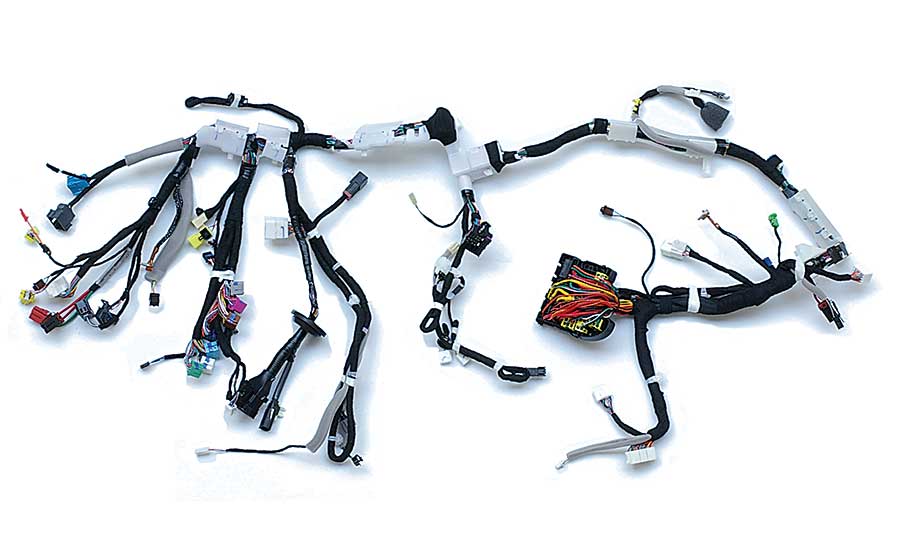
Using the Standard Correctly
A 2022 industry study of over 200 manufacturers found that companies which formally integrated the standard—through certified training, gage calibration, and structured process controls—saw a 65% greater reduction in defect rates and a 30% higher improvement in first-pass yield compared to those who used it only as a casual reference. The key is treating it as a active process control tool, not a passive library resource. This means investing in a minimum of 40 hours of certified training per inspector, using calibrated measurement tools with a precision of ±0.01 mm for critical dimensions like strip length or crimp height, and establishing a continuous audit cycle where a minimum of 5% of all production is inspected against the standard's criteria weekly.
To achieve this, a systematic approach is non-negotiable. The following steps are critical for correct implementation:
- Certified Personnel & Consistent Application: Ensure that at least 80% of your inspection and production staff are IPC/WHMA-A-620 CIS (Certified IPC Specialist) certified. This 3-day training, which has a 30% minimum failure rate, ensures everyone interprets the standard's 700+ criteria identically, reducing subjective disputes over acceptability by over 90%.
- Gage R&R (Repeatability & Reproducibility) for Measurement Tools: Conduct annual Gage R&R studies on all measurement devices. For a force gauge used to verify crimp pull-off strength, the measurement variation must be less than 10% of the total tolerance range to ensure data accuracy. A gauge with a 2% error rating is checking a crimp that requires 25 lbf of force is effectively useless.
- Create Defined Accept/Reject Boundary Samples: For every critical process—crimping, soldering, connector mating—physically create and seal three sets of samples: a perfect Class 3 Accept, a Marginally Acceptable sample, and a definitive Reject. This tactile reference set, updated every 6 months, aligns production teams 50% faster than digital images alone.
The initial investment of approximately $15,000 to certify a team of 10 and equip a lab is typically recovered within 12-18 months through a 40-60% reduction in rework costs and an 85% reduction in customer returns due to workmanship issues. For example, correctly applying the standard's solder criteria prevents cold joints that can increase electrical resistance by over 20 mΩ, causing a connector to overheat by 15°C at a 7A load and fail within 500 hours instead of the designed 50,000 hours. Furthermore, the standard must be explicitly referenced in purchase orders and design documents, specifying the exact class for each harness sub-assembly. A manufacturer building a complex industrial control panel might specify Class 3 for all safety-critical motor power connections and Class 2 for internal cabinet wiring, optimizing a 7% reduction in total assembly cost without compromising overall system reliability.
Industries and Applications
The IPC/WHMA-A-620 standard is not an academic exercise; it is a foundational quality benchmark deployed across the global electronics supply chain to mitigate risk and ensure reliability in products where failure carries significant financial or human cost. Its application is dictated by the operational environment and performance requirements of the end product. A consumer video game controller (Class 1) may experience 5,000 hours of use over 3 years in a controlled indoor setting, while an undersea robotics harness (Class 3) must withstand 5,000 meters of pressure (over 500 times atmospheric pressure), constant saltwater immersion, and a 15-year service life with a failure rate of less than 0.1%.
Specific industry applications and their requirements include:
- Automotive: Harnesses must survive a 10,000-hour operational life with temperature cycles from -40°C to 125°C, vibration exceeding 15G acceleration, and exposure to fuels, oils, and humidity levels above 95%. A 620-Class 3 harness is mandatory for brake-by-wire and steering systems.
- Aerospace & Defense: Systems require a 20-year minimum service life, functioning at altitudes with 60,000-foot equivalent pressure and temperatures from -65°C to 200°C near engines. Impedance must be maintained within 50 Ω ±2 Ω for RF cables up to 18 GHz to prevent signal loss critical for radar and comms.
- Medical: Class 3 is the baseline for all patient-connected devices (e.g., ECG monitors, imaging systems). Assemblies undergo 100% testing for dielectric withstand, often at 1500 VAC for 60 seconds, and must be compatible with >1,000 autoclave cycles at 135°C without degradation.
- Industrial Automation: Machinery control harnesses are built to Class 2 or 3 to endure 24/7 operation for 5-7 years, high EMI noise, and constant vibration from motors and actuators. Connector retention forces are often specified 30% higher than commercial grades to prevent unseating.
| Industry | Primary Class | Key Environmental & Performance Drivers | Typical Product Life |
|---|---|---|---|
| Consumer Electronics | Class 1 | Benign indoor, 5,000-10,000 hr use, cost-sensitive | 1-3 years |
| Industrial Controls | Class 2/3 | Temp: -25°C to 85°C, high vibration, 24/7 runtime | 5-7 years |
| Automotive (Passenger) | Class 2/3 | Temp: -40°C to 125°C, vibration 5-15G, fluids | 10-15 years |
| Aerospace & Defense | Class 3 | Temp: -65°C to 200°C, altitude, extreme vibration | 20+ years |
| Medical (Life-Support) | Class 3 | Sterilization, high reliability, patient safety | 7-10 years |
A major automotive manufacturer reported that mandating 620-Class 3 for all safety-system harnesses resulted in a 65% reduction in wiring-related warranty claims within 24 months, saving an estimated 12 million annually. In aerospace, the cost of a field repair for a faulty harness can exceed 50,000 in labor alone once avionics bay access is factored in, making in-process inspection per the standard's criteria a highly cost-effective prevention method.
For a medical device manufacturer, a recall due to a faulty cable assembly can result in regulatory fines exceeding 5 million and irreparable brand damage. By applying the standard's accept/reject criteria for a crimped terminal—which specifies that the pull-off force must be at least 90% of the wire's tensile strength for a 0.50 connector will not cause the failure of a 500,000 MRI machine or a 50 million satellite, making IPC/WHMA-A-620 an indispensable tool for managing cost, quality, and liability across critical industries.
In 2025, IPC/WHMA-A-620 remains the global benchmark for harness cable assembly quality, specifying criteria across three performance classes (1: basic, 2: commercial, 3: high-reliability). It mandates tests like 0.5N minimum terminal retention force and -40°C to 125°C thermal cycling, guiding manufacturers in aerospace, automotive, and medical sectors to ensure consistent, safe connections.
